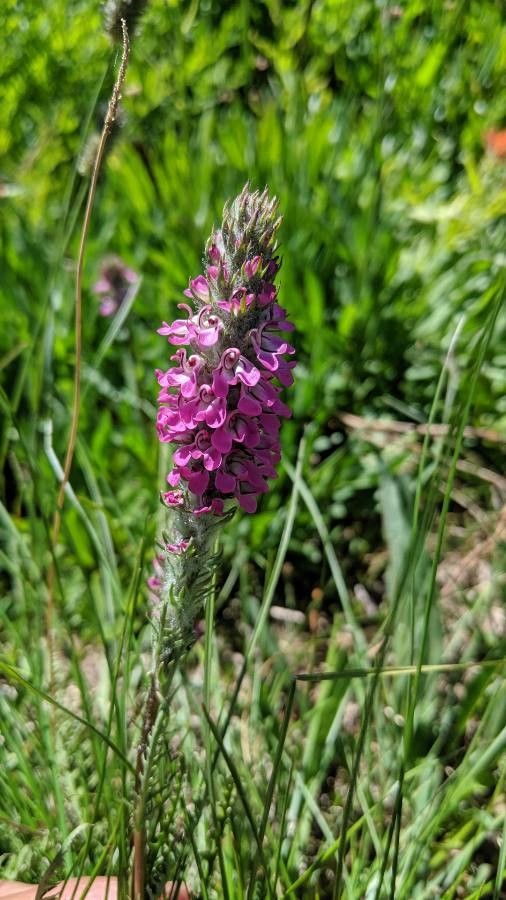
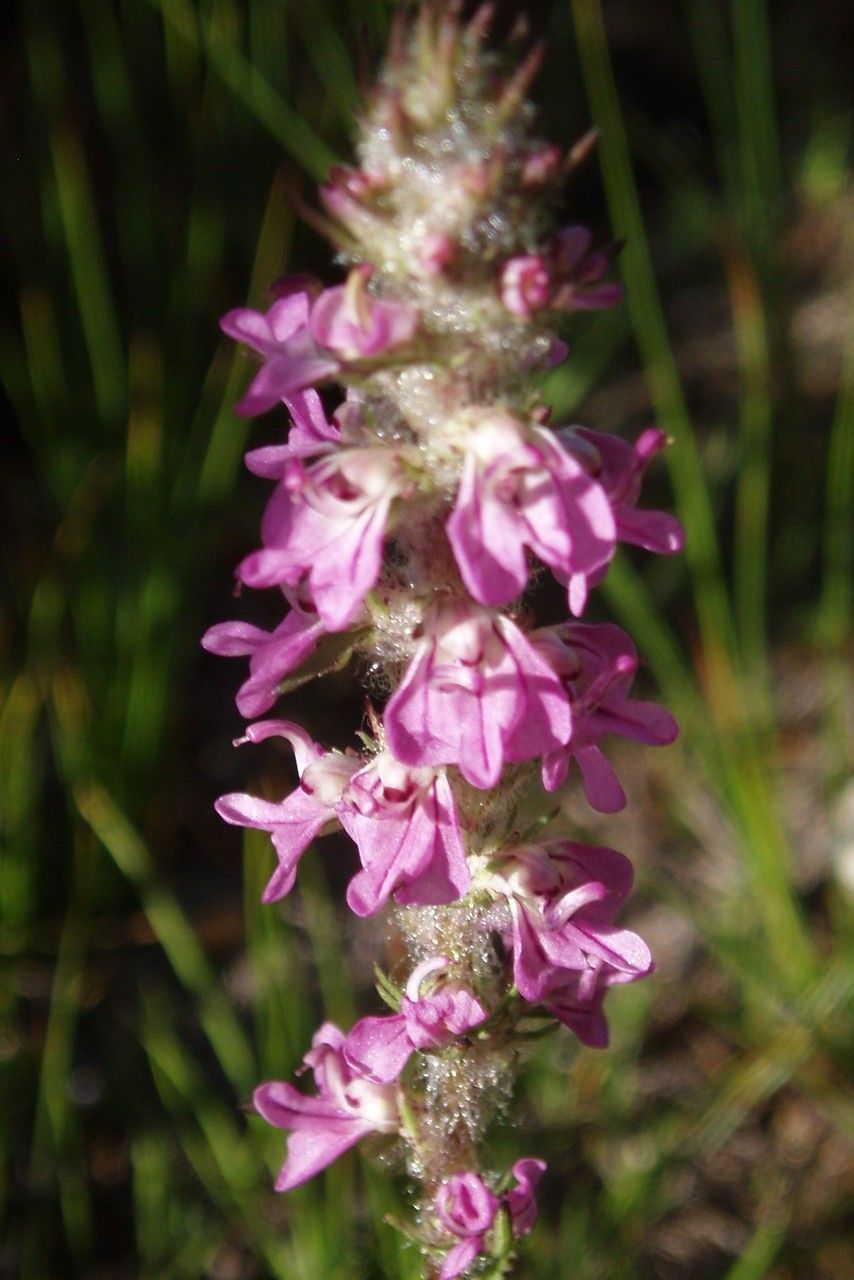
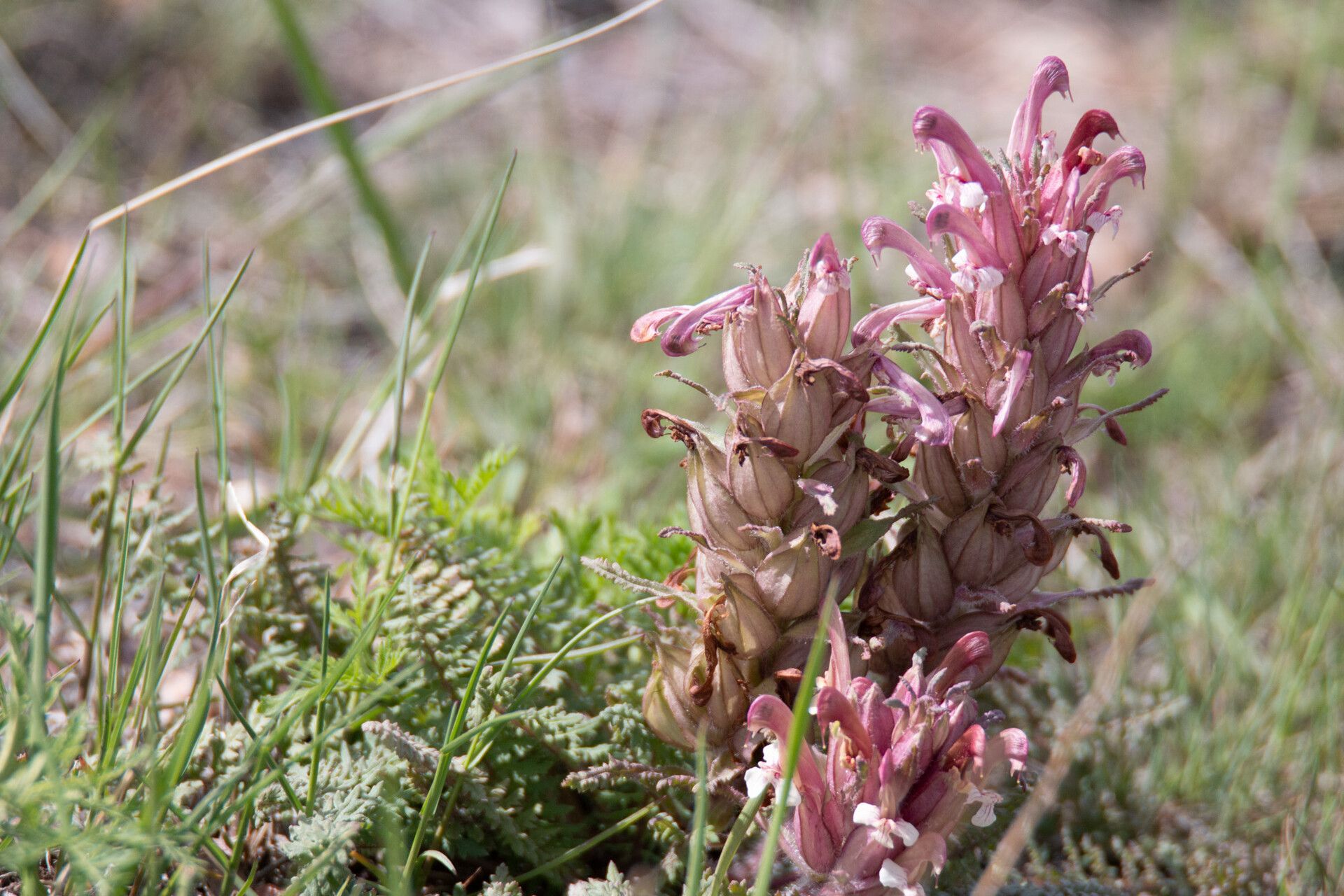
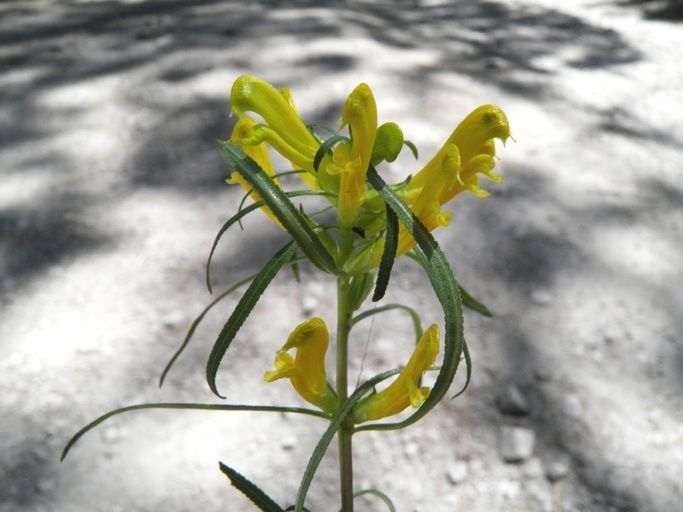
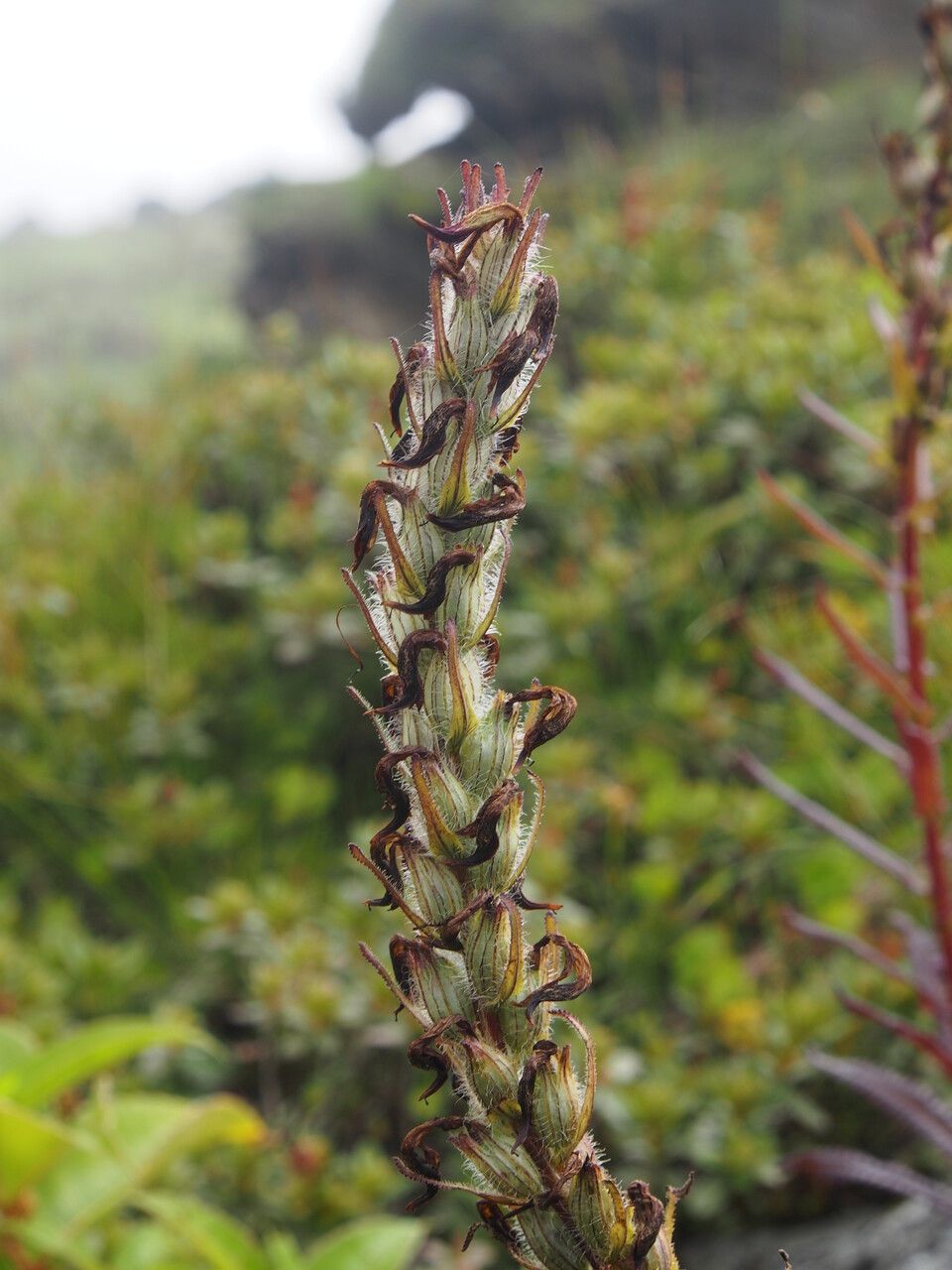
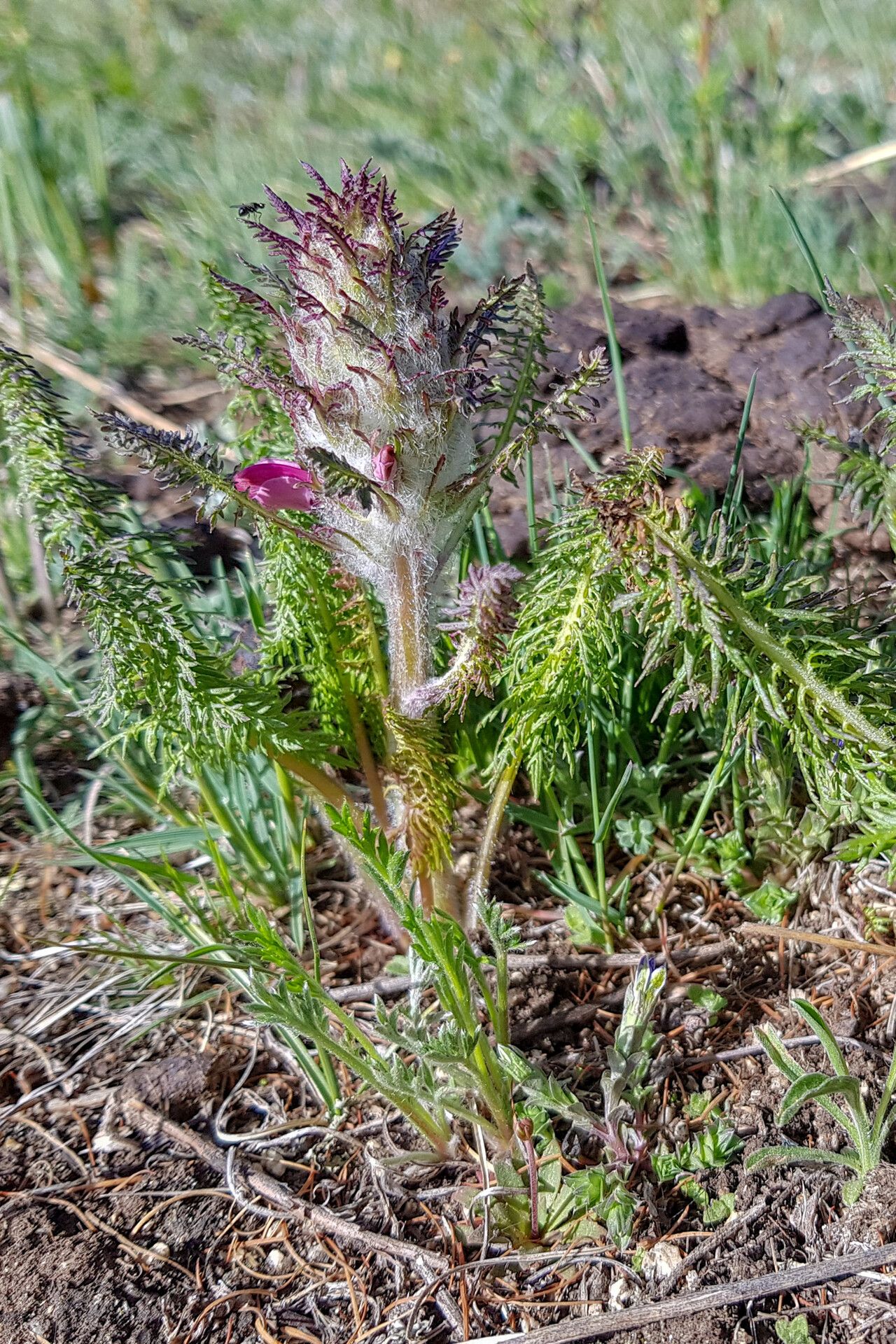
Pedicularis attollens is a species of flowering plant in the family Orobanchaceae known by the common name little elephant's head. It is native to Oregon and California, where it grows in moist mountainous areas such as meadows and bogs. It is a perennial herb growing up to 60 centimetres (24 in) in maximum height with one or more stems emerging from a caudex. The leaves are comblike, divided into many linear lobes. The inflorescence is a raceme occupying the top of the stem. The sepals of the flowers and the bracts between them are woolly. The flower is under 1 centimetre (2⁄5 in) long and divided into a curving trunklike upper lip and a three-lobed lower lip. It is pink or purplish in color with darker stripes. The fruit is a capsule up to 1 centimetre (2⁄5 in) long containing seeds with netlike surfaces.
Little elephantshead is fairly disease-resistant and typically does not suffer from many illnesses. However, it can be vulnerable to pests and diseases present in its environment, though such infections are generally mild. In terms of care, the plant requires moderate maintenance. Regular pruning is necessary to maintain a good appearance and support healthy growth. Applying fertilizer can also encourage flowering. Little elephantshead is suitable for anyone with outdoor space, such as a garden or patio, and does not demand much gardening experience. It may need more attention when grown indoors.
How to keep Pedicularis Attollens.
Light
Little elephantshead is native to habitats like forest understories and rocky areas, where it experiences natural shade. It prefers partial sun but can tolerate full sun or full shade, showing its versatile and hardy nature.
Water
Little elephantshead is a plant native to moist alpine regions, where it flourishes in environments that are consistently hydrated. To maintain its growth, it needs to be watered weekly. When grown outdoors, little elephantshead benefits from natural rainfall, which aids its growth during different seasons and improves its resilience in cooler temperatures.
Temperature
Little elephantshead comes from cool habitats and grows best in temperatures from 32 to 90 °F (0 to 32 °C). Preferred temperature levels shift with the seasons — cooler in winter and a bit warmer in summer.
Fertilizer
For Little elephantshead, the primary time to apply fertilizer is early spring, when the flowers are forming. The proper fertilizer promotes better blooms and helps Little elephantshead produce attractive flowers. Fertilizing in early spring ensures strong flowers during the season and provides energy for periods of dormant growth.
Pruning
Little elephantshead is known for its distinctive, elephant-like flowers. To ensure optimal growth, prune the dead stems in early spring and again in late spring. Be careful to avoid cutting mature stems. Regular pruning improves air circulation, which helps prevent disease. Always use clean tools, and consider leaving some flowers to allow for natural reseeding.
Botanical profile.
- Plant Type
- Herb
- Life Cycle
- Perennial
- Genus
- Pedicularis
- Family
- Orobanchaceae
- Hardiness Zone
- 2-7
- Mature Height
- 15 cm to 46 cm
- Mature Spread
- 5 cm to 15 cm
- Leaf Color
- Green, Blue
- Leaf Type
- Semi-evergreen
- Flower Color
- Pink, Lavender
- Flower Size
- 1.02 cm
- Bloom Time
- Early summer, Mid summer
- Planting Time
- Spring, Summer, Autumn
- Harvest Time
- Late summer, Early fall
Other names.
Reader questions.
How should I water my Little elephantshead plant?
To ensure the well-being of the Little elephantshead plant, it is best to water it with filtered water at room temperature. Tap water may contain harmful particles, hence the preference for filtered water. The plant also prefers warm water as it originates from a warm environment, and cold water can be a shock. It is important to avoid watering the plant from above, as this can cause problems with its foliage. Instead, gently saturate the soil with the filtered room temperature water until it is completely moist. This aids in moisturizing the plant's roots and promotes their growth and nutrient absorption.
What are the sunlight requirements for Little elephantshead?
Little elephantshead thrives in partial sun, needing about 3-6 hours of sunlight daily, but it can also grow in full sun conditions, which means above 6 hours of sunlight each day. The plant is native to environments such as forest understories or rocky areas, where it experiences natural shade. This makes it a versatile perennial herbaceous plant that can also tolerate full shade, adapting well to various lighting conditions. Remember to watch how sunlight moves through your garden and choose spots that offer a balance of light and shade to ensure the happiness and health of your plants.
What is the ideal temperature range for Little elephantshead?
Little elephantshead thrives in cool environments, with an ideal temperature range of 32 to 90 °F (0 to 32 °C). The plant prefers lower temperatures during the winter months and slightly higher temperatures in the summer. It is highly cold-tolerant and does not require additional frost protection in winter. To prepare for winter, it's recommended to water the plant generously before the first freeze to ensure the soil remains moist when it enters a frozen state, which helps prevent drought and water scarcity during the colder months.
What should I do if I give my Little elephantshead plant too much or too little water?
Overwatering is a more common problem for the health of your Little elephantshead. It causes the stems and leaves to wilt and turn yellow. Overwatering for a long time can also lead to diseases like root rot, mold, and mildew, which can be fatal for the plant. Underwatering is less common as the Little elephantshead can tolerate drought. However, it can still happen and result in brittle and brown leaves. To care for your Little elephantshead, it's important to notice signs of overwatering early. Some diseases like root rot might not be fixable if you wait too long. If you see signs of overwatering, reduce your watering schedule and ensure the soil drains well. Replace the soil if it doesn't. If you notice signs of underwatering, increase your watering frequency until the signs go away.
How can artificial lighting be used for indoor Little elephantshead plants?
Indoor Little elephantshead plants require adequate lighting for optimal growth, especially when natural sunlight is insufficient, such as in winter or less sunny spaces. Artificial lights provide a vital solution, promoting healthier growth. LED lights are popular for indoor plant lighting because they can be customized to deliver specific wavelengths of light needed by plants. The general guidance is that full sun plants need 30-50W/sq ft of artificial light, partial sun plants require 20-30W/sq ft, and full shade plants need 10-20W/sq ft. Place the light source 12-36 inches above the plant to mimic natural sunlight and aim for 8-12 hours of light per day, mimicking natural daylight hours.
What should I do if the winter temperature drops below -40°C?
Although Little elephantshead is extremely cold-tolerant, it's important to maintain winter temperatures above -40°C. If temperatures fall below this threshold, you might not notice any immediate changes during winter, but the plant may experience decreased sprouting or fail to sprout at all in spring. If this occurs, you should remove any parts of the plant that have failed to sprout in the spring.
How many times a week should I water my Little elephantshead?
If your Little elephantshead plant is in a pot, the best way to determine if it needs water is to stick your finger into the soil. If the top two to three inches of soil are dry, it's time to water. The same method can be used if you grow your Little elephantshead outdoors in the ground. Once the top few inches of soil have dried out, it's time to water. During spring and early fall, watering once a week is usually sufficient. In very hot weather, you may need to water two or more times a week. However, mature and well-established Little elephantshead plants have a remarkable ability to survive drought.
What are the symptoms of insufficient light in Little elephantshead?
When Little elephantshead does not receive enough light, several symptoms may appear. These include small or lighter-colored new leaves, which indicate a lack of chlorophyll and essential nutrients. The plant may also experience leggy or sparse growth, as the spaces between leaves or stems become longer, leading to a weak and stretched-out appearance. Faster leaf drop, slower or no new growth are signs of the plant conserving resources under poor light conditions. Additionally, conditions such as chlorosis, where leaves lose their green color, sunscald, leaf curling, wilting, and leaf scorching are symptoms related to light deficiency or excessive exposure to sunlight.
How does Little elephantshead react to high temperatures, and what should I do?
Little elephantshead is not tolerant of high temperatures. When the temperature exceeds 32°C, the plant's growth will halt, and it will become more susceptible to rot. To protect the plant under these conditions, trim away any sunburned and dried parts. Move the plant to a shaded location away from the midday and afternoon sun, or use a shade cloth to artificially create shade. It's also advisable to water the plant in the morning and evening to keep the soil consistently moist.
How much water does my little elephant's plant need?
When watering your Little elephantshead, don't be shy about how much water you give. Make sure the top two to three inches of soil are dry before watering thoroughly. This means you should add enough water to completely soak the soil, causing excess water to flow through the drainage holes at the bottom of the pot. If you don't see water draining from the pot, you have likely not watered enough. However, be careful not to let water accumulate in the soil, as this can harm the plant. On the other hand, if water doesn't drain through the pot, it could mean the soil doesn't drain well, which is not good for the plant's health. If the plant is outside, one inch of rain per week should be enough.
What solutions can alleviate insufficient sunlight for Little elephantshead?
To address insufficient sunlight for Little elephantshead, gradually acclimating the plant to sunnier spots is key. For indoor plants, shifting them weekly to slightly sunnier spots until they receive 3-6 hours of direct sunlight daily can help them adapt. If the plant is large or not easily movable, using artificial lights such as a desk or ceiling lamp for at least 8 hours daily, or investing in professional plant grow lights can provide additional light. Outdoors, gradually moving plants to the best spot for sunlight and avoiding sudden changes in light intensity to prevent sunburn is advised. For plants in the ground, reduce obstructions like trees by pruning and consider transplanting smaller plants during their dormant period to locations with ample sunlight and good drainage. Note that parts of the plant affected by insufficient sunlight may not recover, but new growth should be healthy after light conditions improve.
What is the botanical name of Little elephantshead?
The botanical name of Little elephantshead is Pedicularis attollens.