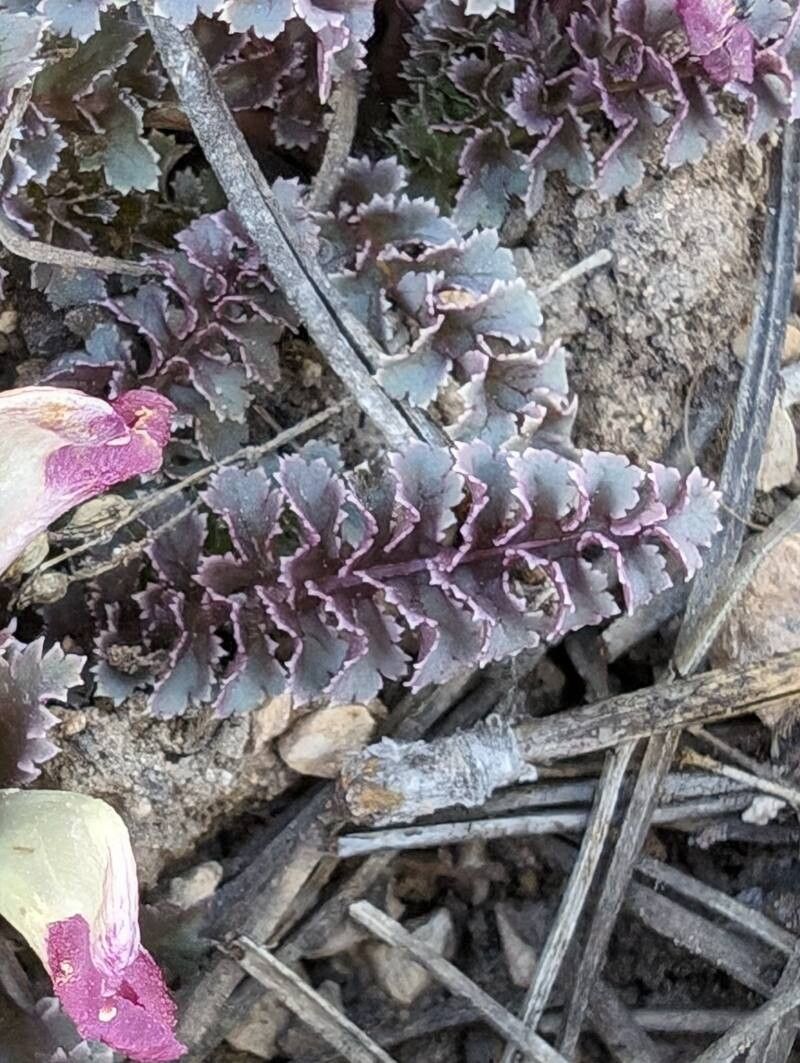
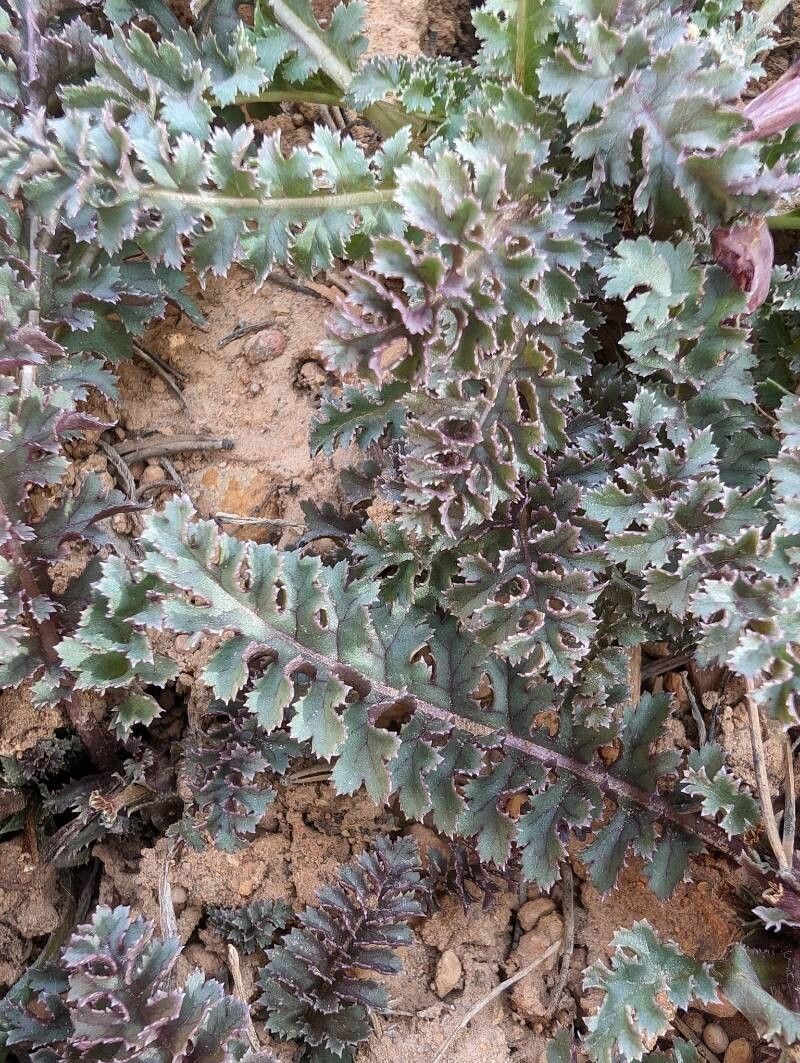
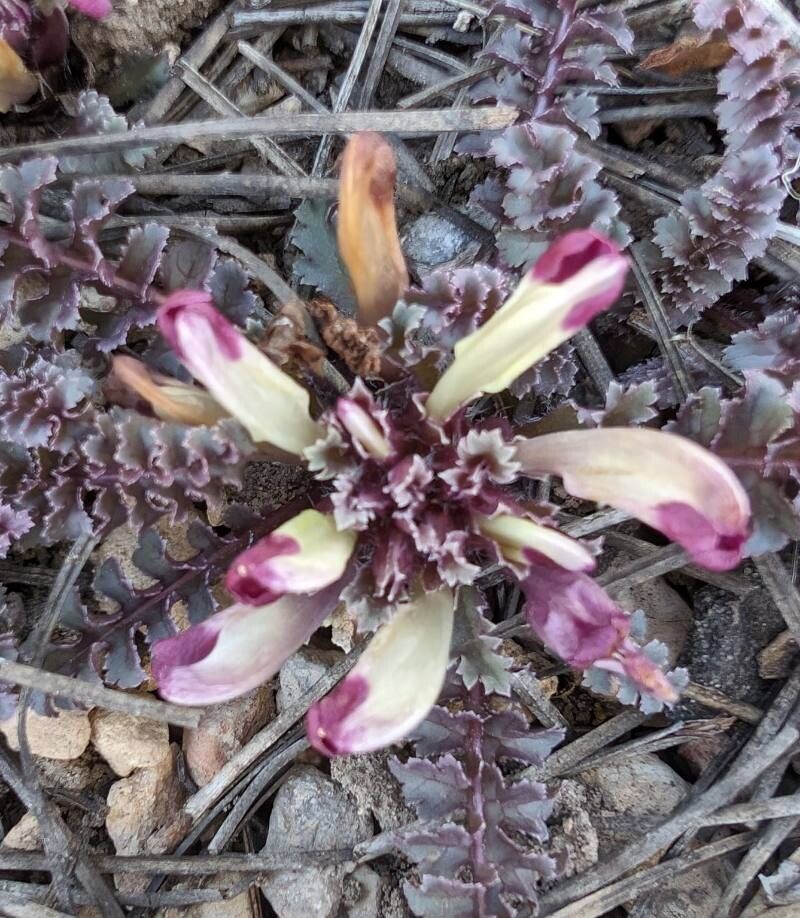
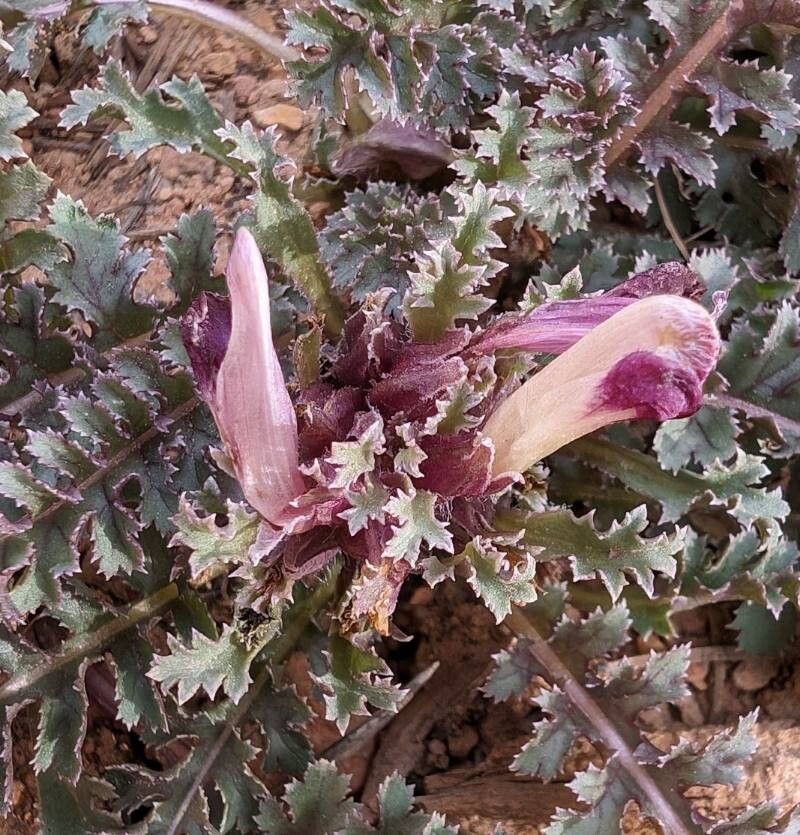
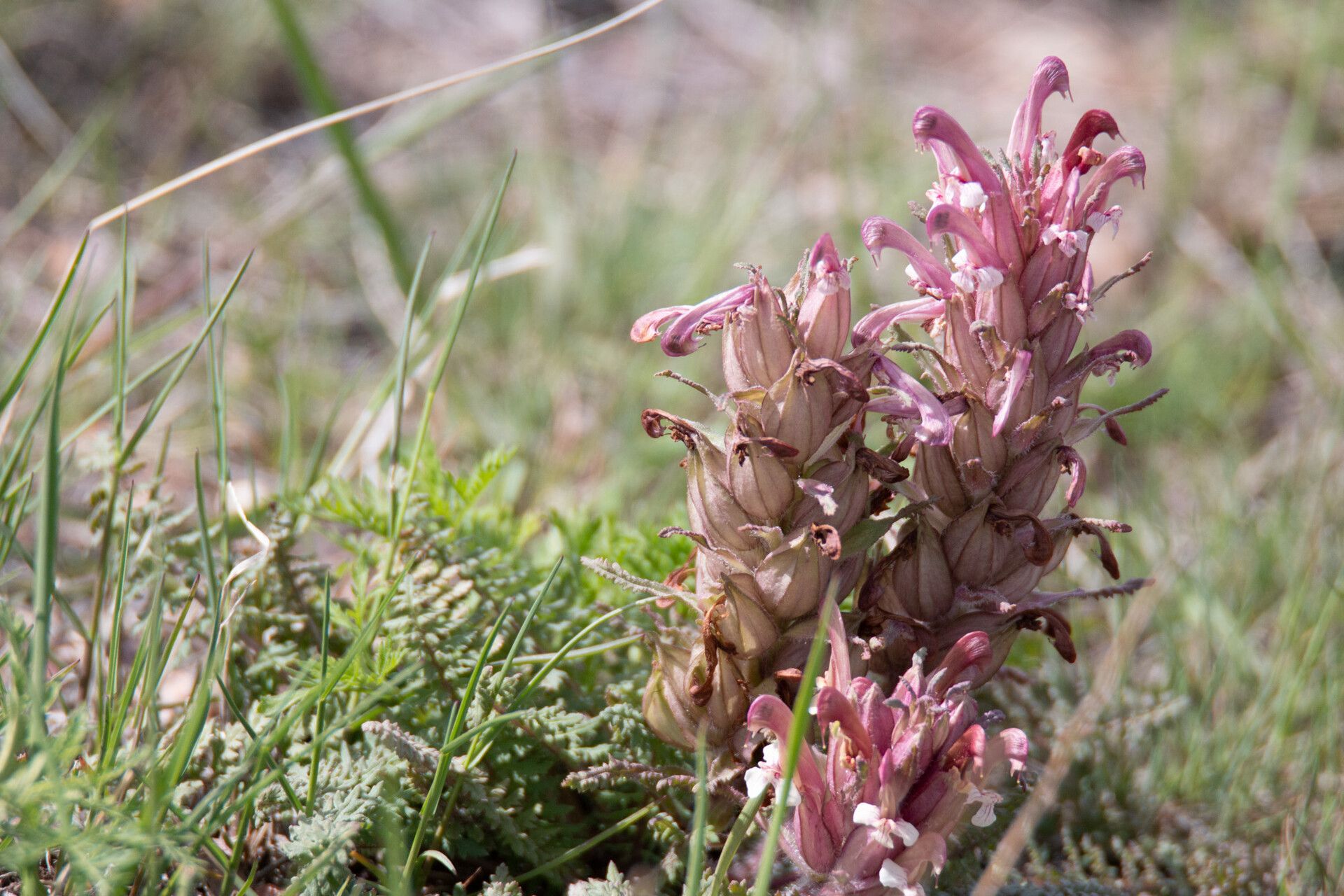
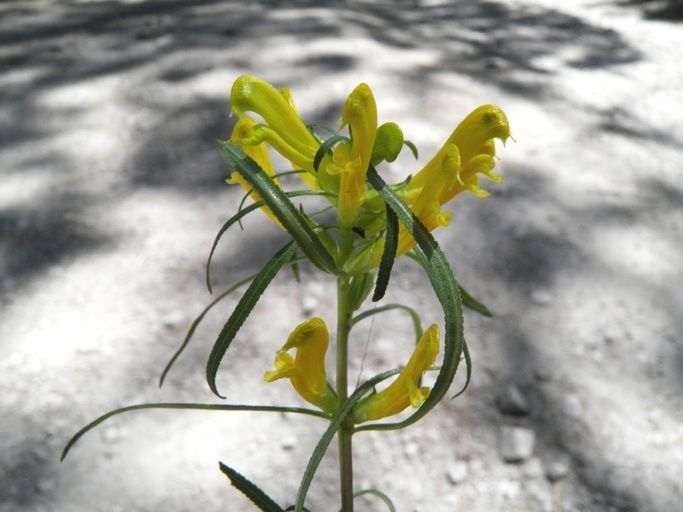
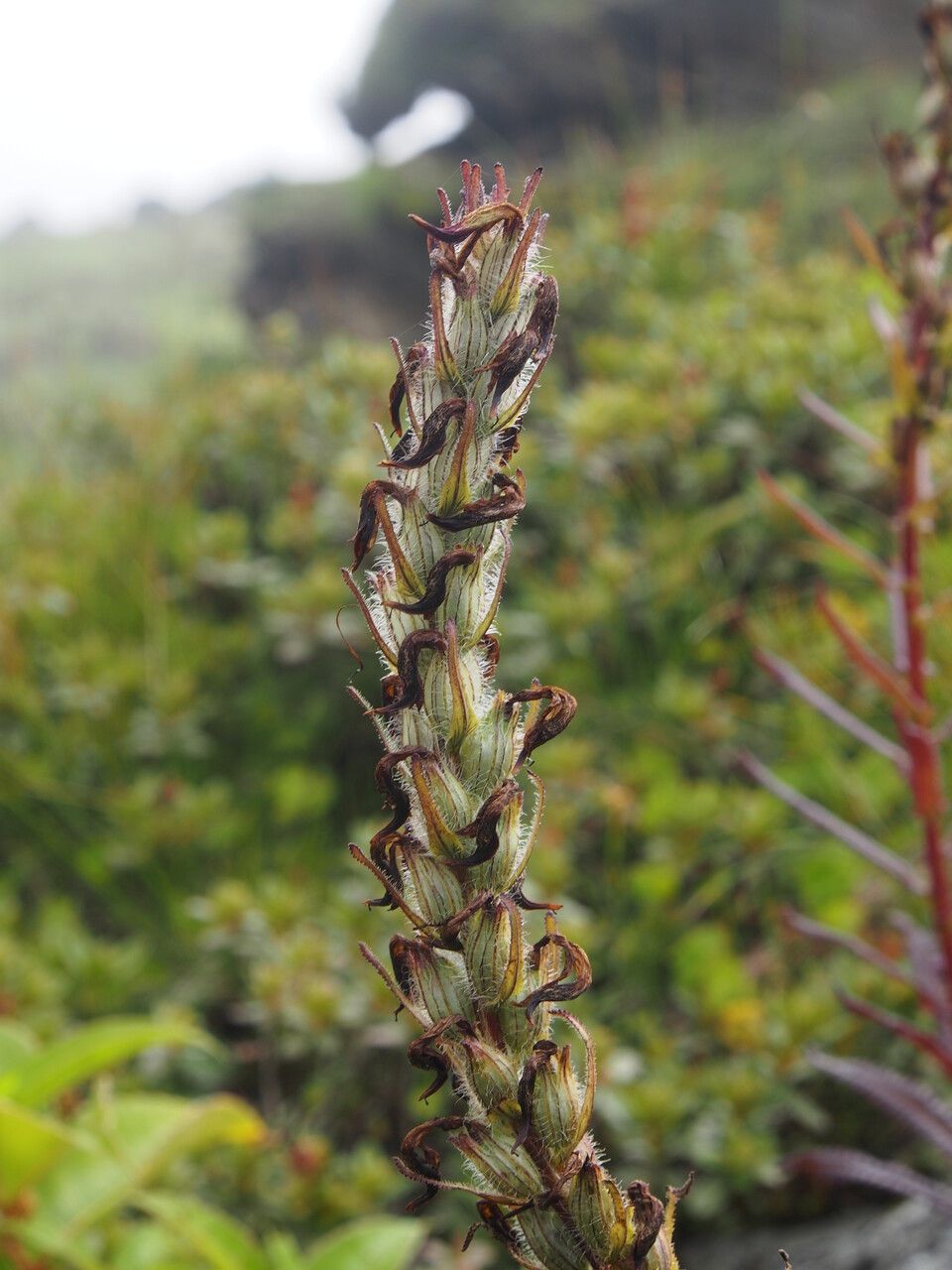
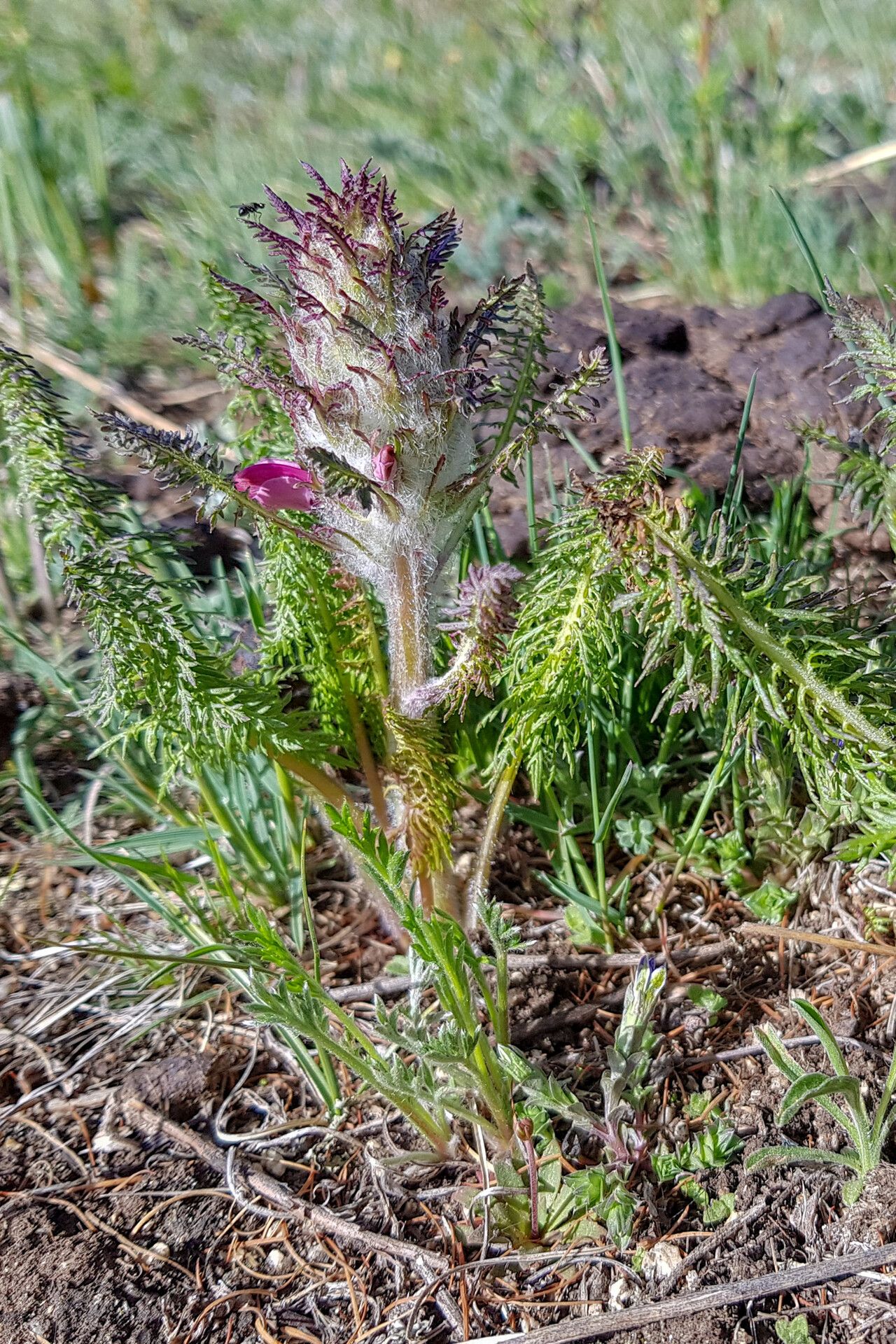
Pedicularis centranthera is a species of flowering plant in the family Orobanchaceae known by the common names dwarf lousewort and Great Basin lousewort. It is native to the western United States from eastern Oregon and California to Colorado and New Mexico, where it grows in sagebrush and other basin and plateau habitat. It is a perennial herb producing several short stems a few centimeters tall from a basal caudex. The leaves are up to 20 centimeters long, lance-shaped and divided into many overlapping toothed, wrinkled, or fringed lobes. The inflorescence is a short raceme bearing many long, protruding, club-shaped flowers. Each flower may exceed 4 centimeters in length and is white or pale purple with dark purple tips on the wide ends of its upper and lower lips. The sepals of the flowers are shorter and hairy. The fruit is a capsule around centimeter long containing seeds with netlike surfaces.
Dwarf lousewort has strong resistance to disease and is generally not easily affected by illnesses. However, it can be vulnerable to pests and diseases present in its environment. These problems are typically minor. In terms of care, this plant needs moderate maintenance. It should be pruned regularly to keep a neat appearance and support healthy growth. Fertilizing can also encourage it to flower. Dwarf lousewort is well suited for anyone with an outdoor area, such as a garden or patio, and does not demand extensive plant-care experience. It may need more attention if grown indoors.
How to keep Pedicularis Centranthera.
Light
Dwarf lousewort is naturally found in habitats like forest understories and rocky sites, where it grows under natural shade. It favors partial sun but can tolerate both full sun and full shade, showing its versatility and hardiness.
Fertilizer
For Dwarf lousewort, one fertilizer application in spring is generally sufficient, though repeated feedings can boost growth. Apply fertilizer every month to every month and a half. Fertilization improves the leaves' appearance and function, helping maintain uniform color and a healthy texture. It also promotes root development and increases nutrient uptake, supporting long-term plant health.
Pruning
Dwarf lousewort is a low-growing perennial known for its delicate leaves and attractive flowers. To promote flowering and reduce the risk of disease, prune the plant in early spring to shape it and remove any damaged stems. Make sure to use clean tools to ensure effective cuts. Regular pruning helps maintain the plant's health and vibrancy.
Botanical profile.
- Plant Type
- Herb
- Life Cycle
- Perennial
- Genus
- Pedicularis
- Family
- Orobanchaceae
- Hardiness Zone
- 4-8
- Mature Height
- 10 cm to 30 cm
- Mature Spread
- 15 cm to 25 cm
- Leaf Color
- Green, Dark Green
- Leaf Type
- Deciduous
- Flower Color
- Pink
- Flower Size
- 1.02 cm to 2.03 cm
- Bloom Time
- Early spring, Mid spring
- Planting Time
- Spring, Summer
- Harvest Time
- Late spring, Early summer
Other names.