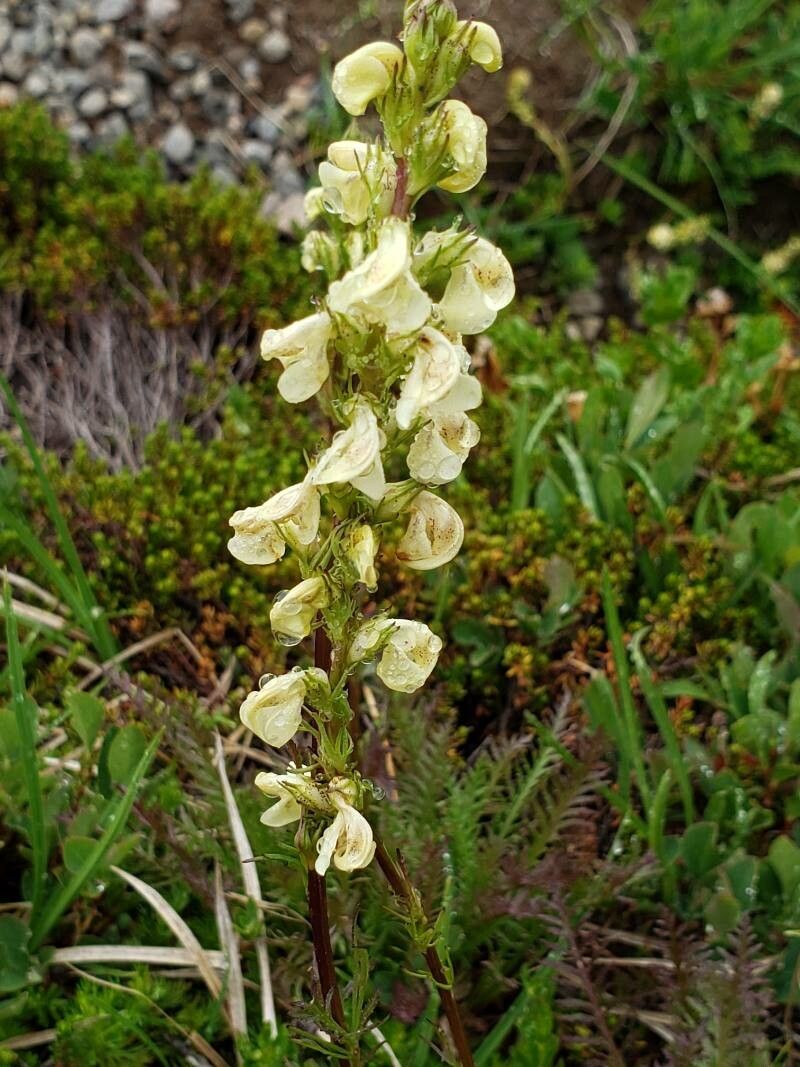
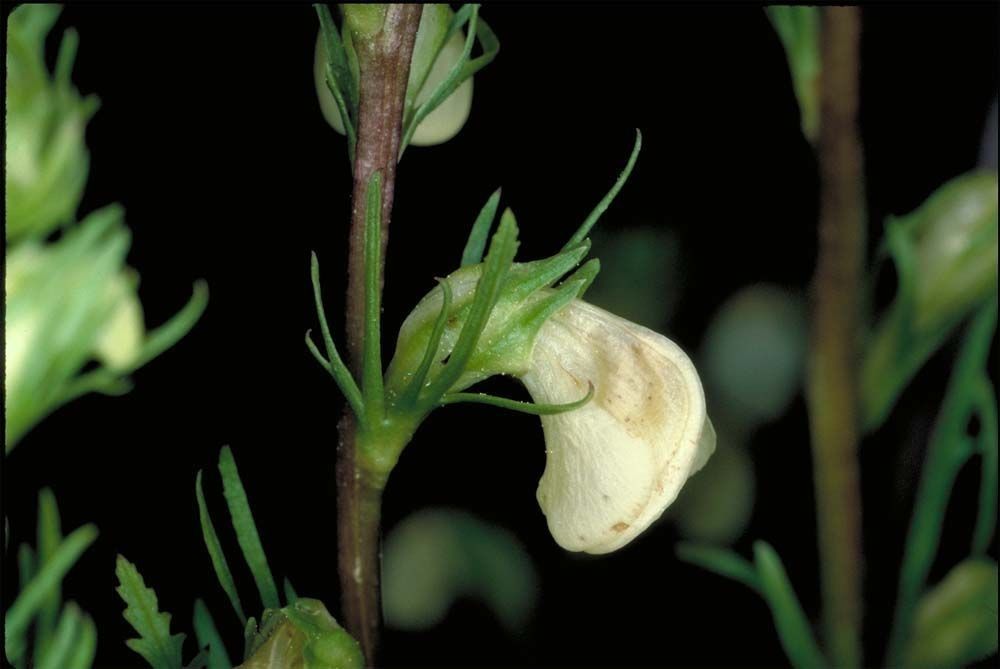
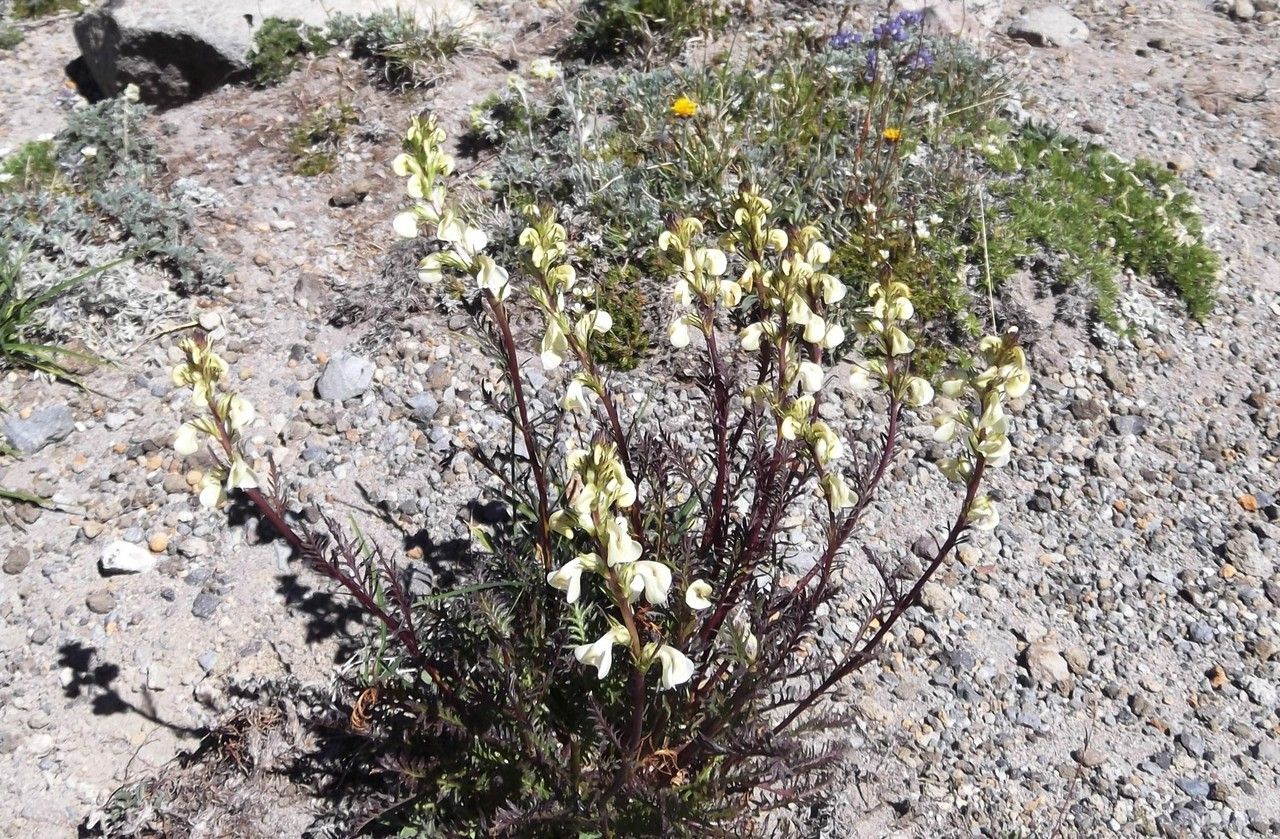
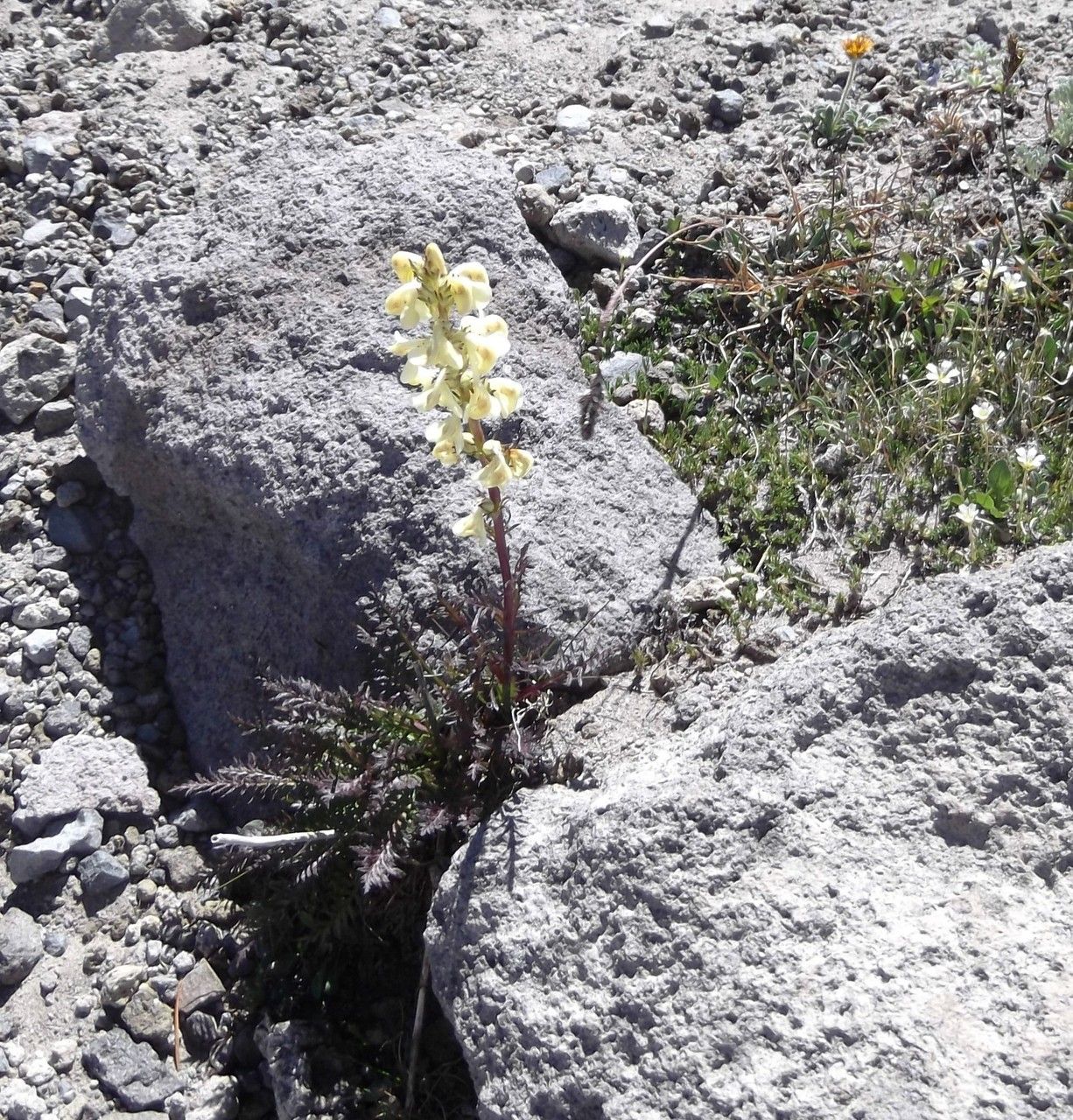
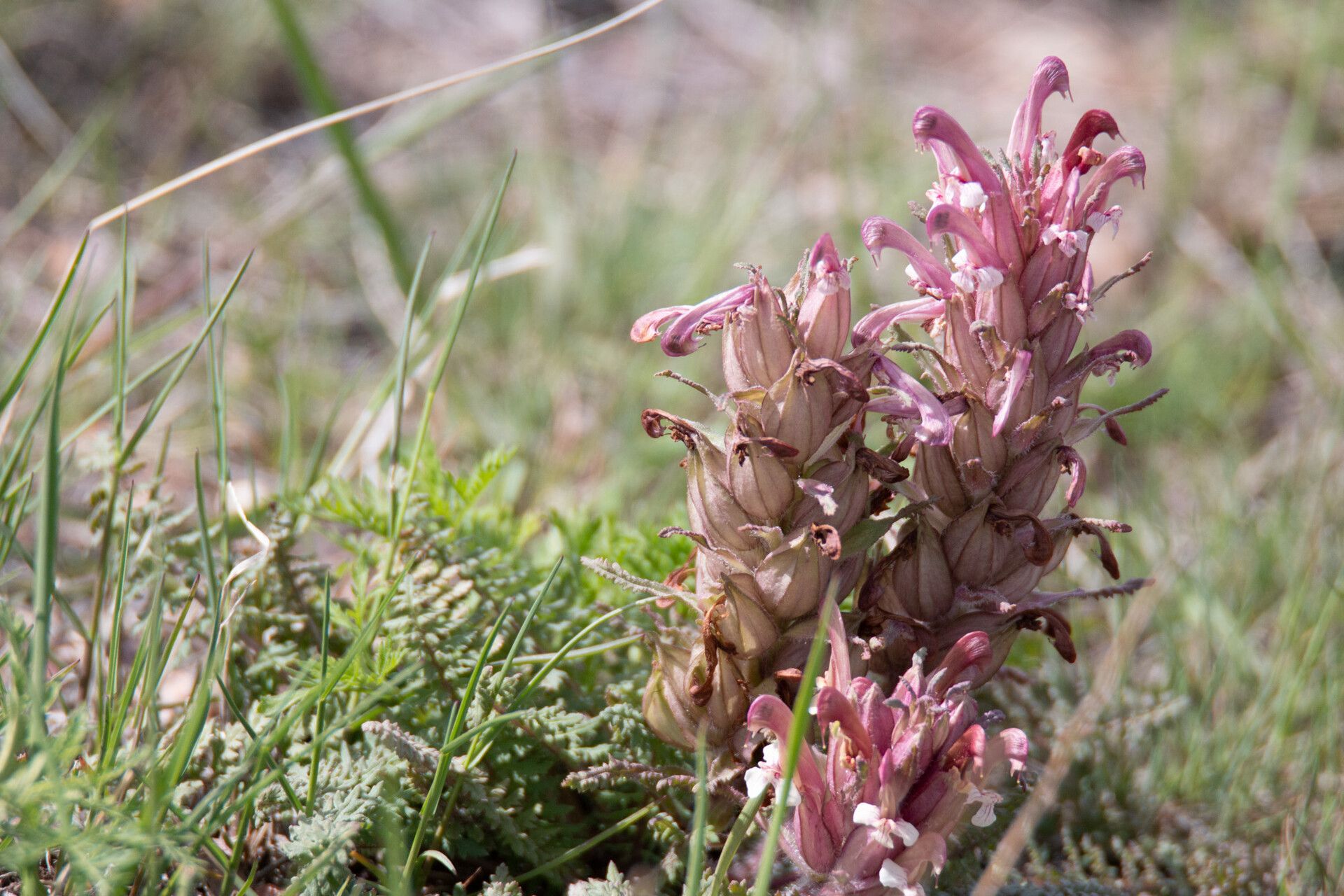
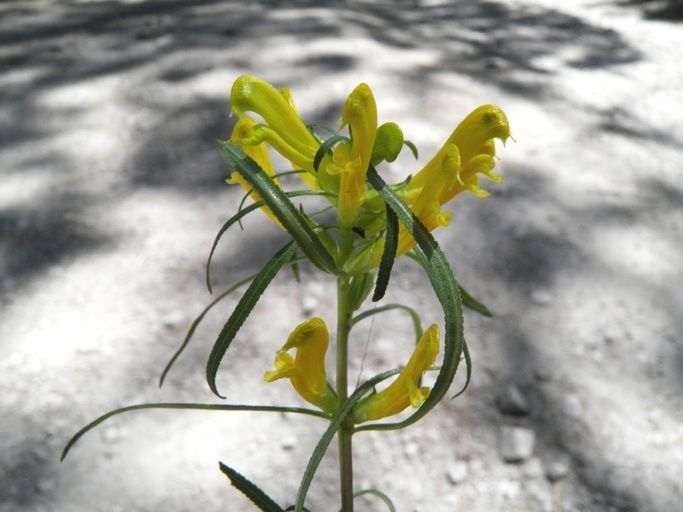
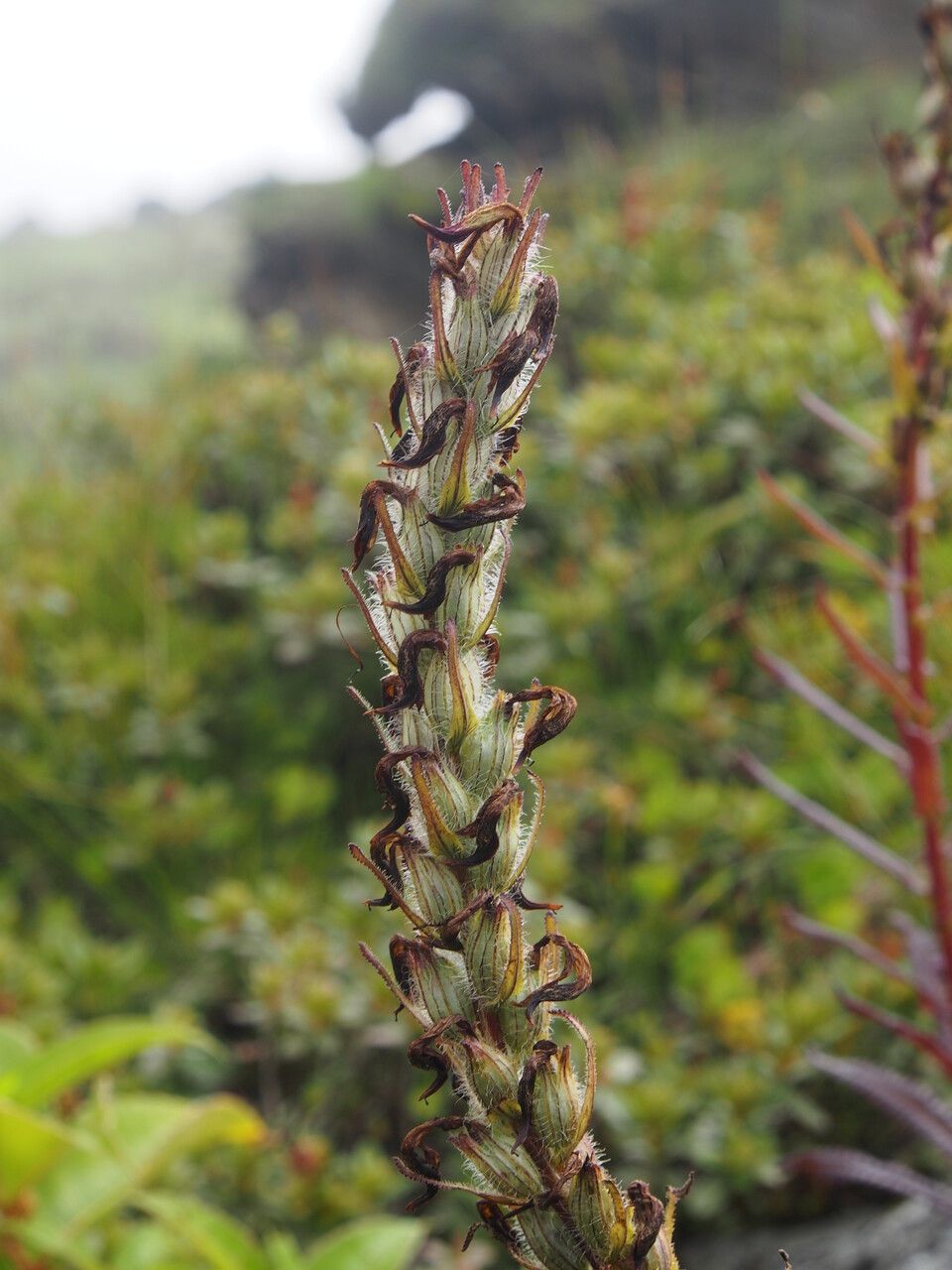
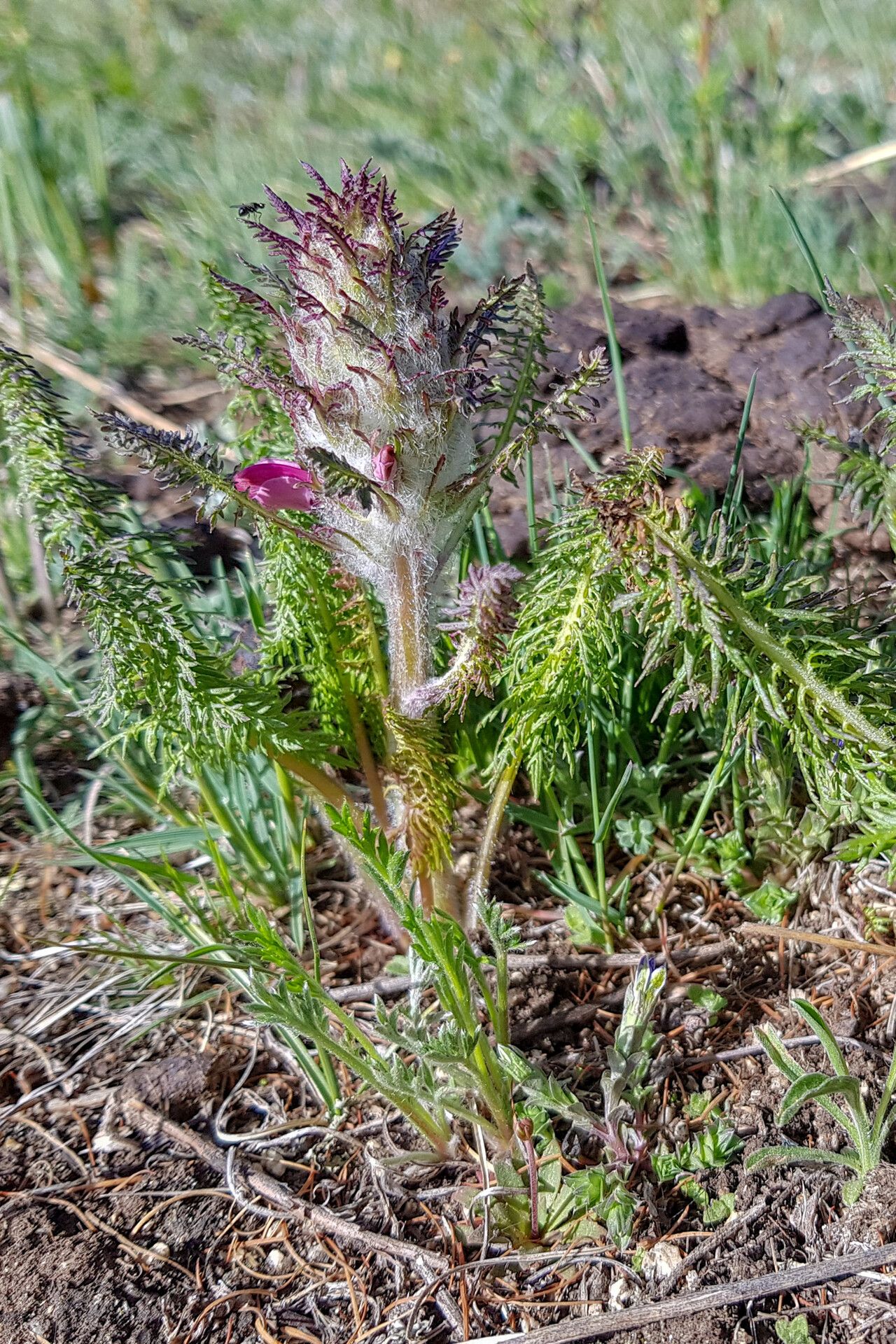
Pedicularis contorta is a species of flowering plant in the family Orobanchaceae known by the common names coiled lousewort and curved-beak lousewort. It is native to western North America, including southwestern Canada and the northwestern United States, where it grows in moist mountainous habitat, such as bogs, shady forests, and meadows. It is a perennial herb producing one or more stems up to 40 centimetres (16 in) tall from a caudex. The leaves are up to 18 centimetres (7.1 in) long, lance-shaped to oblong, and divided into many linear lobes which may be toothed or smooth-edged. The inflorescence is a raceme of flowers occupying the top of the stem. Each flower is a centimeter long or slightly longer, white to yellowish in color, and divided into a coiled or curved beak-like upper lip and a flat, three-lobed lower lip. The fruit is a capsule up to a centimeter long containing seeds with netted surfaces.
Curve-beak lousewort shows strong resistance to disease and is generally not liable to illnesses. Still, it can be affected by pests and diseases present in its environment. Such infections are generally mild. Regarding care, this plant needs a moderate level of maintenance. It should be pruned on a regular basis to preserve a neat appearance and healthy growth. Applying fertilizer can also encourage blooming. Curve-beak lousewort is appropriate for anyone who has an outdoor area, like a garden or patio, and does not demand extensive care experience. When kept indoors it may need more attention.
How to keep Pedicularis Contorta.
Light
Curve-beak lousewort is native to habitats such as forest understories or rocky areas, where it grows in natural shade. It prefers partial sun but can tolerate both full sun and full shade, showing its versatile and hardy character.
Fertilizer
For Curve-beak lousewort, the primary time to apply fertilizer is in early spring when the flowers are forming. The appropriate fertilizer promotes better blooms and helps Curve-beak lousewort produce attractive flowers. Fertilizing in early spring ensures strong flowers throughout the season and supplies energy for dormant growth phases.
Pruning
Curve-beak lousewort is known for its distinctive, curved, beak-like flowers. To maintain this plant effectively, start by pruning in early spring. Begin by trimming away any dead stems and follow up with some light shaping later in the season. Regular pruning helps improve airflow, reduces the risk of disease, and promotes healthier growth. Always use clean tools to ensure the plant's health and maintain its aesthetic appeal.
Botanical profile.
- Plant Type
- Herb
- Life Cycle
- Perennial
- Genus
- Pedicularis
- Family
- Orobanchaceae
- Hardiness Zone
- 4-8
- Mature Height
- 15 cm to 40 cm
- Mature Spread
- 10 cm to 20 cm
- Leaf Color
- Green, Dark Green
- Leaf Type
- Semi-evergreen
- Flower Color
- Pink, White
- Flower Size
- 1.02 cm to 2.03 cm
- Bloom Time
- Late spring, Early summer, Mid summer
- Planting Time
- Spring, Autumn
- Harvest Time
- Late summer, Early fall, Mid fall
Other names.
Reader questions.
What are the sunlight requirements for Curve-beak Lousewort?
Curve-beak lousewort thrives in partial sun, requiring about 3-6 hours of sunlight daily. It's native to environments like forest understories or rocky areas which naturally provide shade, although it can also tolerate full shade. It's essential to observe how sunlight moves through your garden to choose spots that provide a balance of light and shade, ensuring the plant's well-being.
How can artificial lighting support Curve-beak Lousewort's growth indoors?
When natural sunlight is insufficient, especially in winter or less sunny spaces, artificial lighting can be a vital solution for indoor plants, including Curve-beak lousewort. Optimal growth can be supported by choosing the right type of artificial light, such as LED lights, which can be customized to provide specific wavelengths. The recommended artificial light intensity varies by plant type: 30-50W/sq ft for full sun plants, 20-30W/sq ft for partial sun plants, and 10-20W/sq ft for full shade plants. The light source should be placed 12-36 inches above the plant, mimicking natural sunlight conditions for 8-12 hours per day.
What are the common symptoms of insufficient light in Curve-beak Lousewort?
Common symptoms of insufficient light in Curve-beak lousewort include smaller new leaves compared to mature ones, leggy or sparse growth, faster leaf drop, slower or no new growth, lighter-colored new leaves, and chlorosis. Sunscald, leaf curling, wilting, and leaf scorching are symptoms related to excessive sunlight. These symptoms indicate that the plant is either not receiving enough light or is getting too much direct sunlight, affecting its health and growth.
What solutions can address insufficient sunlight for Curve-beak Lousewort?
To address insufficient sunlight for Curve-beak lousewort, gradual adaptation to changing light conditions is key. For indoor plants, this can include shifting the plant to sunnier spots each week until achieving 3-6 hours of direct sunlight daily or using artificial light, like a desk or ceiling lamp for at least 8 hours a day. Outdoors, gradually moving plants to sunnier locations can help, alongside minimizing obstructions like trees by pruning. If necessary, smaller plants can be transplanted during their dormant period to a location with more sunlight and good drainage. It's important to note that parts of the plant damaged by insufficient light may not recover, but new growth will be healthy with improved light conditions.