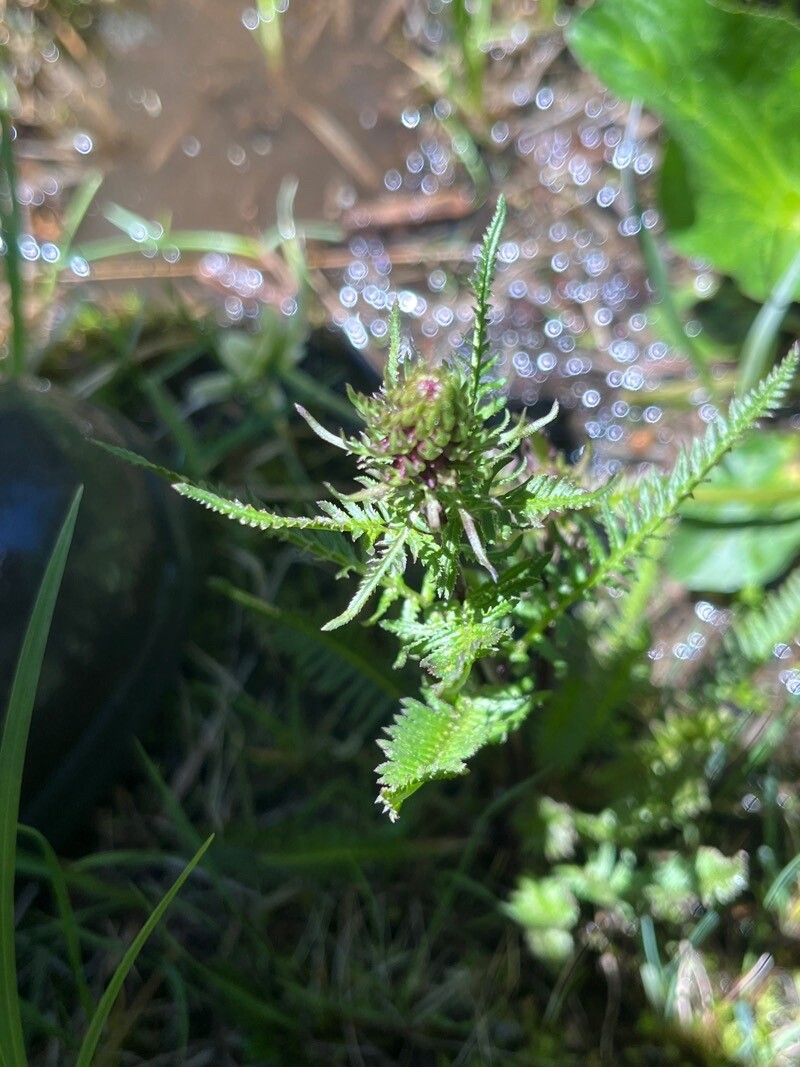
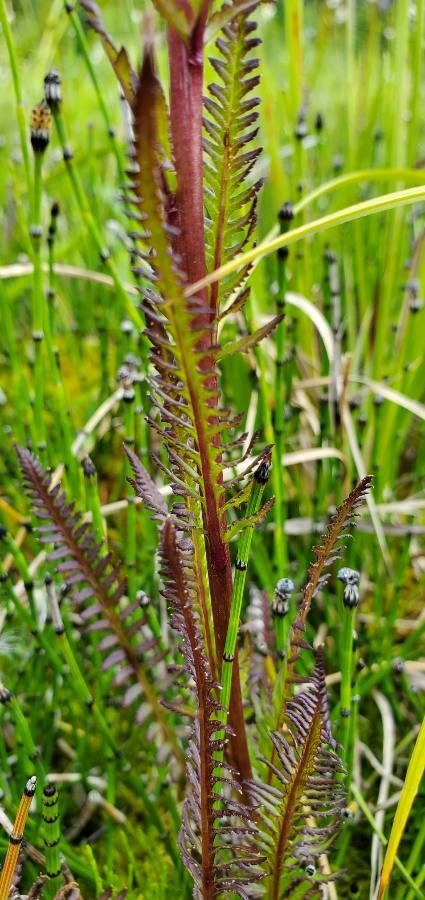
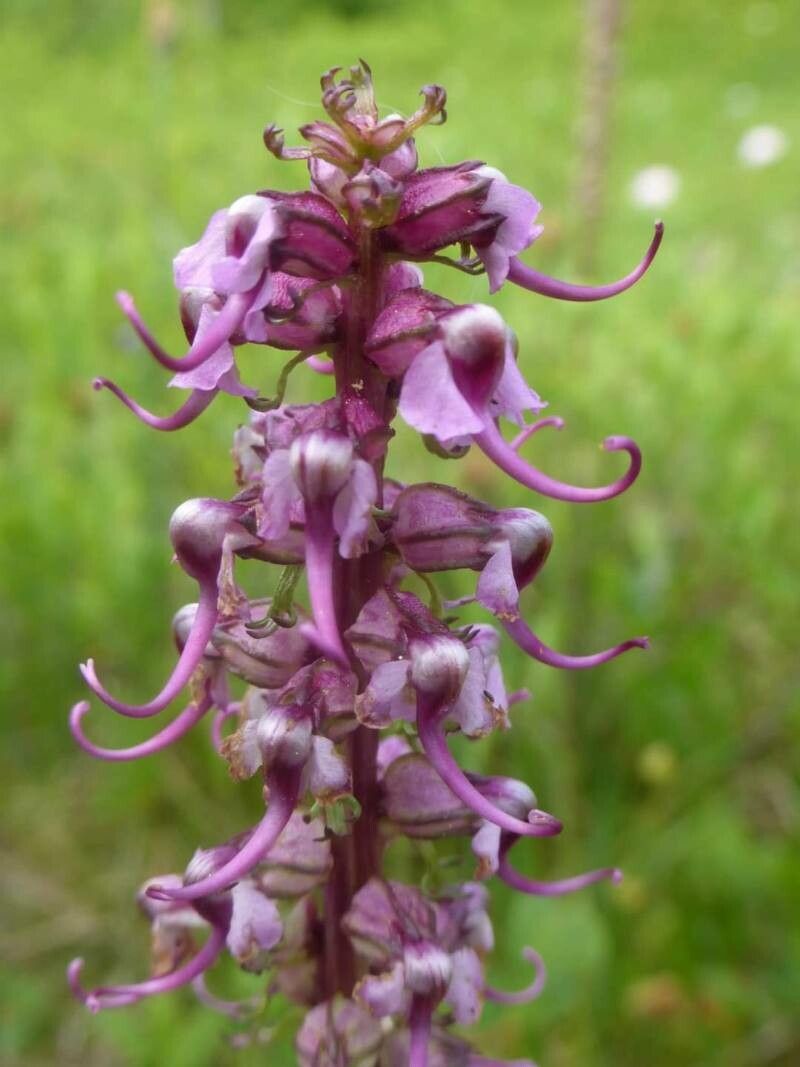
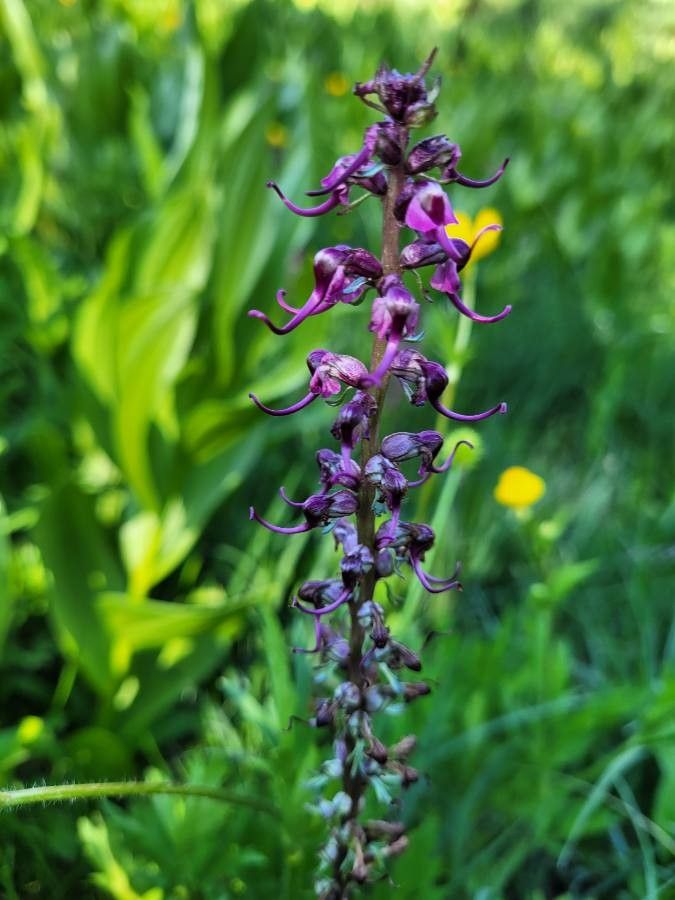
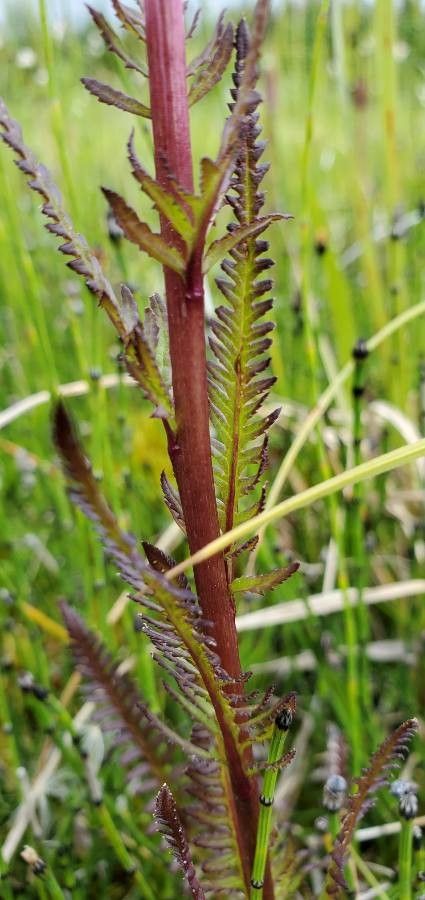
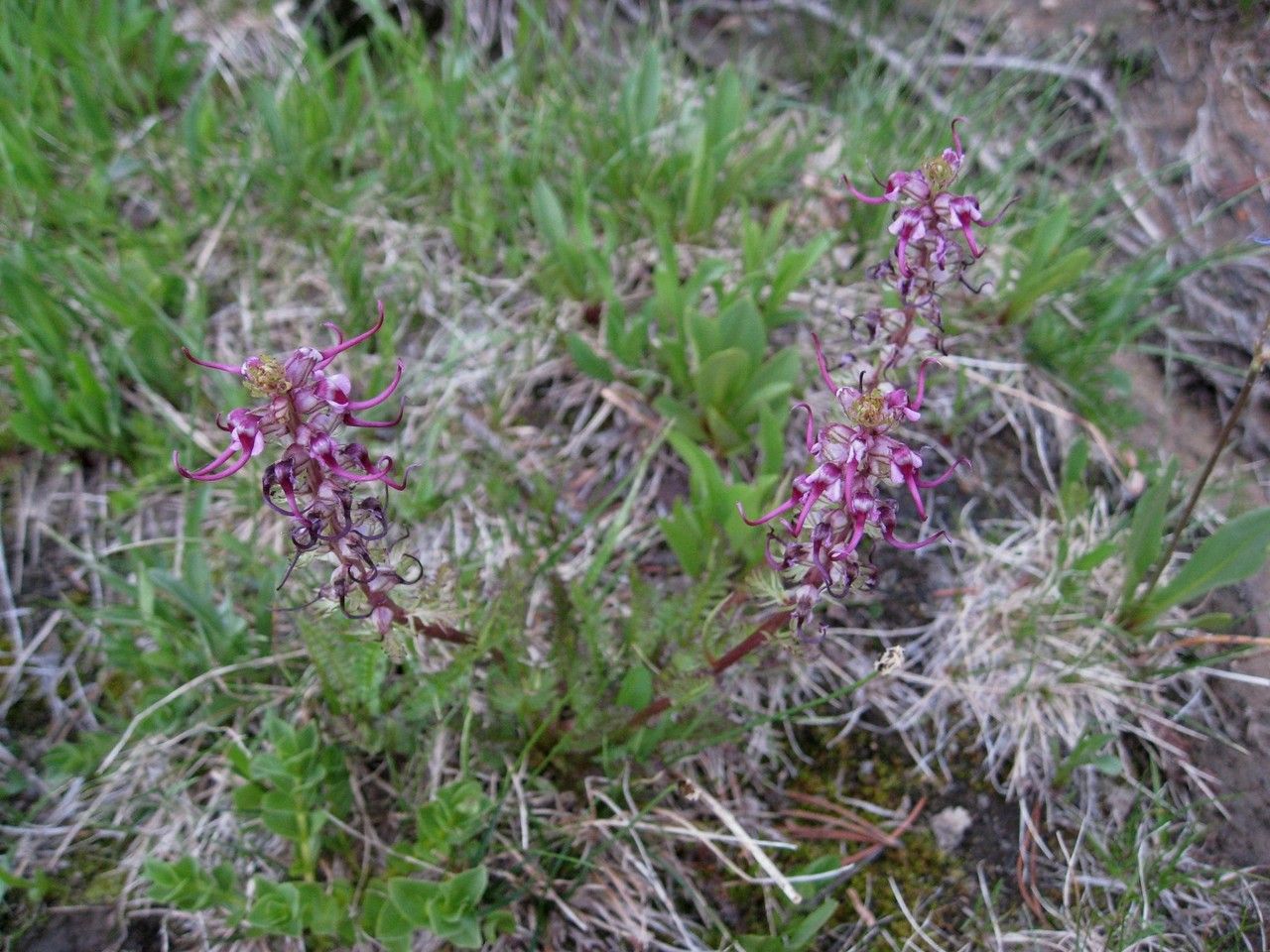
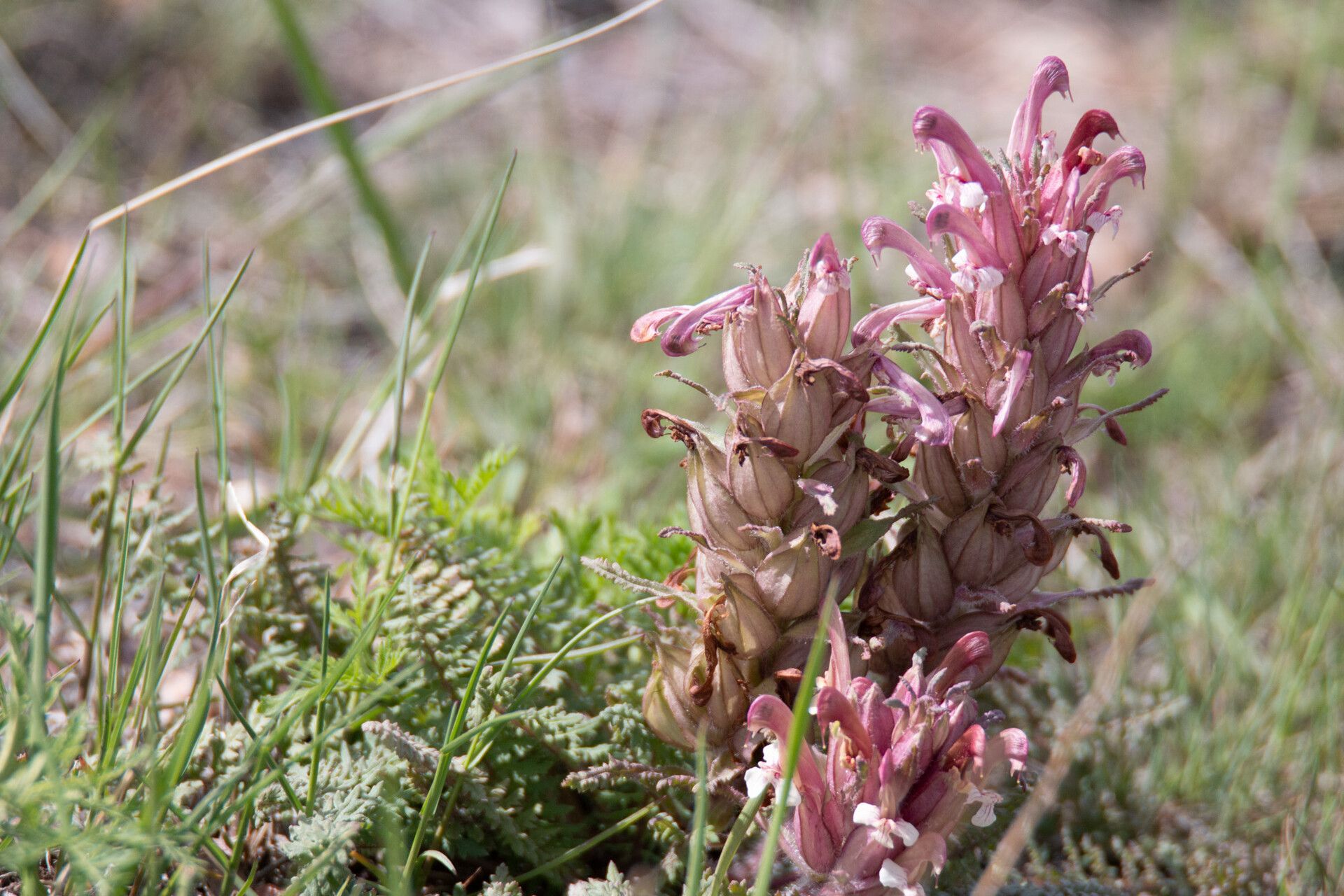
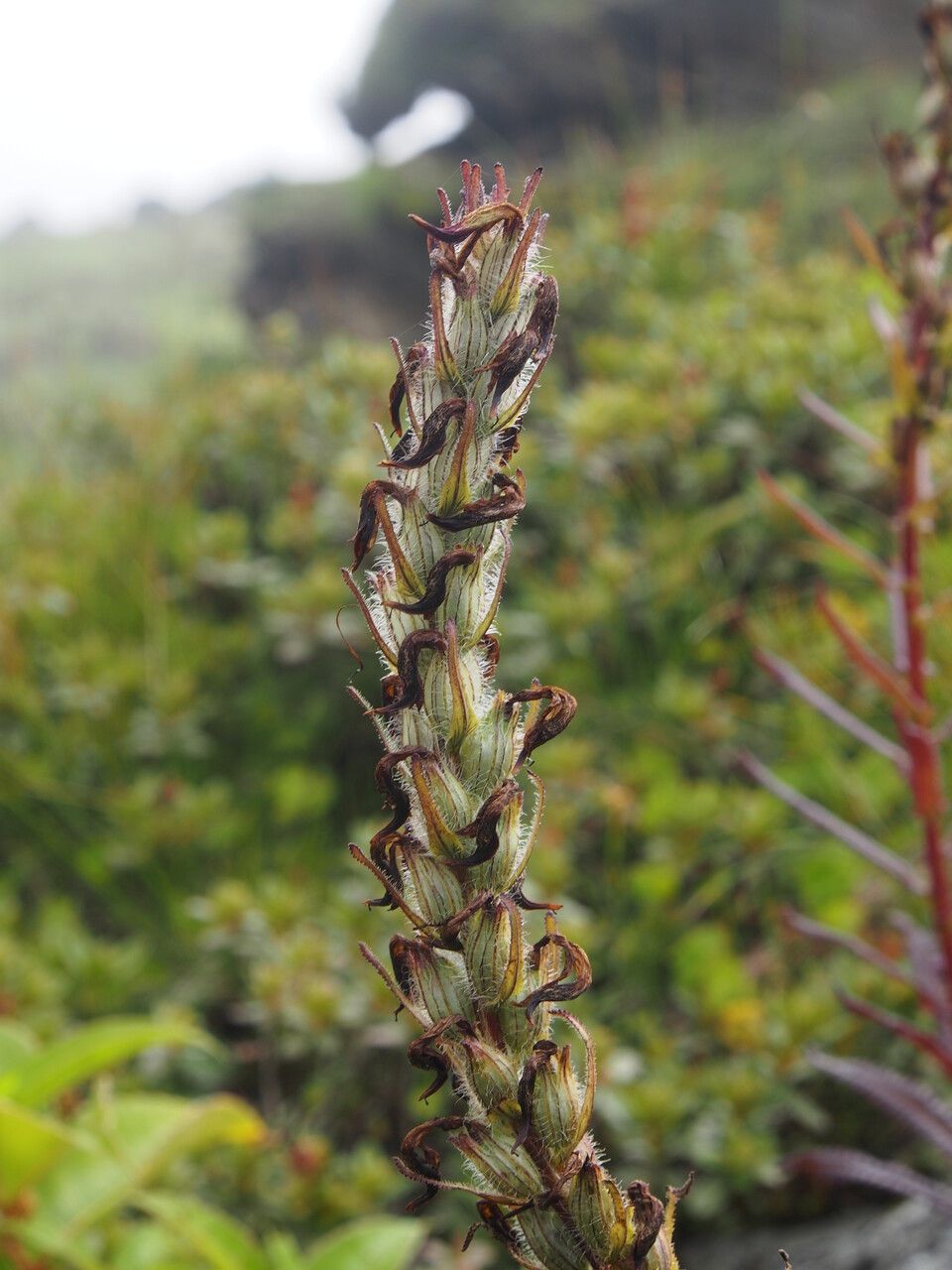
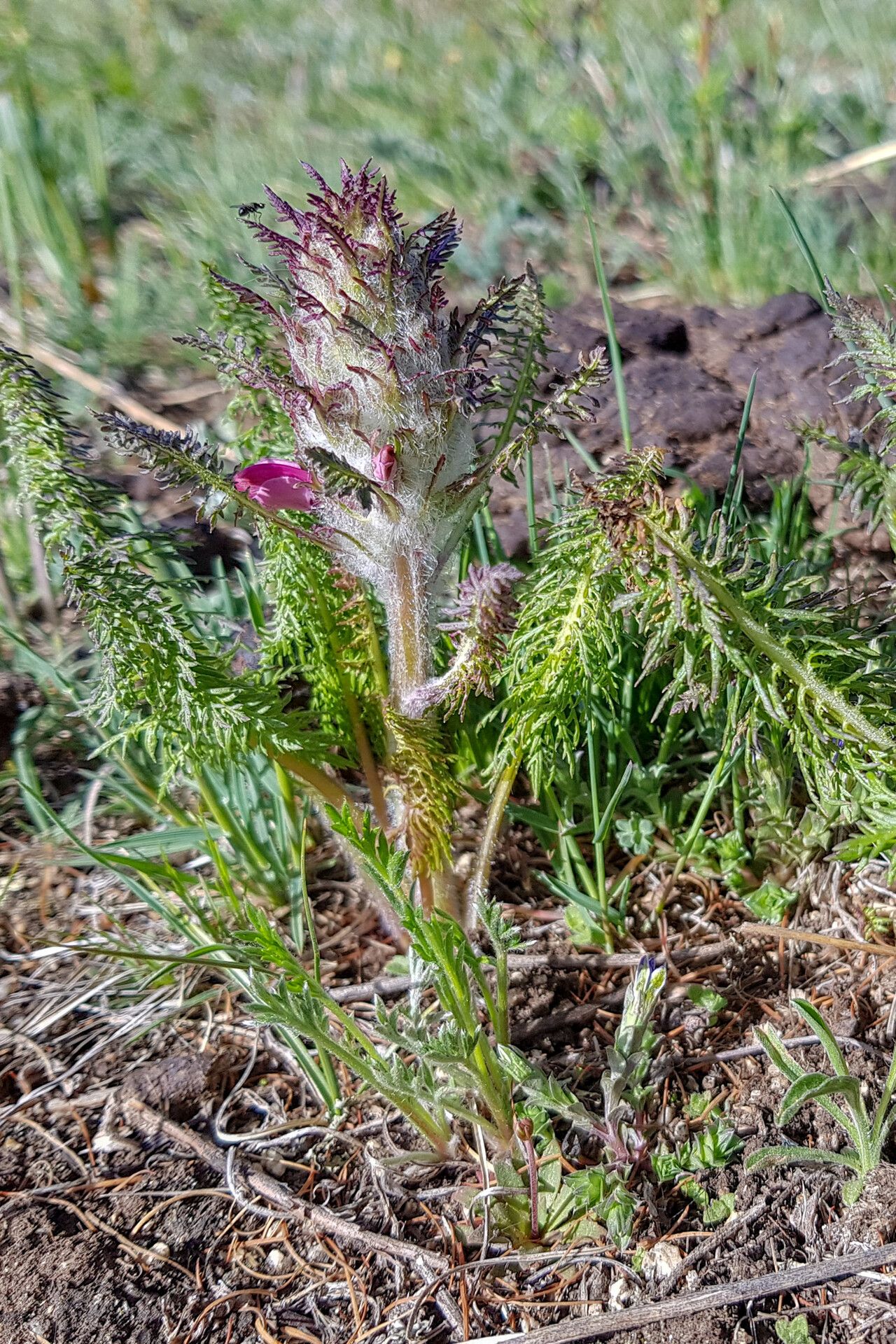
Pedicularis groenlandica is a showy flowering plant in the family Orobanchaceae which is known by the common names elephant's head, elephanthead lousewort and butterfly tongue.This erect plant can grow to a height of 80 centimetres (31 in). Its sharply-toothed fernlike leaves are located low on the stout stem. The stem is topped with a large inflorescence of bright pink to purple or white flowers. Each flower has a long, pointed beak which curves upward, superficially resembling the trunk of an elephant, and the lateral lobes of the flower resemble an elephant's ears. Flowers bloom June to August. Like other louseworts and related broomrape genera, this is a root parasite which obtains nutrients from the roots of other plants by piercing them with haustoria. This plant is found in the high mountain ranges of western North America, particularly the Cascades and High Sierra, much of Canada and Greenland. It grows in moist mountain meadows.
Elephanthead lousewort has strong disease resistance and is generally unlikely to develop illnesses. It can, however, be vulnerable to pests and diseases present in its surroundings, though such infections are typically mild. Regarding care, this plant needs moderate upkeep. It should be pruned regularly to preserve an attractive appearance and healthy growth. Fertilizing can also help encourage flowering. Elephanthead lousewort is appropriate for anyone with outdoor space, like a garden or patio, and does not demand extensive care experience. It may need more attention when grown indoors.
How to keep Pedicularis Groenlandica.
Light
Elephanthead lousewort occurs naturally in habitats such as forest understories and rocky areas, where it is found in natural shade. It prefers partial sun but can tolerate full sun or full shade, showing its adaptable and hardy nature.
Water
Elephanthead lousewort, native to moist alpine regions, thrives in consistently damp soil. To ensure healthy growth, it should be watered weekly to maintain moisture without causing waterlogging. As an herbaceous perennial, it also benefits from natural rainfall during its growth cycle.
Fertilizer
For Elephanthead lousewort, the primary time to apply fertilizer is early spring, when flowers are forming. The appropriate fertilizer promotes better blooms and helps Elephanthead lousewort produce attractive flowers. Fertilizing in early spring ensures excellent flowers during the season and supplies energy for dormant growth phases.
Pruning
The Elephanthead Lousewort, known for its dense clusters of pink flowers, thrives in moist alpine environments. To encourage growth and improve airflow, it's best to prune this plant in early spring. Regularly deadheading the flowers not only prevents self-seeding but also boosts blooming. Additionally, pruning helps maintain the plant's vigor and reduces the risk of fungal infections by enhancing air circulation.
Botanical profile.
- Plant Type
- Herb
- Life Cycle
- Perennial
- Genus
- Pedicularis
- Family
- Orobanchaceae
- Hardiness Zone
- 3-7
- Mature Height
- 20 cm to 76 cm
- Mature Spread
- 5 cm to 15 cm
- Leaf Color
- Dark Green
- Leaf Type
- Semi-evergreen
- Flower Color
- Pink
- Flower Size
- 1.02 cm to 2.03 cm
- Bloom Time
- Early summer, Mid summer
- Planting Time
- Spring, Summer
- Harvest Time
- Late summer, Early fall
- Native Area
- Denmark
Other names.