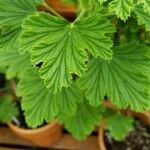
Pelargonium citronellum
Lemon-scent pelargonium
Description
Source: leafsnapPelargonium citronellum, commonly known as the lemon-scented geranium, is a perennial plant in the Geraniaceae family. Native to South Africa, it is widely cultivated for its fragrant leaves and attractive flowers. This plant grows up to 1 meter in height and has a bushy appearance with deeply lobed green leaves. During the summer months, it produces small pink or white flowers in clusters, which attract bees, butterflies, and other pollinators. Despite the charming flowers, it is primarily grown for its aromatic leaves, which release a strong lemon scent when crushed or rubbed. Pelargonium citronellum has various uses. It serves as an ornamental plant in gardens, containers, patios, or balconies. It is also valued for its insect-repelling properties due to its high content of citronella oil, which naturally deters mosquitoes and other insects. Additionally, this plant has medicinal applications. It can help treat respiratory infections such as bronchitis thanks to its antibacterial properties. When applied topically, it can soothe skin irritations like insect bites due to its anti-inflammatory properties. Overall, Pelargonium citronellum is an easy-to-grow plant with both ornamental and medicinal benefits, making it a popular choice among gardeners worldwide.
Care Guide
💧 Water Every 7 days
Pelargonium citronellum thrives in semi-arid environments, requiring minimal water and demonstrating excellent drought resistance. Watering once a week is sufficient, and it is important to avoid overwatering. When grown outdoors, this plant prefers well-draining soil to prevent root rot during rainy periods.
☀️ Light Partial sun
citronella pelargonium is native to habitats with dappled light, for example the understory of forests or rocky sites that offer natural shade. It prefers partial sun but is also able to tolerate full sun.
What are the sun requirements for Pelargonium citronellum?
Pelargonium citronellum, also known by its botanical name Pelargonium citronellum, thrives in conditions that meet its sunlight requirements. Full sun exposure, characterized by receiving above 6 hours of sunlight per day, is ideal for promoting its growth and health. Alternatively, it can also do well in partial sun, which means about 3-6 hours of sunlight daily. It's important to observe how sunlight moves through your garden to select the best spots that ensure a perfect balance of light and shade, guaranteeing the happiness of your Pelargonium citronellum.
🌡️ Temperature 20–37.8°C
Citronella pelargonium prefers warm conditions and needs elevated temperatures during the growing season to support growth and metabolic activity. It does well with plenty of sunlight, proper moisture, and good airflow. However, it can be damaged by very low temperatures and by overwatering. It's also important to maintain balance and avoid excessively high heat or overly dry conditions.
What is Pelargonium citronellum?
Pelargonium citronellum, also known by its botanical name Pelargonium citronellum, does not have specific information provided regarding its essentials, symptoms, or additional details in the provided data.
💨 Humidity normal (40-60%)
This plant will thrive in moderate humidity, which is probably the level in your home. However, misting it a few times a week can be very beneficial. Make sure the room has good ventilation.
🪴 Soil 0-0
🌱 Fertilizer
For citronella pelargonium, light applications of fertilizer once or twice a year during the growing season are enough. Avoid fertilizing in winter and in the summer when the plant is dormant. Use less fertilizer for plants that have been repotted, and wait a couple of months after repotting before applying fertilizer. Fertilizing helps maintain healthy growth and encourages blooms.
🪴 Pot & Repot
✂️ Pruning
To help Pelargonium citronellum thrive, prune it in early spring. Trim the stems back by one-third to encourage a bushier growth. Remove any dead branches to promote healthy new growth, and regularly deadhead spent flowers to encourage more blooms. Pruning also helps maintain the plant's shape and prevents it from becoming leggy. Always use clean, sharp tools to minimize stress and reduce the risk of disease.
🌿 Propagating
🐛 Diseases & pets
☠️ Toxicity
Characteristics
- Plant Type
- Herb, Succulent
- Life Cycle
- Perennial
- Genus
- Pelargonium
- Family
- Geraniaceae
- Hardiness Zone
- 9-11
- Mature Height
- 61 cm to 91 cm
- Mature Spread
- 46 cm to 61 cm
- Leaf Color
- Light Green, Yellow Green
- Leaf Type
- Evergreen
- Flower Color
- Pink
- Flower Size
- 2.03 cm to 3.05 cm
- Bloom Time
- All year round
- Planting Time
- Spring, Summer, Autumn
- Harvest Time
- All year round
- Native Area
- South Africa