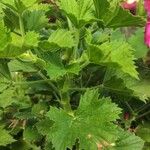
Pelargonium grandiflorum
اژدر · Large-flower pelargonium · Regal Geranium
Description
Source: leafsnapPelargonium grandiflorum, commonly known as the Large-Flowered Geranium, is a species of flowering plant in the Geraniaceae family. Native to South Africa, it is widely cultivated as an ornamental plant in gardens and parks around the world. This plant has a bushy growth habit with succulent stems that can reach up to 60 cm in height. The leaves are deeply lobed, velvety in texture, and have serrated edges. Its large, showy flowers come in shades of pink, red, or white, often adorned with darker markings on the petals. The Large-Flowered Geranium prefers full sun or partial shade and well-drained soil that is rich in organic matter. It can tolerate drought conditions but requires regular watering during hot summer months. In addition to its ornamental value, the Large-Flowered Geranium has medicinal uses. Its essential oils have antibacterial properties and have been used to treat respiratory infections such as bronchitis and asthma. Overall, Pelargonium grandiflorum is an excellent addition to any garden. Its beautiful flowers bloom throughout the summer months, and its ease of cultivation makes it perfect for novice gardeners looking for a low-maintenance plant.
Care Guide
💧 Water Every 7 days
Pelargonium grandiflorum is well-suited to arid regions due to its strong drought tolerance. It prefers to be watered infrequently, about once every three weeks. As an evergreen plant, it keeps its leaves year-round, which means it needs consistent moisture levels even during dormancy to maintain its vibrant foliage.
☀️ Light Partial sun
English storksbill occurs naturally in habitats like forest understories or rocky areas, where it receives natural shade. It prefers partial sun but can also tolerate full sun or full shade, showing that it is versatile and hardy.
What are the sunlight requirements for Pelargonium grandiflorum?
Pelargonium grandiflorum, also known by its botanical name Pelargonium grandiflorum, thrives in conditions where it can receive ample sunlight. It requires full sun, which means it needs more than 6 hours of sunlight daily, to flourish. However, it can also tolerate partial sun, about 3-6 hours of sunlight each day. It's important to watch how sunlight moves through your garden to ensure you choose locations that provide the perfect balance of light and shade, ensuring your Pelargonium grandiflorum's happiness and health.
🌡️ Temperature 20–37.8°C
English storksbill is quite adaptable to temperature, able to withstand higher heat and greater temperature fluctuations. In hot conditions, attention should be paid to watering and providing appropriate shade to prevent sunburn. On the other hand, English storksbill is relatively intolerant of low temperatures; while it can handle some cold, extremely low temperatures may cause frost damage.
💨 Humidity
🪴 Soil 6-8
🌱 Fertilizer Every 30 days
The best time to fertilize an English storksbill is in early spring, as it is coming out of dormancy and beginning active growth. Fertilizing supplies essential nutrients for healthy growth. Although English storksbill has relatively low fertilizer needs, an annual application can improve its survival and encourage better, longer-lasting flowers.
🪴 Pot & Repot Every 12 months
✂️ Pruning
Pelargonium grandiflorum is known for its vibrant, large blossoms. To encourage growth and blooming, prune the plant from early to late spring. Remove any dead stems and trim back any leggy growth to improve the plant's shape and air circulation. Be cautious not to prune heavily during the blooming period, as this can reduce the number of flowers. Regular pruning helps maintain the plant's health and encourages abundant flowering.
🌿 Propagating
🐛 Diseases & pets
☠️ Toxicity
Characteristics
- Plant Type
- Herb
- Life Cycle
- Perennial
- Genus
- Pelargonium
- Family
- Geraniaceae
- Hardiness Zone
- 10-11
- Mature Height
- 30 cm
- Mature Spread
- 20 cm
- Leaf Color
- Green, Dark Green
- Leaf Type
- Semi-evergreen
- Flower Color
- Pink, White, Red, Purple
- Flower Size
- 5.08 cm to 7.62 cm
- Bloom Time
- All year round
- Planting Time
- Spring, Summer
- Harvest Time
- All year round
- Native Area
- South Africa