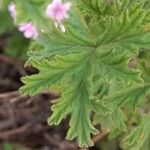
Pelargonium graveolens
عطر چای · شمعدانی عطری، · Sweet-scented Geranium · Citronella · Rose-scented pelargonium
Description
Source: leafsnapPelargonium graveolens, commonly known as rose-scented geranium, is a perennial plant native to South Africa. Belonging to the Geraniaceae family, it is widely cultivated for its fragrant leaves and attractive flowers. The plant can grow up to 1 meter in height and has a bushy habit with deeply lobed, green leaves that have a slightly velvety texture. The flowers of Pelargonium graveolens are either pink or white and feature five symmetrical petals. They bloom from spring through fall, attracting bees, butterflies, and other pollinators. The essential oil extracted from the leaves of Pelargonium graveolens is highly valued for its therapeutic properties, including anti-inflammatory, antifungal, and antibacterial effects. This oil is commonly used in aromatherapy for relaxation due to its calming scent. Pelargonium graveolens can be grown both indoors and outdoors, provided it receives adequate sunlight—at least 6 hours per day—and is planted in well-draining soil. The plant requires moderate watering during its growing season but should be allowed to dry out between watering sessions. Overall, Pelargonium graveolens is an attractive ornamental plant that also boasts medicinal properties, making it an excellent addition to any garden or home collection.
💡 Rose geranium is a source of pride for the African people and is also quite popular in Eurasia. Germany, Spain, and Hungary place significant importance on the cultivation and breeding of rose geraniums. In fact, Hungary has even declared the vibrant and colorful rose geranium as its national flower.
🌳 Rose geranium is well known for its fragrant essential oils, but its applications also reach into holistic practices. Its leaves have been woven into dream pillows to promote sleep, while its oil is incorporated into balms for spiritual uplift. Rose geranium is likewise important in perfumery and cosmetology, where it acts as a stabilizing component. Additionally, its antiseptic qualities have led to its use for cleaning surfaces and freshening the air.
🎭 A chance encounter brings happiness; an arranged meeting brings affection.
Care Guide
💧 Water Every 7 days
The rose geranium thrives in subtropical conditions and possesses a moderate tolerance for drought. It requires consistent moisture without being waterlogged, so it should be watered every 1 to 2 weeks. This plant prefers well-draining soil and benefits from occasional deep watering, which helps to mimic the precipitation patterns of a Mediterranean climate.
When should I water my Rose Geranium?
Watering your Rose Geranium properly is key to its health, contributing to vibrant growth and flower production. Check the soil's moisture; if the top 1 to 2 inches feel dry, it's time to water. Wilted, lackluster leaves or changes in leaf color can also indicate the need for water. During warm temperatures and high sunlight exposure, Rose Geraniums' water requirements increase. Be cautious of over-watering to avoid root diseases and under-watering which can cause wilting or plant death.
How should I water my Rose Geranium?
Watering your Rose Geranium effectively involves a few key techniques. Bottom-watering helps ensure the roots are well-hydrated without over-saturating the soil surface, minimizing disease risk. Use a watering can with a narrow spout to direct water to the base and avoid wetting the leaves. A moisture meter can help gauge if watering is needed, preventing both over and under-watering. Ensure the watering frequency allows the soil to dry out between sessions to promote healthy plant growth.
How much water does Rose Geranium really need?
The Rose Geranium, adapted to arid conditions, does best with watering that mimics natural rainfall, deeply soaking the soil when necessary rather than frequent light sprinkles. The amount depends on various factors such as pot size and environmental conditions. Well-hydrated plants will show glossy, firm leaves and white or light beige roots. Over or underwatering can lead to several health issues, so it’s crucial to find a balance that keeps the soil moist without waterlogging.
What kind of water is best for Rose Geranium?
Rainwater, distilled, or filtered tap water is preferable for Rose Geranium due to its sensitivity to minerals and chemicals present in hard tap water. To minimize chlorine and fluoride effects which can harm the plant, let tap water sit for 24 hours before use. Room temperature water is ideal to prevent shock. Maintaining a neutral pH for the water ensures the plant's health and longevity.
How do Rose Geranium's watering needs change with the seasons?
Seasonal changes affect how much water Rose Geranium needs. In spring, increase watering as the plant exits dormancy. During the hot summer months, ensure the soil has dried out before watering again, adjusting for high evaporation rates. Reduce watering frequency in autumn as growth slows and further reduce in winter during dormancy, watering only when the soil is dry. Seasonal moisture and temperature variations necessitate adjustments to watering routines to maintain plant health.
☀️ Light Full sun
Rose geranium requires ample light each day, reflecting conditions in its natural habitat. Light is essential for its vigorous growth and for producing flowers. In locations with limited light it can persist, though its growth may be reduced. Very strong light is typically tolerated, but it can still put the plant under stress.
What are the sunlight requirements for rose geranium?
Rose geranium thrives in environments that mimic its natural preference for considerable daily light, which is crucial for its healthy growth and flowering. It requires full sun, defined as above 6 hours of sunlight daily, to flourish. However, it can survive in partial sun, about 3-6 hours of sunlight, though its growth may be compromised. It's important to monitor the movement of sunlight through your garden to find spots that provide the ideal balance for your plants.
Can rose geranium grow in artificial lighting?
Yes, rose geranium can grow under artificial lighting, which becomes essential when natural sunlight is insufficient, such as in winter or in areas with little natural light. Using artificial lights, like LED lights, can promote faster, healthier growth by providing the specific wavelengths of light needed. For full sun plants, 30-50W/sq ft is recommended, partial sun plants require 20-30W/sq ft, and full shade plants need 10-20W/sq ft. The light source should be placed 12-36 inches above the plant, mimicking natural sunlight for about 8-12 hours per day.
What symptoms indicate light deficiency in rose geranium?
Symptoms of light deficiency in rose geranium include smaller new leaves, leggy or sparse growth due to longer spaces between leaves or stems, faster leaf drop to conserve resources, slower or halted new growth, and lighter-colored new leaves indicating a lack of chlorophyll. Additionally, chlorosis, or yellowing of the leaves due to the breakdown of chlorophyll from excessive sunlight, can affect the plant's ability to photosynthesize.
What symptoms result from excessive sunlight in rose geranium?
Excessive sunlight can cause several symptoms in rose geranium, including sunscald, which manifests as pale, bleached, or necrotic areas on plant tissue; leaf curling as a defense mechanism to minimize water loss; wilting from increased water loss and difficulty maintaining hydration; and leaf scorch, characterized by brown, dry, and crispy leaf edges. These conditions can severely impact the plant's health and photosynthetic capacity.
How can I manage and improve the light conditions for my rose geranium?
To optimize light conditions for rose geranium, gradually move indoor plants to sunnier locations until they receive at least 6 hours of direct sunlight daily, utilizing south-facing windows for maximum exposure. Consider using artificial light sources for large or stationary plants, ensuring they're on for at least 8 hours. For outdoor plants, avoid sudden changes in light intensity to prevent sunburn. Observe your environment and reduce light obstructions by pruning or transplanting to sunnier locations. While some parts affected by insufficient light may not recover, new growth will be healthier with proper light adjustments.
🌡️ Temperature 20–37.8°C
The ideal temperature range for rose geranium is 68 to 100 ℉ (20 to 38 ℃), matching its native growing conditions. It can tolerate a variety of temperatures, but prolonged exposure to levels below 50 ℉ (10 ℃) or above 90 ℉ (32 ℃) can damage the plant. In summer, place it where it receives bright but indirect sunlight, while in winter it should be relocated to a spot with more direct sunlight.
What is the optimum temperature range for Rose Geranium?
The optimum temperature range for Rose Geranium, also known by its botanical name Pelargonium graveolens, is between 68 to 100°F (20 to 38°C). This range is similar to its native growth environment, allowing it to thrive. However, it's important to note that while Rose Geranium can tolerate a wide range of temperatures, prolonged exposure to temperatures below 50°F (10°C) or above 90°F (32°C) can be harmful to the plant. To ensure its health, it's recommended to place Rose Geranium in bright but indirect sunlight during summer and in a spot with more sunlight during winter. Moreover, in regions experiencing cold autumns, it's advised to bring outdoor plants indoors, placing them near a bright window but away from heaters to maintain appropriate temperatures for growth.
How does low temperature affect Rose Geranium and what are the solutions?
Rose Geranium thrives in warm conditions and is not tolerant of low temperatures, requiring temperatures above 50°F (10°C) for optimal growth. Exposure to temperatures below this threshold can cause the leaves to lighten in color, and if the plant experiences frost damage, its leaves may turn brown or black, exhibiting wilting and drooping symptoms. To counteract the effects of low temperatures, it's recommended to trim off the frost-damaged parts and move the plant indoors to a warm environment for cold protection. Placing the plant near a south-facing window ensures it receives ample sunlight, but it's also important to keep it away from heaters or air conditioning vents to avoid excessive dryness in the air.
What should be done if a Rose Geranium is exposed to high temperatures?
During the summer, it's critical to ensure that Rose Geranium is kept below 90°F (32°C) to prevent the plant from overheating. When temperatures exceed this limit, the leaves may lighten in color and become more susceptible to sunburn. If sunburn or damage from high temperatures occurs, the affected parts of the plant should be trimmed away. To protect Rose Geranium from excessive heat, it's advisable to move it to a location that provides shade during the midday and afternoon sun. Furthermore, watering the plant in the morning and evening can help keep the soil moist, preventing stress from high temperatures.
💨 Humidity normal (40-60%)
This plant will thrive in moderate humidity, which is probably the level in your home. However, misting it a few times a week can be very beneficial. Make sure the room has good ventilation.
🪴 Soil 6-6
🌱 Fertilizer
Rose geraniums need the most fertilizer during their active growth period, which falls mainly in spring, summer, and early fall. Fertilizing supplies essential nutrients the soil might be missing, encouraging healthy root and stem growth and supporting the attractive foliage that is a hallmark of this plant.
Why should I put fertilizer on my Rose geraniums?
All plants, including the Rose geranium, need soil nutrients for growth. However, it's not guaranteed that the soil will have all the necessary nutrients. Fertilization and soil amendments can help provide both basic and specific nutrients to your garden plants. In the case of Rose geranium, fertilizer is important to support healthy root and stem development during the growing season. Fertilization also plays a key role in producing beautiful foliage, which is the main ornamental feature of this plant.
When should I fertilize my Rose geranium plant?
During the active growing seasons of spring, summer, and early fall, a Rose geranium requires the highest amount of fertilizer. This phase of active growth usually lasts for the majority of these months. After winter ends, it is recommended to feed your Rose geranium every two to four weeks. Keep up this feeding schedule until fall arrives. As fall approaches, gradually decrease the rate of fertilization until you stop completely in preparation for the less active growth period during winter.
When is it best to not use fertilizer on my Rose geranium?
For most of the year, including spring, summer, and most of the fall, it is important to regularly feed your Rose geranium. However, there are a couple of exceptions that you should be aware of. If you notice that your Rose geranium has received too much fertilizer or if you have fertilized it incorrectly, causing fertilizer burn or other issues, you will need to address these problems before resuming a regular feeding schedule. The only time of year when you should not fertilize a Rose geranium is during winter. If you are growing this plant indoors in a cold winter environment, it will go into a dormant phase. It is unnecessary and unhelpful to feed the plant during this dormant period, and doing so is likely to cause fertilizer burn.
What kind of plant food does my Rose geranium need?
When fertilizing a Rose geranium, it is important to use a specific blend of nutrients in relatively low amounts. The preferred N-P-K ratio is 3-1-2, but a general-purpose fertilizer with an even blend can also work. However, regardless of the fertilizer type, the ratio numbers representing the volume of each nutrient should be 10 or lower. There are two options for fertilizer: granular or liquid. If you opt for a liquid-based fertilizer, it is recommended to dilute it by half. Granular fertilizer has few drawbacks, but using liquid fertilizer is generally advisable, especially when watering your Rose geranium.
How should I give my Rose geranium plant fertilizer?
When purchasing fertilizer for your Rose geranium, you will likely receive application instructions that you should follow. In most cases, it is important to fertilize just before or while you are watering the soil to avoid burning the plant's roots. If you are using a slow-release granular fertilizer, sprinkle it on the soil and immediately provide water. For liquid-based fertilizer, dilute it with water, apply it to the soil, and then provide a bit more water. It is especially important to dilute the fertilizer by at least half in spring and fall when the plant's growth is increasing or decreasing.
🪴 Pot & Repot 2-3 years
When repotting a Rose geranium, select a pot 1-2 inches (2.5–5.1 cm) larger with good drainage. Use a well-draining potting mix. Repot in spring or fall, making sure the root ball sits slightly below the rim of the flower pot. Water thoroughly after repotting and place in a warm spot with indirect sunlight.
✂️ Pruning
Rose geraniums have fragrant, lobed leaves. To encourage bushiness and remove dead stems, prune them from early to late spring. Pinching the tips of the plant promotes branching, and removing spent flowers helps prolong blooming. Avoid heavy pruning in the fall, as this helps retain their cold tolerance and improves air circulation, which minimizes pests and diseases.
🌿 Propagating
🐛 Diseases & pets
☠️ Toxicity
Characteristics
- Plant Type
- Herb
- Life Cycle
- Perennial
- Genus
- Pelargonium
- Family
- Geraniaceae
- Hardiness Zone
- 10-11
- Mature Height
- 0.49 m to 1.52 m
- Mature Spread
- 76 cm
- Leaf Color
- Green
- Leaf Type
- Evergreen
- Flower Color
- Pink, White
- Flower Size
- 2.03 cm to 3.05 cm
- Bloom Time
- All year round
- Planting Time
- Spring
- Harvest Time
- All year round
- Native Area
- South Africa, Mozambique, Zimbabwe