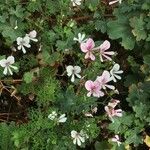
Pelargonium peltatum
Ivy geranium · Ivyleaf geranium · Peltated Geranium · Hanging geranium · Ivy-leaf pelargonium
Description
Source: leafsnapPelargonium peltatum, commonly known as ivy-leaved geranium, is a species of flowering plant in the Geraniaceae family. Native to South Africa, this plant is widely cultivated for its attractive foliage and showy flowers. The ivy-leaved geranium features trailing stems that can grow up to 2 meters long, adorned with glossy, dark green leaves that resemble ivy leaves. Its flowers, produced in clusters at the ends of the stems, come in a variety of colors, including pink, red, white, and purple. Ivy-leaved geraniums thrive in full sun to partial shade and prefer well-drained soil that is kept moist but not waterlogged. They are popular in hanging baskets or trained to climb trellises or walls, thanks to their cascading growth habit. Additionally, they make excellent ground covers when planted in large groups, as they spread quickly by rooting at nodes along their stems. Overall, Pelargonium peltatum is an attractive ornamental plant that adds color and texture wherever it is planted. Its relatively easy care makes it a popular choice among gardeners worldwide.
💡 The ivy geranium is a source of pride for the people of Africa and is also popular across Eurasia. Countries like Germany, Spain, and Hungary place great emphasis on its cultivation and breeding. In fact, Hungary has even named the vibrant ivy geranium as its national flower.
🌳 Ivy geranium possesses a range of uses that go beyond its typical ornamental role. Unexpectedly, it has found a place in the perfume trade because its leaves are highly fragrant, making it a potential source of essential oils. In addition, the plant appears promising in horticulture as a natural indicator of heavy metal levels in soil, implying a function beyond decoration toward environmental monitoring.
🎭 A chance meeting brings happiness.
Care Guide
💧 Water Every 7 days
Ivy geraniums thrive in subtropical climates and are moderately drought-tolerant. They require well-draining soil and balanced moisture levels, ideally with watering every 1-2 weeks. As evergreen outdoor plants, managing soil moisture carefully is crucial to prevent root rot and maintain healthy foliage.
How should I water my Ivy geranium?
To properly water the Ivy geranium, it is recommended to use filtered water at room temperature or slightly warmer. Tap water may contain harmful particles, so filtered water is preferred. The Ivy geranium is accustomed to a warm environment, so it's best to avoid using cold water, which may shock the plant. Furthermore, overhead watering should be avoided as it can cause issues with the foliage. Instead, apply the filtered room temperature water directly to the soil until it is fully soaked. This method benefits the plant by moistening the roots and aiding their spread throughout the soil to absorb essential nutrients.
What should I do if I give my Ivy geranium too much or too little water?
Overwatering is a common issue for Ivy geraniums and can cause their stems and leaves to wilt and turn yellow. It can also lead to diseases like root rot, mold, and mildew which can kill the plant. Underwatering is less common but still possible. When it happens, the leaves become brittle and brown. It's important to notice the signs of overwatering early and reduce watering immediately. If the soil doesn't drain well, replace it with a loose, well-draining potting mix. If the Ivy geranium is not getting enough water, water more regularly until the signs improve.
How much time do I need to wait in between watering my Ivy geranium?
To determine if your Ivy geranium needs water, there are different methods depending on whether it is potted or grown outdoors in the ground. For potted plants, stick your finger in the soil and if the top two to three inches are dry, it's time to water. The same goes for plants grown in the ground - if the first few inches of soil are dry, water is needed. During spring and early fall, watering once a week should suffice, but during extremely hot weather, it may need to be increased to twice a week or more. However, mature and well-established Ivy geraniums have good drought tolerance.
How much water does my Ivy geranium plant need?
When watering Ivy geranium, it's important to be generous with the amount of water you give. Wait until the first two to three inches of soil are dry, then give the plant a thorough watering, making sure to soak the entire soil. You should add enough water to allow excess water to drain through the pot's drainage holes. If you don't see any excess water draining, it means you haven't given enough water. However, be careful not to let the water accumulate in the soil, as it can be harmful to the plant. On the other hand, if water doesn't drain through the pot, it may indicate poorly draining soils, which can be harmful to the plant's health. If your Ivy geranium is outside, it generally requires around 1 inch of rainfall per week.
When is the best time to water my Ivy geranium at different stages of growth?
The water needs of the Ivy geranium can vary depending on its growth stages. When the geranium is young or has been recently transplanted, it requires more water than usual. During these stages, the plant focuses on developing new roots to support future growth, and these roots need extra moisture. As the geranium matures, it will require less water. Another stage in which the plant may need more water is during its bloom period, as the development of flowers requires a significant amount of moisture.
☀️ Light Full sun
Ivy geranium does best in places with plentiful sunlight, but it can also tolerate spots with lower light levels. Appropriate lighting supports its health and growth throughout its different stages of development. However, too much sun can cause leaves to scorch, while too little light may produce stretched, weak shoots. Its native habitat has similar lighting conditions.
What are the sunlight requirements for Ivy Geranium?
Ivy Geranium thrives best in full sun, which means it should receive above 6 hours of sunlight daily. However, it can also endure partial sun conditions, requiring about 3-6 hours of sunlight. It's important to observe how sunlight moves through your garden to select spots that provide a balance of light and shade, ensuring the plant's well-being.
What are the essentials for the growth of Ivy Geranium?
The essential growth conditions for Ivy Geranium include abundant sunlight exposure, although it can survive in areas with lesser sunlight. The right amount of light promotes its health, growth, and development stages. Excessive sunlight can lead to leaf scorch, while insufficient light may cause stretched, weak shoots. Utilizing artificial lighting, like LED lights, can be beneficial for indoor plants, especially in insufficient natural sunlight. The right type of artificial light and its proper installation are crucial for the plant’s optimal growth.
How does inadequate lighting affect Ivy Geranium?
Inadequate lighting can lead to various symptoms in Ivy Geranium, including adverse effects on flowering and fruiting, lighter-colored new leaves, leggy or sparse growth, slower or no new growth, and conditions such as chlorosis, sunscald, leaf curling, wilting, and leaf scorching. These symptoms indicate a lack of sufficient light, which is necessary for the plant's chlorophyll production and overall health.
What are the solutions for Ivy Geranium's light-related issues?
To address light-related issues in Ivy Geranium, consider gradually moving the plants to a sunnier location, ensuring they receive at least 6 hours of direct sunlight daily. For indoor plants, use south-facing windows or artificial lights to provide ample light. Outdoors, avoid sudden changes in light intensity. If necessary, prune trees to reduce sunlight obstructions or transplant smaller plants to a sunnier location with good drainage. Although parts of the plant affected by insufficient sunlight may not recover, new growth should be healthy once optimal light conditions are established.
🌡️ Temperature 20–37.8°C
The natural growing conditions for ivy geranium call for temperatures of 20 to 38 ℃ (68 to 100 ℉) for optimal development. This plant favors warm conditions and needs protection from frost. In winter, it is recommended to keep it indoors where temperatures are between 21 and 24 ℃ (70 to 75 ℉).
What is the ideal temperature range for growing Ivy Geranium?
Ivy Geranium thrives in temperatures between 20 to 38 °C (68 to 100 °F) for optimal growth. This plant loves warmth and must be protected from frost. During winter, it's advised to keep the plant indoors within a temperature range of 21 to 24 °C (70 to 75 °F) to ensure its health and vitality. Extreme heat lovers, Ivy Geranium plants, should be carefully monitored and protected from cold to prevent harm.
How do you care for Ivy Geranium in winter?
In winter, it's crucial to protect Ivy Geranium from cold by keeping it indoors where temperatures are mild, ideally between 21 to 24 °C (70 to 75 °F). Since Ivy Geranium is highly susceptible to cold, it's recommended to position the plant near a bright window while ensuring it's not placed too close to heaters, which might cause damage. Ensuring the plant receives adequate warmth during the colder months is essential for its continued growth.
What are the symptoms of Ivy Geranium experiencing low temperatures?
When Ivy Geranium is exposed to temperatures below its tolerance level, the leaves might lighten in color. Frost damage can further lead to the foliage turning a brown or black color, accompanied by wilting and drooping of the plant. This indicates the plant's intolerance to low temperatures and the need for immediate intervention to protect it from cold.
What should I do if my Ivy Geranium has frost damage or is affected by low temperatures?
If your Ivy Geranium suffers from frost damage, you should trim away the damaged parts to prevent further harm. Immediately relocate the plant to a warm indoor setting for protection against the cold. Placing the plant near a south-facing window will ensure it receives enough sunlight, and it's important to avoid putting it too close to heaters or air conditioners to prevent air dryness.
How does high temperature affect Ivy Geranium, and what are the solutions?
During the summer, it's crucial to monitor the temperature around Ivy Geranium, ensuring it stays below 38 °C (100 °F) to prevent stress from excessive heat. High temperatures can cause the leaves to lighten in color and increase susceptibility to sunburn. To mitigate heat stress, trim away any sunburned or dried parts of the plant, position it in partial shade during the hottest parts of the day, and water it in the morning and evening to maintain soil moisture.
💨 Humidity normal (40-60%)
This plant will thrive in moderate humidity, which is probably the level in your home. However, misting it a few times a week can be very beneficial. Make sure the room has good ventilation.
🪴 Soil 5-6
🌱 Fertilizer
Proper feeding is vital for an Ivy geranium's health and appearance. Feed the Ivy geranium in summer, applying fertilizer once a month throughout the season. Nutrients drive growth and support the plant's parts. Fertilizing improves the Ivy geranium's flower display, ensuring the best blooms.
Why should I put fertilizer on my Ivy geranium?
Fertilizer and soil nutrients are like fuel for your Ivy geranium, helping it grow healthily. Plants use nutrients to grow new material and maintain their existing components. For the Ivy geranium, fertilization is especially important to promote the best flower display. Since the flowers are the main attraction of this plant, most gardeners strive to ensure they appear in their best form. Fertilization is a reliable method to help your Ivy geranium produce beautiful blooms.
When should I fertilize my Ivy geranium?
The Ivy geranium has two main phases every year. Firstly, there is the dormant phase during the winter, where minimal new growth occurs. Secondly, there is the active growth phase in spring and fall, when fertilization is most necessary. It is recommended to start fertilizing your Ivy geranium in spring, repeating the feeding once a month throughout the rest of spring and most of summer. As fall approaches, you can gradually decrease the fertilization rate.
When is it best to not put fertilizer on my Ivy geranium?
If you want to promote Ivy geranium growth without risking root burn, it's important to adjust your fertilizing schedule accordingly. These plants require extra nutrients during the active growing period in spring and summer. However, in the fall and winter when the plant goes dormant, fertilizing should be ceased.
Which type of fertilizer should I use for my Ivy geranium?
For Ivy geranium, the ideal fertilizer should have a balanced mix of the three main nutrients, with slightly more phosphorus. Another option is to improve the soil by adding organic materials like compost, worm castings, and manure. Fertilizers for Ivy geranium can come in various forms, and both liquid and powdered fertilizers are recommended. Whichever type you choose, make sure to dilute it and apply it while watering the Ivy geranium.
How can I give my Ivy geranium plant nutrients?
First, find a suitable fertilizer and learn the ideal fertilization schedule for your Ivy geranium. Once you have that information, it's time to learn how to apply the fertilizer. The most reliable method is to mix your liquid fertilizer with water before applying it to the soil. It's important to remember that each fertilizer may have different instructions for feeding plants, so it's best to follow the manufacturer's guidance. These instructions should also include how to properly dilute the fertilizer to avoid overfertilization. Mixing the fertilizer with water is a simple process, and once it's done, just pour the mixture into the soil where your Ivy geranium is located.
🪴 Pot & Repot 2-3 years
When repotting Ivy geranium, select a pot 1-2 inches (2.5–5.1 cm) larger with ample drainage. Use a well-draining potting mix. Repot in spring or fall, making sure the root ball sits slightly below the rim of the flower pot. Water thoroughly after repotting and place it in a warm spot with indirect sunlight.
✂️ Pruning
Prune ivy geraniums from early spring to late winter by removing dead stems and leggy growth. This encourages bushier shapes and more blooms. Be gentle, as ivy geraniums are sensitive to harsh cuts. During active growth periods, regularly pinch back the tips to promote plant health and extend flowering periods.
🌿 Propagating
🐛 Diseases & pets
☠️ Toxicity
Characteristics
- Plant Type
- Herb
- Life Cycle
- Perennial, Annual
- Genus
- Pelargonium
- Family
- Geraniaceae
- Hardiness Zone
- 9-11
- Mature Height
- 40 cm to 91 cm
- Mature Spread
- 0.91 m to 1.52 m
- Leaf Color
- Green
- Leaf Type
- Evergreen
- Flower Color
- Pink, White, Lavender
- Flower Size
- 0.51 cm to 1.27 cm
- Bloom Time
- All year round
- Planting Time
- Spring, Summer
- Harvest Time
- All year round
- Native Area
- South Africa