Pellaea rotundifolia
Button fern
Description
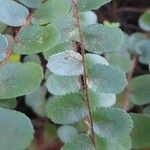
Source: leafsnapPellaea rotundifolia, commonly known as the button fern, is a small fern species that belongs to the family Pteridaceae. Native to North America, it thrives in various habitats such as rocky slopes, cliffs, and forests. This plant features a compact growth habit with fronds that can reach up to 30 cm in length. The dark green fronds have round leaflets, giving the plant its common name. Button ferns are easy to care for and can be grown both indoors and outdoors. They prefer well-draining soil with moderate moisture levels but can tolerate periods of drought once established. Additionally, they thrive best in partial shade or filtered sunlight. Due to its attractive appearance, the button fern is frequently used for ornamental purposes. However, it also boasts medicinal properties, such as being used as an antiseptic or for treating respiratory ailments. Overall, Pellaea rotundifolia is a beautiful yet hardy plant species that adds an elegant touch of greenery wherever it grows, while also providing some medicinal benefits.
🌳 The Button Fern is a bushy and compact plant with small, round leaflets, making it a popular choice for patios and containers. It is relatively cold-tolerant and can be planted outdoors in gardens where temperatures remain above freezing. This fern looks especially beautiful in the front rows of containers and raised beds, as it easily cascades over the edges. It is particularly popular in native gardens in New Zealand and is a cherished houseplant around the world.
Care Guide
💧 Water Every 7 days
Button ferns, which originate from moist and shaded areas, thrive in consistently moist conditions without becoming waterlogged. They prefer a humid environment, so watering them twice a week helps to keep their foliage lush. Since button ferns are usually grown indoors, it's important to mimic high humidity levels during their active growing season to ensure they stay healthy.
☀️ Light Full shade
Button fern favors conditions like a partially shaded understory but can tolerate both increased exposure to sunlight and deeper shade. Coming from habitats with varying light levels, it copes well with different amounts of light. Excessive exposure can scorch the leaves, while persistent heavy shade can slow its growth.
What are the sunlight requirements for a Button fern?
The Button fern, or Pellaea rotundifolia, thrives under a range of sunlight conditions, adapting well to both partial shade and direct sunlight. It requires about 3-6 hours of sunlight a day for optimal growth but can also handle being in full sun or full shade, which involves more than 6 hours of sunlight. It's essential to monitor the movement of sunlight through your garden to choose locations that provide a balanced environment for your plants to grow healthily.
How does the Button fern adapt to different light levels?
Naturally originating from habitats with varying degrees of light, the Button fern has adapted to thrive in both greater exposure to sunlight and deeper shades. It prefers conditions similar to a partially shaded understory, which mimics its natural habitat. However, while it can withstand various light levels, excessive exposure can lead to scorched leaves, and constant heavy shade might retard the plant's growth.
What artificial lighting is recommended for indoor Button ferns?
For Button ferns grown indoors, adequate lighting is crucial, especially when natural sunlight is insufficient, like during winter or in less sunny spaces. Artificial lighting, such as LED lights that can be customized to provide specific wavelengths, is highly recommended. Depending on your plant's sunlight needs (full sun, partial sun, or full shade), the required artificial light intensity varies from 10-50W/sq ft. It is also important to place the light source 12-36 inches above the plant and ensure it receives 8-12 hours of light per day to mimic natural sunlight conditions.
What are the symptoms of inadequate lighting for a Button fern?
Button fern displays several symptoms when subjected to poor lighting conditions. These include slower or no new growth, indicating that the plant is in survival mode due to insufficient light; chlorosis or the yellowing of leaves because of excessive sunlight; sunscald characterized by bleached areas on leaves or stems; leaf curling as a defense mechanism against harsh sunlight; wilting from increased water loss; and leaf scorching where leaves show brown, dry edges. These symptoms signal the need for immediate action to adjust the plant's exposure to light.
What are the solutions for improving light conditions for Button fern?
To optimize growth for Button ferns facing inadequate light conditions, indoor plants can be gradually shifted to sunnier spots each week to receive 3-6 hours of direct sunlight daily, or use artificial light if the plant is not easily movable by keeping a desk or ceiling lamp on for at least 8 hours daily. Outdoor plants should also be gradually moved to sunnier locations to prevent sunburn. Removing obstructions or transplanting to areas with better sunlight and drainage can also enhance light availability for ground plants. It's critical to avoid drastic changes in light intensity to prevent damaging the plants.
🌡️ Temperature 20–37.8°C
The button fern fern originates from tropical regions where temperatures range from 68 to 100 ℉ (20 to 38 ℃). It prefers warm conditions and can withstand light frost. In colder seasons, the plant should be placed in a warm, bright location with temperatures maintained around 68 to 75 ℉ (20 to 24 ℃).
What is the native climate for Button fern?
The Button fern, or Pellaea rotundifolia, thrives in tropical climates where temperatures range from 68 to 100°F (20 to 38°C). This plant is heat-loving and prefers warm temperatures, being able to tolerate only light frost. It is native to environments that offer conditions within this temperature range.
How should Button fern be cared for in cooler seasons?
During cooler seasons, it is crucial to keep the Button fern in a warm and bright area, with ideal temperatures being consistently around 68 to 75°F (20 to 24°C). If the plant is grown outdoors, it should be brought indoors in autumn and placed near a bright window. However, care should be taken to maintain a distance from heaters to avoid excessive heat. Keeping the plant at temperatures above 20°C during winter aids in its growth, while exposure to temperatures nearing 0°C can be harmful.
What are the symptoms of low temperature exposure in Button fern?
Button fern exhibits signs of distress when exposed to low temperatures, such as a lightening of leaf color when temperatures drop below -5°C, eventually turning brown or black with frost damage. Symptoms also include wilting and drooping. This plant thrives best above 20°C and requires winter temperatures to be kept above 0°C to prevent damage.
How can Button fern be protected from frost and cold damage?
To protect Button fern from frost and cold damage, trim off the frost-damaged parts and immediately move the plant indoors to a warmer environment. Positioning the plant near a south-facing window can ensure it receives ample sunlight while also avoiding placement near heaters or air conditioning vents, which could cause excessive dryness in the air.
How does high temperature affect Button fern and what are the solutions?
Button fern should ideally be kept below 38°C (100°F) during summer. Temperatures exceeding 43°C (109°F) can cause the leaves to lighten and increase the susceptibility of the plant to sunburn. To mitigate high temperature effects, trim away sunburned and dried-up parts, and move the plant to a shadier location during the midday and afternoon sun. Ensuring the soil remains moist by watering in the morning and evening can also help.
💨 Humidity high (>60%)
This plant needs special care because it loves high humidity levels of 60-80% or more. The best way to achieve this is by placing a humidifier near the plant. Daily misting is also essential! Make sure the room has good ventilation.
🪴 Soil 6-7
🌱 Fertilizer
To promote healthy frond growth in button ferns, fertilize them every 4 to 6 weeks with a diluted high-nitrogen fertilizer. Use the fertilizer at quarter strength to prevent root damage. It's important to stop feeding the plant in the fall and winter months and to keep an eye on soil moisture levels. Over-fertilizing can lead to foliage burn, so apply the fertilizer sparingly to ensure the plant remains healthy.
🪴 Pot & Repot 2-3 years
When repotting Button fern, select a pot 1-2 inches (2.5–5.1 cm) larger with good drainage. Use a well-draining potting mix. Repot in spring or fall, making sure the root ball sits slightly lower than the rim of the flower pot. Water thoroughly after repotting and place the plant in a warm spot with indirect sunlight.
✂️ Pruning
The Button Fern is a small, compact plant with charming, rounded leaflets. To keep your fern healthy and well-shaped, prune it in early spring. This will help remove any dead fronds and encourage new growth. Regular pruning also prevents overcrowding, enhances air circulation, and reduces the risk of disease, all of which contribute to the fern's overall health and vitality.
🌿 Propagating
🐛 Diseases & pets
☠️ Toxicity
Characteristics
- Plant Type
- Fern
- Life Cycle
- Perennial
- Genus
- Pellaea
- Family
- Pteridaceae
- Hardiness Zone
- 9-11
- Mature Height
- 30 cm
- Mature Spread
- 10 cm to 49 cm
- Leaf Color
- Green, Brown
- Leaf Type
- Evergreen
- Planting Time
- Spring
- Native Area
- New Zealand