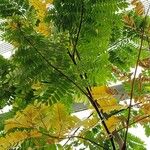
Peltophorum africanum
African-wattle · Umkahla · Umsehla · African weeping-wattle · Rhodeian wattle
Description
Source: leafsnapPeltophorum africanum, commonly known as the African wattle or African yellowwood, is a deciduous tree native to southern Africa. It can grow up to 20 meters tall and features a spreading crown with a diameter of up to 15 meters. The tree has smooth grey bark and compound leaves with small, bright green leaflets. In spring, Peltophorum africanum produces clusters of bright yellow flowers that attract bees and other pollinators. These flowers are followed by long seed pods that contain small seeds. Due to its attractive foliage and showy flowers, Peltophorum africanum is often used as an ornamental tree in gardens and parks. It also holds various medicinal uses in traditional African medicine, such as treating ailments like fever, coughs, colds, diarrhea, and dysentery. The wood of Peltophorum africanum is hardy, making it suitable for furniture making and use as fuelwood. Additionally, the bark can be used for tanning leather or dyeing fabrics. Overall, Peltophorum africanum is an important plant species due to its ecological significance and its cultural importance in traditional medicinal practices across southern Africa.
Care Guide
💧 Water Every 7 days
☀️ Light Full sun
African wattle is native to open habitats, such as sunlit meadows and forest margins, which offer abundant light. It flourishes in Full Sun but can also tolerate Partial Sun, adjusting well to a range of sunlight conditions.
🌡️ Temperature 20–37.8°C
African wattle demonstrates good temperature adaptability, enduring higher heat and wide temperature fluctuations. In hot conditions, care should be taken with watering and providing appropriate shade to prevent sunburn. However, African wattle is relatively poorly tolerant of low temperatures. It can handle some cold, but excessively low temperatures can cause frost damage.
💨 Humidity
🪴 Soil 6-8
🌱 Fertilizer
The timing of fertilization is important for African wattle. Apply fertilizer in early spring and continue monthly until early summer. Fertilizer encourages attractive blooms and supplies energy during both dormant and active growth phases.
🪴 Pot & Repot
✂️ Pruning
The African wattle is an upright tree known for its feathery green leaves and fragrant yellow flowers. To maintain its health and appearance, prune the tree in early spring to remove any dead branches and encourage healthy growth. Thinning the tree can help improve light and air circulation, but be careful not to over-prune, as this can cause stress and affect the tree's structural integrity and aesthetic appeal.
🌿 Propagating
🐛 Diseases & pets
☠️ Toxicity
Characteristics
- Plant Type
- Tree
- Life Cycle
- Perennial
- Genus
- Peltophorum
- Family
- Fabaceae
- Hardiness Zone
- 9-11
- Mature Height
- 7.92 m to 14.94 m
- Mature Spread
- 6.1 m to 10.06 m
- Leaf Color
- Green, Dark Green
- Leaf Type
- Deciduous
- Flower Color
- Yellow
- Flower Size
- 1.02 cm to 2.03 cm
- Bloom Time
- Summer
- Planting Time
- Spring, Summer, Autumn
- Harvest Time
- Fall
- Native Area
- Malawi, Angola, Mozambique, South Africa, Zambia, Eswatini, Namibia, Congo (DRC), Botswana, Zimbabwe