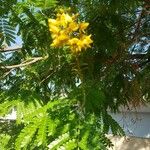
Peltophorum pterocarpum
Yellow flame · Copperpod · Yellow flametree · Yellow poinciana · Yellow-flamboyant
Description
Source: leafsnapPeltophorum pterocarpum (commonly known as copperpod, yellow-flamboyant, yellow flametree, yellow poinciana or yellow-flame) is a species of Peltophorum, native to tropical southeastern Asia and a popular ornamental tree grown around the world.
🌳 Yellow poinciana serves purposes beyond ornamentation, helping to improve soil and control erosion. Its leaves contribute nitrogen to the soil, functioning as green manure. The tree yields hard, durable wood that is used for furniture and construction. Recent interest in its biofuel potential has prompted research into using it as a renewable energy source.
Care Guide
💧 Water
The yellow poinciana thrives in tropical climates, where it needs consistent moisture and high humidity. It can withstand heavy rainfall as well as brief periods of drought, with watering needed every two weeks. Well-draining soil is crucial to prevent root rot, which makes the yellow poinciana a resilient choice for urban landscaping.
How should I water my Yellow poinciana?
To ensure excellent root development for your plants, it is recommended to place a garden hose at the base of the plant. Avoid directly spraying the leaves, as this can be detrimental. If your plants are outdoors and exposed to direct sunlight, keep in mind that the leaves will require more watering. To moisten the roots, you can also use bubblers that can be attached to each plant. Additionally, when adding or removing plants, you can use soaker hoses that cover the entire garden or bed to help deeply hydrate the roots. After watering, make sure to drain any excess water, and wait for the soil to dry before watering again. Watering at ground level is important to prevent diseases. On sunny days, it may be beneficial to spray the entire bush with water. Regardless of whether your plants are potted or in the ground, remember that Yellow poinciana prefers deep watering rather than light sprinkling.
What should I do if I give Yellow poinciana too much or too little water?
If a Yellow poinciana is overwatered, its leaves may turn yellow, drop off, and wilt. The plant may also look unhealthy with mushy stems. When these signs appear, it's best to adjust your watering schedule. Wilting can also be a sign of under watering, with leaves becoming crispy and dry. Check the soil when it's dry and watering alone is insufficient; give it a thorough watering. The plant will initially recover but may still have dry, yellow leaves due to damaged roots. Once it returns to normal, the yellowing will stop. Indoors, always check the moisture levels and avoid overwatering. Black spots may indicate overwatering, so let the soil dry and refrain from watering for a few days. Overwatering can lead to root rot, so if you see discolored and slimy roots, consider transferring the plant to a different pot. Prevent root rot by avoiding excessive moisture. Outdoors, ensure the soil is adequately moist by checking with your fingers. If the soil is too dry, it could indicate underwatering, so provide sufficient water for the plant to recover.
How frequently do I need to water my Yellow poinciana plant?
The Yellow poinciana prefers deep and infrequent watering, especially when planted in pots. Pots have limited water storage, so watering every 3 to 5 days is necessary in cold regions. Water the plant early in the morning when the soil is dry, both indoors and outdoors. Check the soil moisture by feeling the top 2-3 inches, and if it's dry, give the plant a thorough watering. During hot days, monitor the soil moisture more frequently as the heat can quickly dry out the pot. For garden plants in hot climates, water once a week when you notice 2 to 3 inches of soil becoming too dry. Be mindful of rainfall and avoid overwatering to prevent root rot. Adding mulch 3 to 4 inches deep around outdoor plants helps conserve water. Sandy soil drains faster, so frequent watering is needed, while clay soil requires less frequent watering to prevent root rot. Keep track of watering dates and watch for drooping leaves to ensure timely watering.
How much water should I give my Yellow poinciana?
The Yellow poinciana plant needs about a gallon of water on a regular schedule. For potted plants, water them until you see water dripping from the bottom of the pot, and then wait for the soil to dry before watering again. You can use a water calculator or moisture meter to track how much water you give your plant in a week. During the flowering period, provide plenty of water but allow the excess moisture to evaporate to prevent root rot. If the Yellow poinciana is planted outdoors and receives adequate rainfall, it may not need additional watering. However, when the plant is young or newly planted, make sure it gets 1-2 inches of rain per week. As the Yellow poinciana grows, it can rely solely on rainfall. Only during very hot weather or when there has been no rainfall for 2-3 weeks should you consider giving the plant a full watering during the cooler part of the day to prevent heat damage. Additional watering will be needed during dry spells.
Do I need to change how often I water my Yellow poinciana tree based on the different seasons or climates?
The Yellow poinciana needs to be watered based on weather conditions. During spring and fall, keep the soil moist but not soggy. Alternating between dry and moist soil will help it grow well. In summer, hot weather and lack of rain may require more frequent watering to keep it moist. In winter, when the plant goes dormant and loses its leaves, use well-draining soil and water less. During the dormant period, rely on fall and winter rains. When flowering, ensure good drainage and avoid overwatering. When in a pot, water more often as the roots have limited space. Water deeply once or twice a week, avoiding shallow sprinkles. Don't let the plant dry out completely in fall or winter, but also avoid overwatering. Apply mulch to reduce stress and conserve water. Good drainage is crucial to prevent root rot.
☀️ Light Full sun
The yellow poinciana does best with abundant sunlight and needs generous rays to grow vigorously. Native to areas with plentiful sun exposure, it can tolerate full sun. Both too much and too little light can harm its development, and it has little tolerance for low-light conditions.
What are the sunlight requirements for Yellow Poinciana?
Yellow Poinciana requires full sun, defined as more than 6 hours of sunlight daily, to thrive optimally. It's crucial to observe the movement of sunlight through your garden to ensure that you choose locations offering a harmonious balance of light and shade, tailored to meet the needs of your plants. This careful consideration ensures the overall happiness and health of your Yellow Poinciana.
How does the Yellow Poinciana respond to different lighting conditions?
The Yellow Poinciana flourishes under abundant sun exposure, a testament to its origin in sun-drenched habitats. This plant demands a generous amount of sunlight to foster vigorous growth. Both excessive and insufficient sunlight can negatively affect its growth, with the plant showing no particular tolerance for low-light conditions. For indoor plants, when natural sunlight is lacking, particularly during winter or in spaces that do not receive enough sunlight, artificial lighting becomes an essential solution, helping to ensure faster and healthier plant growth. Appropriate artificial lighting includes ensuring the right type and intensity of light, proper distance between the plant and the light source, and correct duration of light exposure.
What are the signs of insufficient light in Yellow Poinciana, and how can they be addressed?
When Yellow Poinciana is grown indoors or does not receive sufficient light, it may display several symptoms indicating light deficiency. These include smaller new leaves, leggy or sparse growth, faster leaf drop, slowed or halted new growth, lighter-colored new leaves, and conditions such as chlorosis, sunscald, leaf curling, wilting, and leaf scorching. To address these issues, gradually move plants to locations with at least 6 hours of direct sunlight daily or use artificial lighting to supplement light, especially for large plants or those that cannot be easily moved. For outdoor plants, gradually acclimating them to sunnier spots can prevent sunburn. Also, observing your garden's environment to reduce obstructions and possibly transplanting smaller plants to sunnier locations can improve their sunlight exposure.
🌡️ Temperature 20–37.8°C
Yellow poinciana originates from areas where temperatures generally range from 68 to 100 °F (20 to 38 ℃). It does well in these warm settings, and significant temperature swings can impede its growth.
What is the ideal climate for Yellow Poinciana?
Yellow Poinciana, or Peltophorum pterocarpum, is native to warm climates with temperatures ranging from 68 to 100 °F (20 to 38 °C). It flourishes in these conditions, demonstrating a strong preference for heat. Extreme temperature fluctuations are not favorable for its growth. During the colder months of autumn, it is advisable to bring Yellow Poinciana indoors and place it near a bright window, ensuring it is not too close to heaters. To promote healthy growth, keeping the indoor temperature above 20°C during winter is key, as exposure to temperatures near or below 5°C can be harmful to the plant.
What should I do if my Yellow Poinciana is exposed to low temperatures?
Yellow Poinciana thrives in warmth and is susceptible to damage from low temperatures. It is best kept in environments above 20°C, and special care is needed during winter to keep temperatures above 5°C. Exposure to temperatures below 1°C can cause the leaves to lighten in color, and after frost damage, they may turn brown or black. Symptoms like wilting and drooping are common signs of distress. If your Yellow Poinciana suffers frost damage, trim off the damaged parts and move the plant to a warmer indoor setting immediately. Placing the plant near a south-facing window ensures sufficient sunlight, but avoid positioning it near heaters or air conditioning vents to prevent the air from becoming too dry.
How can I protect my Yellow Poinciana from high temperatures?
In the heat of summer, it's important to ensure that the surrounding temperatures for Yellow Poinciana do not exceed 38°C. Exposure to temperatures above 43°C can cause the leaves to lighten and increase the plant's susceptibility to sunburn. To protect your plant, trim away sunburned and dried parts and relocate it to a shaded area during the intense midday and afternoon sun. Additionally, watering the plant in the morning and evening will help keep the soil adequately moist and assist in preventing heat stress.
💨 Humidity normal (40-60%)
This plant will thrive in moderate humidity, which is probably the level in your home. However, misting it a few times a week can be very beneficial. Make sure the room has good ventilation.
🪴 Soil 6-7
🌱 Fertilizer
The best time to fertilize a Yellow poinciana is in early spring, as it breaks dormancy. This encourages overall growth and flower development. Fertilization improves foliage, stems, and branches, and supports large, vibrant, long-lasting blooms. It helps transfer nutrients from the roots to the flowers and enhances the plant's health and resistance to disease.
Why should I put fertilizer on my Yellow poinciana?
Fertilization is crucial for the overall health and well-being of a Yellow poinciana. It helps the plant develop healthy foliage, strong stems, and branches. Additionally, fertilization plays a significant role in the flower production of a Yellow poinciana. With the right fertilizer, the plant can produce large, vibrant, and long-lasting flowers. This is because the proper fertilizer enables the transfer of nutrients from the roots to the flowers through the stems. Moreover, fertilization promotes the overall health of the plant, making it more resistant to diseases.
When should I fertilize my Yellow poinciana tree?
To properly fertilize a Yellow poinciana, focus on two main times of the year: early spring and the end of the season in the fall. During the early spring, as the plant exits its dormant phase, it's important to feed it to support growth and flower development. This initial feeding provides energy for the plant. However, it's also beneficial to have a smaller feeding in the fall. Some gardeners choose to fertilize the plant during planting, but this step is not always necessary.
When is the best time to not fertilize my Yellow poinciana?
During the winter, it is unnecessary to fertilize your Yellow poinciana as it enters a dormant phase and does not require much energy from the soil to grow. Fertilizing at this time increases the risk of overfertilization. The optimal times to feed your Yellow poinciana are in early spring and fall, meaning it does not need fertilizer in most of the spring and summer. If your plant is experiencing excessively hot or dry conditions, it is best to refrain from feeding it.
What kind of fertilizer should I use for my Yellow poinciana?
When fertilizing Yellow poinciana plants, it is generally recommended to use a specific type of fertilizer rather than a general-purpose one. Nitrogen and phosphorus are the most important nutrients for these plants, so the fertilizer should have a higher ratio of these nutrients compared to potassium. For example, a fertilizer with an N-P-K ratio of 10-10-8 would work well. Additionally, using organic materials like compost for at least one feeding can be beneficial. If using fertilizer, granular fertilizer is often the most common option for Yellow poinciana.
How can I give nutrients to my Yellow poinciana?
Fertilizing your Yellow poinciana is simple and suitable for even inexperienced gardeners. To apply granular fertilizer, just sprinkle it on the soil after moistening it with water. Alternatively, you can improve the soil of your Yellow poinciana by adding compost or manure. If you choose to do this, place the material on top of the soil and gently work it into the top few inches with a hand rake, being careful not to disturb the roots.
🪴 Pot & Repot
✂️ Pruning
The yellow poinciana is known for its stunning, vibrant yellow blooms and benefits greatly from regular pruning to maintain its health and shape. Key practices in pruning include removing any damaged branches, improving air circulation, and shaping the plant in early spring to encourage growth and flowering. It's important to use clean cuts and sterilized tools to prevent disease.
🌿 Propagating
🐛 Diseases & pets
☠️ Toxicity
Characteristics
- Plant Type
- Tree
- Life Cycle
- Perennial
- Genus
- Peltophorum
- Family
- Fabaceae
- Hardiness Zone
- 10-12
- Mature Height
- 12.19 m to 15.24 m
- Mature Spread
- 9.14 m to 14.94 m
- Leaf Color
- Green
- Leaf Type
- Semi-evergreen
- Flower Color
- Yellow
- Flower Size
- 2.03 cm to 3.05 cm
- Bloom Time
- Mid summer
- Planting Time
- Spring, Autumn
- Harvest Time
- Early spring, Mid spring, Mid summer, Late summer, Fall, Winter
- Native Area
- Sri Lanka, Malaysia, Indonesia, Cambodia, Vietnam, Myanmar, Philippines, Singapore, Bangladesh, Brunei, Thailand