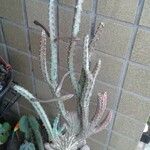
Peniocereus greggii
Desert night-blooming cereus · Night-blooming cereus · Deer-horn cactus · Arizona queen-of-the-night · Sweet potato cactus
Description
Source: leafsnapPeniocereus greggii, a cactus species native to the southwestern United States and northern Mexico, is commonly referred to as the desert night-blooming cereus or queen of the night. This name stems from its large, fragrant, white flowers that bloom exclusively at night. The plant features a slender stem that can extend up to 10 feet in length and is adorned with small spines along its ridges. It thrives in well-drained soil and requires full sunlight, making it an excellent choice for desert gardens or xeriscaping projects. The fruit of Peniocereus greggii is edible and has been traditionally used by indigenous peoples for medicinal purposes, including treating fever and stomach ailments. Although relatively easy to care for, this cactus species poses challenges when propagated from cuttings due to its slow growth rate and susceptibility to rot if overwatered.
Care Guide
💧 Water Every 7 days
The Arizona Queen of the Night is a drought-tolerant plant native to arid regions, and its succulent nature allows it to thrive with minimal moisture. Watering should be infrequent, approximately every 2 to 3 weeks. This plant is ideal for xeriscaping, as it adapts well to outdoor environments with infrequent rainfall.
☀️ Light Full sun
The arizona queen of the night grows best when it receives partial sun exposure. In its native environment it naturally gets dappled light during the day, which supports its health and development. Too much sun can cause sunburn, but it lacks a specific light tolerance, so a shortage of light is less detrimental.
What are the sunlight requirements for the Arizona queen of the night?
The Arizona queen of the night thrives in environments with partial sun exposure, requiring about 3-6 hours of sunlight daily. Its natural habitat provides scattered light, which supports its health and growth. It's important to observe how sunlight moves through your garden, choosing spots with the ideal balance of light and shade. While the plant can tolerate some variation in light exposure, overexposure can lead to sunburn. However, the plant does not have a specific tolerance for low light, making it less susceptible to damage from light deficiency.
How can artificial lighting support the growth of indoor Arizona queen of the night plants?
Indoor Arizona queen of the night plants require adequate lighting for optimal growth, especially when natural sunlight is insufficient, like in winter or less sunny spaces. Artificial lighting, such as LED lights, can be customized to provide specific wavelengths needed for plant growth. Full sun plants need 30-50W/sq ft, partial sun plants need 20-30W/sq ft, and full shade plants need 10-20W/sq ft of artificial light. The light source should be placed 12-36 inches above the plant, mimicking natural sunlight, and it's crucial to provide 8-12 hours of light per day.
What are some common symptoms of light deficiency in the Arizona queen of the night?
The Arizona queen of the night may exhibit several symptoms when grown indoors with insufficient light, including smaller new leaves, leggy or sparse growth, quicker leaf drop, inhibited new growth, and lighter-colored new leaves or signs of chlorosis. Intense sunlight exposure can cause sunscald, leaf curling, wilting, and leaf scorching. These indicate a need for adjusting the plant's exposure to light whether by increasing it, if insufficient, or protecting the plant from excessive direct sunlight.
What solutions can help manage light conditions for the Arizona queen of the night?
To optimize plant growth, it's beneficial to gradually expose the Arizona queen of the night to increasing amounts of sunlight, aiming for 3-6 hours daily, or use artificial light for indoor plants that can't be moved easily, ensuring they get at least 8 hours of light daily. For outdoor plants, moving them progressively to sunnier spots can help them adapt without getting sunburned. Reducing obstructions like trees or moving smaller plants to sunnier locations can also improve light exposure. However, it's vital to make these changes gradually and during the plant's dormant period if transplanting is involved. Notably, parts of the plant damaged by insufficient light may not recover, but new growth should be healthy with improved light conditions.
🌡️ Temperature 15–37.8°C
Arizona queen of the night does best in warm conditions and needs warmer temperatures during the growing season to support growth and metabolic activity. It likes plenty of sunlight, proper moisture levels, and good air circulation. However, it can be harmed by very low temperatures and by overwatering. It's important to maintain a balance and to avoid excessively high heat and overly dry conditions as well.
What is the Arizona queen of the night?
The Arizona queen of the night, also known by its botanical name Peniocereus greggii, is a plant native to the region specified in its common name. Unfortunately, the provided information doesn't include details about its essentials or symptoms.
💨 Humidity
🪴 Soil 6-7
🌱 Fertilizer
For Arizona queen of the night, light applications of fertilizer once or twice a year during the growing season are adequate. Avoid fertilizing in winter or in summer when the plant is dormant. Cut back on fertilizer for repotted plants and wait a couple of months after repotting before you start fertilizing. Fertilizing helps maintain healthy growth and promotes blooming.
🪴 Pot & Repot Every 3 years
✂️ Pruning
The Arizona queen of the night thrives in dry climates, producing large, fragrant flowers that bloom at night. To encourage new growth and maintain its structure, it's best to prune this plant in early spring using sterilized tools. Regular monitoring is important to ensure its health and vibrant blooms. Pruning also helps prevent diseases.
🌿 Propagating
🐛 Diseases & pets
☠️ Toxicity
Characteristics
- Plant Type
- Shrub
- Life Cycle
- Perennial
- Genus
- Peniocereus
- Family
- Cactaceae
- Hardiness Zone
- 8-11
- Mature Height
- 0.91 m to 3.05 m
- Mature Spread
- 30 cm to 61 cm
- Leaf Color
- Green, Blue
- Leaf Type
- Semi-evergreen
- Flower Color
- White
- Flower Size
- 10.16 cm to 12.70 cm
- Bloom Time
- Early summer, Mid summer
- Planting Time
- Summer
- Harvest Time
- Late summer, Early fall