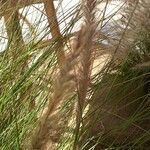
Pennisetum setaceum
Crimson fountaingrass · Fountain grass · Tender fountain grass · Crimson fountain grass
Description
Source: leafsnapPennisetum setaceum, commonly known as fountain grass, is a perennial ornamental grass native to Africa and the Middle East. It is a favored choice for landscaping due to its appealing appearance and minimal upkeep needs. The plant grows in clumps that can reach up to 3 feet tall and 2 feet wide, featuring long, narrow leaves that range in color from green to purple. During the summer, it produces long, feathery plumes that can extend up to 12 inches and are often used in floral arrangements. Fountain grass thrives in full sun but can tolerate some shade. It prefers well-draining soil with moderate moisture levels. While it is drought-tolerant once established, it still benefits from occasional watering during prolonged dry periods. Although it is not considered invasive in most parts of the United States, it can self-seed aggressively under certain conditions. Overall, Pennisetum setaceum is an attractive addition to any garden or landscape design, thanks to its unique texture and low maintenance requirements.
🌳 One interesting use of crimson fountain grass is as a source of vivid pink dyes, suitable for various purposes including fabric dyeing and artistic projects. It is also valued for its biomass, providing a renewable feedstock for biofuel production that promotes sustainability.
🎭 Giving, well-being, unity
Care Guide
💧 Water Every 7 days
Regular watering will keep any variety of Pennisetum grass happy. The species within this genus prefer moist conditions, so water when the top of the soil begins to feel dry. Aim to keep the soil consistently moist, but never soggy. Pennisetum setaceum prefer a moist but well-drained soil. When established they can tolerate dry periods but require a moist soil when becoming established. As with many other ornamental plants, they do not like constantly soggy or wet soil, which can lead to root rot and other plant diseases.
☀️ Light Full sun
Crimson fountain grass grows most vigorously with plenty of sunlight, which greatly aids its healthy development. Although it can tolerate some shade, insufficient light may dull its bright color and restrict growth. In its native habitat, this plant is accustomed to abundant sunshine.
🌡️ Temperature 20–37.8°C
In its native environment, crimson fountain grass flourishes in hot temperatures ranging from 68 to 100 ℉ (20 to 38 ℃). The plant tends to thrive in warm weather and is less productive in cooler conditions. During fall and winter, it is best kept in a room with a temperature no lower than 60 ℉ (15 ℃) to prevent damage.
💨 Humidity
🪴 Soil 6-7
🌱 Fertilizer
Crimson fountain grass needs extra nutrients to encourage healthy new growth. In spring, spreading some compost around the plant's base can effectively supply the nutrition it requires. Fertilizing helps support vigorous growth and assists the plant in resisting diseases and pests.
🪴 Pot & Repot 2-3 years
When repotting Crimson fountain grass, pick a pot 1-2 inches (2.5–5.1 cm) larger with plenty of drainage. Use a well-draining potting mix. Repot in spring or fall, making sure the root ball sits slightly below the rim of the pot. Water thoroughly after repotting and place it in a warm spot with indirect sunlight.
✂️ Pruning
🌿 Propagating
🐛 Diseases & pets
☠️ Toxicity
Pennisetum setaceum has no toxic effect reported.
Characteristics
- Plant Type
- Grass
- Life Cycle
- Perennial, Annual
- Genus
- Pennisetum
- Family
- Poaceae
- Hardiness Zone
- 9-11
- Mature Height
- 0.2 m to 1.22 m
- Mature Spread
- 0.61 m to 1.22 m
- Leaf Color
- Green, Blue, Red, Purple
- Leaf Type
- Deciduous
- Flower Color
- Pink
- Flower Size
- 15.24 cm
- Bloom Time
- Summer
- Planting Time
- Spring, Summer
- Harvest Time
- Mid summer, Late summer, Early fall