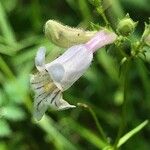
Penstemon australis
Southeastern beardtongue · Slender beard-tongue · Southern beard-tongue · Eustis Lake Beardtongue
Description
Source: leafsnapPenstemon australis is a perennial plant native to the wetlands of Florida, with the common name Eustis Lake beardtongue.It has pink or purple tubular flowers and pointed leaves. It is in the family Plantaginaceae.
Care Guide
💧 Water
☀️ Light Full sun
Southeastern beardtongue is a sun-loving, perennial herbaceous plant that originates from open habitats and is often found thriving in meadows and grasslands. It prefers full sun but can tolerate partial sun.
What are the sunlight requirements for Southeastern beardtongue (Penstemon australis)?
The Southeastern beardtongue, or Penstemon australis, thrives in various sunlight conditions. It requires 'Full sun' which means it should receive above 6 hours of sunlight daily to flourish. Alternatively, it can also grow in 'Partial sun', making do with about 3-6 hours of sunlight each day. It's important to observe the movement of sunlight through your garden to find spots that offer a harmonious balance of light and shade. Properly assessing and choosing the right location will ensure the health and happiness of your plants.
🌡️ Temperature 5–35°C
Southeastern beardtongue adapts well to temperature, tolerating higher heat and wider temperature swings. In hot weather, attention to watering and providing some shade is necessary to avoid sunburn. On the other hand, its resistance to low temperatures is fairly poor. While it can handle a certain amount of cold, very low temperatures may cause frost damage.
💨 Humidity
🪴 Soil 6-8
🌱 Fertilizer
The best time to fertilize a Southeastern beardtongue is in early spring, as it breaks dormancy and begins active growth. Fertilization supplies essential nutrients for healthy development. Although Southeastern beardtongue has relatively low fertilizer requirements, applying fertilizer annually can improve its survival and encourage better, longer-lasting blooms.
🪴 Pot & Repot
For Southeastern beardtongue to thrive in pots, it requires excellent drainage.
✂️ Pruning
Southeastern beardtongue is known for its vibrant flowers and bushy growth. To encourage new growth and improve air circulation, it is best to prune in early spring. This involves removing dead stems and trimming the plant back by one-third of its height. Avoid heavy pruning in late summer, as this can reduce blooming. Instead, focus on maintaining a strong structure and promoting abundant flowering.
🌿 Propagating
🐛 Diseases & pets
☠️ Toxicity
Characteristics
- Plant Type
- Herb
- Life Cycle
- Perennial
- Genus
- Penstemon
- Family
- Plantaginaceae
- Hardiness Zone
- 5-9
- Mature Height
- 30 cm to 91 cm
- Mature Spread
- 30 cm to 37 cm
- Leaf Color
- Green, Dark Green
- Leaf Type
- Deciduous
- Flower Color
- Purple, Lavender
- Flower Size
- 2.54 cm
- Bloom Time
- Mid spring, Late spring, Early summer
- Planting Time
- Spring, Summer, Autumn
- Harvest Time
- Mid summer, Late summer, Early fall