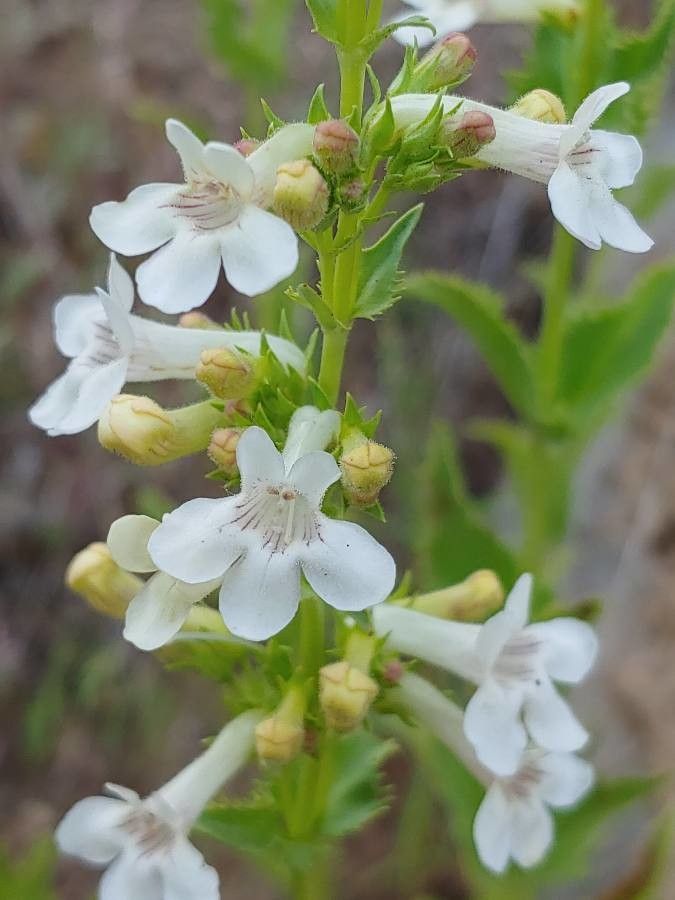
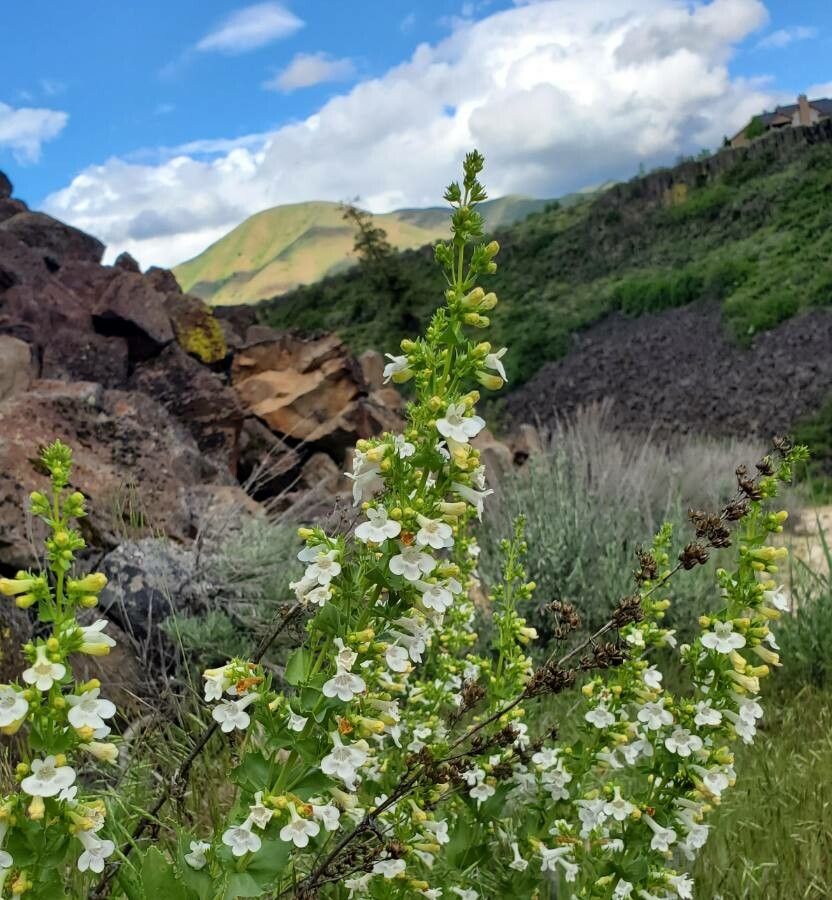
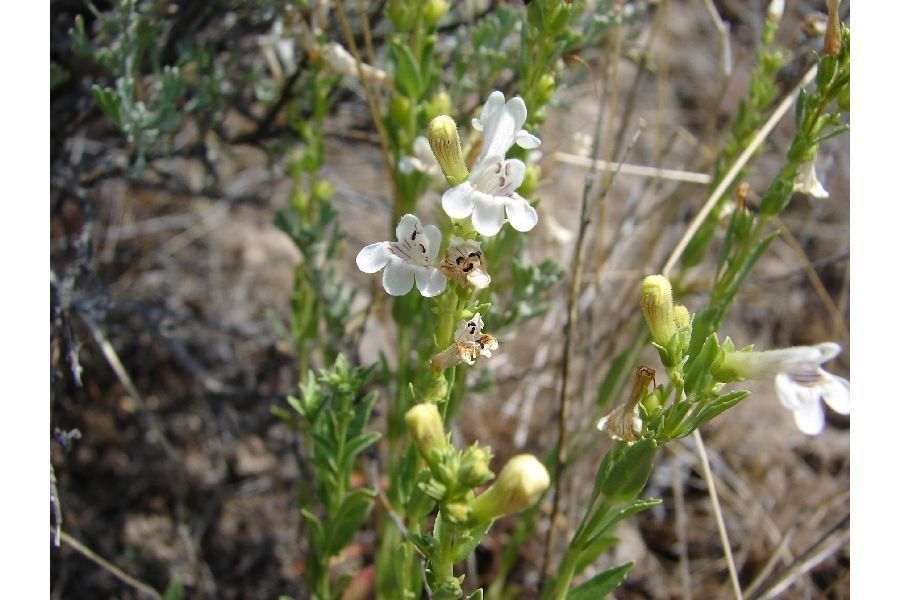
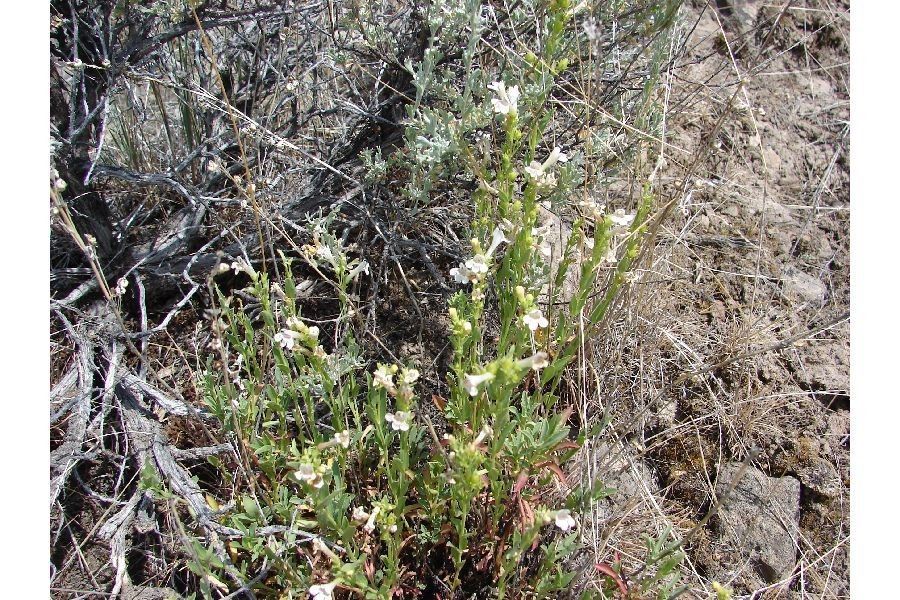
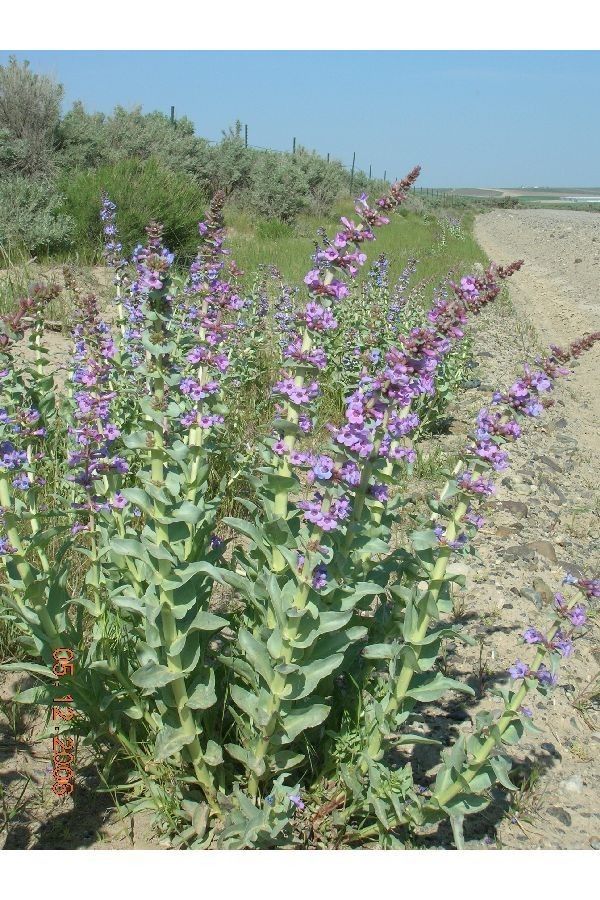
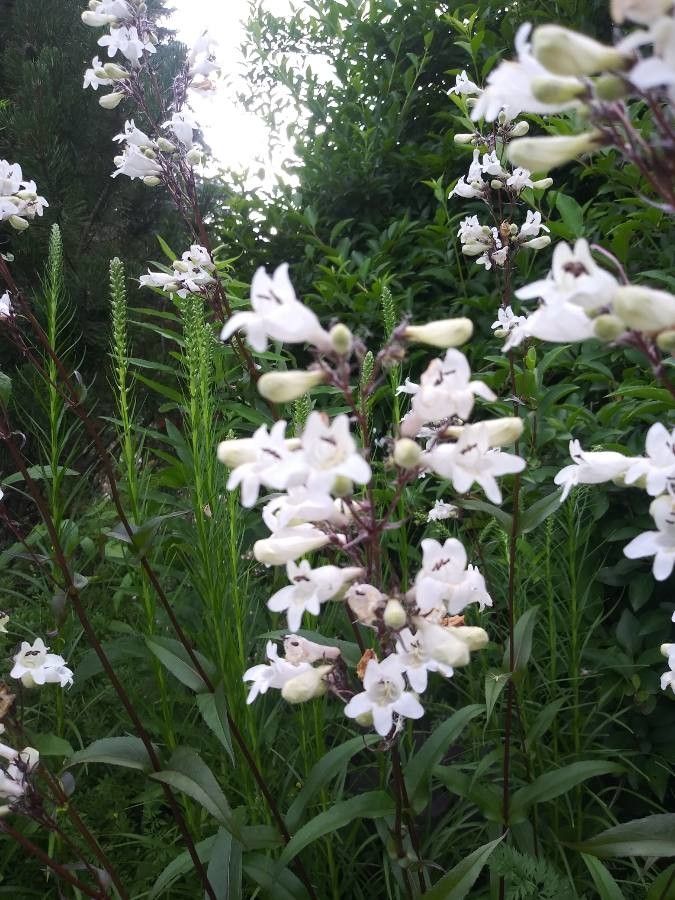
Penstemon deustus is a species of penstemon known by the common names hotrock penstemon and scabland penstemon. It is native to much of the northwestern United States from the Pacific Northwest to Wyoming, where it grows in many types of forest and open plateau habitat, often on soils heavy in volcanic rock or on limestone outcrops. It is a perennial herb with upright branches approaching 40 centimetres (16 in) in maximum height. The thick leaves are lance-shaped to oval or round, and are sharply toothed. Most leaves occur low on the plant. The inflorescence produces tubular flowers with lipped, five-lobed mouths. The glandular flower is cream in color with dark lining and reaches 1.5 cm in length.This plant is used in wilderness revegetation and landscaping projects in its native region. It is favored for its low water needs and its abundant flowers which attract pollinators, including honey bees, bumblebees, sweat bees, and leafcutter bees.
Scabland penstemon has strong disease resistance and is generally not vulnerable to illnesses. Still, it can be affected by pests and diseases present in its environment. These outbreaks are typically mild. Regarding care, the plant needs moderate maintenance. It should be pruned on a regular basis to preserve a good appearance and support healthy growth. Applying fertilizer can also encourage flowering. Scabland penstemon is appropriate for anyone with an outdoor area, such as a garden or patio, and does not require extensive gardening experience. It may demand more attention when cultivated indoors.
How to keep Penstemon Deustus.
Light
Scabland penstemon does best in locations with abundant sunlight, though it can persist in areas with only moderate sun. Its native habitat experienced high sun exposure. Insufficient light can produce poor growth, while excessive light may be harmful to its health.
Water
The Scabland penstemon is well-suited to dry, rocky environments and demonstrates excellent drought tolerance with a weekly watering schedule. It thrives in well-draining soil and should be watered thoroughly once the topsoil becomes dry, while being careful to avoid waterlogging. Impressively, this plant blooms vibrantly even in low moisture conditions.
Temperature
Scabland penstemon is native to areas with a moderate temperature range of 41 to 95 °F (5 to 35 ℃). It grows best within that range and may require temperature adjustments during extreme seasonal changes to mimic its natural habitat.
Fertilizer
The best time to fertilize a Scabland penstemon is in early spring, as it is coming out of dormancy and starting active growth. Fertilization supplies essential nutrients needed for healthy development. While Scabland penstemon has relatively low fertilizer requirements, an annual application can improve its survival and encourage better, longer-lasting blooms.
Pruning
The Scabland penstemon is known for its attractive tubular flowers and thrives in well-drained soil. For optimal growth, it's best to prune the plant from early to late spring before any new growth begins. Be sure to remove any dead stems to promote healthier blooms and maintain the desired shape of the plant. Always use clean tools to prevent the spread of diseases. Additionally, consider a light annual pruning to maintain the plant's vitality.
Pot & Repot
To ensure optimal growth and health, Scabland penstemon requires pots with excellent drainage.
Botanical profile.
- Plant Type
- Herb
- Life Cycle
- Perennial
- Genus
- Penstemon
- Family
- Plantaginaceae
- Hardiness Zone
- 4-9
- Mature Height
- 15 cm to 46 cm
- Mature Spread
- 30 cm to 46 cm
- Leaf Color
- Green, Dark Green
- Leaf Type
- Deciduous
- Flower Color
- White
- Flower Size
- 1.52 cm
- Bloom Time
- Late spring, Early summer, Mid summer
- Planting Time
- Spring, Summer
- Harvest Time
- Late summer, Early fall, Mid fall
Other names.
Reader questions.
How should I water my Scabland penstemon plant?
To properly water the Scabland penstemon, use filtered water at room temperature or slightly warmer. Tap water may contain harmful particles, so it's best to avoid it. The penstemon prefers warm environments, so cold water can be a shock to its system. Additionally, overhead watering should be avoided as it can cause foliage issues. Instead, pour the filtered room temperature water directly onto the soil until it is completely soaked. This method ensures that the roots are moistened and able to spread and gather nutrients effectively.
What are the sunlight requirements for Scabland penstemon?
Scabland penstemon thrives best in full sun, requiring more than 6 hours of sunlight daily. However, it can also grow in partial sun, with about 3-6 hours of sunlight. This balance is crucial for the plant's health and growth, emphasizing the importance of choosing planting spots with a good mix of light and shade. The natural habitat of Scabland penstemon had abundant sun exposure, making adequate light essential for its well-being. Insufficient light may lead to suboptimal growth, and excessive exposure could be harmful.
What is the ideal temperature range for Scabland penstemon?
Scabland penstemon, known botanically as Penstemon deustus, is native to regions with a moderate temperature range, thriving best between 41 to 95 °F (5 to 35 °C). It is adapted to these conditions and may require temperature adjustments during extreme seasonal changes to mimic its natural habitat effectively.
What should I do if I give my Scabland penstemon too much or too little water?
Overwatering is a more common issue for the health of your Scabland penstemon compared to underwatering. Too much water can cause wilting, yellowing leaves, and potential diseases like root rot, mold, and mildew, which can be fatal for the plant. While underwatering is less likely due to the plant's drought tolerance, it can still happen, resulting in brittle, brown leaves. It is important to identify signs of overwatering early and reduce watering immediately. If the soil drains poorly, replace it with well-draining potting mix. If the plant is not receiving enough water, increase watering until the signs improve.
How can artificial lighting support the growth of indoor Scabland penstemon plants?
Indoor plants, including Scabland penstemon, require adequate lighting for optimal growth, especially when natural sunlight is insufficient. Artificial lights, such as LED lights, are beneficial as they can be customized to provide specific wavelengths needed by plants. For full sun plants, 30-50W/sq ft of artificial light is recommended, while partial sun plants need 20-30W/sq ft, and full shade plants require 10-20W/sq ft. The artificial light source should be placed 12-36 inches above the plant to mimic natural sunlight and set to remain on for 8-12 hours per day to emulate the duration of natural daylight.
Does Scabland penstemon require special frost protection?
Scabland penstemon possesses strong cold resistance, typically obviating the need for special frost protection measures during winter. However, in environments where winter temperatures are anticipated to plummet below -30°C, it's crucial to provide cold protection. This can be accomplished by covering the plant with insulating materials such as soil or straw. Additionally, watering the plant abundantly before the first freeze in autumn is recommended to ensure the soil remains moist and enters a frozen state, helping prevent drought and water scarcity during winter and early spring.
How much should I water my Scabland penstemon?
If your Scabland penstemon is in a pot, the best way to determine if it needs water is to feel the soil with your finger. If the top two to three inches of soil are dry, it's time to water it. If you're growing the Scabland penstemon outdoors in the ground, you can use the same method to test the soil. When the top few inches of soil have dried out, it's time to water it. Typically, during spring and early fall, watering once a week is sufficient. However, during extremely hot weather, you may need to water it twice or more per week. Nevertheless, mature and well-established Scabland penstemon plants have a remarkable ability to withstand drought.
What are the symptoms of incorrect lighting conditions in Scabland penstemon?
Scabland penstemon exhibits various symptoms when exposed to incorrect lighting conditions. Inadequate light may lead to small, mature leaves, leggy or sparse growth, faster leaf drop, and slower or no new growth, indicating a struggle with light absorption. Excessive sunlight can cause chlorosis (leaf yellowing), sunscald, leaf curling, wilting, and leaf scorching. These symptoms range from leaf discoloration to physical damage, reflecting the plant's need for a balanced exposure to sunlight.
How does Scabland penstemon react to temperatures below -30°C?
When temperatures fall below -30°C, Scabland penstemon remains cold-tolerant and shows no significant changes during the winter. However, such extreme cold may result in a reduction or even absence of sprouting in the spring. To mitigate this, it’s advisable to remove any parts of the plant that have failed to sprout once spring arrives.
How much water does my Scabland penstemon require?
To properly water your Scabland penstemon, don't be afraid to give it a generous amount of water. Check if the top two to three inches of soil are dry, and if they are, it's time to water. Make sure you water the plant thoroughly so that the entire soil is soaked. The water should be enough that it drains through the pot's drainage holes. If you don't see any excess water draining, it means you haven't watered enough. However, be careful not to let water build up inside the soil, as that can harm the plant. If there's no drainage, it may be due to poorly draining soil, which is not good for the plant's health. If the plant is outside, one inch of rain per week should be enough.
What solutions are available for addressing lighting issues for Scabland penstemon?
To resolve lighting issues for Scabland penstemon, gradually acclimate the plant to more suitable light conditions. For indoor plants, moving them to a south-facing window or using artificial grow lights can help ensure they receive at least 6 hours of direct sunlight daily. Outdoors, selecting the best spot with gradual adjustment prevents sunburn. Reducing obstructions by pruning or transplanting to sunnier locations can also help improve light availability. It's vital to note that while parts of the plant that suffered from poor lighting might not recover, new growth will be healthier with improved lighting conditions.
What are the effects of high temperatures on Scabland penstemon and how can they be mitigated?
During summer, it’s important to keep Scabland penstemon below 35°C to prevent heat stress. Exceeding 38°C may lead to lighter leaf colors, curling, susceptibility to sunburn, and in severe cases, complete wilting and dryness of the plant. To mitigate these effects, remove sunburned and dried-up parts of the plant. Relocate the plant to an area with shade during the midday and afternoon sun, or use a shade cloth to provide protection. Additionally, watering the plant in the morning and evening will help keep the soil adequately moist.