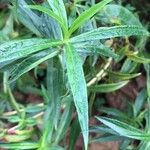
Penstemon gentianoides
Gentian beardtongue
Description
Source: leafsnapPenstemon gentianoides, commonly known as the gentian beardtongue, is a herbaceous perennial plant that belongs to the family Plantaginaceae. It is native to North America and typically grows in rocky areas, meadows, and open woods. The plant can reach up to 2 feet in height and features lance-shaped leaves arranged in opposite pairs along the stem. The flowers of Penstemon gentianoides are tubular with five lobes and showcase a deep blue-purple color. They bloom from late spring to early summer, attracting pollinators such as bees, butterflies, and hummingbirds. This plant prefers well-drained soil and full sun exposure but can also tolerate partial shade. It is drought-tolerant once established, though it benefits from occasional watering during extended dry periods. Native American tribes have used Penstemon gentianoides for its anti-inflammatory properties. Additionally, it has ornamental value in gardens due to its attractive flowers and foliage. Overall, Penstemon gentianoides is a hardy perennial that enhances the beauty of any garden while providing important ecological benefits as a pollinator attractor.
Care Guide
💧 Water Every 7 days
☀️ Light Full sun
Hartweg's beardtongue is a perennial herbaceous plant that favors sunny, open habitats and is frequently found in meadows and grasslands. It prefers full sun but will also tolerate partial sun.
What are the sunlight requirements for Gentian beardtongue?
Gentian beardtongue (Penstemon gentianoides) thrives in various sunlight conditions. For full sun exposure, it requires above 6 hours of sunlight daily, which is ideal for its growth and flowering. In cases of partial sun, about 3-6 hours of sunlight per day is sufficient. It's important to observe how sunlight moves through your garden to find spots providing the perfect balance of light and shade, ensuring the plants' optimal growth and happiness.
🌡️ Temperature 15–35°C
Hartweg's beardtongue can tolerate a broad spectrum of temperatures, though its range may still be restricted by specific combinations of moisture and heat. It performs best in warm summer conditions with sufficient rainfall or watering. Extended stretches of cloudy, rainy weather, as well as prolonged high temperatures, raise the likelihood of Hartweg's beardtongue dying. In winter, protecting the plant from cold can increase its chances of survival.
💨 Humidity
🪴 Soil 6-8
🌱 Fertilizer
The best time to fertilize a Hartweg's beardtongue is in early spring, as it comes out of dormancy and begins active growth. Fertilizer supplies essential nutrients needed for healthy development. Although Hartweg's beardtongue has relatively low fertilizer requirements, an annual application can improve its survival and encourage better, longer-lasting flowers.
🪴 Pot & Repot
To thrive, Gentian beardtongue needs pots with excellent drainage. This prevents excess water from accumulating, which can cause root rot and other problems.
✂️ Pruning
Gentian beardtongue showcases vibrant, tubular flowers that draw in pollinators. To maintain the plant, prune it in early spring by removing dead stems and cutting back the taller ones by one-third. This encourages bushiness and new growth. Additionally, deadheading the faded blooms extends the flowering period, improves air circulation, and reduces the risk of disease.
🌿 Propagating
🐛 Diseases & pets
☠️ Toxicity
Characteristics
- Plant Type
- Herb
- Life Cycle
- Perennial
- Genus
- Penstemon
- Family
- Plantaginaceae
- Hardiness Zone
- 7-10
- Mature Height
- 76 cm
- Mature Spread
- 49 cm
- Leaf Color
- Green
- Leaf Type
- Deciduous
- Flower Color
- Red, Pink, Purple
- Flower Size
- 2.03 cm to 3.05 cm
- Bloom Time
- Late spring, Summer, Early fall, Mid fall
- Planting Time
- Spring, Summer, Autumn
- Harvest Time
- Late summer, Fall
- Native Area
- Mexico