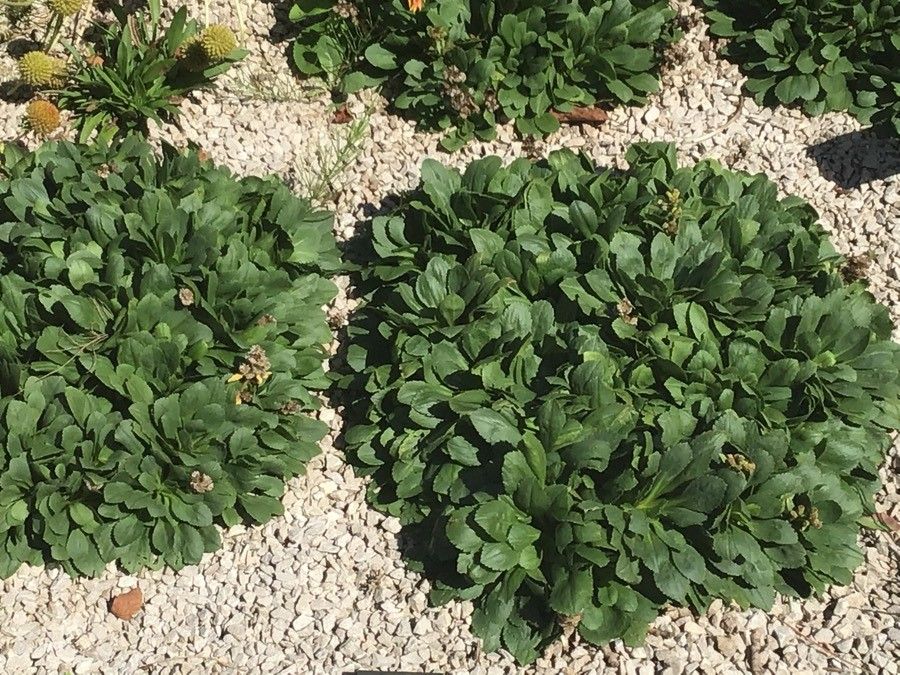
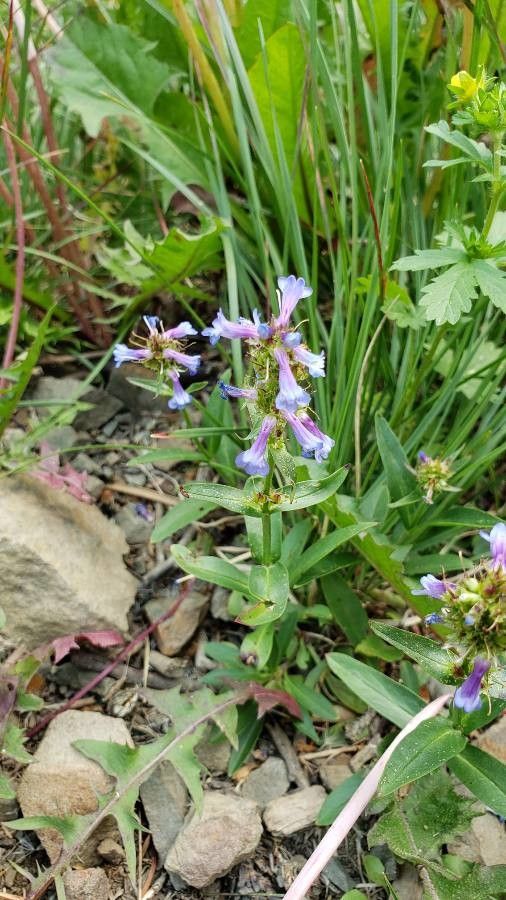
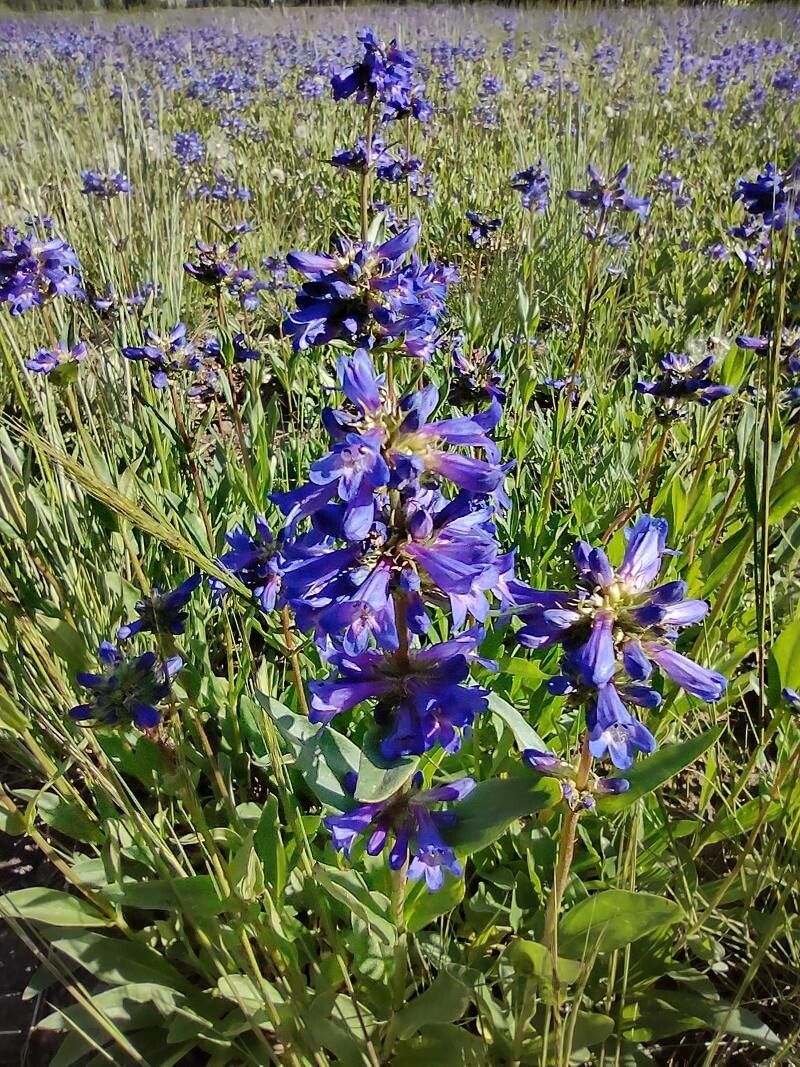
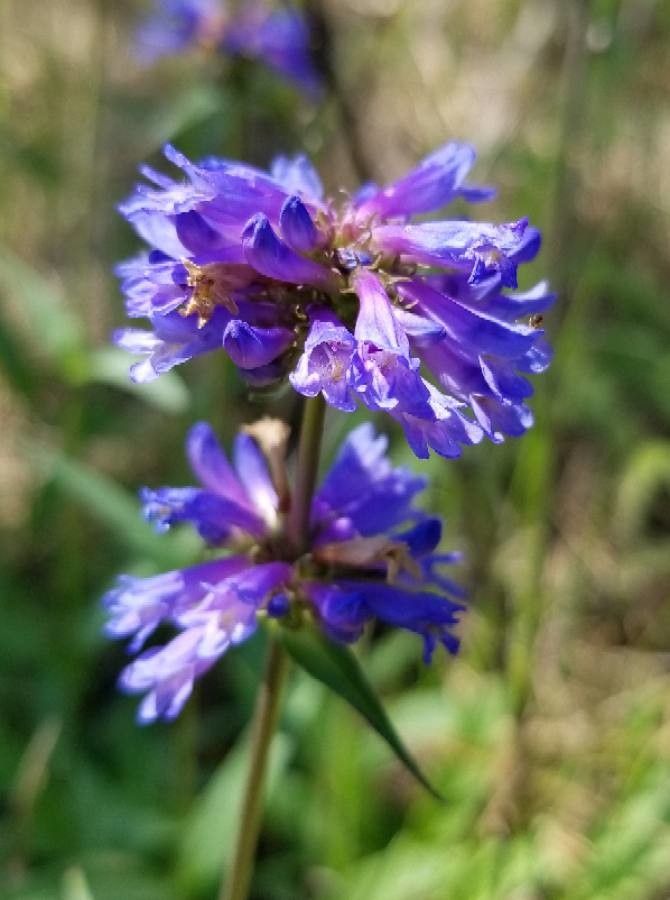
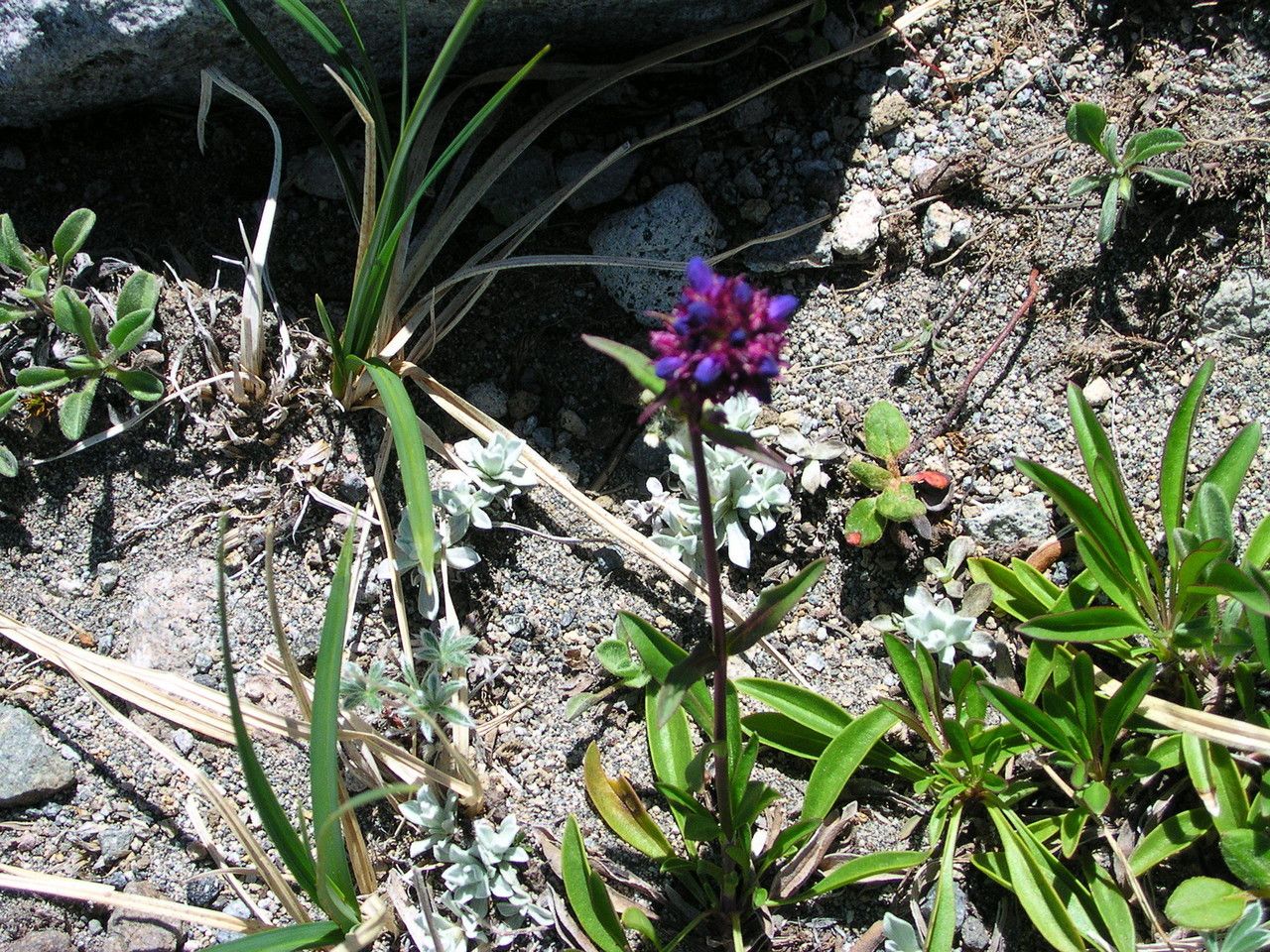
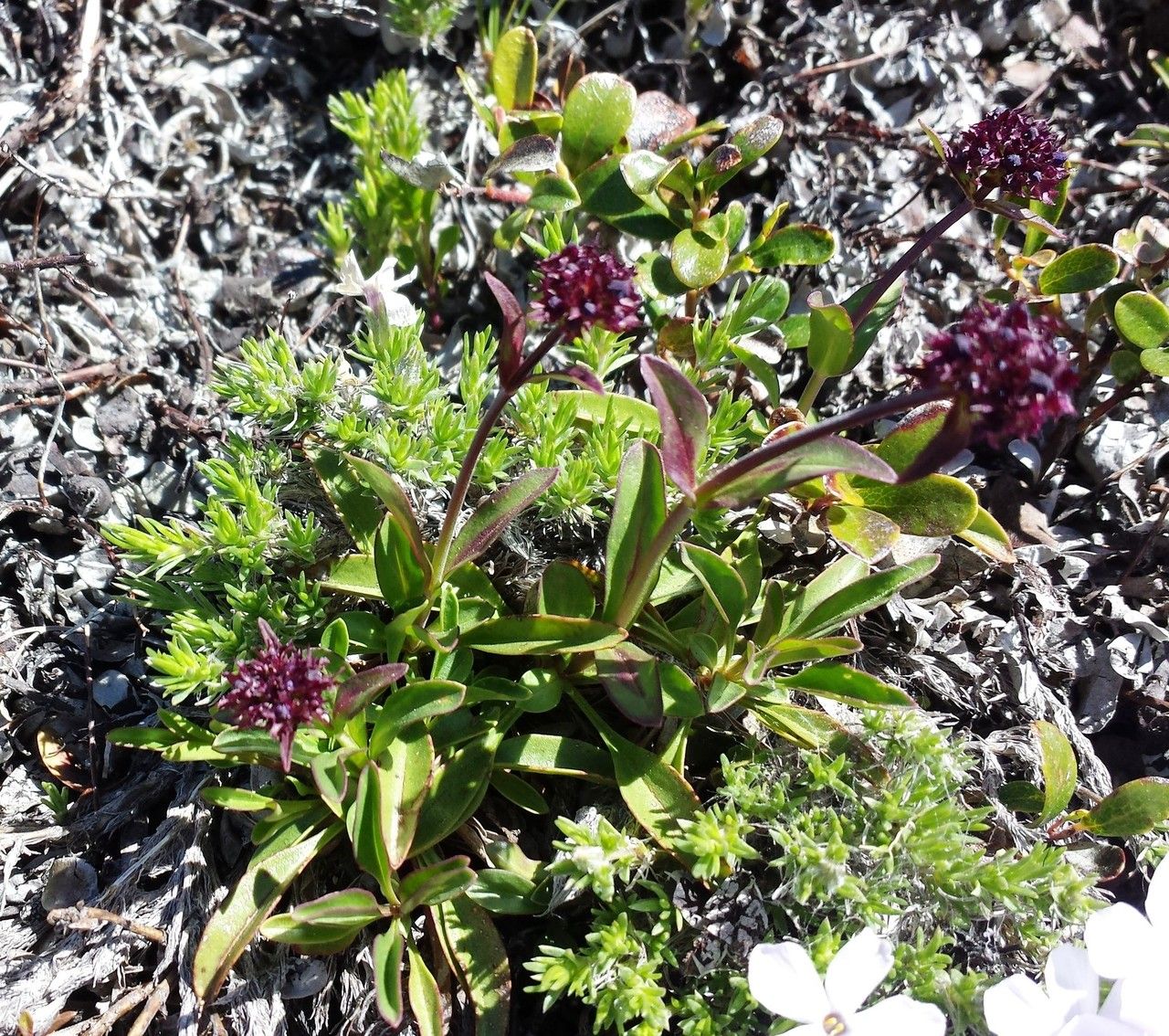
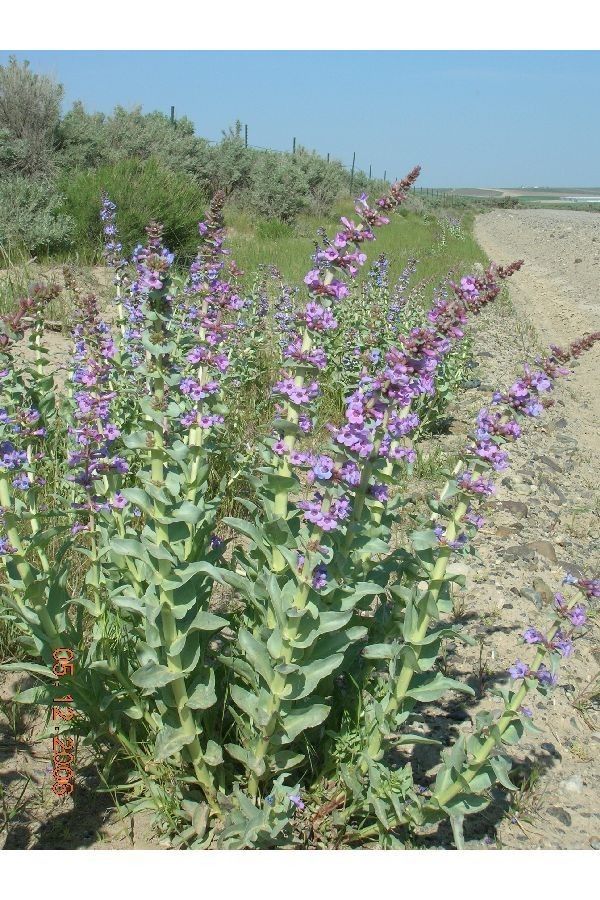
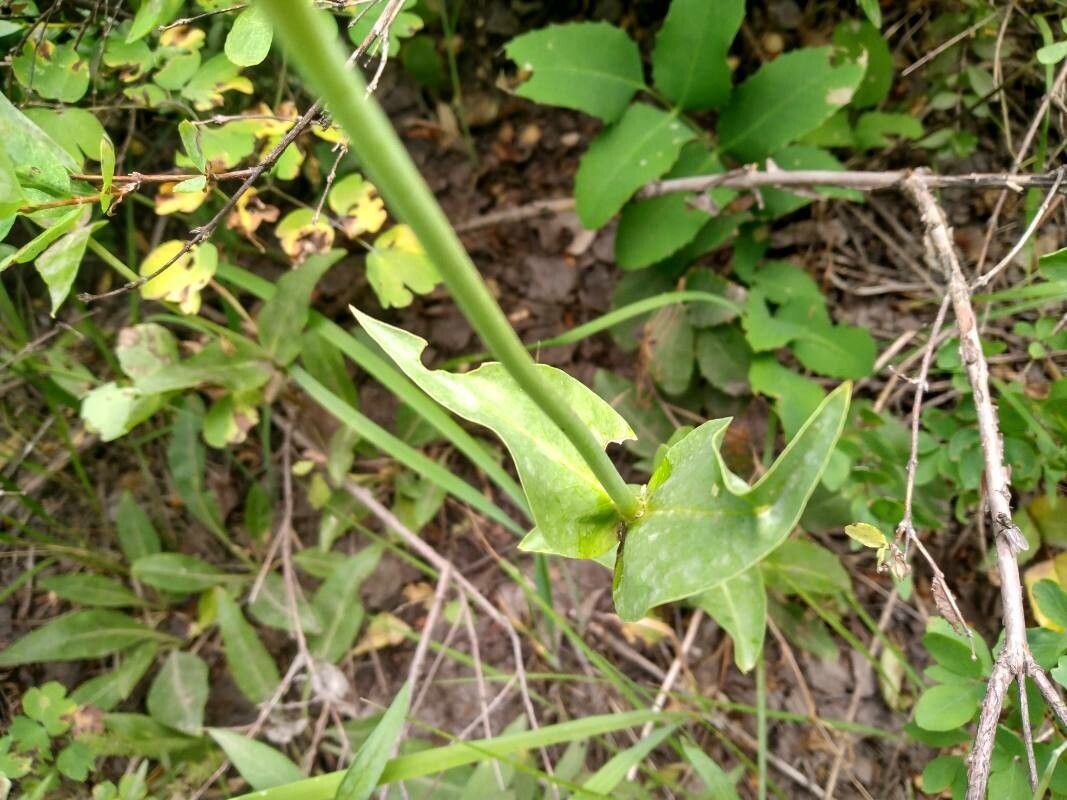
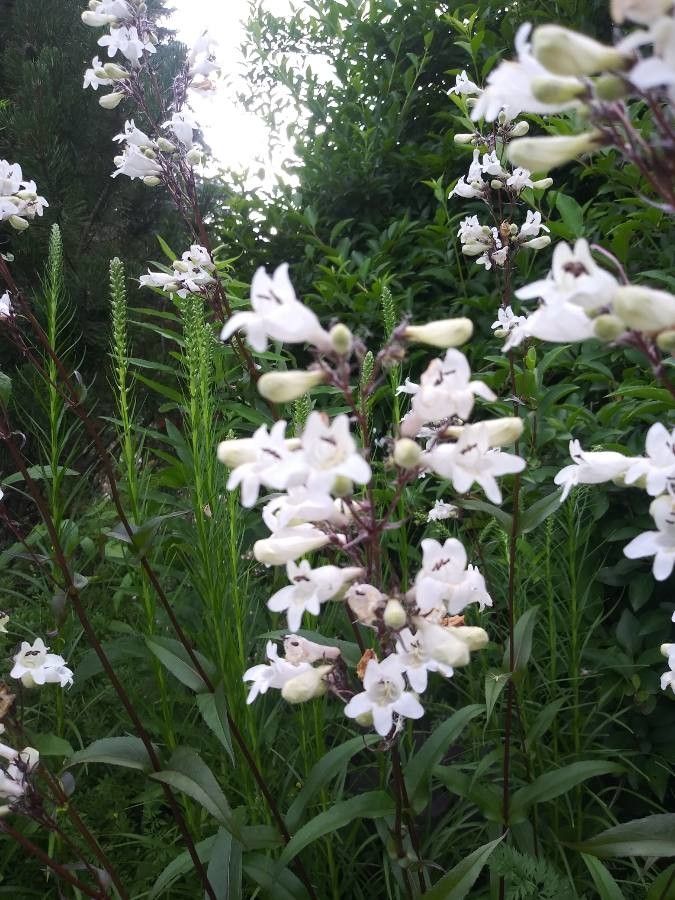
Penstemon procerus is a species of penstemon known by the common name littleflower penstemon. It is native to western North America from Alaska to California to Colorado, as far east in Canada as Manitoba, where it grows in mountain habitat such as meadows, often in alpine climates. This herbaceous perennial forms mats of herbage with some erect stems reaching about 40 centimeters in maximum height. There are several varieties which vary in morphology, some more decumbent than others, some of which are known commonly as pincushion penstemons for their matted forms. In general, the leaves are lance-shaped to oval, plentiful around the base of the plant with smaller ones arranged in opposite pairs along the stem. The inflorescence is made up of one or more clusters of tubular flowers with lipped, lobed mouths. Each flower is no more than one centimeter in length and is purple to blue in color, often with a white throat. The outside of the flower is generally hairless, while the inside may be lined with white or yellowish hairs. The Latin specific epithet procerus means "tall".In cultivation in the UK the cultivar 'Roy Davidson' has won the Royal Horticultural Society's Award of Garden Merit. It copes with a range of situations, but requires a well-drained medium in full or partial sun.
Small-flower penstemon is fairly disease-resistant and typically not vulnerable to illnesses. That said, it can be affected by pests and diseases present in its environment. Such infections are generally mild. Regarding care, this plant needs a moderate amount of attention. Regular pruning is necessary to preserve an attractive appearance and encourage healthy growth. Applying fertilizer can also aid in increasing flower production. Small-flower penstemon is appropriate for anyone who has an outdoor area, like a garden or patio, and does not demand extensive gardening experience. It may need more attention when cultivated indoors.
How to keep Penstemon Procerus.
Light
Small-flower penstemon needs a large amount of sunlight to thrive. In its native habitat it received unshaded sun all day, which encouraged healthy foliage and vivid flowering. Insufficient light can restrict its growth, while an excess may cause harm.
Water
The small-flower penstemon flourishes in well-drained soils with moderate humidity. It needs consistent moisture without becoming waterlogged and should be watered weekly. In temperate regions, this outdoor plant benefits from rainwater during its growing season to ensure proper hydration.
Temperature
Small-flower penstemon occurs naturally where temperatures range from 32 to 90°F (0 to 32℃). It grows well in both cool and warm climates. Seasonal temperature adjustments are usually unnecessary for this hardy species.
Fertilizer
Small-flower penstemon should be fertilized mainly in early spring while its flowers are developing. The appropriate fertilizer promotes better blooms and helps Small-flower penstemon produce attractive flowers. Fertilizing in early spring ensures strong flowers during the season and supplies energy for dormant growth stages.
Pruning
Small-flower penstemon features vibrant blossoms and thrives in well-drained soil. To promote growth, it is best to prune from early to late spring, removing any dead stems. Regular pruning enhances air circulation and encourages blooming, but it is important to avoid heavy pruning after the plant has bloomed, as this can cause stress. With proper care, the plant will remain healthy and produce a beautiful display of flowers.
Pot & Repot
To thrive in pots, small-flower penstemon needs excellent drainage. Good drainage prevents waterlogging and root rot, ensuring the plant's optimal growth and health.
Botanical profile.
- Plant Type
- Herb
- Life Cycle
- Perennial
- Genus
- Penstemon
- Family
- Plantaginaceae
- Hardiness Zone
- 3-7
- Mature Height
- 5 cm to 30 cm
- Mature Spread
- 8 cm to 15 cm
- Leaf Color
- Green
- Leaf Type
- Semi-evergreen
- Flower Color
- Blue, Purple
- Flower Size
- 2.54 cm
- Bloom Time
- Late spring, Early summer, Mid summer
- Planting Time
- Spring, Summer, Autumn
- Harvest Time
- Late summer, Early fall, Mid fall
Other names.
Reader questions.
How should I water my Small-flower penstemon?
To properly care for the Small-flower penstemon, it is important to use filtered water at room temperature. Tap water may contain harmful particles that could affect its health. Additionally, the water should be warm to mimic the plant's natural warm environment and prevent any shock. It is best to avoid watering the plant from above as it could lead to issues with the foliage. Instead, apply the filtered room temperature water directly to the soil until it is fully saturated. This method benefits the plant by providing moisture to the roots and aiding in their spread throughout the soil to gather necessary nutrients.
What are the sunlight requirements for Small-flower penstemon?
Small-flower penstemon thrives best in full sunlight, requiring more than 6 hours of sunlight daily. However, it can also grow in partial sun, which entails about 3-6 hours of sunlight. It's crucial to observe how sunlight moves through your garden to select spots offering the ideal balance of light and shade. This ensures the plants' health and happiness by mimicking their natural ecosystem, which is exposed to unobstructed sun throughout the day. Inadequate sunlight might hinder growth, while too much sunlight can be harmful.
What is the natural temperature range for small-flower penstemon?
Small-flower penstemon, also known as Penstemon procerus, thrives naturally in a temperature range from 32 to 90°F (0 to 32°C). This robust species is well-suited to both cool and warm climates, displaying a high level of cold tolerance. It does not require seasonal temperature adjustments or additional frost protection measures during winter. However, to safeguard against drought and water scarcity during the colder months, it is advisable to water the plant generously before the first freeze in autumn, ensuring the soil remains moist as it enters a frozen state.
What should I do if I give my Small-flower penstemon too much water or too little water?
Overwatering can be more harmful to Small-flower penstemon than underwatering. When this species is overwatered, its stems and leaves may wilt and turn yellow. Prolonged overwatering can also lead to diseases like root rot, mold, and mildew, which can kill the plant. On the other hand, underwatering is less common because the plant is fairly tolerant to drought. However, if underwatering occurs, the leaves may become brittle and brown. It is important to identify signs of overwatering early to prevent irreversible damage, particularly with diseases like root rot. If signs of overwatering are spotted, reduce watering immediately and consider replacing poorly-draining soil with a well-draining potting mix. If signs of underwatering emerge, simply increase the watering frequency until the signs subside.
Can artificial lighting be used for Small-flower penstemon, and how?
Yes, artificial lighting can support Small-flower penstemon's growth, especially when natural sunlight is insufficient. This is particularly useful in winter or less sunny locations. LED lights are recommended because they can provide specific wavelengths needed for the plant. The amount of light varies based on plant needs: full sun plants require 30-50W/sq ft, partial sun plants 20-30W/sq ft, and shade plants 10-20W/sq ft. The artificial light should be positioned 12-36 inches above the plant and kept on for 8-12 hours per day to mimic natural sunlight conditions.
How should I care for my small-flower penstemon during very low temperatures?
Small-flower penstemon is exceptionally cold-tolerant, capable of enduring winter temperatures down to -35°C (-31°F) without the need for special measures. Despite this tolerance, if temperatures dip below -35°C, you may not notice any changes during the winter, but there could be a decrease in sprouting or even no sprouting at all come springtime. In such cases, it’s recommended to remove any parts of the plant that have failed to sprout as part of your spring care routine.
How often do I need to water my Small-flower penstemon?
If your Small-flower penstemon is in a pot, the easiest way to tell if it needs water is to stick your finger in the soil. If the top two to three inches of soil are dry, then it's time to water it. The same method can be used if you're growing the Small-flower penstemon in the ground. When the first few inches of soil have dried out, it's time to water it. In the spring and early fall, watering once a week is usually sufficient. However, during extremely hot weather, you may need to water it twice a week or even more. It's important to note that mature, well-established Small-flower penstemons have a strong ability to tolerate drought.
What are the symptoms of incorrect lighting conditions in Small-flower penstemon?
Symptoms include small or new leaves growing smaller than previous ones, leggy or sparse growth indicating inadequate light, whereas faster leaf drop signals an attempt to conserve resources. Under poor light, growth may slow or cease as the plant enters survival mode. Leaves can develop lighter colors or patterns due to chlorophyll deficiency. Excessive sunlight might cause chlorosis (yellowing leaves), sunscald, leaf curling (to minimize water loss), wilting because of increased water loss, and leaf scorching, characterized by brown or dry leaf edges.
What should I do if my small-flower penstemon experiences high temperatures?
Small-flower penstemon does not fare well in high temperatures, particularly those exceeding 32°C (90°F). Excessive heat halts its growth and increases its susceptibility to rot. To mitigate the effects of high temperatures, trim the sunburned and dried-up parts of the plant. Relocating the plant to an area with shade during the midday and afternoon heat or employing a shade cloth can provide necessary protection. Additionally, maintaining soil moisture through watering in the morning and evening is crucial in such conditions.
How much water does my Small-flower penstemon require?
To properly water your Small-flower penstemon, don't be afraid to give it a generous amount of water. Make sure the top two to three inches of soil are dry before watering. When you water, make sure the soil is thoroughly soaked. You should water enough so that excess water flows out through the drainage holes at the bottom of the pot. If you don't see any excess water draining, it means you haven't watered enough. However, be careful not to let water accumulate in the soil, as this can be harmful to the plant. If there is no water draining through the pot, it might be a sign of poorly draining soil, which is not good for the plant's health. If the plant is outdoors, it typically only needs 1 inch of rainwater per week.
How can lighting conditions be optimized for Small-flower penstemon indoors and outdoors?
For indoor plants, gradually move them to sunnier spots to achieve at least 6 hours of direct sunlight, or use artificial light for large plants not easily moved, ensuring at least 8 hours of light daily. Outdoors, adapt plants to sunlight by gradually relocating them to prevent sunburn. Removing obstructions like trees or transplanting to sunnier locations can enhance light exposure. Although damaged parts might not recover, new growth should be healthy with improved lighting.
How do I water my Small-flower penstemon when it's growing at different stages?
The water needs of the Small-flower penstemon can vary depending on different growth stages. In the early years and after transplanting, it requires more water due to the focus on developing new roots for future growth. These new roots perform best with a slightly higher level of moisture. As the plant matures, it will require less water. Another stage when it may need more water is during the bloom period, as flower development utilizes a significant amount of moisture.