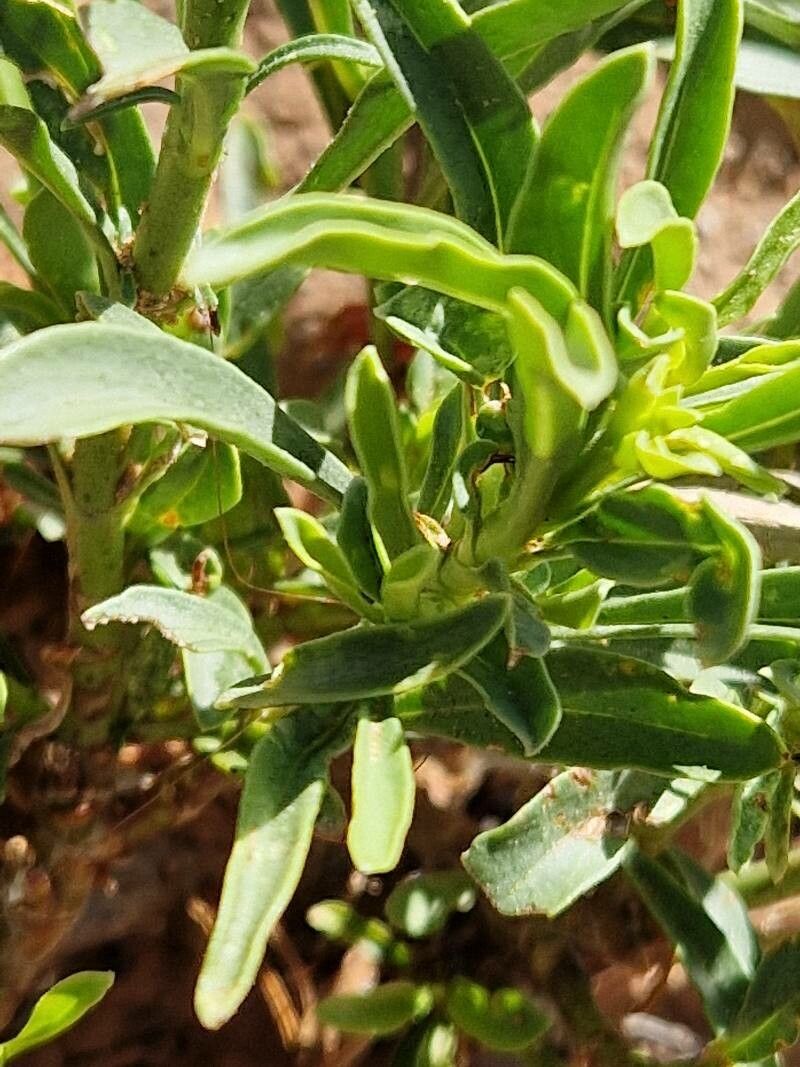
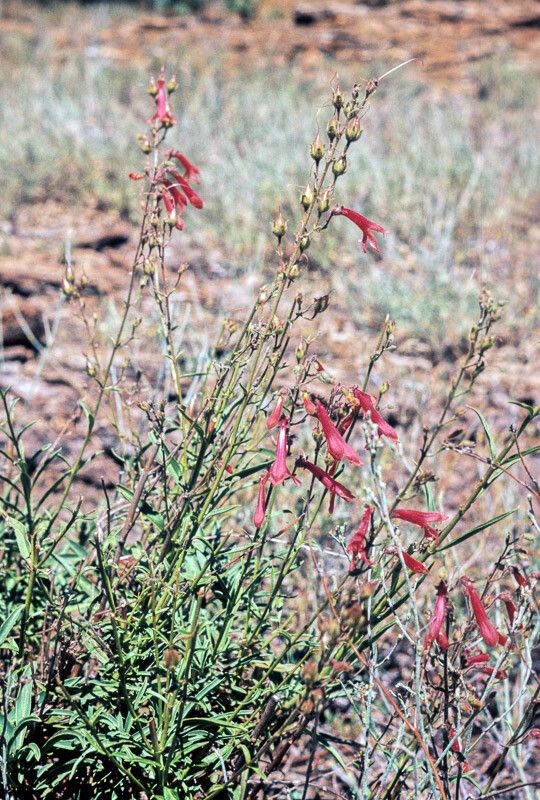
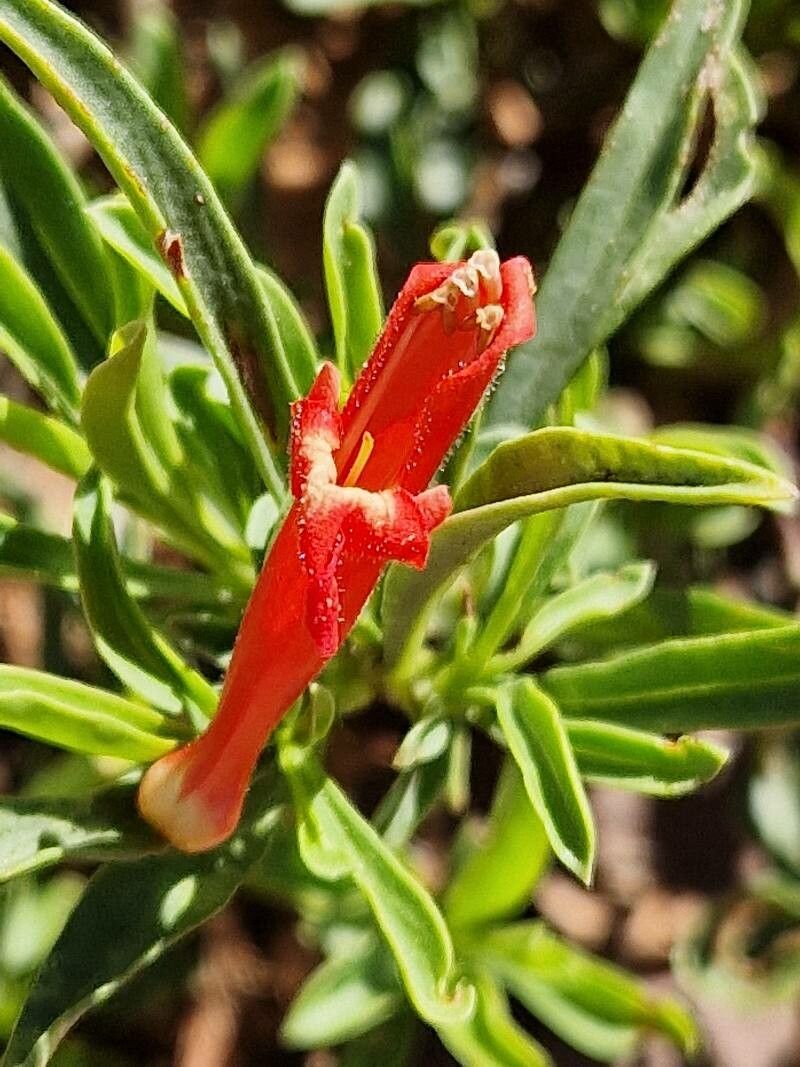
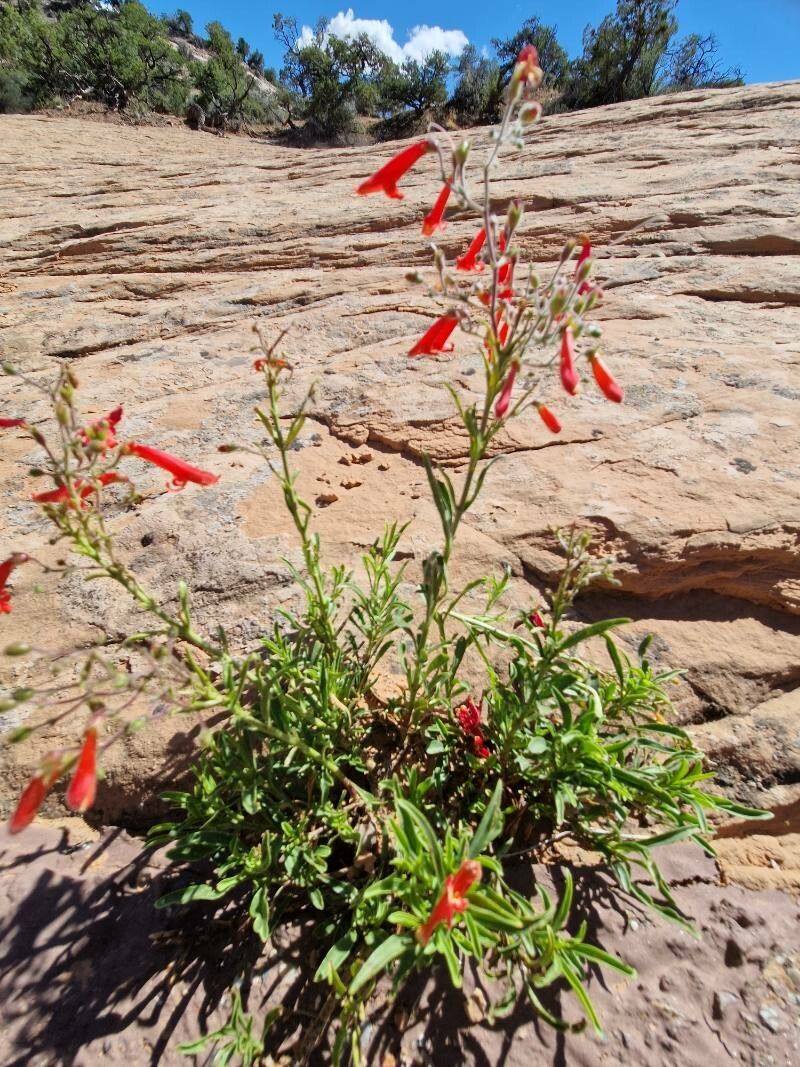
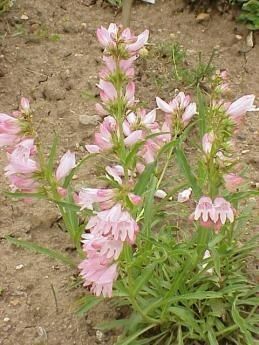
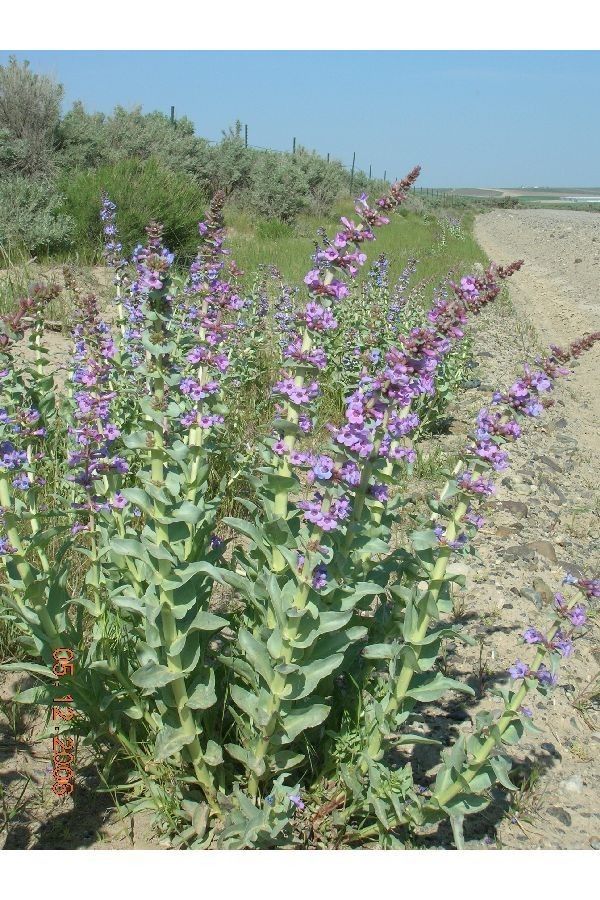
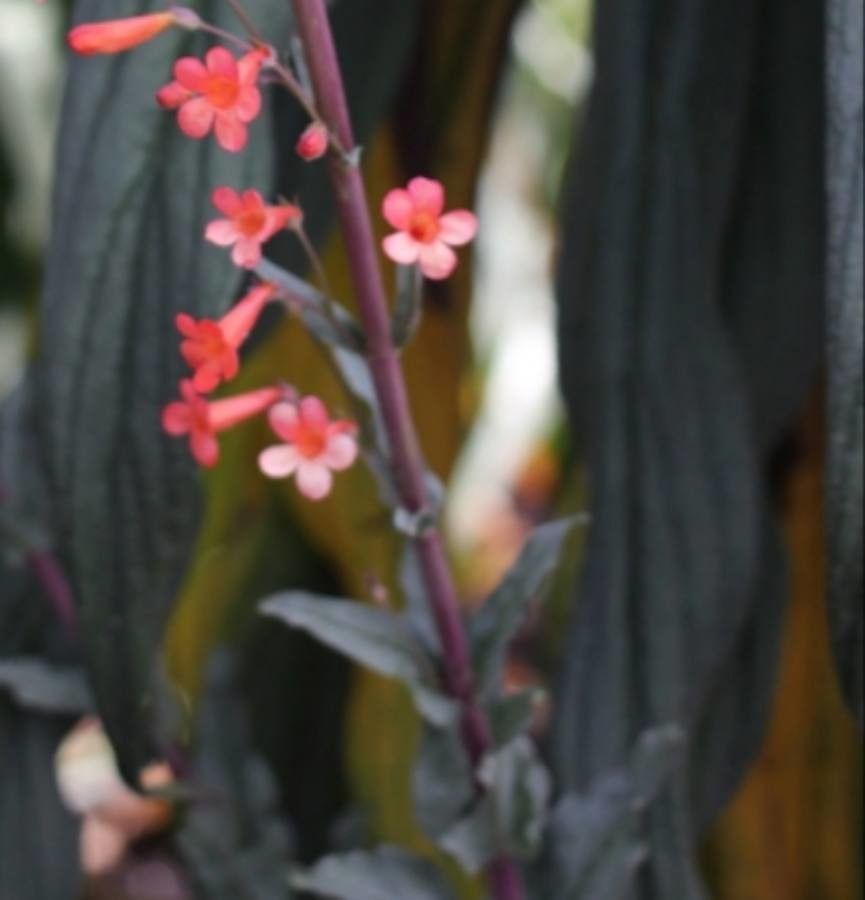
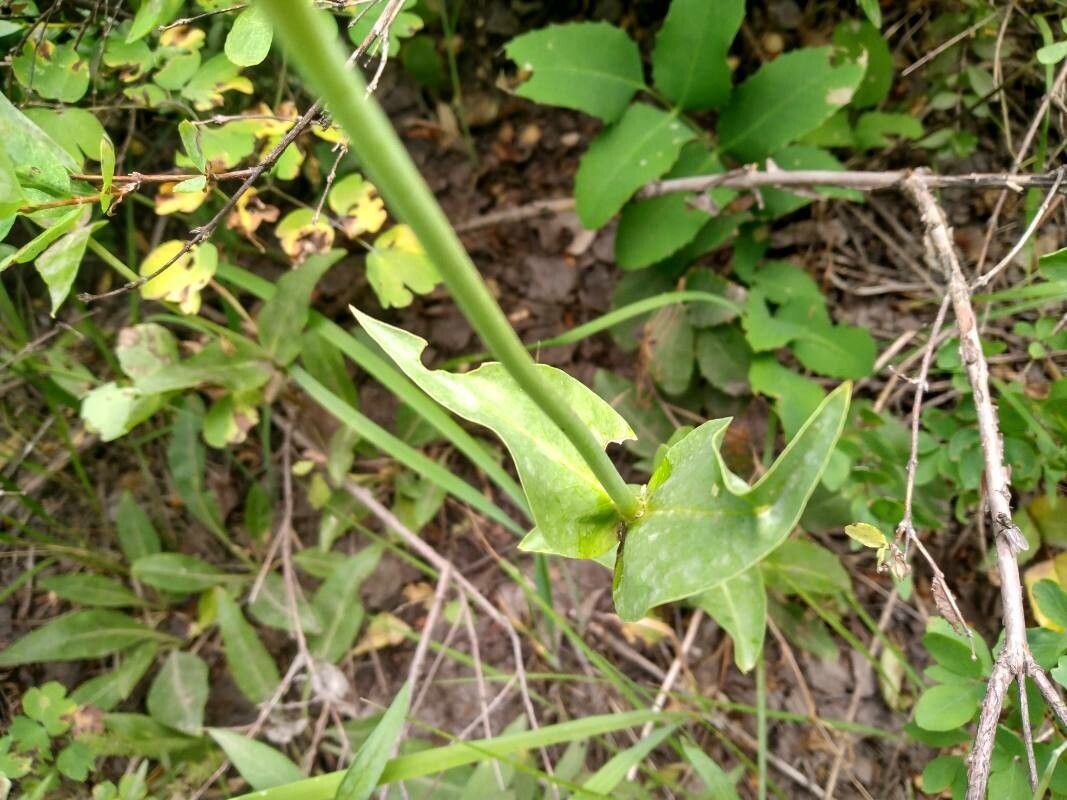
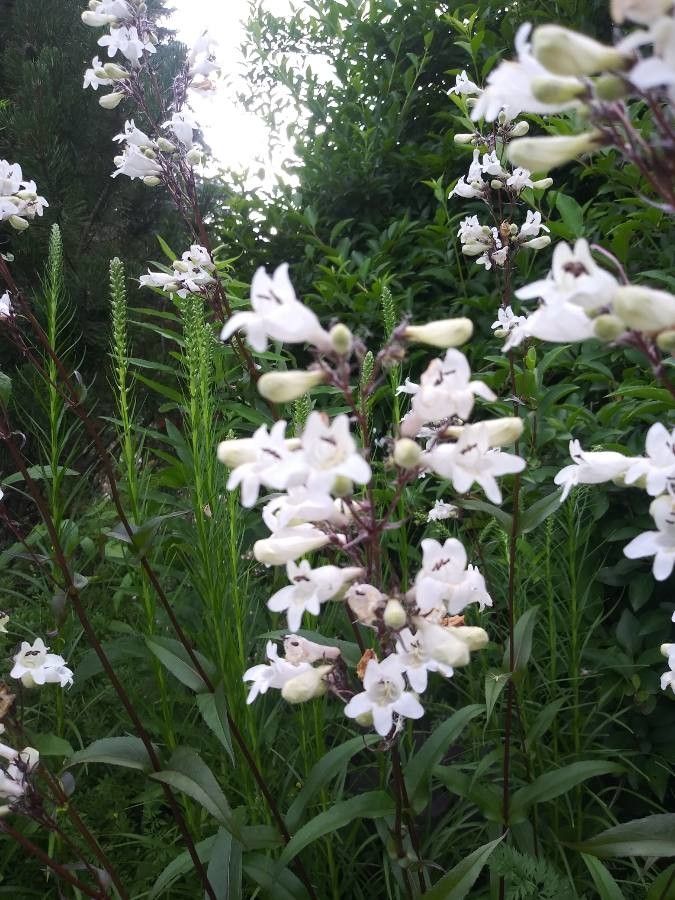
Penstemon rostriflorus, commonly known as the beaked penstemon, is a perennial herbaceous plant in the family Plantaginaceae. Native to North America, it flourishes in diverse habitats including prairies, meadows, and rocky slopes. The plant can grow up to 60 centimeters tall and features narrow leaves arranged in opposite pairs along the stem. The flowers of Penstemon rostriflorus are tubular with a distinctive beak-like projection at the tip. Their colors range from pinkish-purple to blue-violet, blooming from late spring through early summer. Known for its hardiness, this plant thrives in a variety of soil types and attracts pollinators such as bees, butterflies, and hummingbirds with its nectar-rich flowers. Historically, Penstemon rostriflorus has been used for medicinal purposes by Native American tribes to treat ailments such as coughs, colds, sore throats, and fevers. In summary, Penstemon rostriflorus is an attractive perennial that adds vibrant color to gardens and landscapes while providing essential ecological benefits by attracting pollinators.
Botanical profile.
- Plant Type
- Herb, Shrub
- Life Cycle
- Perennial
- Genus
- Penstemon
- Family
- Plantaginaceae
- Hardiness Zone
- 4-8
- Mature Height
- 30 cm to 61 cm
- Mature Spread
- 15 cm to 30 cm
- Leaf Color
- Green
- Leaf Type
- Evergreen
- Flower Color
- Red, Orange
- Flower Size
- 2.54 cm
- Bloom Time
- Summer
- Planting Time
- Spring, Summer
- Harvest Time
- Late summer, Early fall, Mid fall
- Native Area
- Mexico
Other names.