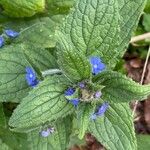
Pentaglottis sempervirens
Green Alkanet · Bird's-eye · Evergreen bugloss · Evergreen alkanet · Alkanet
Description
Source: leafsnapPentaglottis sempervirens, commonly known as green alkanet, is a perennial herbaceous plant belonging to the Boraginaceae family. Native to Europe and western Asia, it has also become naturalized in other parts of the world. The plant can grow up to 60 cm tall and features dark green, hairy leaves with white spots. Its blue-purple flowers, which bloom from April to June, are arranged in a funnel shape with five petals. Green alkanet thrives in moist soils and is commonly found along roadsides, hedgerows, woodland edges, and waste areas. It is frequently cultivated as an ornamental plant due to its attractive flowers, but it can also be invasive, spreading rapidly through self-seeding. The leaves of Pentaglottis sempervirens have been used for medicinal purposes for centuries, primarily due to their anti-inflammatory properties. Additionally, the plant has historical use as a natural dye for textiles. While Pentaglottis sempervirens is both an attractive and medicinally beneficial plant, it should be monitored carefully if planted in gardens or landscapes due to its invasive nature.
💡 Pentaglottis sempervirens is a weedy plant that is frequently mistaken for the forget-me-not, which belongs to the Myosotis genus. The key differences are that Pentaglottis sempervirens has brighter flowers and larger leaves compared to the forget-me-not.
🌳 Evergreen bugloss is cherished by gardeners for its vibrant electric-blue flowers that bloom in the spring and early summer. This beautiful ornamental plant is a popular choice in wildflower and cottage gardens. It adds a splash of color to borders and flower beds while attracting bees, and it generally remains free from pests and diseases.
Care Guide
💧 Water Every 7 days
Evergreen bugloss flourishes in moist, shaded environments and needs consistent moisture without becoming waterlogged. It requires weekly watering and thrives in well-draining soil to keep its lush foliage as a perennial evergreen. Because it has low drought tolerance, maintaining stable hydration is crucial for its optimal health.
How should I water my Evergreen bugloss plant?
When watering the Evergreen bugloss, it is important to use filtered water at room temperature. Tap water can contain harmful particles for this plant, so filtered water is the better option. The water should be at room temperature or slightly warmer because the Evergreen bugloss is used to a warm environment, and cold water can be a shock to its system. Instead of overhead watering, it is better to apply filtered room temperature water directly to the soil until it is fully soaked. This helps moisten the roots and facilitates their spreading through the soil to collect the necessary nutrients.
If I give my Evergreen bugloss too much or too little water, what should I do?
Both overwatering and underwatering can harm the health of your Evergreen bugloss, but overwatering is more likely. When this species gets too much water, its stems and leaves may wilt and turn yellow. Overwatering for a long time can also lead to diseases like root rot, mold, and mildew, which can kill your plant. Underwatering is less common for the Evergreen bugloss because it can tolerate drought fairly well. However, underwatering can still happen, and when it does, you'll notice the leaves becoming brittle and brown. It's important to recognize the signs of overwatering early when taking care of your Evergreen bugloss. Some of the diseases caused by overwatering, like root rot, may not be fixable if you wait too long. If you see early signs of overwatering, reduce your watering immediately. You might also want to check the quality of the soil your Evergreen bugloss is in. If the soil doesn't drain well, replace it with loose, well-draining potting mix. On the other hand, if you notice signs of underwatering, simply water more regularly until the signs go away.
How frequently should I give water to my Evergreen bugloss?
If you have a potted Evergreen bugloss plant, you can check if it needs water by sticking your finger into the soil. If the top two to three inches of soil are dry, it's time to water it. If you have your Evergreen bugloss plant in the ground, you can use the same method to check the soil. If the top few inches of soil are dry, it's time to water it. Generally, during spring and early fall, you'll need to water this plant about once a week using this method. However, in extremely hot weather, you may need to water it twice a week or more. It's worth noting that mature, well-established Evergreen bugloss plants can withstand drought well.
How much water does my Evergreen bugloss plant need?
To ensure your Evergreen bugloss gets enough water, don't be afraid to water it generously. Wait until the top two to three inches of soil are dry, then give the plant a thorough watering. Make sure to water enough to saturate the soil completely, causing excess water to flow out of the drainage holes. If you don't see any excess water draining, you may have not provided enough water. However, be cautious not to let water accumulate in the soil, as this can harm the plant. On the other hand, if water doesn't drain properly from the pot, it could be a sign of poorly draining soil, which is not good for the plant's health. If the plant is outdoors, about one inch of rain per week is usually sufficient.
How do I water my Evergreen bugloss at different stages of growth?
The Evergreen bugloss's water requirements vary with different growth stages. In the early years or after transplanting to a new location, it needs more water. During these stages, the plant focuses on developing new roots for future growth, so they require extra moisture. However, as the plant matures, it will need less water. Additionally, during the bloom period, the flower development process requires a significant amount of moisture, so watering may need to be increased at this time.
☀️ Light Partial sun
Evergreen bugloss generally does best with gentle exposure to moderate sunlight, though it can also tolerate low-light conditions. Too much sun can cause less-than-optimal growth, while too little light may produce weak or slow development. Its origin in lightly dappled understorey habitats explains its adaptable light requirements.
What are the sunlight requirements for Evergreen bugloss?
Evergreen bugloss, or Pentaglottis sempervirens, thrives best under medium-intensity sunlight but can adjust well to lower light levels. It originally grows in light-dappled understorey habitats, which provides it with flexible light requirements. The plant needs about 3-6 hours of sunlight (partial sun) for optimal growth but can survive in full shade (less than 3 hours of sunlight) conditions. It's crucial to observe your garden's sunlight patterns carefully to find the perfect balance of light and shade for your plants, ensuring their health and happiness.
How can artificial lighting be used for indoor Evergreen bugloss plants?
When natural sunlight is insufficient for indoor Evergreen bugloss plants, especially during winter or in areas receiving less sunshine, artificial lighting can be an effective solution. LED lights are recommended for their ability to mimic the specific wavelengths of light the plants require. For full sun plants, 30-50W per square foot is needed; partial sun plants require 20-30W per square foot, and full shade plants need 10-20W per square foot. The artificial light source should be placed 12-36 inches above the plant and kept on for 8-12 hours a day to simulate natural daylight conditions.
What are the common symptoms of light deficiency or excess in Evergreen bugloss?
Evergreen bugloss exhibits various symptoms when exposed to improper lighting conditions. Light deficiency may lead to smaller new leaves, leggy or sparse growth, faster leaf drop, slower or halted growth, lighter-colored new leaves, and symptoms of chlorosis. Excessive sunlight can cause sunscald, leaf curling, wilting, leaf scorching, and chlorosis as well. These symptoms indicate that the plant is struggling with the current light conditions and requires adjustment to its environment.
How can I optimize the light conditions for Evergreen bugloss?
To optimize light conditions for Evergreen bugloss, gradually introduce the plant to more direct sunlight each week, aiming for 3-6 hours of exposure daily. This gradual adaptation helps prevent shock from sudden changes. If moving the plant is not feasible, consider supplementary lighting, such as desk lamps or professional grow lights, for at least 8 hours daily. For outdoor plants, it's crucial to transition them to sunnier spots gradually to avoid sunburn. If light is obstructed by elements like trees, pruning may be necessary. Transplanting smaller plants into sunnier locations during their dormant period can also improve light availability.
🌡️ Temperature 10–35°C
Evergreen bugloss originates from temperate regions and thrives in temperatures of 50 to 95 °F (10 to 35 ℃). As seasons shift, maintain its surroundings within that range to support optimal growth.
What is the ideal temperature range for Evergreen bugloss?
Evergreen bugloss, or Pentaglottis sempervirens, thrives in temperate environments, with an ideal temperature range between 50 to 95 °F (10 to 35 °C). To ensure optimal growth, it's important to keep its surroundings within this temperature range as the seasons change. The plant possesses strong cold resistance, hence special frost protection is usually not necessary during winter. However, if temperatures are expected to drop below -25°C, providing cold protection by covering the plant with materials such as soil or straw is advisable. Abundant watering before the first freeze in autumn to maintain moist soil can help the plant endure winter and early spring conditions.
How does Evergreen bugloss react to low temperatures?
Evergreen bugloss is cold-tolerant and fares best when temperatures are maintained above 10°C. During the winter, temperatures should be kept above -15°C. If temperatures fall below -25°C, there may not be noticeable changes immediately, but this could lead to reduced sprouting or no sprouting at all in the spring. The advisable solution in spring is to remove any parts of the plant that have failed to sprout, enabling healthier growth.
What should I do if Evergreen bugloss experiences high temperatures?
During the summer, it's crucial to ensure that the temperature around Evergreen bugloss does not exceed 35°C. Exposure to temperatures above 38°C can result in the leaves becoming lighter in color, curling, and becoming susceptible to sunburn. In severe cases, the plant may wilt and dry out entirely. The recommended course of action includes trimming away the sunburned and dried parts of the plant, moving it to a location with shade during the midday and afternoon sun, or using a shade cloth. Additionally, watering the plant in the morning and evening will help keep the soil moist and support the plant's well-being.
💨 Humidity
🪴 Soil 6-7
🌱 Fertilizer
The best time to fertilize an Evergreen bugloss is in early spring, as it comes out of dormancy and starts active growth. Fertilization supplies essential nutrients needed for healthy development. Although Evergreen bugloss has relatively low fertilizer requirements, applying fertilizer annually can improve its survival and encourage stronger, longer-lasting blooms.
Why should I put fertilizer on my Evergreen bugloss?
To keep your Evergreen bugloss looking great and functioning properly, fertilization is key. It benefits the leaves, ensuring consistent color and a healthy texture. Additionally, fertilization supports root development and maintenance, enabling your plant to absorb soil nutrients more effectively in the future.
When should I fertilize my Evergreen bugloss?
When growing Evergreen bugloss outdoors, it will send new growth in early spring, which is a sign to start fertilizing. Typically, one application of fertilizer is sufficient. However, if you want to encourage maximum growth, you can fertilize multiple times during the spring and early summer, about once every month to a month and a half.
When should I not add fertilizer to my Evergreen bugloss?
During late fall and winter, your Evergreen bugloss goes into a dormant phase and does not produce new growth. It is best to avoid fertilizing your Evergreen bugloss during this time. In spring and summer, if you choose to fertilize, gradually decrease the rate as summer approaches since the growth rate of your Evergreen bugloss will also slow down. In general, it is not recommended to fertilize your Evergreen bugloss during abnormally hot weather or when the soil is excessively dry. Fertilizing in these conditions can stress your Evergreen bugloss and lead to premature perishing.
What kind of fertilizer does my Evergreen bugloss need?
Luckily, picking the right fertilizer for an Evergreen bugloss plant is quite simple. These plants do well with a general-purpose garden fertilizer that contains equal amounts of nitrogen, phosphorus, and potassium, such as a 10-10-10 ratio. It's best to avoid fertilizers high in nitrogen when unsure. Granular fertilizers are mostly recommended for Evergreen bugloss and should be slow-release for ease of application to the soil. Additionally, feeding these plants with organic soil amendments like compost can be beneficial.
How can I make my Evergreen bugloss plant grow better?
To help your Evergreen bugloss thrive, wait until its first leaves emerge in early spring and then apply a slow-release fertilizer at the base of the plant. You can repeat this process later in the season if desired. When reapplying the fertilizer, focus on the soil rather than the plant itself. If needed, move the leaves aside to access the soil around the roots. It's also beneficial to water the bugloss before and after fertilizing.
🪴 Pot & Repot Every 12 months
✂️ Pruning
Evergreen bugloss is a perennial plant known for its vibrant blue flowers. To ensure optimal growth, it is recommended to perform light pruning in early spring, followed by more extensive shaping in late spring. Regularly removing dead stems will help promote healthy growth and blooming, while also controlling the plant's invasive tendencies.
🌿 Propagating
🐛 Diseases & pets
☠️ Toxicity
Pentaglottis sempervirens has no toxic effects reported.
Characteristics
- Plant Type
- Herb
- Life Cycle
- Perennial
- Genus
- Pentaglottis
- Family
- Boraginaceae
- Hardiness Zone
- 6-9
- Mature Height
- 61 cm to 91 cm
- Mature Spread
- 30 cm to 61 cm
- Leaf Color
- Green
- Leaf Type
- Evergreen
- Flower Color
- Blue
- Flower Size
- 0.76 cm to 1.02 cm
- Bloom Time
- Mid spring, Late spring, Early summer
- Planting Time
- Spring
- Harvest Time
- Early summer, Mid summer
- Native Area
- Spain, France, Portugal