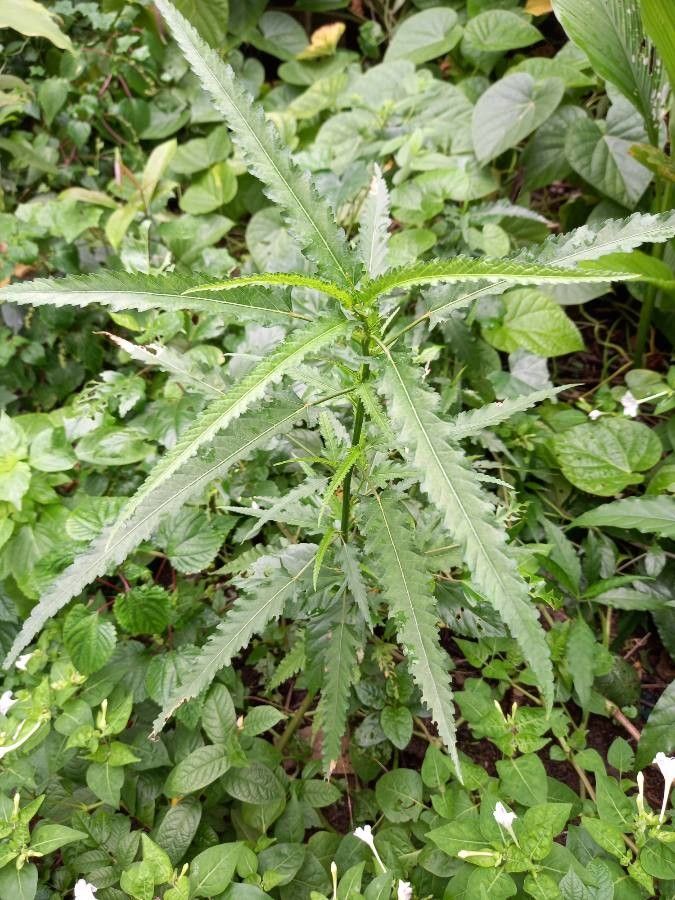
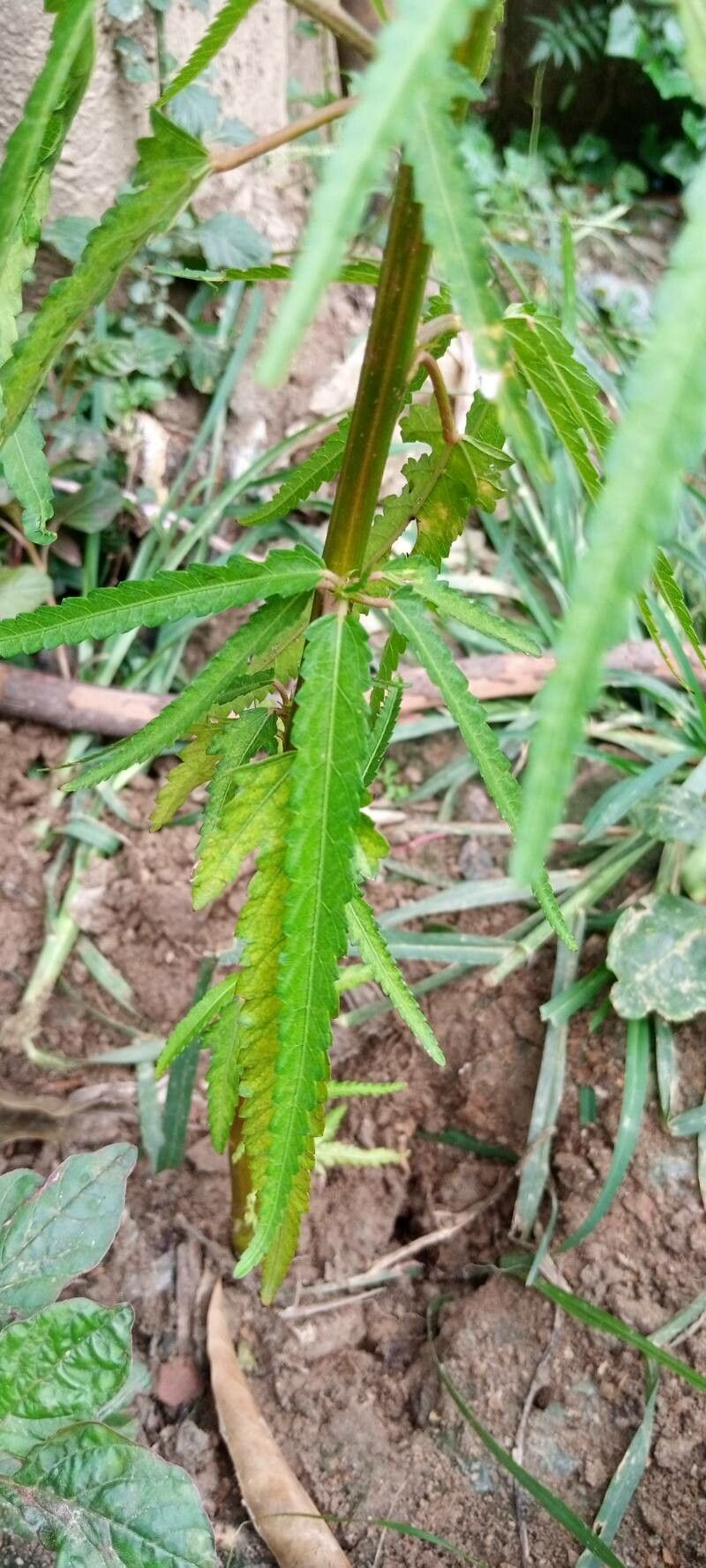
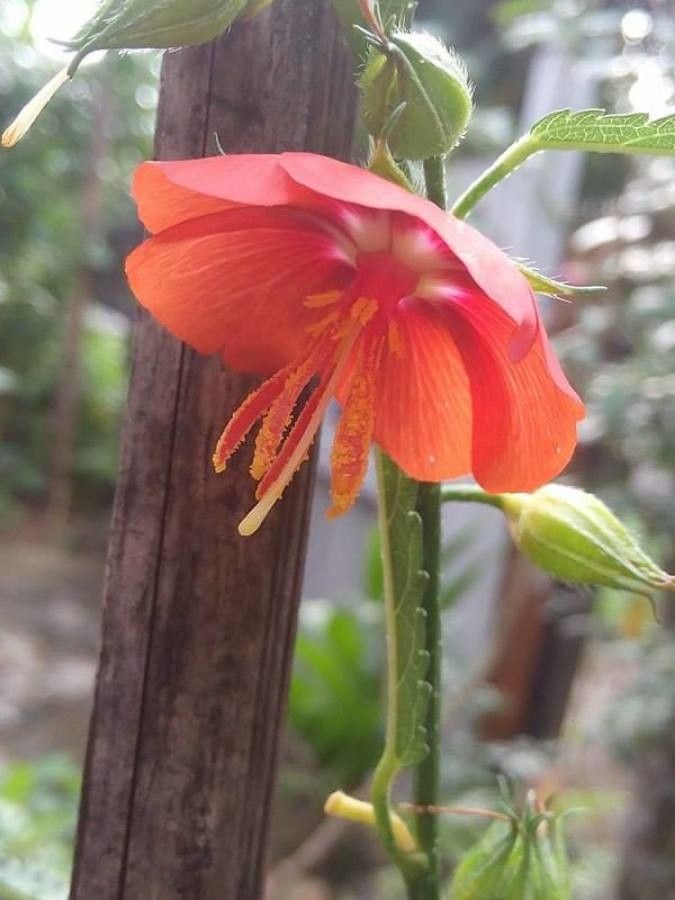
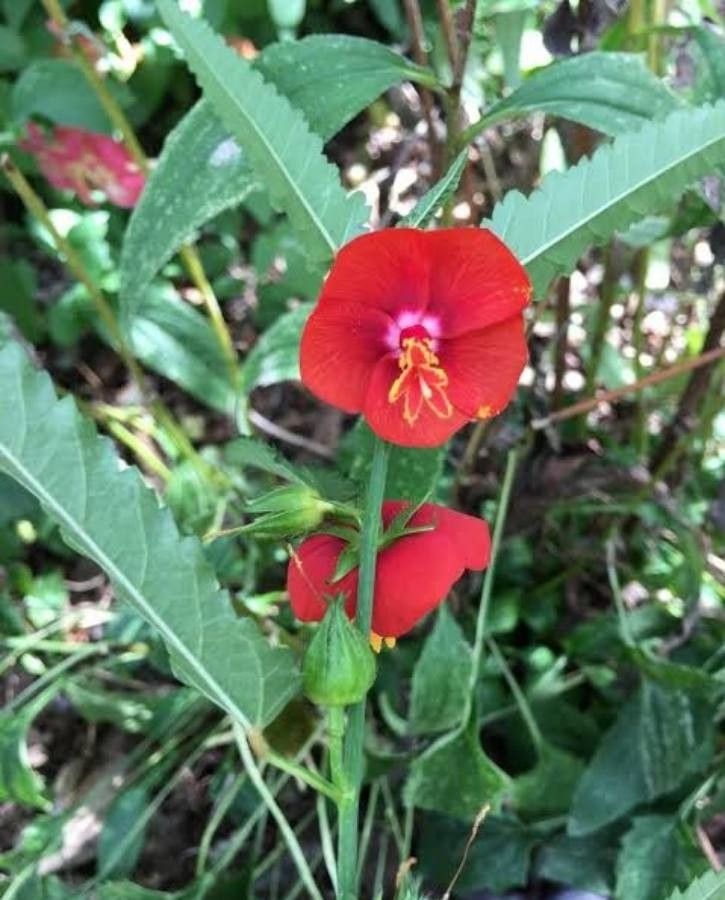
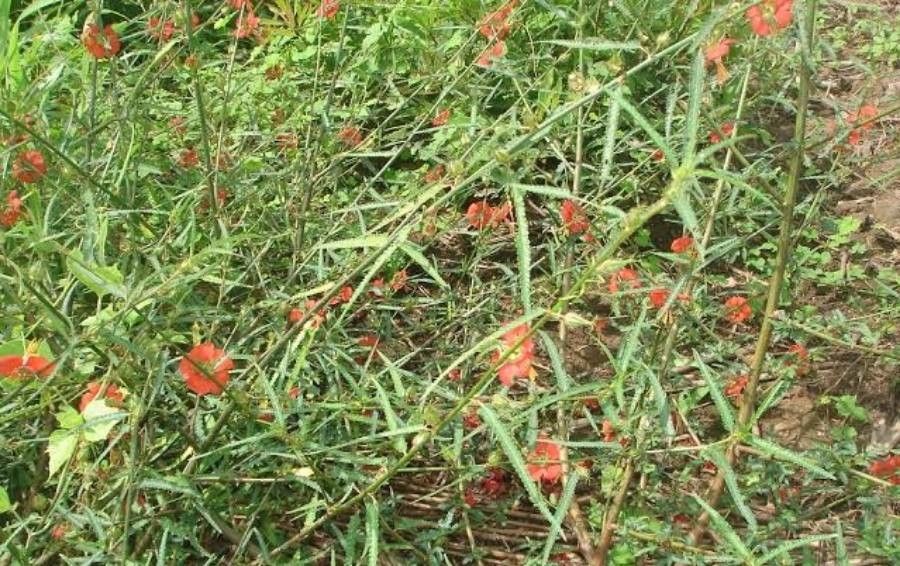
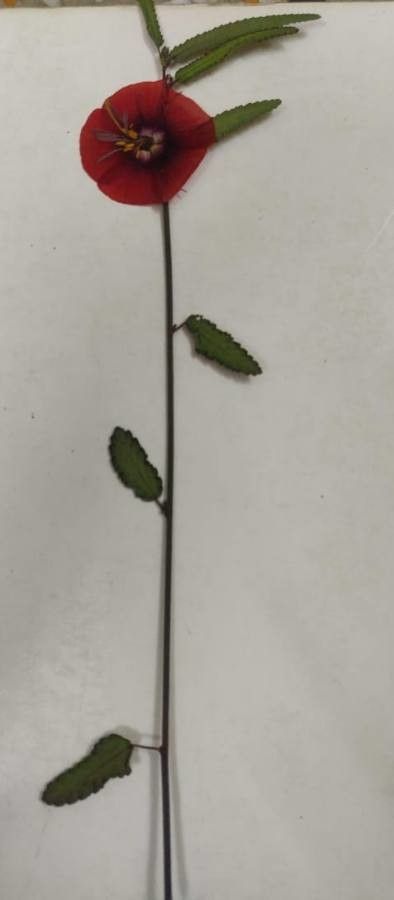
Pentapetes is a genus of flowering plants in the family Malvaceae. It contains a single species, Pentapetes phoenicea, called the noon flower and occasionally cultivated. The flower is also known as "Midday Flower" or "Scarlet Mallow". This is so named as the flowers open around noon, and closes around next day early morning. The plant grows around 4–6 ft in height and the branches are long and spreading. Leaves are 6–10 cm in length, toothed at the margins, usually having a broad base and tapering to a pointed tip. Flowers are born in the axils of the leaves with 5 large deep red colored petals. The fruit is a 5-valved, rounded, hairy capsule, about 1 centimetre in diameter. The seeds, which are not winged, occur 8–12 in two series in each cell. The flower is native to a wide region of tropical South Asia from Ceylon and India to northern Australia and the Philippines.
Flor impia presenta buena resistencia a las enfermedades y, en general, no suele ser propensa a ellas. No obstante, puede verse afectada por plagas y enfermedades presentes en su entorno. Estas infecciones suelen ser poco graves. En cuanto al cuidado, esta planta requiere un mantenimiento medio. Es necesario podarla con regularidad para mantener una buena apariencia y un crecimiento sano. La fertilización también puede ayudar a favorecer la floración. Flor impia es apropiada para cualquier persona que disponga de un espacio exterior, como un jardín o una terraza, y no exige mucha experiencia en cuidados. Puede necesitar más atención cuando se cultiva en interior.
How to keep Pentapetes Phoenicea.
Light
Flor impia is a plant that prospers under direct, unfiltered sunlight and requires a large amount of light to grow healthily. In its native environment it does best where sunlight is plentiful throughout the day. It can tolerate lower light conditions, but this may diminish the plant's vigor and interfere with its flowering cycles.
Water
Flor impia, a plant native to tropical regions, thrives in humid environments with consistent moisture. Although it can tolerate moderate drought, it grows best in evenly damp soil and benefits from weekly watering. Ideally grown outdoors in warm climates, flor impia appreciates rainwater during its active growing season.
Temperature
Flor impia originates from a climate of moderate to high temperatures and prefers 68 to 100 °F (20 to 38 ℃). For optimal growth, adjust temperatures across seasons while keeping them within this range.
Fertilizer
When most of Flor impia’s flowers have opened to their full size, resume fertilizing. At the time of peak bloom production, apply fertilizer every three to four weeks, weather permitting. Then, when Flor impia begins to produce fewer new flowers, stop fertilizing; there’s no point in feeding the plant when it can no longer produce more blooms.
Pruning
The Flor Impia plant is known for its vibrant red flowers and bushy growth. To maintain its health and beauty, it is best to prune it from early to late spring. Begin by removing any dead stems to improve air circulation. Thinning the plant will allow more light to reach its interior. After the plant has finished blooming, additional pruning can enhance future flowering and encourage bushier, healthier growth.
Botanical profile.
- Plant Type
- Herb
- Life Cycle
- Annual, Perennial
- Genus
- Pentapetes
- Family
- Malvaceae
- Hardiness Zone
- 11
- Mature Height
- 1.22 m
- Mature Spread
- 61 cm to 91 cm
- Leaf Color
- Green
- Leaf Type
- Evergreen
- Flower Color
- Red, Orange
- Flower Size
- 2.54 cm to 5.08 cm
- Bloom Time
- Summer, Early fall, Mid fall
- Planting Time
- Spring, Summer
- Harvest Time
- Late summer, Fall, Early winter
- Native Area
- Nepal, Sri Lanka, India, Malaysia, Indonesia, Cambodia, Vietnam, Myanmar, Bangladesh, Laos, Thailand
Other names.
Reader questions.
What is the ideal climate for growing Flor impia?
Flor impia thrives in a climate with moderate to high temperatures, ideally between 68 to 100°F (20 to 38°C). This plant loves heat and is vulnerable to cold. To ensure the best growth, it's important to maintain temperatures within this range throughout the different seasons. During autumn, it is suggested to bring Flor impia indoors if it's been growing outside, placing it near a bright window but away from heaters. Keeping the temperature above 20°C during winter supports the plant's growth, while temperatures near or below 10°C can harm it.
How does low temperature affect Flor impia and what are the solutions?
Flor impia is sensitive to cold, preferring warm temperatures above 20°C and requiring protection from temperatures below 10°C. Exposure to temperatures below 5°C may result in leaves lightening in color, and frost can cause them to turn brown or black, leading to wilting and drooping. To combat frost damage, remove the damaged parts of the plant and move it to a warm location indoors. Placing it near a south-facing window will ensure it gets enough sunlight without the harm of excessive heat from heaters or air conditioning vents.
What should be done if Flor impia is exposed to high temperature?
During the summer, it is crucial to keep Flor impia's temperature below 38°C. Temperatures above 43°C can lighten the color of the leaves and increase susceptibility to sunburn. If the plant suffers from sunburn or drying, trim away the affected areas and relocate the plant to a spot that is shaded during the midday and afternoon sun. Ensuring the soil remains moist by watering in the morning and evening can also help protect the plant from high temperatures.