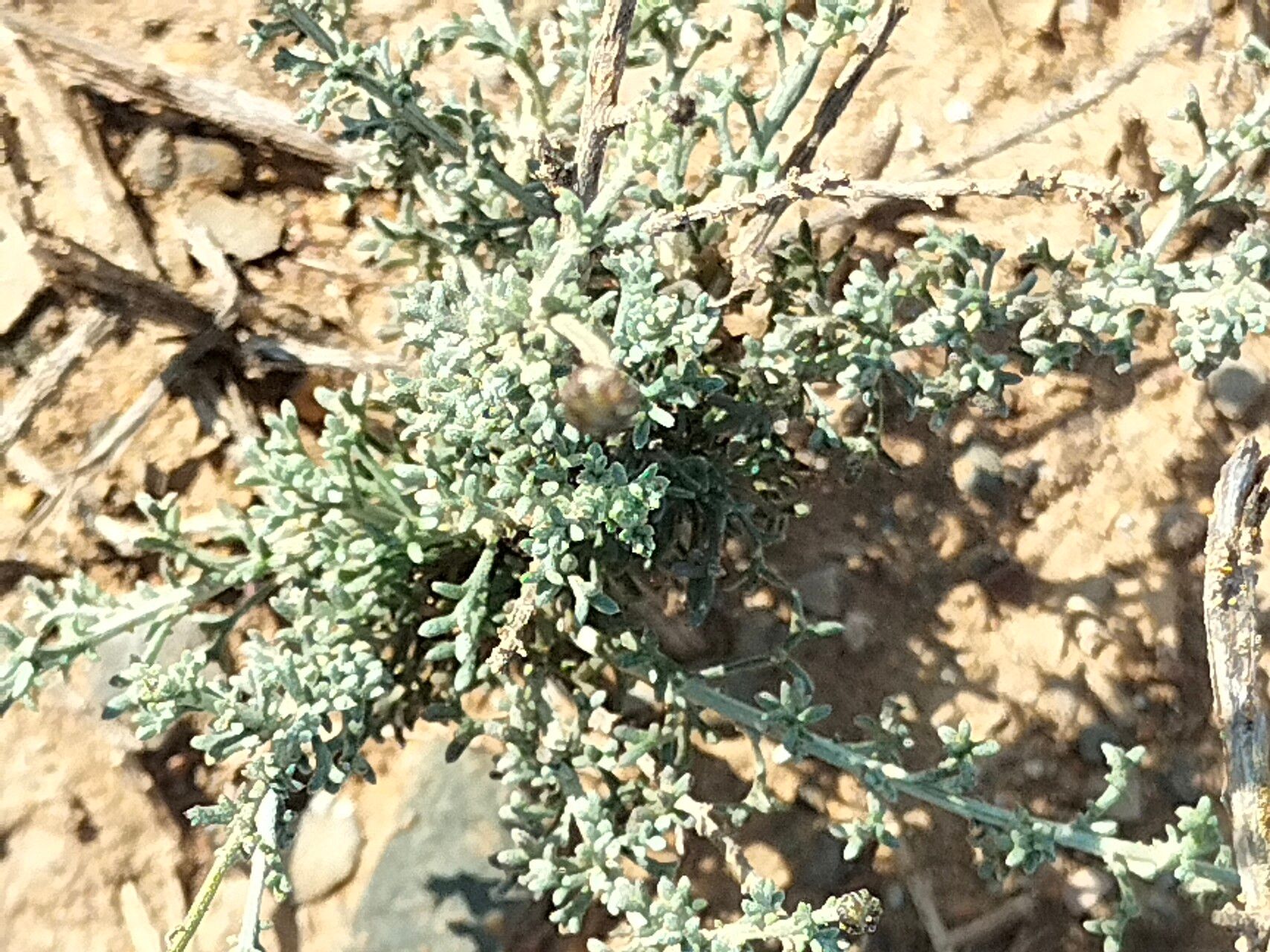
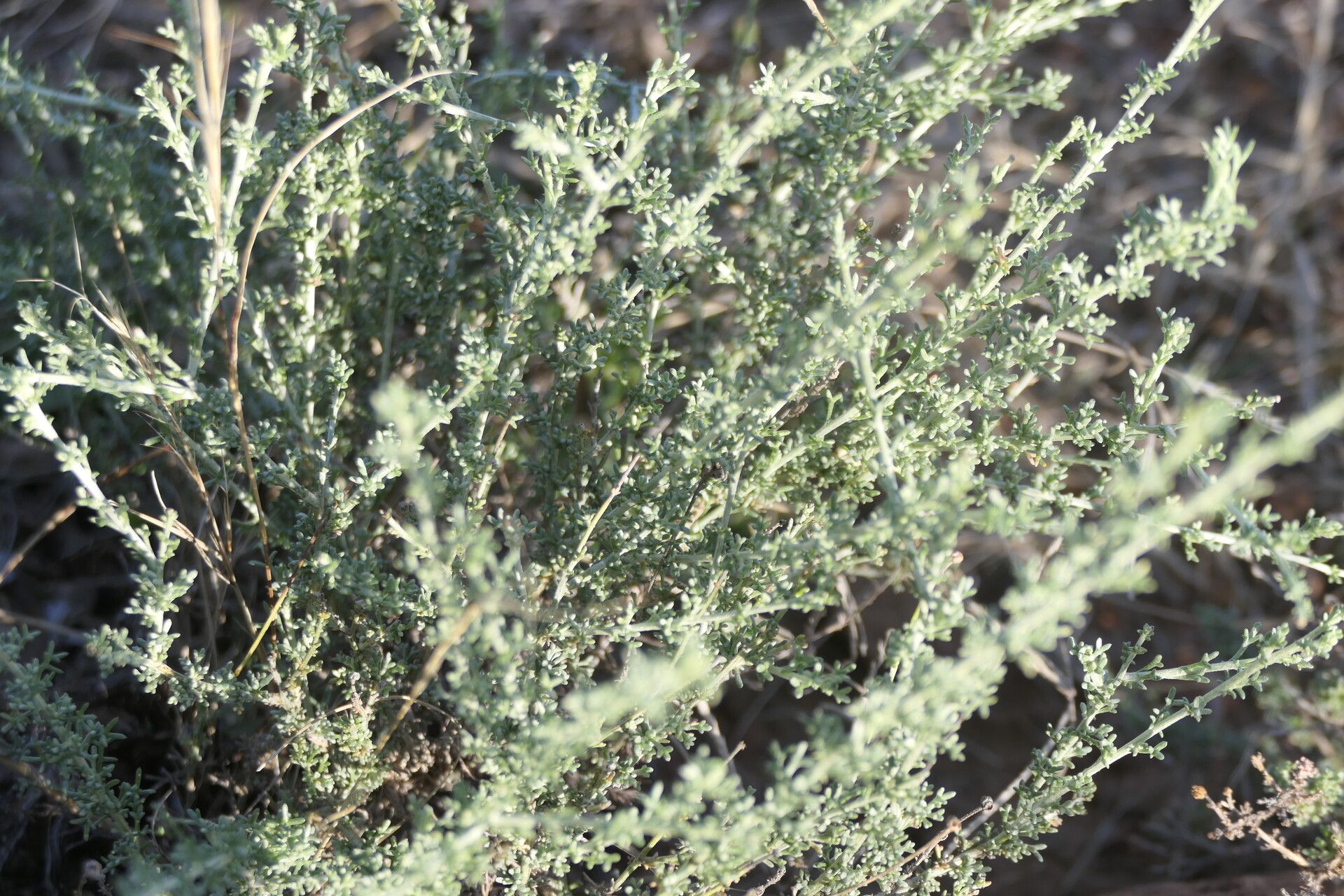
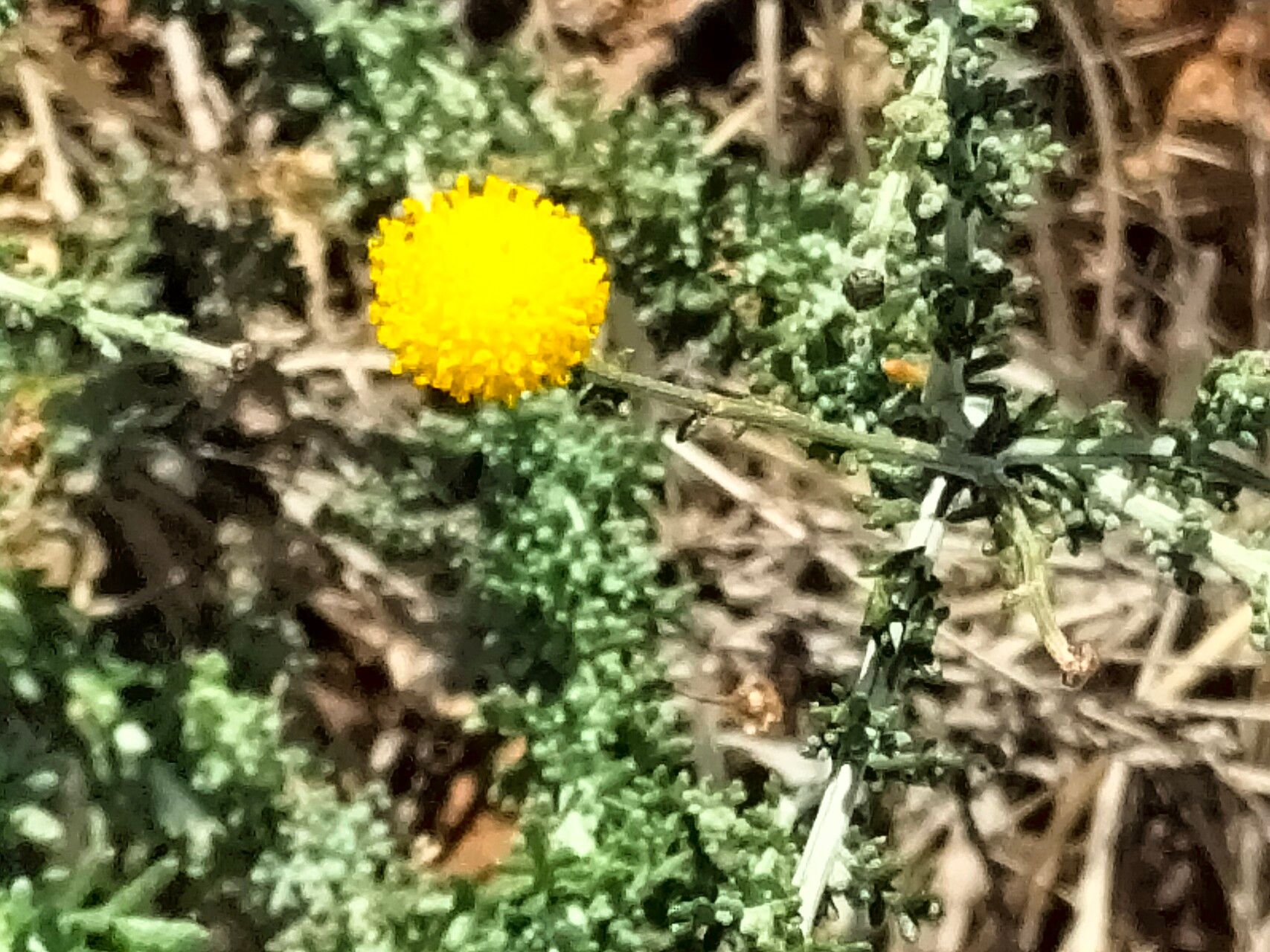
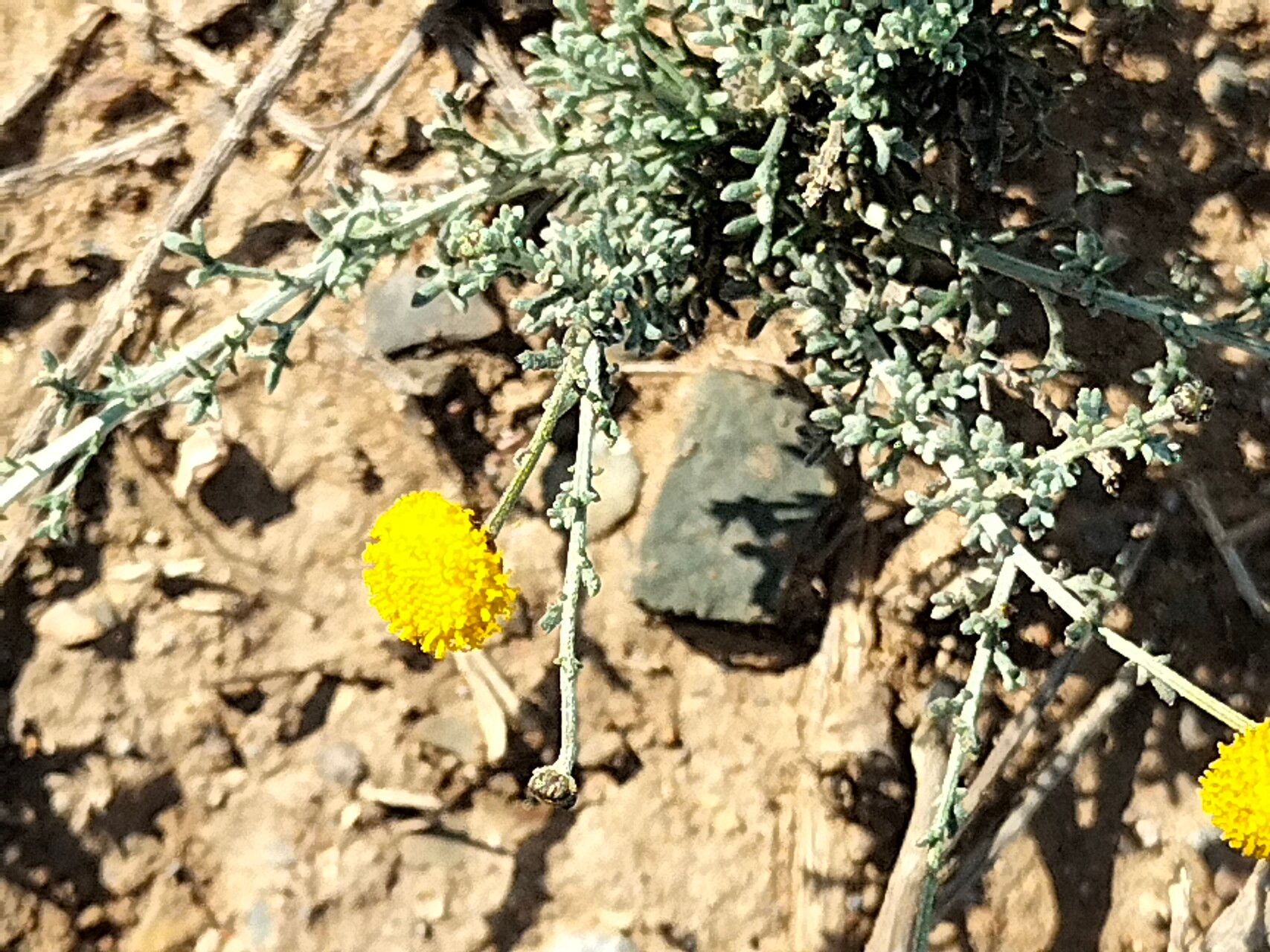
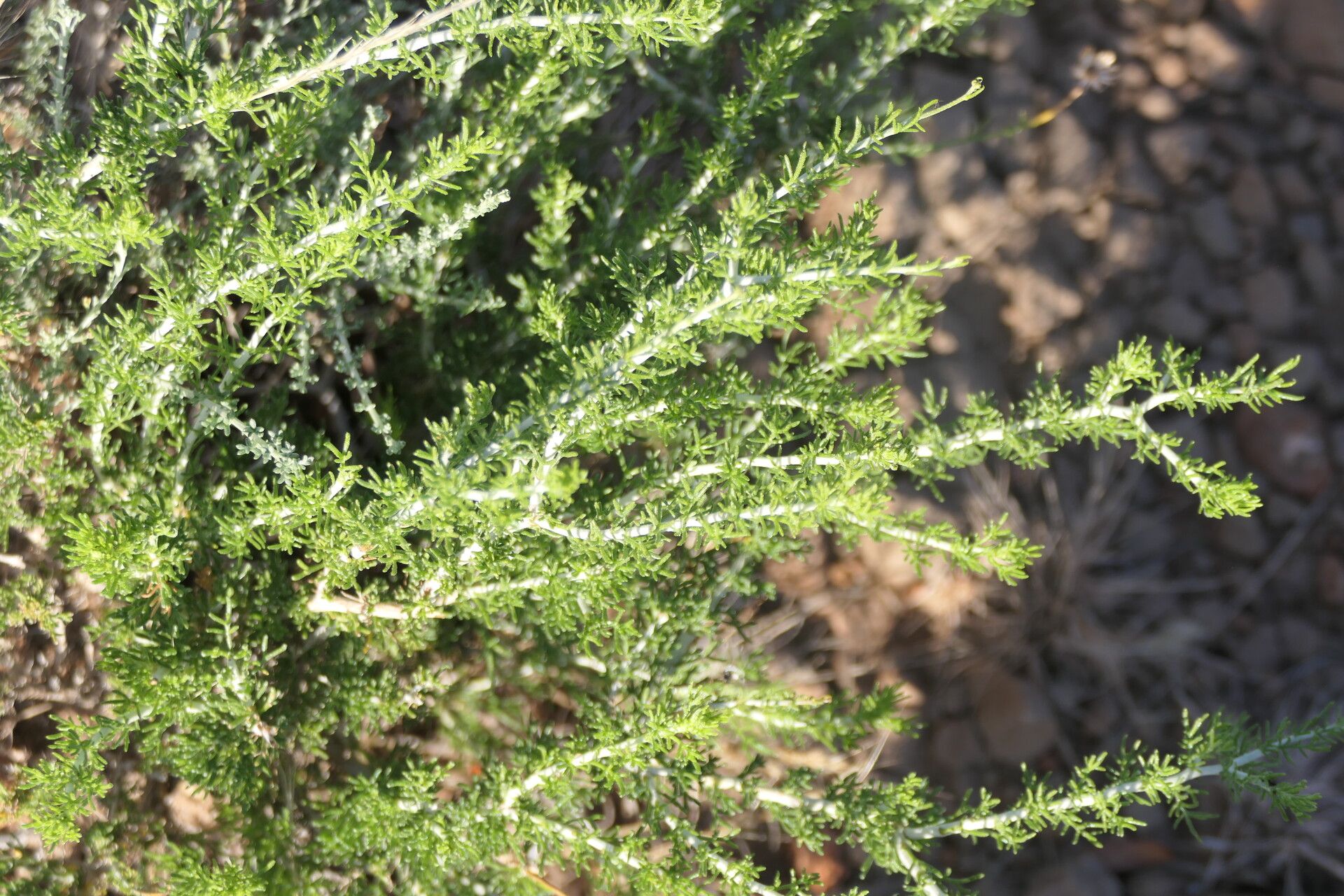
The African sheepbush (Afrikaans: goeiekaroo, "good karoo", Pentzia incana) is a plant native to South Africa and Namibia. It ranges throughout the Succulent Karoo, Nama Karoo, renosterveld, and fynbos, and it is listed under the SANBI Red List as "safe" (LC).The African sheepbush has been imported to Australia. The grey, downy shrub grows to around 60 cm (24 in) in height, with fibrous stem branches that rise, bundled 3-9 mm leaves of egg or wedge shape split one or two ways, and yellow flowers resembling chamomile.It is a reasonable grazing plant:
African sheepbush is highly disease-resistant and is usually not susceptible to illnesses. For care, this plant is fairly low-maintenance. When grown outdoors it needs only light watering, and larger plants typically do not require pruning. Smaller plants, however, should be trimmed after they finish blooming. African sheepbusht is suitable for anyone who has outdoor space, such as a garden or deck, and it does not demand much plant-care experience.
How to keep Pentzia Incana.
Light
African sheepbush comes from open habitats like sunny meadows and forest edges, where light is abundant. It does best in Full Sun but can also tolerate Partial Sun, adapting well to different sunlight conditions.
Water
The African sheepbush, native to arid regions, demonstrates a high tolerance for drought. It requires watering only about once a week. Its adaptability to dry conditions makes the African sheepbush ideal for outdoor cultivation, where it can thrive on natural rainfall. It is particularly well-suited for xeriscaping, a landscaping method designed for areas with limited water resources.
Temperature
African sheepbush is quite adaptable to temperature, able to endure higher heat and larger temperature fluctuations. In hot weather, attention should be paid to watering and providing adequate shade to prevent sunburn. However, African sheepbush has relatively poor tolerance for low temperatures. It can tolerate some cold, but excessively low temperatures can cause frost damage.
Fertilizer
To encourage healthy growth, fertilize your African sheepbush in early spring. Regular feeding improves overall health, producing vigorous growth, greater tolerance of harsh conditions, and enhanced resistance to pests and diseases. Keep to a specific fertilization schedule for your African sheepbush to maintain vibrant, deeply colored foliage and a lush appearance.
Pruning
The African sheepbush benefits from regular pruning, which helps to shape the plant and encourage healthy growth. It's best to prune during its dormant period, from early to late winter. During this time, remove any dead branches and thin out areas that are too crowded. Make sure to use clean, angled cuts. This promotes good air circulation and encourages new growth, which not only improves the plant's overall health and appearance but also reduces the risk of disease.
Botanical profile.
- Plant Type
- Shrub
- Life Cycle
- Perennial
- Genus
- Pentzia
- Family
- Asteraceae
- Hardiness Zone
- 8-11
- Mature Height
- 30 cm to 61 cm
- Mature Spread
- 30 cm to 61 cm
- Leaf Color
- Silver, Gray
- Leaf Type
- Evergreen
- Flower Color
- Yellow
- Flower Size
- 0.51 cm to 1.02 cm
- Bloom Time
- Mid spring, Late spring, Early summer
- Planting Time
- Spring, Summer, Autumn
- Harvest Time
- Summer
- Native Area
- South Africa, Namibia, Botswana, Zimbabwe
Other names.