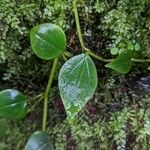
Peperomia blanda
Arid-land peperomia · Aridland peperomia
Description
Source: leafsnapPeperomia blanda, the arid-land peperomia, is a species of herb in the family Piperaceae. The species has a natural pan-tropical distribution that encompasses Asia, Africa, Australasia, Polynesia and the Americas. The species typically grows as a perennial, somewhat succulent herb to 30 cm in height, though the form varies from prostrate and creeping to up to 60 cm tall depending on environment and genotype. The typical habitat is damp rock crevices and steep stream banks.
Care Guide
💧 Water
The arid-land peperomia, native to tropical regions, thrives in an environment with consistent moderate moisture and balanced humidity. While it is drought-tolerant, it benefits from weekly watering. As an evergreen plant, it maintains its foliage throughout the year and requires a steady water supply, even during cooler months, to counteract the reduced indoor humidity.
☀️ Light Partial sun
Arid-land peperomia thrives with moderate sunlight but can also tolerate low-light conditions. Its native environments have fluctuating light levels, so it adapts to a variety of lighting. Both excessive and insufficient light can affect its well-being, influencing its growth and health.
What are the sunlight requirements for Arid-land peperomia?
Arid-land peperomia thrives under moderate sun exposure but can also endure limited light conditions. This plant is adaptable to various light conditions due to its origin in environments with fluctuating light intensities. It can flourish in partial sun, requiring about 3-6 hours of sunlight, or full shade, with less than 3 hours of sunlight. However, both excess and insufficient sunlight could negatively affect the plant's well-being, influencing its growth and overall health. It's crucial to observe the movement of sunlight in your garden to ensure the chosen spots provide an optimal balance of light and shade for the happiness of your plants.
How can artificial lighting be used for Arid-land peperomia?
Artificial lighting is essential for indoor Arid-land peperomia plants, especially when natural sunlight is insufficient. LED lights are recommended because they can be customized to supply specific light wavelengths needed by plants. For optimal growth, full sun plants need 30-50W/sq ft of artificial light, partial sun plants require 20-30W/sq ft, and full shade plants need 10-20W/sq ft. The light source should be placed 12-36 inches above the plant to mimic natural sunlight, and most plants benefit from 8-12 hours of light per day.
What are the common symptoms of inadequate light in Arid-land peperomia?
Symptoms of inadequate light in Arid-land peperomia can be subtle but may become more apparent in indoor plants. These symptoms include smaller new leaves, leggy or sparse growth, faster leaf drop, slower or halted new growth, lighter-colored new leaves, and conditions such as chlorosis, sunscald, leaf curling, wilting, and leaf scorching. These signs indicate either a deficiency or excess of light, impacting the plant's ability to photosynthesize and maintain healthy growth.
What solutions can be implemented for Arid-land peperomia experiencing light-related issues?
To optimize growth for Arid-land peperomia with light-related issues, gradually introducing the plant to sunnier spots each week until it receives adequate sunlight (3-6 hours daily) is beneficial. For indoor plants that cannot be moved, providing additional artificial light, such as keeping a lamp on for at least 8 hours daily or investing in grow lights, can help. Outdoors, gently moving plants to progressively sunnier locations while avoiding sudden changes to prevent sunburn is key. For ground plants, reducing obstructions like pruning trees or relocating the plants to sunnier areas with good drainage during their dormant period can ensure proper sunlight exposure. Note that while parts of the plant affected by insufficient light may not recover, new growth will be healthy after adjusting light conditions.
🌡️ Temperature 20–37.8°C
Arid-land peperomia is naturally suited to warm conditions, preferring a temperature range of 68 to 100°F (20 to 38℃). You may need to make seasonal adjustments to indoor temperatures to preserve its vitality.
What is the ideal temperature range for Arid-land peperomia?
Arid-land peperomia thrives in warm environments, with an ideal temperature range between 68 to 100°F (20 to 38°C). It is extremely heat-loving, and it's important to make seasonal adjustments in home temperature to keep the plant healthy. During winter, maintaining temperatures above 20°C is beneficial, while temperatures approaching 5°C can be harmful to the plant. If you've been growing Arid-land peperomia outdoors, it's recommended to bring it inside near a bright window once autumn arrives, but keep it away from direct heat sources.
How do you care for Arid-land peperomia in low temperatures?
Arid-land peperomia struggles in low temperatures and prefers to be kept in environments where the temperature is consistently above 20°C. During colder months, ensure the temperature stays above 5°C to prevent damage. If exposed to temperatures below 1°C, the leaves may lighten and eventually turn brown or black after frost damage, accompanied by wilting and drooping. To care for a plant affected by cold, trim off any frost-damaged parts and move the plant to a warmer indoor spot immediately. Placing it near a south-facing window ensures it receives ample sunlight, but avoid placing it near heaters or air conditioning vents to prevent air dryness.
How should you treat Arid-land peperomia exposed to high temperatures?
In the summer months, it's crucial to ensure that Arid-land peperomia's environment remains below 38°C to prevent heat stress. Exposure to temperatures above 43°C can cause the leaves' color to lighten and increase susceptibility to sunburn. In case of sunburn, trim away the affected parts and relocate the plant to a partially shaded area, especially to avoid midday and afternoon sun. Watering the plant in the morning and evening can also help keep the soil moist and aid in cooling the plant.
💨 Humidity
🪴 Soil 0-0
🌱 Fertilizer
For arid-land peperomia, light fertilizer applications once or twice a year during the growing season are sufficient. Avoid fertilizing in winter and summer when the plant is dormant. Reduce fertilizer for repotted plants and wait a couple of months after repotting before resuming fertilization. Fertilizing promotes healthy growth and encourages flowering.
🪴 Pot & Repot
✂️ Pruning
The arid-land peperomia is a compact plant with fleshy leaves. To manage its size and promote bushier growth, prune it from early to late spring. Always use clean tools for pruning to prevent disease. Regular pruning enhances air circulation, reduces pests, and keeps the plant healthy and attractive throughout the growing season.
🌿 Propagating
🐛 Diseases & pets
☠️ Toxicity
Characteristics
- Plant Type
- Herb
- Life Cycle
- Annual
- Genus
- Peperomia
- Family
- Piperaceae
- Hardiness Zone
- 10-11
- Mature Height
- 61 cm
- Mature Spread
- 20 cm
- Leaf Color
- Green
- Leaf Type
- Evergreen
- Flower Color
- Green, Yellow
- Flower Size
- 0.20 cm to 0.25 cm
- Bloom Time
- All year round
- Planting Time
- Spring
- Harvest Time
- All year round
- Native Area
- Colombia, Mexico, Venezuela, Peru, Brazil, Ecuador, Panama