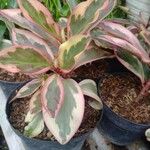
Peperomia clusiifolia
Baby rubberplant · Red edge peperomia · Tricolor peperomia
Description
Source: leafsnapPeperomia clusiifolia, commonly known as Red Edge Peperomia, is a popular houseplant belonging to the Piperaceae family. Originating from Central and South America, it can grow up to 8 inches tall. The plant features thick, glossy, dark green leaves with a distinctive red edge. These oval-shaped leaves have a slightly wavy texture, adding to its visual appeal. Caring for Peperomia clusiifolia is straightforward, making it ideal for beginners or those seeking a low-maintenance plant. It thrives in bright, indirect light and prefers well-draining soil. Water the plant when the top inch of soil feels dry to the touch, but be cautious not to overwater, as this can lead to root rot. While Peperomia clusiifolia does not require frequent fertilization, it benefits from occasional feeding during its growing season, which spans from spring through summer. The plant enjoys high humidity but can tolerate lower levels as well. In summary, Peperomia clusiifolia is an attractive, low-maintenance houseplant perfect for adding a touch of greenery to any indoor space.
Care Guide
💧 Water Every 7 days
Peperomia Jelly thrives in high humidity and moist soil, benefiting from weekly watering to replicate its natural rainforest environment. While mature plants can tolerate moderate drought, regular misting improves their health and enhances their ornamental beauty, making this plant a popular choice for indoor decoration.
☀️ Light Partial sun
Peperomia Jelly does best with a moderate amount of sunlight, though it can tolerate a moderately high level of sun. It comes from habitats where light is somewhat filtered. Too much sun can scorch the leaves, while too little light causes reduced growth and less vibrant coloration.
🌡️ Temperature 20–41.1°C
Peperomia Jelly comes from tropical areas, where the climate is generally warm and humid. Therefore, it is well-suited to high temperatures and humidity. It dislikes abrupt temperature changes and prefers a steady temperature, so it's important to prevent fluctuations indoors. It typically cannot tolerate cold and needs warmer conditions to grow. If the surrounding temperature falls too low, the plant may stop growing or even die.
💨 Humidity
🪴 Soil 6-6
🌱 Fertilizer
Proper fertilization is essential for Peperomia Jelly's health and appearance. Fertilize Peperomia Jelly during summer, repeating the application monthly throughout the season. Nutrients power growth and support the plant's various parts. Fertilization improves Peperomia Jelly's flowering display, ensuring the best blooms.
🪴 Pot & Repot 2-3 years
When repotting Peperomia Jelly, choose a pot 1-2 inches (2.5–5.1 cm) larger with ample drainage. Use a well-draining potting mix. Repot in spring or fall, making sure the root ball is slightly lower than the rim of the pot. Water thoroughly after repotting and place in a warm spot with indirect sunlight.
✂️ Pruning
To help your Peperomia Jelly thrive, regularly prune it to shape the plant and encourage new growth. The best time for pruning is between early and late spring. This helps prevent overcrowding and promotes fuller growth. Make sure to use clean, sharp tools to minimize stress and reduce the risk of disease, which will enhance the plant's appearance and overall health.
🌿 Propagating
🐛 Diseases & pets
☠️ Toxicity
Characteristics
- Plant Type
- Herb
- Life Cycle
- Perennial
- Genus
- Peperomia
- Family
- Piperaceae
- Hardiness Zone
- 10-12
- Mature Height
- 15 cm to 30 cm
- Mature Spread
- 20 cm to 40 cm
- Leaf Color
- Green, Red
- Leaf Type
- Evergreen
- Flower Color
- Green, White, Yellow, Red, Brown
- Flower Size
- 5.08 cm to 10.16 cm
- Bloom Time
- All year round
- Planting Time
- Summer, Autumn
- Harvest Time
- All year round
- Native Area
- Jamaica