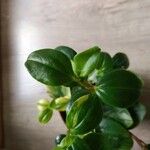
Peperomia glabella
Cypress Peperomia · Wax-privet · Orchid’s Purslane
Description
Source: leafsnapPeperomia glabella is a small, perennial plant belonging to the Piperaceae family, native to Central and South America, where it thrives in tropical rainforests. The plant's compact growth habit typically reaches a height of 6-8 inches. The leaves of Peperomia glabella are glossy and heart-shaped, with a dark green color and prominent veins. These leaves are thick and fleshy, which helps the plant retain moisture during dry periods. The stems are also thick and fleshy, contributing to its moisture retention capabilities. The flowers of Peperomia glabella are small and inconspicuous, growing on spikes that emerge from the center of the plant. They feature greenish-white petals with yellow centers. This species is commonly grown as an indoor houseplant due to its attractive foliage and ease of care. It prefers bright but indirect light but can tolerate lower light levels and dry air conditions typical of indoor environments. Overall, Peperomia glabella is an excellent choice for anyone looking for an easy-to-care-for houseplant with attractive foliage. It adds a touch of greenery to living spaces without requiring significant attention or maintenance.
Care Guide
💧 Water Every 7 days
Cypress Peperomia, native to tropical rainforests, thrives in conditions of consistent moisture and well-drained soil. Water it weekly, ensuring the soil dries slightly between waterings. Additionally, maintaining higher indoor humidity levels is essential for the plant's health and crucial for keeping its evergreen foliage vibrant throughout the year.
☀️ Light Partial sun
Cypress Peperomia comes from habitats like forest understories or rocky areas, where it grows in natural shade. It prefers partial sun but can tolerate full sun or full shade, showing its versatile, hardy nature.
What are the sunlight requirements for Cypress Peperomia?
Cypress Peperomia, botanically known as Peperomia glabella, thrives under specific sunlight conditions to ensure its well-being. For optimal growth, it requires 'Full sun' which is defined as receiving above 6 hours of sunlight per day. However, it can also tolerate 'Partial sun,' meaning it should get about 3-6 hours of sunlight daily. It's important to observe the natural light pattern in your garden to find spots that offer a harmonious balance of light and shade, aligning with the plant's sunlight needs. This careful selection of planting locations ensures that your Cypress Peperomia remains healthy and happy.
🌡️ Temperature 20–37.8°C
Cypress Peperomia comes from tropical areas where the climate is generally warm and humid. Therefore it is adapted to high temperatures and humidity. It does not tolerate sudden temperature changes and prefers a consistent temperature, so avoiding indoor temperature fluctuations is important. It typically cannot endure cold temperatures and needs warmer conditions to grow. If the ambient temperature falls too low, the plant may stop growing or even die.
💨 Humidity
🪴 Soil 5-6
🌱 Fertilizer
Proper feeding is vital for Cypress Peperomia's health and appearance. Fertilize Cypress Peperomia in summer, repeating the application monthly throughout the season. Nutrients power growth and help maintain the plant's tissues. Fertilization improves the plant's flowering, ensuring the best blooms.
🪴 Pot & Repot 2-3 years
When repotting Cypress Peperomia, choose a pot 1-2 inches (2.5–5.1 cm) larger with ample drainage. Use a well-draining potting mix. Repot in spring or fall, ensuring that the root ball is slightly lower than the rim of the flower pot. Water thoroughly after repotting and place in a warm spot with indirect sunlight.
✂️ Pruning
The Cypress Peperomia is a compact, trailing plant known for its small, smooth, round leaves. To encourage denser foliage and maintain healthy growth, it’s best to prune the plant from early to late spring. Pruning helps prevent overgrowth by removing leggy or dead stems. When trimming, cut just above a leaf node to stimulate new growth and improve air circulation.
🌿 Propagating
🐛 Diseases & pets
☠️ Toxicity
Yes, both humans and pets are (mildly) poisoned by the rubber plant.There is a milky irritating sap found in the stems and leaves of many Ficus plants, including F. elastica, that can cause stomach issues if swallowed and skin irritation if applied to the skin for an extended period of time or goes into the eyes into small cuts.
Characteristics
- Plant Type
- Herb
- Life Cycle
- Perennial
- Genus
- Peperomia
- Family
- Piperaceae
- Hardiness Zone
- 10-11
- Mature Height
- 20 cm
- Mature Spread
- 30 cm
- Leaf Color
- Green
- Leaf Type
- Evergreen
- Flower Color
- Green
- Flower Size
- 0.20 cm to 0.25 cm
- Bloom Time
- All year round
- Planting Time
- Spring
- Harvest Time
- All year round
- Native Area
- Belize, Honduras, Mexico, Guatemala, Peru, Panama, Jamaica, Colombia, Bahamas, Cuba, Bolivia, Venezuela, Guyana, Brazil, Nicaragua, Ecuador, Costa Rica