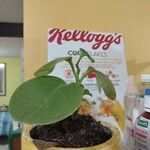
Peperomia magnoliifolia
قاشقی پپرومیا :in Persian · برگ قاشقی · Spoonleaf peperomia · Rock balsam · Elephant foot
Description
Source: leafsnapPeperomia magnoliifolia is a compact, evergreen plant belonging to the Piperaceae family. Native to Central and South America, it thrives in tropical rainforests. The plant features thick, fleshy leaves that are dark green and glossy. These oval-shaped leaves, tapering to pointed tips, can grow up to 10 centimeters long. This plant is notably low-maintenance and easy to care for. It thrives in bright, indirect light but can also tolerate low light conditions. The soil should be well-draining, with regular watering during the growing season and less frequent watering in the winter months. In the summer, Peperomia magnoliifolia produces small white or green flowers on long stems that emerge from the center of the foliage. The plant can be propagated through stem cuttings or by dividing mature plants. Overall, Peperomia magnoliifolia is an excellent choice for a houseplant due to its attractive foliage and minimal maintenance requirements.
Care Guide
💧 Water Every 7 days
The succulent leaves of the Peperomia show that these plants do not require frequent watering to stay healthy. Allow the soil surface to dry out in between waterings. It is preferable to keep the peperomia dry rather than saturated. Root rot can be caused by wet soil.
☀️ Light Partial sun
Spoonleaf peperomia comes from habitats with dappled light, for example the understory of forests or rocky locations that provide natural shade. It favors partial sun but can also tolerate full sun.
🌡️ Temperature 20–37.8°C
Spoonleaf peperomia does best in warm conditions and needs relatively higher temperatures during the growing season to support its growth and metabolic activity. It prefers plenty of sunlight, proper moisture, and good air circulation. However, it can be damaged by very low temperatures and excessive watering. It's important to maintain balance and avoid both extreme heat and overly dry conditions.
💨 Humidity normal (40-60%)
This plant will thrive in moderate humidity, which is probably the level in your home. However, misting it a few times a week can be very beneficial. Make sure the room has good ventilation.
🪴 Soil 6-7
🌱 Fertilizer
Spoonleaf peperomia only needs light doses of fertilizer once or twice a year during the growing season. Avoid fertilizing in winter and in summer when it is dormant. Reduce fertilizer for plants that have been repotted and wait a couple of months after repotting before applying fertilizer. Fertilizing helps maintain healthy growth and encourages blooms.
🪴 Pot & Repot Every 2 years
When repotting Spoonleaf peperomia, choose a pot slightly larger than the current one that provides good drainage. Use a gritty, well-draining succulent or cactus potting mix. Gently remove the plant from its old pot, brush off excess soil, and plant it at the same depth. Delay watering for a few days to allow any root damage to heal. Repot in spring or fall, and place it in a brightly lit spot.
✂️ Pruning
In the early spring, prune Peperomia plants to remove any lanky, thin growth. Pinching back the stems encourages additional branching, which improves the plant's rich appearance. Remove the initial set of leaves from each stem by pinching them off with your fingers or snipping them off using hand pruners.
🌿 Propagating
🐛 Diseases & pets
☠️ Toxicity
Characteristics
- Plant Type
- Herb, Succulent
- Life Cycle
- Perennial
- Genus
- Peperomia
- Family
- Piperaceae
- Hardiness Zone
- 10-12
- Mature Height
- 15 cm to 30 cm
- Mature Spread
- 20 cm to 40 cm
- Leaf Color
- Dark Green, Forest Green
- Leaf Type
- Evergreen
- Flower Size
- 5.08 cm to 10.16 cm
- Bloom Time
- All year round
- Planting Time
- Spring, Summer, Autumn
- Harvest Time
- All year round
- Native Area
- Colombia, Bahamas, Cuba, Honduras, Guatemala, Venezuela, Peru, Guyana, Brazil, Nicaragua, Ecuador, Costa Rica, Panama