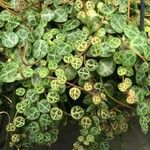
Peperomia prostrata
String of Turtles
Description
Source: leafsnapPeperomia prostrata, a charming trailing plant from the Piperaceae family, is native to South America and commonly known as String of Turtles because its distinctive leaf pattern resembles a turtle's shell. This plant features small, round leaves that are green with silver markings on the top and have a reddish-brown underside. It can grow up to 6 inches in height and spread up to 12 inches in width. Peperomia prostrata thrives in bright, indirect light but can also adapt to low light conditions. It requires well-draining soil and should be watered when the top inch of soil feels dry. Overwatering can cause root rot, so it's crucial to avoid letting the plant sit in water for extended periods. This easy-to-care-for plant is an excellent addition to any indoor space or terrarium due to its compact size. Its unique leaf pattern makes it an attractive option for houseplant enthusiasts seeking something different from traditional foliage plants like pothos or spider plants. In summary, Peperomia prostrata is a fantastic choice for those looking for a low-maintenance yet visually appealing houseplant that adds character and charm to any setting!
🌳 Because of its trailing stems and rounded leaves, trailing jade is a favored ornamental houseplant. Appreciated for its visual appeal and easy-to-care-for nature, it is commonly placed in hanging baskets and terrariums. This decorative use constitutes a substantial portion of the houseplant industry which, although often overlooked, has a significant impact on interior design trends and the creation of green spaces in urban areas.
🎭 In Brazil, peperomia is regarded as an agent of luck.
Care Guide
💧 Water Every 7 days
String of turtles plants are more susceptible to overwatering than to dry circumstances. Because the plant is native to the Brazilian jungle, it prefers damp circumstances. Make sure the pot has drainage holes, then water well and allow the soil to dry between waterings. Overwatering may be avoided by soaking the soil until water flows out of the bottom of the pot and the soil is properly saturated. Wait until the top two inches of soil have dried up before watering the plant again.
☀️ Light Partial sun
Trailing jade requires a moderate amount of sunlight for best growth. Although it can tolerate brighter light, giving it some protection helps prevent leaf scorch. It does well in settings where sunlight is filtered. Both too much and too little light can impede growth or cause the leaves to become discolored.
🌡️ Temperature 20–37.8°C
Trailing jade, native to warmer climates, prefers temperatures of 68 to 100 °F (20 to 38 ℃). As the seasons change, adjust temperatures if necessary to remain within this range to ensure healthy growth.
💨 Humidity high (>60%)
This plant needs special care because it loves high humidity levels of 60-80% or more. The best way to achieve this is by placing a humidifier near the plant. Daily misting is also essential! Make sure the room has good ventilation.
🪴 Soil 6-7
🌱 Fertilizer
Trailing jade needs the most fertilizer during its active growth period, which occurs mainly in spring, summer, and early fall. Fertilization supplies crucial nutrients that the soil may lack, supporting healthy root and stem development and the attractive foliage that is a defining characteristic of this plant.
🪴 Pot & Repot 2-3 years
Repot Trailing jade in early spring into a pot only slightly larger than the current one that has good drainage. Use a well-draining potting mix and position the root ball at the same level as before. Gently loosen any root-bound roots. After repotting, water generously and put the plant in a warm, shady location. Prune regularly to keep its size in check and to encourage new growth.
✂️ Pruning
If string of turtles plants are not trimmed on a regular basis, they can become untidy, ragged, and lanky. Pruning on a regular basis will allow you to eliminate dead and damaged stems and leaves as well as control undesired growth. It also encourages new, more vigorous growth to flourish. Do all pruning with sanitized scissors or very sharp snips.
🌿 Propagating
🐛 Diseases & pets
☠️ Toxicity
Characteristics
- Plant Type
- Herb, Vine
- Life Cycle
- Perennial
- Genus
- Peperomia
- Family
- Piperaceae
- Hardiness Zone
- 10-11
- Mature Height
- 25 cm to 30 cm
- Mature Spread
- 20 cm
- Leaf Color
- Green
- Leaf Type
- Evergreen
- Flower Color
- White, Green
- Flower Size
- 0.20 cm to 0.25 cm
- Bloom Time
- All year round
- Planting Time
- Spring
- Harvest Time
- All year round
- Native Area
- Colombia, Cuba, Honduras, Mexico, Bolivia, Venezuela, Peru, Guyana, Brazil, Nicaragua, Ecuador, Costa Rica, Panama, Jamaica