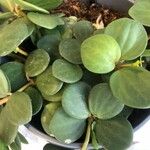
Peperomia rotundifolia
Yerba linda · Trailing Jade · Jade Necklace · Camphor vine · Cocoa mint
Description
Source: leafsnapPeperomia rotundifolia, commonly known as trailing jade or creeping peperomia, is a popular houseplant from the Piperaceae family. Native to Central and South America, it thrives in tropical rainforests. The plant features small, round, dark green leaves with a glossy texture. These leaves grow on long stems that can reach up to 12 inches in length, making it an ideal choice for hanging baskets or for trailing over shelves. Peperomia rotundifolia is an easy-care plant that flourishes in bright, indirect light and prefers well-draining soil with regular watering. While it can tolerate low light conditions, its growth may slow down in such environments. Additionally, this plant has air-purifying properties, helping to remove toxins like formaldehyde and benzene from the air, making it a great addition to any indoor space. In summary, Peperomia rotundifolia is an attractive, low-maintenance houseplant, perfect for beginners or anyone looking to add a touch of greenery with minimal effort.
💡 In the tradition of feng shui, the trailing jade plant is seen as a symbol of good luck and prosperity. Rounded shapes are believed to attract positive energy, whereas sharp, pointed shapes are thought to block it.
🌳 Because of its trailing stems and rounded leaves, trailing jade is a favored ornamental houseplant. Appreciated for its visual appeal and easy-to-care-for nature, it is commonly placed in hanging baskets and terrariums. This decorative use constitutes a substantial portion of the houseplant industry which, although often overlooked, has a significant impact on interior design trends and the creation of green spaces in urban areas.
🎭 In Brazil, peperomia is regarded as an agent of luck.
Care Guide
💧 Water Every 7 days
Trailing jade originates from rainforests, where it thrives in high humidity and consistent moisture. While it can tolerate drought, it prefers balanced watering, ideally about twice a week. Commonly grown indoors, trailing jade benefits from regular misting to help maintain the moisture levels similar to its natural, humid habitat.
How should I water my Trailing jade plant?
To properly water the Trailing jade plant, it is best to use filtered water at room temperature. Tap water may contain harmful particles, so filtered water is preferred. It is important to use room temperature water or slightly warmer because the Trailing jade is accustomed to warm climates and cold water can be a shock to its system. Additionally, it is recommended to avoid overhead watering as it can cause issues with the foliage. Instead, water the plant by applying filtered room temperature water directly to the soil until it is completely saturated. This method helps moisten the roots and promotes their spread through the soil, allowing them to collect the necessary nutrients for the plant's health.
What should I do if I give my Trailing jade plant too much or too little water?
Overwatering is a common issue that can harm your Trailing jade. It causes the stems and leaves to wilt and turn yellow. Over time, it can lead to root rot, mold, and mildew, which can be fatal for your plant. Underwatering is less common, but it can still happen. When it occurs, the leaves become brittle and brown. It's important to recognize the signs of overwatering early on. Diseases like root rot may not be fixable if left untreated for too long. If you notice early signs of overwatering, reduce your watering schedule and check the soil drainage. Replace poorly draining soil with a loose, well-draining potting mix. If you suspect underwatering, increase your watering frequency until the signs subside.
How often do I need to water my Trailing jade plant?
If your Trailing jade plant is in a pot, the most precise way to determine if it needs water is by sticking your finger into the soil. If the top two to three inches of soil feel dry, it's time to water it. If you're growing your Trailing jade outdoors in the ground, you can use a similar method to check the soil moisture. If the top few inches of soil are dry, it's time to water. Typically, during spring and early fall, watering once a week is sufficient. However, during hot weather, you may need to water twice a week or more. It's important to note that mature, well-established Trailing jade plants can tolerate dry conditions well.
How much water does my Trailing jade plant need?
When watering your Trailing jade, don't hold back on the amount of water you give. Wait for the top two to three inches of soil to dry, and then give it a good, thorough watering. Make sure the water completely soaks the soil. You should add enough water that it flows out of the drainage holes at the bottom of the pot. If you don't see excess water draining, it means you haven't watered enough. However, be careful not to let the water accumulate inside the soil, as that can harm the plant. On the other hand, if water isn't draining from the pot, it could mean the soil doesn't drain well, which is not good for the plant's health and should be avoided. If the plant is outside, it will be fine with 1 inch of rain per week.
How do I water my Trailing jade plant when it is growing at different stages?
The water needs of the Trailing jade plant can vary depending on its growth stages. In the first few years or after transplanting, it requires more water to support the development of new roots. These roots will help the plant grow in the future and thrive better with slightly higher moisture levels. However, as the plant matures over a few seasons, it will need less water. Another stage that may require increased watering is during the bloom period when flower development requires more moisture. Therefore, during these specific growth stages, it is important to provide additional water to the Trailing jade plant.
☀️ Light Partial sun
Trailing jade requires a moderate amount of sunlight for best growth. Although it can tolerate brighter light, giving it some protection helps prevent leaf scorch. It does well in settings where sunlight is filtered. Both too much and too little light can impede growth or cause the leaves to become discolored.
What kind of sunlight does Trailing Jade require?
Trailing Jade (Peperomia rotundifolia) requires moderate sunlight exposure to thrive, performing best under conditions where sunlight is filtered. While it can tolerate both partial sun (about 3-6 hours of sunlight) and full sun (above 6 hours of sunlight), too much direct sunlight might lead to leaf burn, whereas insufficient sunlight can cause growth issues or leaf discoloration. It's essential to monitor the sunlight's movement through your garden or indoors to ensure the plant receives the optimal balance of light and shade.
How can I supplement natural light for my indoor Trailing Jade?
When natural sunlight is not sufficient, especially during winter or in less sunny indoor spaces, artificial lighting can be a great alternative to support the growth of your Trailing Jade. LED lights, being customizable for specific wavelengths, are highly recommended. Full sun plants require 30-50W/sq ft, partial sun plants 20-30W/sq ft, and full shade plants 10-20W/sq ft of artificial light. Position the light source around 12-36 inches above the plant and ensure it receives 8-12 hours of artificial light daily to mimic natural sunlight exposure.
What are the signs of inadequate light exposure for Trailing Jade?
Symptoms of insufficient light exposure in Trailing Jade include the growth of smaller new leaves compared to older ones, leggy or sparse growth, faster leaf drop, slower or no new growth at all, and lighter-colored or yellow leaves indicating a lack of chlorophyll. Additionally, excessive sunlight can cause chlorosis, sunscald, leaf curling, wilting, and leaf scorching. These symptoms suggest that the plant's light environment needs adjustment for optimal health.
What steps should I take if my Trailing Jade shows signs of light stress?
To help your Trailing Jade recover from light stress, gradually adapt it to the ideal light conditions by moving it to sunnier spots each week until it gets 3-6 hours of direct sunlight daily. If moving the plant is not feasible, especially indoors, supplement with artificial lighting, ensuring it gets at least 8 hours of light daily. When dealing with outdoor plants, it's crucial to make these adjustments gradually to prevent sunburn. Additionally, identify and minimize any environmental obstructions to sunlight, such as overhanging branches, and consider transplanting smaller plants to sunnier locations during their dormant period.
🌡️ Temperature 20–37.8°C
Trailing jade, native to warmer climates, prefers temperatures of 68 to 100 °F (20 to 38 ℃). As the seasons change, adjust temperatures if necessary to remain within this range to ensure healthy growth.
What is the ideal temperature range for Trailing Jade?
Trailing Jade (Peperomia rotundifolia) thrives in warmer climates, preferring a temperature range between 68 to 100°F (20 to 38°C). It is vital to replicate this temperature range throughout the year to promote healthy growth, especially as seasonal changes occur. During the winter, it's beneficial to keep the temperature above 20°C, ensuring the plant is sheltered from cold temperatures that could cause harm. Specifically, temperatures nearing 5°C or lower are detrimental to the plant's health.
How does low temperature affect Trailing Jade, and what should I do?
Trailing Jade does not tolerate low temperatures well, flourishing best when temperatures are above 20°C. It's essential to maintain temperatures above 5°C during winter months. Exposure to temperatures below 1°C can result in leaves lightening in color, with brown or black hues appearing after frost damage, alongside wilting and drooping symptoms. As a solution, frost-damaged parts should be trimmed off, and the plant should be moved indoors to a warm environment near a south-facing window for sufficient sunlight. It's also important to avoid placing the plant near heaters or air conditioning vents to prevent air dryness.
What are the effects of high temperature on Trailing Jade and how can I mitigate them?
In the summertime, it is crucial to ensure that Trailing Jade's environment remains below 38°C. Exposure to temperatures exceeding 43°C can lead to lighter leaf colors and increase the plant's susceptibility to sunburn. To mitigate these effects, trim away the sunburned and dried parts of the plant. Move the plant to a shaded location, especially during the midday and afternoon sun, to protect it. Additionally, watering the plant in the morning and evening will help keep the soil moist and support the plant's health under high temperatures.
💨 Humidity normal (40-60%)
This plant will thrive in moderate humidity, which is probably the level in your home. However, misting it a few times a week can be very beneficial. Make sure the room has good ventilation.
🪴 Soil 6-7
🌱 Fertilizer
Trailing jade needs the most fertilizer during its active growth period, which occurs mainly in spring, summer, and early fall. Fertilization supplies crucial nutrients that the soil may lack, supporting healthy root and stem development and the attractive foliage that is a defining characteristic of this plant.
Why should I put fertilizer on my Trailing jade?
Plants, including the Trailing jade, need soil nutrients for their growth. However, there's no guarantee that the soil your plants grow in will have all the necessary nutrients. To ensure your garden plants have the basic and specific nutrients they need, it's important to use fertilization and soil amendments. For the Trailing jade, fertilizer is necessary to support the healthy development of its roots and stems throughout the growing season. Fertilization also enhances the appearance of the plant's leaves, which are its main decorative feature.
When should I fertilize my Trailing jade plant for best results?
A Trailing jade needs the most fertilizer during its active growing seasons, which are typically spring, summer, and early fall. After winter, you should feed your Trailing jade every two to four weeks. Keep this feeding schedule until fall. In fall, you can reduce the amount of fertilizer gradually until you stop feeding the plant completely in preparation for winter, when the Trailing jade's growth slows down.
When is the best time to not fertilize my Trailing jade plant?
For most of the year, including spring, summer, and fall, it is important to regularly feed your Trailing jade. However, if you notice that you have given it too much fertilizer or fertilized it incorrectly, causing fertilizer burn or other issues, you should fix the problem before resuming regular feeding. The only exception is during winter, when you should not fertilize a Trailing jade. If you have this plant indoors in a cold area, it will go into a dormant phase during winter. Feeding it during this time is unnecessary and can cause fertilizer burn.
What kind of fertilizer should I use for my Trailing jade plant?
To properly fertilize a Trailing jade, a specific blend of nutrients is necessary. This blend should have a ratio of 3 parts nitrogen (N), 1 part phosphorus (P), and 2 parts potassium (K), known as the N-P-K ratio. However, a general-purpose fertilizer with an even balance of nutrients can also be effective in some cases. Regardless of the fertilizer used, it is important that each nutrient's volume representation is at or below 10. You can choose between granular or liquid-based fertilizer for your Trailing jade. If selecting a liquid-based option, it is recommended to dilute the strength by half. Granular fertilizer, though generally acceptable, is often more practical to opt for liquid fertilizer, particularly if you prefer to feed your Trailing jade while watering it.
How should I give fertilizer to my Trailing jade plant?
When fertilizing your Trailing jade, it's important to follow the instructions that come with the fertilizer. For this plant, it's best to fertilize just before or during watering to prevent the roots from getting burned. If using slow-release granular fertilizer, sprinkle it on the soil and water immediately. If using liquid fertilizer, dilute it with water, apply to the soil, and give a little extra water. It's crucial to dilute the fertilizer by at least half, especially in spring and fall when the plant's growth is increasing or decreasing.
🪴 Pot & Repot 2-3 years
Repot Trailing jade in early spring into a pot only slightly larger than the current one that has good drainage. Use a well-draining potting mix and position the root ball at the same level as before. Gently loosen any root-bound roots. After repotting, water generously and put the plant in a warm, shady location. Prune regularly to keep its size in check and to encourage new growth.
✂️ Pruning
Trailing jade is a low-growing plant with rounded leaves that grows in a trailing manner. To encourage fullness and vibrant new growth, prune it from early to late spring. For maintenance, use clean and sharp shears to remove dead stems and leggy growth. This will help maintain a compact shape and prevent overgrowth.
🌿 Propagating
🐛 Diseases & pets
☠️ Toxicity
While peperomia plants are in fact non-harmful, they can create a few poisonous like responses in felines and canines who attempt to indulge. These pets are primarily carnivores and can consume modest quantities of plant matter because of their stomach related framework's plan. Over-guilty pleasure might bring about the runs, touchiness, or spewing.
Characteristics
- Plant Type
- Herb, Vine
- Life Cycle
- Perennial
- Genus
- Peperomia
- Family
- Piperaceae
- Hardiness Zone
- 10-11
- Mature Height
- 25 cm to 30 cm
- Mature Spread
- 20 cm
- Leaf Color
- Green
- Leaf Type
- Evergreen
- Flower Color
- White, Green
- Flower Size
- 0.20 cm to 0.25 cm
- Bloom Time
- All year round
- Planting Time
- Spring
- Harvest Time
- All year round
- Native Area
- Colombia, Cuba, Honduras, Mexico, Bolivia, Venezuela, Peru, Guyana, Brazil, Nicaragua, Ecuador, Costa Rica, Panama, Jamaica