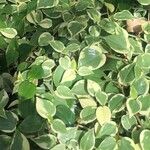
Peperomia scandens
Vinagre
Description
Source: leafsnapPeperomia serpens, the vining peperomia, is a species of flowering plant in the genus Peperomia and family Piperaceae, native to the New World Tropics. The plant is perennial.The name Peperomia serpens has in the past also been used to describe Peperomia dimota and Peperomia subrotundifolia. In addition the terms Peperomia serpens and Peperomia scandens are sometimes falsely used for Peperomia nitida, perhaps because both are similar vining plants. The Royal Horticultural Society has bestowed the Award of Garden Merit to "Peperomia scandens" as a houseplant, however it is not clear whether this means Peperomia serpens or Peperomia nitida.
Care Guide
💧 Water Once a week
☀️ Light Partial sun
Peperomia scandens is native to habitats like forest understories and rocky areas, where it grows in natural shade. It prefers partial sun but can tolerate full sun or full shade, reflecting its versatile and hardy nature.
🌡️ Temperature 20–37.8°C
Peperomia scandens comes from tropical areas, where the climate is typically warm and humid. Therefore it is well suited to high heat and humidity. It does not tolerate sudden temperature shifts and prefers a consistent temperature, so avoiding indoor temperature fluctuations is important. It usually cannot withstand cold conditions and needs warmer temperatures to grow. If the ambient temperature falls too low, the plant may stop growing or even die.
💨 Humidity normal (40-60%)
This plant will thrive in moderate humidity, which is probably the level in your home. However, misting it a few times a week can be very beneficial. Make sure the room has good ventilation.
🪴 Soil 5-6
🌱 Fertilizer
Appropriate feeding is vital for Peperomia scandens's health and appearance. Feed Peperomia scandens in the summer, applying fertilizer once a month throughout the season. Nutrients supply energy for growth and support the plant's structures. Fertilization improves Peperomia scandens's flowering, helping it produce the best blooms.
🪴 Pot & Repot 2-3 years
When repotting Peperomia scandens, select a pot 1-2 inches (2.5–5.1 cm) larger with good drainage. Use a well-draining potting mix. Repot in spring or fall, ensuring the root ball sits slightly lower than the rim of the flower pot. Water thoroughly after repotting and place in a warm spot with indirect sunlight.
✂️ Pruning
To keep the plant looking compact, you'll need to trim it. Remove any dead leaves or stems that show signs of damage or illness. You may also let the vines creep outside and around the container. Trim a few stems to attain the desired appearance and to encourage development.
🌿 Propagating
🐛 Diseases & pets
☠️ Toxicity
All portions of this peperomia plant are deemed non-toxic to both people and animals. However, if your pets ingest large amounts, they may have toxic-like symptoms such as diarrhea, irritation, or vomiting.
Characteristics
- Plant Type
- Herb, Vine
- Life Cycle
- Perennial
- Genus
- Peperomia
- Family
- Piperaceae
- Hardiness Zone
- 10-12
- Mature Height
- 15 cm to 30 cm
- Mature Spread
- 30 cm to 61 cm
- Leaf Color
- Dark Green, Forest Green
- Leaf Type
- Evergreen
- Flower Size
- 5.08 cm to 10.16 cm
- Bloom Time
- All year round
- Planting Time
- Spring, Summer, Autumn
- Harvest Time
- All year round
- Native Area
- Tropical and subtropical regions of Central and South America