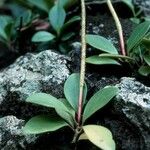
Peperomia spathulifolia
Care Guide
💧 Water
☀️ Light Full shade
The baby rubberplant blossoms with minimal sunlight, they prefer settings with less brightness, and can also survive in low light conditions. Native to environments with mixed light, too much or too little light can adversely affect its health. An appropriate balance of sunlight is essential for each stage of its growth.
🌡️ Temperature 20–37.8°C
The typical temperature span for a baby rubberplant is from 68℉ to 100℉ (20℃ to 38℃), as a result of its natural habitat in the tropics. It is most comfortable at a room temperature of approximately 72℉ (22℃). In the winter season, it is recommended to relocate it from chilly windows or breezes to prevent a decrease in temperature.
💨 Humidity
🪴 Soil 6-7
🌱 Fertilizer
During the active growth phase that mainly happens in spring, summer, and early autumn, the baby rubberplant needs the highest amount of fertilizer. The soil might lack some vital nutrients, which fertilization would supply to the plant. This way, the plant can develop healthy roots and stems and the desirable leafage that is characteristic of this particular plant type.
🪴 Pot & Repot 2-3 years
When it's time to repot your Baby rubber plant, opt for a container that's 1-2 inches larger with plenty of drainage. Fill it with a potting mix that drains well. The ideal seasons to repot are spring or autumn, and when doing so, ensure the root ball sits a bit lower than the pot's edge. Once repotting is complete, give the plant a thorough watering and position it in a warm location where it will receive indirect sunlight.
✂️ Pruning
🌿 Propagating
🐛 Diseases & pets
☠️ Toxicity
Characteristics
- Plant Type
- Herb
- Life Cycle
- Perennial
- Genus
- Peperomia
- Family
- Piperaceae
- Hardiness Zone
- 10-12
- Mature Height
- 8 cm to 40 cm
- Mature Spread
- 20 cm
- Leaf Color
- Green, Red
- Leaf Type
- Evergreen
- Flower Color
- White
- Flower Size
- 2.54 cm
- Bloom Time
- Mid summer
- Planting Time
- Spring, Summer, Autumn, Winter
- Harvest Time
- All year round
- Native Area
- Belize, Honduras, Mexico, Peru, Panama, Jamaica, Colombia, Bahamas, Cuba, Bolivia, Venezuela, Guyana, Brazil, Nicaragua, Ecuador, Costa Rica