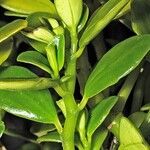
Peperomia urvilleana
Description
Source: leafsnapThe Peperomia urvilleana is a large genus consisting of tropical and subtropical perennials. In their natural habitat, these plants grow as epiphytes but they have quickly become a popular choice for houseplants and terrariums. The Peperomia urvilleana has a branching habit with short erect stems that bear attractive fleshy, dark green foliage and unique tiny, spike-shaped blooms.
Care Guide
💧 Water 1-2 times a week
The succulent leaves of the Peperomia show that these plants do not require frequent watering to stay healthy. Allow the soil surface to dry out in between waterings. It is preferable to keep the peperomia dry rather than saturated. Root rot can be caused by wet soil.
☀️ Light Partial sun
The natural habitat of Peperomia urvilleana includes areas with scattered light, like forest understories or rocky terrains that offer natural shadows. It favors semi-sunlit conditions, however, it can withstand direct sunlight too.
🌡️ Temperature 20–37.8°C
Peperomia urvilleana flourishes in hot climates and needs increased temperatures during its growth phase to encourage development and metabolic activities. It prefers plenty of sunlight, suitable humidity, and favourable air circulation. However, this plant can easily get harmed by overly cold temperatures and being watered too much. It is crucial to maintain a balance by preventing excessively hot temperatures and extreme dryness too.
💨 Humidity
🪴 Soil 0-0
🌱 Fertilizer
Peperomia urvilleana requires modest amounts of fertilizer 1-2 times annually during the growth phase. Refrain from fertilizing during the dormant winter and summer periods. Lower the amount of fertilizer for plants that have been repotted and hold off on fertilizing for a few months after the repotting. The use of fertilizer promotes vigorous growth and stimulates the production of flowers.
🪴 Pot & Repot
✂️ Pruning
In the early spring, prune Peperomia plants to remove any lanky, thin growth. Pinching back the stems encourages additional branching, which improves the plant's rich appearance. Remove the initial set of leaves from each stem by pinching them off with your fingers or snipping them off using hand pruners.
🌿 Propagating
🐛 Diseases & pets
☠️ Toxicity
Characteristics
- Plant Type
- Herb, Succulent
- Life Cycle
- Perennial
- Genus
- Peperomia
- Family
- Piperaceae
- Hardiness Zone
- 10-12
- Mature Height
- 15 cm to 30 cm
- Mature Spread
- 20 cm to 30 cm
- Leaf Color
- Dark Green, Forest Green
- Leaf Type
- Evergreen
- Flower Size
- 0.51 cm to 1.02 cm
- Bloom Time
- All year round
- Planting Time
- Spring, Summer, Autumn
- Harvest Time
- All year round
- Native Area
- Fiji, New Zealand