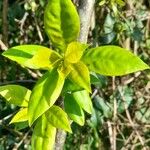
Pereskia aculeata
Ora-pro-nobis · Leaf cactus · Leafy cactus · Pereskia · Lemonvine
Description
Source: leafsnapPereskia aculeata, commonly known as Barbados gooseberry or leaf cactus, is a species of cactus native to South America. This climbing shrub can reach up to 10 meters in height and features woody stems adorned with sharp spines. Its large green leaves resemble those of non-cactus plants. The plant produces pink or white flowers that bloom in clusters at the tips of the stems. Indigenous people in South America have used Pereskia aculeata for centuries to treat a variety of ailments, including respiratory problems, fever, inflammation, and wounds. Beyond its medicinal uses, Pereskia aculeata is also valued as an ornamental plant for its attractive foliage and flowers. It can be cultivated both indoors and outdoors in warm climates with well-draining soil. In summary, Pereskia aculeata is a fascinating plant with significant medicinal and ornamental value, deserving more attention from both gardeners and botanists.
💡 While the berries of the Barbados gooseberry are edible and highly nutritious, the plant is often considered undesirable in many places, such as South Africa. This is because the Barbados gooseberry is invasive and can thrive in a wide range of environmental conditions. Once it becomes established, it spreads rapidly, often at the expense of native plants.
Care Guide
💧 Water Every 7 days
The Barbados gooseberry is native to tropical regions where it thrives in conditions of high humidity and occasional heavy rainfall. It prefers consistent moisture but can tolerate short periods of dryness. For optimal growth, it should be watered every two weeks. While it is usually cultivated outdoors, the plant flourishes during the growing season, particularly when rainfall patterns are similar to those of its natural habitat.
What's the best way to water my Barbados gooseberry?
To ensure excellent root development, place a garden hose at the base of the plant. Avoid watering the leaves directly, especially if the plant is exposed to direct sunlight outdoors, as this may require more watering. You can use bubblers or soaker hoses to keep the roots moist. When adding or removing plants, use soaker hoses that cover the entire garden or bed, allowing the water to reach deep into the roots. After watering, drain any excess water and wait for the soil to dry before watering again. Watering at ground level helps prevent diseases. On a sunny day, consider spraying the entire bush with water. Whether your Barbados gooseberry is potted or in the ground, remember to provide deep watering rather than light sprinkling.
What should I do if I give too much or too little water to Barbados gooseberry plant?
An overwatered Barbados gooseberry exhibits several signs of distress. Its leaves may turn yellow, drop off, and wilt, giving the plant a dull and unhealthy appearance. Mushy stems are also a common indication of overwatering. In such cases, it is recommended to adjust your watering schedule as needed. Interestingly, wilting can also occur as a result of under watering. When this happens, the leaves may become crispy and dry, creating a stark contrast with the soft, wilted leaves of an overwatered plant. It is important to check the soil moisture level regularly and provide a thorough watering when it becomes dry. However, it should be noted that even with sufficient water, the Barbados gooseberry may still display dryness and yellowing of leaves due to damage to the root system. Eventually, as the plant recovers, the yellowing of leaves will cease. When cultivating the Barbados gooseberry indoors, it is crucial to monitor moisture levels in the pot and avoid overwatering. If black spots appear, it is advisable to allow the soil to dry out by refraining from watering for a few days. Overwatering can lead to root rot, which can be identified by discolored and slimy roots. To mitigate this issue, it is advisable to transfer the plant to a different pot. Always take precautions to prevent root rot by avoiding excessively moist soil. When planting the Barbados gooseberry outdoors, it is recommended to dig a bit deeper. If the soil feels too dry when checked with your fingers, it may indicate a case of underwatering. Proper watering is crucial for the plant's recovery and well-being.
How frequently should I give water to my Barbados gooseberry plant?
The Barbados gooseberry prefers deep and infrequent watering, especially when planted in pots. To prevent the soil from drying out too quickly, soak them with a gallon of water each time. In colder regions, water every 3 to 5 days. Watering in the early morning is best, when the soil is dry. You can check if watering is needed by observing the top 2-3 inches of soil - if it's dry, it's time to water. On hot days, monitor the soil moisture daily as it can dry out rapidly. For garden plants, water once a week in hot climates. Avoid watering if there has been sufficient rainfall to prevent root rot. During spring and fall, when Barbados gooseberries grow, add 3 to 4 inches of mulch outdoors for water conservation. Sandy soil requires more frequent watering while clay soil needs less frequent watering to avoid root rot. To keep track of watering, mark dates on the calendar and watch for drooping leaves as an indication of possible delay.
How much water should I give my Barbados gooseberry plant?
The Barbados gooseberry generally needs about a gallon of water on a regular schedule. For potted plants, water them deeply until you see water dripping from the bottom of the pot. Then, wait for the soil to dry before watering again. You can use a water calculator or moisture meter to determine the amount given to your plant each week. During the flowering period, provide plenty of water but allow the moisture to evaporate to prevent root rot. If the Barbados gooseberry is planted outdoors with sufficient rainfall, additional watering may not be necessary. When it is young or newly planted, ensure it receives 1-2 inches of rain per week. As it grows, it can rely solely on rainfall. Only if the weather is excessively hot or there is no rainfall for 2-3 weeks, consider giving it a thorough watering during cooler parts of the day to prevent heat damage. Additional watering may be needed during extended dry spells.
Should I water my Barbados gooseberry more often or less often depending on the time of year or the weather?
To ensure the growth and survival of the Barbados gooseberry, it's important to provide the right amount of water at different times of the year. During the spring and fall, the soil should be kept moist but not overly wet. Alternating between dry and moist conditions is optimal for the plant. In the summer, when hot weather and evaporation are concerns, it may be necessary to water more frequently if there is insufficient rainfall. However, during the winter, the Barbados gooseberry requires less water because it goes dormant. Using a well-draining soil mixture like terracotta can help the water evaporate quickly. Once the plant starts to leaf out in the spring, it can rely on fall and winter rains to survive while dormant. Good drainage is crucial during all seasons, especially in preventing ponding or drought. If the Barbados gooseberry is in a pot, it has limited root growth, so it should be watered more often, especially in the summer. Instead of shallow sprinkles, deep soakings of the entire root system once or twice a week, depending on the weather, are recommended to avoid fungal growth and reach deep into the roots. While the plant should not dry out completely during its dormancy in the fall and winter, it should not be over-watered either since sitting in water for too long can be harmful. Applying mulch is beneficial in reducing stress, conserving water, and promoting healthy blooms.
☀️ Light Full sun
The barbados gooseberry does best when given ample sunlight throughout the day. It can tolerate locations with only partial sun, but that may impact its growth and overall health. Its native environments receive plenty of sunlight. Insufficient light can cause leggy growth, while too much light can scorch the foliage.
What are the sunlight requirements for Barbados gooseberry?
The Barbados gooseberry, botanically known as Pereskia aculeata, requires generous amounts of sunlight to thrive, preferring locations that receive full sun, defined as above 6 hours of sunlight daily. It can also grow in partial sun, which entails about 3-6 hours of sunlight each day. Observing how sunlight moves through your garden allows for choosing spots that offer a balance of light and shade, which is crucial for the plant's health. The native habitats of Barbados gooseberry are abundant in sunlight, and too little sunlight may cause leggy growth, while excessive light can burn the foliage.
How do artificial lights help indoor Barbados gooseberry plants?
Indoor Barbados gooseberry plants require adequate lighting for optimal growth, especially when natural sunlight is insufficient, such as during winter or in less sunny spaces. Artificial lights are vital in promoting faster, healthier growth. LED lights, popular for indoor plant lighting, can provide the specific wavelengths of light that plants need. For full sun plants, 30-50W/sq ft of artificial light is needed; partial sun plants require 20-30W/sq ft, and full shade plants need 10-20W/sq ft. The light source should be placed 12-36 inches above the plant, mimicking natural sunlight's distance, and the duration should reflect natural daylight hours, with most plants needing 8-12 hours of light per day.
What are the symptoms of inadequate sunlight in Barbados gooseberry plants?
When Barbados gooseberry plants receive inadequate sunlight, they may exhibit several symptoms, including smaller new leaves, leggy or sparse growth, faster leaf drop, slower or no new growth, lighter-colored new leaves, chlorosis, sunscald, leaf curling, wilting, and leaf scorching. These symptoms result from insufficient light affecting the plant’s growth, nutrient intake, and overall health. Insufficient sunlight leads to a lack of chlorophyll and essential nutrients, causing issues like chlorosis, where leaves lose their green color and turn yellow, and sunscald, which damages plant tissue with intense sunlight exposure.
What solutions are available for Barbados gooseberry plants with insufficient sunlight?
For indoor Barbados gooseberry plants suffering from insufficient sunlight, a gradual move to a sunnier location each week until they receive at least 6 hours of direct sunlight daily is recommended. Utilizing a south-facing window and keeping curtains open during the day maximizes sunlight exposure. If the plant is large or not easily movable, consider using artificial light for at least 8 hours daily or investing in professional plant grow lights. For outdoor plants, gradually moving them to sunnier spots while avoiding sudden changes in light intensity prevents sunburn. Reducing obstructions like pruning trees can help. When it comes to ground plants, especially smaller ones, transplantation during the dormant period to a location with ample sunlight and good drainage is advised. However, it's important to note that parts of the plant affected by insufficient sunlight may not recover, but new growth after increasing light exposure should be healthy.
🌡️ Temperature 20–37.8°C
Barbados gooseberry naturally thrives in environments where temperatures range from 68 to 100 °F (20 to 38 °C). It favors warm climate conditions and requires temperature adjustments during extreme seasonal changes to maintain healthy growth.
What are the ideal growing conditions for Barbados gooseberry?
Barbados gooseberry, scientifically known as Pereskia aculeata, thrives in environments with temperatures ranging between 68 to 100 °F (20 to 38 °C). It requires a warm climate to ensure healthy growth and prefers these climates for optimal development. It's crucial to maintain temperatures above 20°C, especially during winter cultivation, to encourage plant growth. The plant should be protected from temperatures dropping below the freezing point to prevent freezing damage. When the outdoor temperature nears -5°C (25°F) in winter, it's advisable to bring the Barbados gooseberry indoors or protect it with a temporary greenhouse, plastic film, or fabric wraps to safeguard it against the cold.
How does Barbados gooseberry react to low temperatures and how can damage be mitigated?
Barbados gooseberry has a moderate tolerance to low temperatures, flourishing best within the 20°C to 38°C range. It's important to keep the plant above 0°C during winter. Exposure to temperatures below -5°C can result in leaves darkening, potentially leading to water-soaked necrosis, wilting, and drooping. Over time, the leaves may turn brown. To mitigate damage from frost, affected parts should be trimmed away, and the plant immediately moved indoors to a warmer environment or protected with a makeshift greenhouse. Placing the plant near a south-facing window ensures ample sunlight, and supplemental lighting can be used if natural light is insufficient.
How should Barbados gooseberry be cared for during high temperatures?
In the summer, it's crucial to keep Barbados gooseberry below 38°C to prevent overheating. When temperatures rise above 43°C, the plant's growth may slow, and its leaves can lighten in color, becoming more prone to sunburn. To counteract high temperature stress, sunburned or dried parts of the plant should be trimmed away. Moving the plant to a shaded location, especially to avoid the afternoon sun, and watering it in the morning and evening to maintain soil moisture are effective strategies for caring for Barbados gooseberry during high temperatures.
💨 Humidity normal (40-60%)
This plant will thrive in moderate humidity, which is probably the level in your home. However, misting it a few times a week can be very beneficial. Make sure the room has good ventilation.
🪴 Soil 6-7
🌱 Fertilizer
For Barbados gooseberry, light applications of fertilizer once or twice a year during the growing season are adequate. Do not fertilize in winter or in summer when the plant is dormant. Reduce fertilizer for repotted plants and wait a couple of months after repotting before applying any fertilizer. Fertilizing promotes healthy growth and encourages blooms.
🪴 Pot & Repot 2-3 years
To ensure optimal growth, repot the fast-growing Barbados gooseberry every 2-3 years during the spring. Choose a larger container with good drainage, and place the plant in a location with bright, indirect light. Water sparingly at first, and wait for new growth to indicate that the plant has acclimated to its new environment.
✂️ Pruning
The Barbados gooseberry is a climbing plant with thorny stems, and it benefits greatly from pruning in late winter. To maintain its health and appearance, focus on removing dead wood and controlling its growth. This encourages healthy regrowth and improves air circulation. Regular maintenance helps the plant achieve the desired shape and size, boosts fruit production, and reduces the risk of disease.
🌿 Propagating
🐛 Diseases & pets
☠️ Toxicity
Characteristics
- Plant Type
- Tree, Vine, Shrub
- Life Cycle
- Perennial
- Genus
- Pereskia
- Family
- Cactaceae
- Hardiness Zone
- 9-11
- Mature Height
- 3.05 m to 10.06 m
- Mature Spread
- 2.13 m to 4.88 m
- Leaf Color
- Variegated
- Leaf Type
- Deciduous
- Flower Color
- White, Pink
- Flower Size
- 2.54 cm to 5.08 cm
- Bloom Time
- All year round
- Planting Time
- Spring, Autumn
- Harvest Time
- All year round
- Native Area
- Colombia, Paraguay, Argentina, Bolivia, Venezuela, Guyana, Brazil, Suriname, Panama