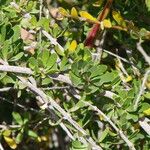
Periploca angustifolia
Description
Source: leafsnapPeriploca laevigata is a species of flowering plant in the family Apocynaceae, native to the Canary Islands, the Savage Islands and Cape Verde.The species was described by William Aiton and was published in Hortus Kewensis in 1789. Its Spanish names are cornicabra or cornica. "Cornicabra" means goat horn.
Care Guide
💧 Water
☀️ Light Full sun
Silkvine is native to open habitats, such as sunny meadows and forest margins, where light is plentiful. It performs best in full sun but will also tolerate partial sun, adapting well to different light conditions.
🌡️ Temperature 20–37.8°C
Silkvine adapts well to temperature, tolerating higher heat and large temperature swings. In hot weather, attention should be paid to watering and providing suitable shade to prevent sunburn. Conversely, Silkvine has relatively limited cold tolerance; while it can handle some cold, excessively low temperatures can cause frost damage.
💨 Humidity
🪴 Soil 6-7
🌱 Fertilizer
Timing is important for fertilizing Silkvine. Apply fertilizer in early spring and continue monthly until early summer. Fertilizer encourages lovely blooms and supplies energy during both dormant and active growth phases.
🪴 Pot & Repot
✂️ Pruning
🌿 Propagating
🐛 Diseases & pets
☠️ Toxicity
Characteristics
- Plant Type
- Shrub
- Life Cycle
- Perennial
- Genus
- Periploca
- Family
- Apocynaceae
- Hardiness Zone
- 11
- Mature Height
- 2.13 m
- Mature Spread
- 0.91 m to 2.13 m
- Leaf Color
- Green
- Leaf Type
- Deciduous
- Flower Color
- Lavender, Purple
- Flower Size
- 2.54 cm to 7.62 cm
- Bloom Time
- Mid spring, Late spring, Early summer
- Planting Time
- Spring, Autumn
- Harvest Time
- Mid summer, Late summer, Early fall
- Native Area
- Libya, Egypt, Tunisia, Syria, Italy, Spain, Mauritania, Algeria, Greece, Morocco