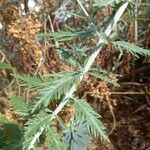
Perovskia atriplicifolia
Russian sage
Description
Source: leafsnapPerovskia atriplicifolia, commonly known as Russian sage, is a perennial plant native to Central Asia. It belongs to the mint family and is celebrated for its aromatic leaves and striking blue-purple flowers. The plant reaches heights of 3 to 4 feet and features silvery-gray foliage that adds texture to gardens and landscapes. Russian sage thrives in full sun and well-draining soil. While it can withstand drought conditions once established, it needs regular watering during its first growing season. The plant flowers from mid-summer to fall, producing long-lasting spikes of small flowers that attract bees, butterflies, and other pollinators. Perovskia atriplicifolia is low-maintenance, requiring minimal pruning or fertilization. It serves well as an accent in mixed borders or can be massed for an impressive display of color in larger landscapes. Additionally, Russian sage makes an excellent cut flower, with its enduring blooms adding indoor beauty. Overall, Perovskia atriplicifolia is a stunning addition to any garden. Its beautiful blue-purple flowers and silvery-gray foliage provide year-round interest while demanding minimal care from gardeners.
💡 Russian sage, known for its long stems and vibrant purple flowers, often lines both sides of roads, creating a picturesque sea of purple-blue blossoms. It is also one of the fragrant herbs included in the Herbes de Provence mixture.
🌳 The shimmering silver foliage and bright purple flowers of Russian sage create a striking visual display, yet its usefulness goes beyond looks. Emitting a faint sage aroma, its leaves are rich in essential oils that are suitable for use in aromatherapy and cosmetic products. Additionally, Russian sage provides natural pest deterrence because of its strong scent and can lend a distinctive flavor to foods and drinks, enhancing culinary experiences.
🎭 Eternal life, extended lifespan, insight, understanding
Care Guide
💧 Water Every 3 days
Russian sage thrives in semi-arid conditions, requiring minimal watering due to its high drought tolerance. It needs hydration only once a week. This outdoor plant flourishes in full sun, conserving water in its woody stems and silvery foliage during peak growing seasons.
When should I water my Russian Sage?
Proper and timely watering is crucial for the growth and health of Russian Sage, a perennial of the mint family thriving in semi-arid conditions. The prime indicator for watering is soil dryness; it's time to water when the top inch of soil around the plant feels dry. Other signs include leaf curling or wilting, color discoloration to dull gray or green, and drooping stems. Overwatering can lead to root rot, while underwatering can cause dehydration and stunted growth. Therefore, paying attention to these signs ensures the plant's vitality.
How should I water my Russian Sage?
Russian Sage requires regular, but careful, watering due to its sensitivity to overwatering. The best method involves deep watering at the plant's base using a watering can or hose with a gentle flow, avoiding foliage to prevent fungal diseases. A can with a narrow spout is recommended for precision. Using a moisture meter can help in determining the perfect timing for watering, ensuring the plant does not become overwatered and stays healthy.
How much water does Russian Sage really need?
Originating from arid regions, Russian Sage is drought-resistant and prefers less frequent watering. The amount of water needed varies with factors like pot size and plant maturity. Critical to ensure water reaches deep into the soil, promoting deeper root growth and making the plant more resilient. Check the soil after watering; it should dry out below the surface over a week. Overwatering can cause root rot, whereas underwatering leads to wilting leaves. Aim for deep, infrequent watering, allowing the plant to dry out between sessions.
What kind of water is best for Russian Sage?
Russian Sage thrives best with natural rainwater or distilled water and can tolerate aerated tap water. It is sensitive to chlorine, fluoride, and hard water, which can affect its health and growth. Chlorine can evaporate by letting tap water sit out before use; distilled or rainwater is the ideal choice. Water temperature should be moderate to avoid shocking the plant. It is essential to follow proper watering practices, letting the soil dry out between watering sessions for optimal health.
How do Russian Sage's watering needs change with the seasons?
Russian Sage's watering needs vary with the seasons. In spring, regular watering supports new growth, with attention to draining to avoid waterlogging. Summer demands consistent moisture due to active growth and higher evaporation rates, watering thoroughly when the top inch of soil is dry. Watering reduces significantly in autumn as the plant enters dormancy, and further in winter, it requires minimal water, just enough to prevent the soil from completely drying out, avoiding root rot and other ailments from overwatering.
☀️ Light Full sun
Russian sage thrives when it gets abundant sunlight throughout the day, using that light to promote vigorous growth. This level of sun closely resembles its native open, sunlit habitat. It can adapt to partial sunlight, but may show weaker growth or less vibrant coloration. While it usually tolerates excessive sun, insufficient light can impair its vitality.
What are the sunlight requirements for Russian sage?
Russian sage requires full sun exposure, which means it needs more than 6 hours of sunlight daily to thrive. However, it can also tolerate partial sun, about 3 to 6 hours of sunlight. It's essential to watch how sunlight moves through your garden to find spots that offer the right balance of light and shade for the plants. Russian sage adapts well to ample sunlight throughout the day, reflecting its natural, open, and sun-drenched habitat. It tolerates over-exposure but might show weakened growth or coloration under less than optimal light conditions.
How can artificial lighting benefit indoor Russian sage plants?
When natural sunlight is insufficient, especially during winter or in less sunny spaces, artificial lighting can significantly promote healthier and faster growth in indoor Russian sage plants. LED lights are a popular choice because they can provide specific wavelengths needed by your plants. For full sun plants like Russian sage, 30-50W/sq ft of artificial light is recommended. The lights should be placed 12-36 inches above the plants for 8-12 hours per day to mimic natural daylight hours effectively.
What are the common symptoms of inadequate light exposure in Russian sage?
Russian sage may show various symptoms when it does not receive enough light, such as smaller new leaves, leggy or sparse growth, faster leaf drop, slower or no new growth, lighter-colored new leaves, and potential for conditions like chlorosis, sunscald, leaf curling, wilting, and leaf scorching. These signs indicate the plant is struggling with the available light, impacting its overall health and ability to photosynthesize efficiently.
How can I address light-related issues for Russian sage?
To optimize growth for Russian sage facing light deficiencies, gradually move the plants to locations with at least 6 hours of direct sunlight daily. For indoor plants, use a south-facing window or consider artificial lighting for at least 8 hours a day. Outdoors, it's crucial to adapt plants gradually to sunnier spots, avoiding sudden changes to prevent sunburn. If shadows from nearby objects are the issue, consider pruning or relocating the plants. Remember, parts of the plant damaged by insufficient light might not recover, but new growth will be healthy with improved light conditions.
🌡️ Temperature 5–35°C
Russian sage is a woody plant of temperate climates that prefers temperatures from 41 to 95 °F (5 to 35 °C). It comes from areas with hot, dry summers and cold winters. To cope with seasonal temperature changes, it needs full sun and well-drained soil in summer, and its roots should be mulched in winter for protection.
What are the ideal growing conditions for Russian sage?
Russian sage, or Perovskia atriplicifolia, thrives in temperate regions with its ideal temperature range being between 41 to 95°F (5 to 35°C). It is native to areas that experience hot, dry summers and cold winters. For the plant to adjust to seasonal temperature changes, it requires full sun exposure and well-drained soil during the summer months. Additionally, to protect its roots, mulching in winter is advisable. Though Russian sage has significant cold resistance and doesn't usually require special frost protection measures, in climates where winter temperatures are expected to drop severely, wrapping the plant's trunk and branches with non-woven fabric or cloth can provide necessary cold protection. Moreover, watering the plant abundantly before the first freeze in autumn is recommended to ensure the soil remains moist and enters a frozen state, helping to prevent drought and water scarcity during the colder months.
How does Russian sage react to extreme temperatures, and what should I do?
Russian sage displays remarkable cold tolerance, ideally thriving when the temperature stays above certain minimum thresholds. Despite its resilience, if temperatures fall below the plant's tolerance limit during winter, you might not notice immediate changes but could see the branches become brittle and dry by spring, resulting in no new shoots. In this case, it's advisable to prune away any dead branches to promote new growth. Conversely, during the summer, Russian sage should be kept below its maximum temperature threshold. Exceeding this limit could result in leaves turning lighter, tips drying and withering, and increased susceptibility to sunburn. To mitigate these issues, trim away the affected parts and consider moving the plant to a shaded location or employing a shade cloth to protect it from midday and afternoon sun. Additionally, watering the plant during cooler times of the day, such as morning and evening, will help keep the soil moist and support plant health.
💨 Humidity dry (<40%)
This plant prefers dry conditions, so don't mist it. However, watering it less often can also thrive in higher humidity.
🪴 Soil 6-7
🌱 Fertilizer
Feed your Russian sage in early spring to encourage healthy growth. Routine fertilization improves overall health, producing vigorous growth, increased tolerance of challenging conditions, and enhanced resistance to diseases and pests. Follow a regular fertilizing schedule for your Russian sage to maintain vibrant, deeply colored, and lush foliage.
Why should I put fertilizer on my Russian sage plants?
No matter which type of Russian sage you have, regular fertilization is key for a healthy plant. Providing the right nutrients promotes strong growth, increasing its resilience to harsh conditions and ability to resist diseases and pests. The foliage of Russian sage is particularly appealing, so it's important to keep it in good condition. By following a dedicated fertilization schedule for your specific Russian sage, you can encourage the development of deep-colored leaves and an overall lush appearance.
When should I fertilize my Russian sage for best results?
To ensure healthy growth, it is recommended to fertilize your Russian sage for the first time in late winter or early spring. This will provide the necessary nutrients for the plant to resume growth once the weather warms up. Additionally, if you live in a warm climate area, it is beneficial to fertilize again in early fall. This not only adds nutrients for the next growing season but also helps the plant withstand the winter cold without foliage damage. Fertilizing earlier in the fall will give the new branches enough time to grow and become more resistant to the cold.
When is it not a good idea to add fertilizer to my Russian sage plant?
There are a few specific times throughout the year when you should avoid fertilizing your Russian sage. The first time is during the early and mid-winter months when the plant is dormant and does not require any feeding. It is also not advisable to fertilize this plant during late spring and summer, when the weather is typically hotter and drier. The combination of these conditions can have a negative impact on your Russian sage if fertilized during this time. To prevent any problems, it is best to stick to a fertilization schedule that involves exclusively feeding it during early spring and early fall.
What kind of fertilizer does my Russian sage plant need?
Russian sage plants require nitrogen as their primary nutrient, but this does not diminish the importance of phosphorus and potassium. On the contrary, they also need a good amount of all three nutrients for optimal growth. A balanced fertilizer like 10-10-10 can be effective, but a more nuanced ratio with higher nitrogen content, such as 10-6-4, often yields better results. You can choose between granular or liquid fertilizers for application.
How should I add fertilizer to my Russian sage?
To fertilize your Russian sage, you have two options: using granular fertilizer or liquid fertilizer. If you choose granular fertilizer, simply sprinkle it on the soil at the correct time. The slow-release nature of this fertilizer will gradually release nutrients into the soil. It's recommended to lightly water your Russian sage before applying the fertilizer. Alternatively, you can use liquid fertilizer, but this is less common. To use this method, mix the fertilizer with water and pour it onto the soil around the base of your Russian sage. In some cases, it may be beneficial to perform a soil test before fertilizing to determine if any adjustments to the pH are necessary.
🪴 Pot & Repot 2-3 years
When repotting Russian sage, select a pot 1-2 inches (2.5–5.1 cm) larger with ample drainage. Use a well-draining potting mix. Repot in spring or fall, making sure the root ball sits slightly below the rim of the flower pot. Water thoroughly after repotting and place in a warm spot with indirect sunlight.
✂️ Pruning
To keep Russian sage healthy and looking its best, it's important to prune it regularly. The ideal time for pruning is early spring, and you should cut the plant back to 6-12 inches above the ground. This encourages the growth of denser foliage and more abundant flowers. Additionally, removing dead or weak stems helps improve air circulation, which reduces the risk of disease and results in a stronger and more visually appealing plant.
🌿 Propagating
🐛 Diseases & pets
☠️ Toxicity
Russian sage is generally not considered poisonous to humans and pets. However, its foliage contains a potentially toxic substance that may cause skin irritation when touched or adverse digestive symptoms when ingested in large quantities. Stay on the safe side and keep away from children and pets.
Characteristics
- Plant Type
- Shrub
- Life Cycle
- Perennial
- Genus
- Perovskia
- Family
- Lamiaceae
- Hardiness Zone
- 5-9
- Mature Height
- 0.49 m to 1.22 m
- Mature Spread
- 0.61 m to 1.22 m
- Leaf Color
- Green, Gray, Silver
- Leaf Type
- Deciduous
- Flower Color
- Lavender
- Flower Size
- 0.76 cm to 1.02 cm
- Bloom Time
- Mid summer
- Planting Time
- Spring, Autumn
- Harvest Time
- Mid summer, Late summer
- Native Area
- Central Asia