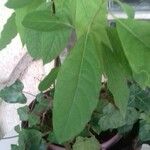
Persea americana
آواکادو · Avocado · Butter Fruit · Alligator Pear · Avocado Pear
Description
Source: leafsnapPersea americana, commonly known as the avocado plant, is a species of flowering plant native to Mexico and Central America. This plant belongs to the Lauraceae family and is widely cultivated for its fruit, also called avocado. The avocado tree can grow up to 20 meters tall and features large, dark green, glossy leaves. The fruit of the Persea americana plant has a unique pear-shaped appearance with skin that can be green or black, smooth or rough, depending on the variety. The flesh inside ranges from pale yellow to bright green, characterized by its creamy texture and nutty flavor. Avocados are highly nutritious, rich in healthy fats, fiber, vitamins C and K, potassium, and folate. They are commonly used in various dishes, such as guacamole or sliced on top of toast. Beyond their culinary uses, avocados have been utilized for medicinal purposes by indigenous peoples for centuries due to their anti-inflammatory properties. They have also been studied for potential benefits, such as reducing cholesterol levels and improving heart health. Overall, Persea americana is an important crop worldwide due to its nutritional value and versatility in culinary applications, making it one of nature's most cherished plants!
🌳 Best known for its pear-like fruit, the avocado also offers culinary delights in its leaves, which are frequently used as an aromatic herb. Their aroma is often compared to anise, and their distinctive flavor becomes stronger when dried; nonetheless, the anise-like note is detectable even when the leaves are fresh. Toasting the leaves before using them heightens this flavor, making them an important seasoning in a variety of dishes worldwide, especially in bean preparations where they contribute a notable depth to the palate.
🎭 Joy, affection, faithfulness, longing, male potency
Care Guide
💧 Water Every 7 days
Avocados thrive in humid, subtropical climates and require a balanced watering schedule, ideally once every one to two weeks. They prefer moderately moist soil and benefit from mulching, which helps retain moisture, reflecting their natural habitat. Typically grown outdoors, avocados are evergreen plants.
When Should I Water My Avocado?
Watering your avocado is key to its health, growth, and yield. It's important to water the plant when the top 1-2 inches of soil feel dry. Avocados, being sub-tropical plants, show signs like drooping, curling, or wilting leaves when they need water. However, such symptoms can also indicate extreme temperatures, which require adjusting the plant's location. Leaves turning brown or yellow and developing a dry texture also suggest the plant needs water. Both under-watering and over-watering can have harmful effects, such as root rot from too much water or dry fruit and poor yield from too little.
How Should I Water My Avocado?
Avocado plants have specific watering needs. A soak and dry method is effective, where you water thoroughly until excess drains out, then allow the soil to dry before the next watering. This balances moisture access and prevents waterlogging. Choosing a watering can with a fine spout helps in applying water gently and precisely, protecting the delicate root system.
How Much Water Does Avocado Really Need?
In its natural habitat of humid, tropical rainforests, avocado thrives on high rainfall and well-draining soils, making it accustomed to frequent yet well-drained moisture. Young, potted avocados typically need about 1-2 inches of water weekly, mimicking a heavy rainfall that reaches deep into the soil. Mature trees require an increase to 2-3 inches per week. Correct watering results in glossy, green, and upright leaves, whereas incorrect amounts can lead to yellowing or brown, crispy leaves due to over or under-watering respectively.
What Kind of Water is Best for Avocado?
Avocado plants are moderately sensitive to water types. Rainwater is ideal due to its natural, chemical-free nature and balanced pH level. Filtered water is a good alternative, and tap water can be used if it's the only available option, though it may need to be dechlorinated by letting it sit for 24 hours due to avocado's high sensitivity to chlorine. Avocado prefers room temperature water, avoiding extremes that could shock the plant.
How Do Avocado's Watering Needs Change with the Seasons?
Avocado's watering needs vary through the year. In spring, water once the top 2 inches of soil dry out, supporting new growth and flowering. Summer, the fruiting period, requires consistent moisture, so water deeply when the top 2-3 inches of soil dry. Reduce watering frequency in autumn to prepare for dormancy, allowing the top 2-4 inches to dry between watering. In winter, water sparingly, only when the top 4-6 inches of soil are dry, to prevent root rot during dormancy.
☀️ Light Full sun
Avocado needs considerable sunlight for healthy growth, which helps its photosynthesis work more efficiently. While it performs best with plenty of light, it can also tolerate less brightly lit spots. Its sunlight requirements change at different stages of growth. Excessive sun can burn the leaves, whereas insufficient light can hinder its development.
What are the sunlight requirements for growing avocados?
Avocado plants require full sun, meaning above 6 hours of sunlight, to thrive and perform best in terms of growth and fruit production. They can also tolerate partial sun, which is about 3-6 hours of sunlight. It's essential to observe how sunlight moves through your garden, choosing spots that provide an optimal balance of light and shade, ensuring the plants' wellbeing. For healthy growth, substantial exposure to sunlight is beneficial for avocado's photosynthesis efficiency. While avocado thrives under generous sunlight, it can also adapt to less sunlit areas. However, stages of growth might affect its sunlight demands, where overexposure could lead to scorched leaves and inadequate light might stunt its growth.
How to use artificial lighting for avocado plants?
When natural sunlight is insufficient, especially in winter or in less sunny spaces, artificial lighting becomes a necessary alternative for indoor avocado plants, promoting healthier and faster growth. LED lights are recommended due to their ability to provide specific wavelengths suitable for plant growth. Full sun plants require 30-50W/sq ft, partial sun plants need 20-30W/sq ft, and full shade plants require 10-20W/sq ft of artificial light. The light source should be placed 12-36 inches above the plant to mimic natural sunlight and should be kept on for 8-12 hours per day to simulate the natural daylight duration.
What are the symptoms of inadequate lighting for avocado plants?
Avocado plants show several symptoms when subjected to inadequate lighting, especially when grown indoors during winter. These symptoms include leggy or sparse growth where the plant appears thin and stretched, faster leaf drop as the plant conserves resources, slower or no new growth indicating a survival mode, chlorosis which entails leaves losing their green color, sunscald showing as pale or necrotic areas on the plant, leaf curling as a defense mechanism to minimize sun exposure, wilting from loss of turgor pressure, and leaf scorching characterized by brown, dry edges on the leaves. These symptoms highlight the critical need for adequate sunlight or artificial light to ensure plant health.
What solutions can mitigate inadequate lighting for avocado plants?
To mitigate lighting issues for avocado plants, gradually increase their sun exposure by moving them to sunnier locations each week until they receive at least 6 hours of direct sunlight daily. Indoors, if the plant is large or not easily movable, supplement with artificial light, keeping a desk or ceiling lamp on for at least 8 hours daily or investing in professional plant grow lights. Outdoors, avoid sudden light intensity changes to prevent sunburn. If sunlight is blocked by obstacles like trees, consider pruning to allow more light through. For smaller plants, transplanting during their dormant period to a location with ample sunlight and good drainage can also be beneficial. Although parts of the plant affected by low light may not recover, new growth will be healthy.
🌡️ Temperature 20–37.8°C
Avocado is native to warm, tropical areas and does best in temperatures from 68 to 100 ℉ (20 to 38 ℃). It favors warm, sunny environments and grows well in frost-free locations with mild winters. As a result, it needs temperatures above 60 ℉ (15.5 ℃) to develop and ripen properly. In colder climates, it can be cultivated indoors or in greenhouses. In hot summer conditions, it requires protection from intense sun and heat stress. Adjusting temperatures appropriately through the seasons is important for ideal growth and fruiting.
What are the ideal growing conditions for an avocado plant?
The avocado plant, botanically known as Persea americana, is native to warm, tropical regions and thrives in temperatures between 68 to 100°F (20 to 38°C). It prefers warm, sunny climates and can grow well in frost-free areas with mild winters, requiring temperatures above 60°F (15.5°C) for growth and ripening. Avocado is extremely heat-loving; however, during hot summers, it needs protection from scorching sun and heat stress. During winter, maintaining temperatures above 20°C is beneficial for avocado plant growth, and it should be protected from temperatures approaching 5°C. If grown in colder regions, the plant can be kept indoors near a bright window but away from direct heat sources.
How do you manage an avocado plant in low temperatures?
Avocado plants prefer warm temperatures and are not tolerant of low temperatures, thriving best above 20°C. During winter or in cold weather, keep the plantation above 5°C to prevent damage. Exposing the plant to temperatures below 1°C may cause the leaves to lighten in color, and after frost damage, they turn brown or black with symptoms such as wilting and drooping. If frost damage occurs, trim off the frost-damaged parts and immediately move the plant to a warmer indoor environment. It's advisable to place it near a south-facing window for ample sunlight, ensuring it's not too close to heaters or air conditioning vents, as this may cause air dryness.
What should you do if your avocado plant experiences high temperatures?
During summer, it's important to ensure that the temperature around the avocado plant remains below 100°F (38°C). Exposure to temperatures exceeding 107°F (43°C) can cause the leaves to lighten in color and increase susceptibility to sunburn. To manage this, trim away any sunburned or dried-up parts and move the plant to a location that's shaded from the midday and afternoon sun. Additionally, watering the plant in the morning and evening can help keep the soil moist, providing relief from high temperatures.
💨 Humidity high (>60%)
This plant needs special care because it loves high humidity levels of 60-80% or more. The best way to achieve this is by placing a humidifier near the plant. Daily misting is also essential! Make sure the room has good ventilation.
🪴 Soil 5-6
🌱 Fertilizer
Use organic fertilizers (e.g., fish emulsion, compost) rather than chemical fertilizers for avocado. Give young plants higher levels of nitrogen and phosphorus in spring. Mix compost or fertilizer into the soil before or after planting. For mature plants, add a balanced fertilizer or one aimed at specific deficiencies in spring. Nutrient deficiency leads to small leaves, short branches, yellow or bronze foliage, acidic fruit, premature fruit drop, and splitting.
Why should I put fertilizer on my Avocado?
If the soil in your area is rich, fertilizing may not be necessary. However, if the soil is lacking nutrients, it will negatively affect the growth of an Avocado plant, resulting in small leaves and short branches, yellowing or bronze leaves, and less tasty fruits due to increased acidity. Conducting a soil test is the most reliable way to identify which nutrients are abundant and which are lacking. Certain nutrient deficiencies can also cause premature fruit drop or splitting.
When should I fertilize my Avocado tree?
To support the strong growth of young Avocado plants, it is recommended to provide them with higher nitrogen and phosphorus fertilizer. This is best done during the spring of their first growing season. Before or immediately after planting, it is beneficial to mix compost or another fertilizer into the soil. As for mature plants, it is necessary to supplement their fertilizer every few years as needed during the spring and summer. A balanced fertilizer or one that addresses any specific soil deficiencies in your area should be used. It is important to avoid fertilizing Avocado plants in the autumn or winter.
When is it a bad time to fertilize my Avocado plant?
To ensure optimal care for your Avocado, refrain from fertilizing it immediately after pruning, during times of disease or insect presence, or when it is under any kind of stress. While fertilizer can address nutrient deficiencies in the soil, it cannot rectify other underlying problems that can negatively affect your Avocado. It is crucial to accurately diagnose the issue before applying fertilizer, as another factor may be responsible for the problem. Additionally, it is advisable to avoid fertilizing your Avocado during winter and during excessively hot and dry periods in the summer.
What kind of fertilizer does my Avocado tree need?
Avocado trees generally thrive in tropical areas where there is plenty of decaying organic matter present naturally. While they can benefit from fertilizer to meet their nutritional needs, it is particularly important to provide them with a high-phosphorus organic fertilizer like mushroom compost, bone meal, or poultry manure when growing them for fruit. This specific fertilizer helps promote the growth of tasty and well-shaped fruits. When purchasing fertilizer, you will come across a number (NPK) on the label that indicates the ratio of the three important macronutrients - nitrogen, phosphorus, and potassium. Although low nitrogen levels are the most commonly observed nutrient deficiency in soil, conducting a soil test is the most reliable means to determine which nutrients might be lacking and therefore in need of supplementation.
How can I give my Avocado plant the nutrients it needs?
Follow the instructions on the fertilizer you choose. It's better to use too little fertilizer than too much, so be conservative when adding fertilizers. This is especially important for chemical fertilizers, as they are concentrated compared to organic fertilizers. Liquid fertilizers should be diluted with water and used to water the Avocado. Granular or dry fertilizers can be spread around the base of the plant, making sure they don't come into direct contact with any part of the plant. It is common to use fertilizer once every 2-3 weeks during the growing season. For organic fertilizers, you can mix them into the soil before planting or spread them over the top of the soil for newly-planted or mature plants.
🪴 Pot & Repot 2-3 years
When repotting an avocado, select a pot that is 1-2 inches (2.5–5.1 cm) larger and provides ample drainage. Use a well-draining potting mix. Repot in spring or fall, making sure the root ball sits slightly below the rim of the flower pot. Water thoroughly after repotting and place it in a warm spot with indirect sunlight.
✂️ Pruning
Avocados benefit greatly from strategic pruning, which is best done from early to late spring. During this time, focus on removing dead branches, thinning out crowded areas, and trimming back young shoots. Pruning at this time of year encourages growth, increases sunlight exposure, reduces the risk of disease, and promotes the overall health of the plant, leading to more abundant fruit yields.
🌿 Propagating
🐛 Diseases & pets
☠️ Toxicity
Although avocados are a popular fruit among humans, it is potentially toxic to pets. Animals like livestock and birds are may be affected by persin, the toxin found in avocado, however, dogs and cats are rarely affected.
Characteristics
- Plant Type
- Tree
- Life Cycle
- Perennial
- Genus
- Persea
- Family
- Lauraceae
- Hardiness Zone
- 10-12
- Mature Height
- 10.06 m to 20.12 m
- Mature Spread
- 10.06 m
- Leaf Color
- Green
- Leaf Type
- Evergreen
- Flower Color
- Yellow, Green
- Flower Size
- 0.51 cm to 1.02 cm
- Bloom Time
- Spring
- Planting Time
- Spring, Autumn
- Harvest Time
- Spring, Mid summer, Late summer, Fall, Winter
- Native Area
- Colombia, Belize, Cuba, Honduras, Mexico, Guatemala, Peru, El Salvador, Nicaragua, Ecuador, Costa Rica, Panama, Jamaica