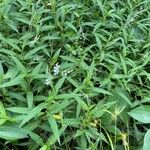
Persicaria hydropiperoides
False water-pepper · Swamp smartweed · Mild water-pepper · False Waterpepper · Mild Smartweed
Description
Source: leafsnapPersicaria hydropiperoides is a New World species of flowering plant in the buckwheat family known by the common names swamp smartweed and false waterpepper. It is widespread across much of North America and South America. It grows in moist and wet habitats, and is sometimes semi-aquatic. Persicaria hydropiperoides is quite variable and is sometimes divided into several varieties, some of which may be better treated as species in their own right.In general, Persicaria hydropiperoides is a rhizomatous perennial herb growing upright or erect and approaching a maximum height of one meter (40 inches). Roots may emerge from nodes on the lower stem. The bristly lance-shaped leaves are around 10 centimeters (4 inches) long. The leaves have sheathing stipules known as ochrea. The spikelike inflorescence produces many pinkish flowers each about 3 millimeters wide.
Care Guide
💧 Water
False waterpepper thrives in consistently moist environments that mimic its wetland origins, and it requires weekly watering. Although regular hydration is ideal, the plant can withstand brief periods of dryness. Seasonal rains are also beneficial, as they support its natural growth cycles and make outdoor cultivation feasible.
☀️ Light Full sun
The false waterpepper flourishes when it receives plenty of sunlight during the day. It can also adapt to environments where sunlight is partially scattered, but this could impact its best growth. Being native to places characterized by plentiful sunlight, it could experience leaf scorch when overly exposed or become thin and lack vitality if sunlight is insufficient.
What are the sunlight requirements for False waterpepper?
False waterpepper thrives in conditions where it can receive generous amounts of sunlight throughout the day. Ideally, it requires full sun, meaning it should be exposed to over 6 hours of sunlight daily, but it can also survive in partial sun, with about 3-6 hours of sunlight. The plant originates from habitats accustomed to abundant sunlight and may experience leaf burn if overexposed or become sparse and lose vigor if the sunlight is inadequate. Observing how sunlight moves through your garden and selecting locations that offer a balance of light and shade will ensure the plants' health and happiness.
How does inadequate lighting affect False waterpepper, and what are the symptoms?
When False waterpepper is placed in rooms with inadequate lighting, it may not show immediate symptoms of light deficiency, but over time, several issues can arise. Symptoms include smaller new leaves, leggy or sparse growth, faster leaf drop, slower or no new growth, lighter-colored new leaves, and conditions like chlorosis (leaves turning yellow), sunscald (damaged leaves or stems from intense sunlight), leaf curling, wilting, and leaf scorching. These symptoms suggest either too much or too little exposure to sunlight, affecting the plant's overall health and ability to photosynthesize.
What kind of artificial lighting is recommended for indoor False waterpepper plants?
For indoor False waterpepper plants, when natural sunlight is insufficient, especially in winter or less sunny spaces, artificial lights provide a vital solution. LED lights are a popular choice because they can be customized to offer specific wavelengths of light needed by plants. Full sun plants require 30-50W per square foot, partial sun plants need 20-30W per square foot, and full shade plants need 10-20W per square foot of artificial light. The light source should be placed 12-36 inches above the plant, mimicking natural sunlight's distance, and the duration should replicate the natural daylight hours for the plant species, usually between 8-12 hours of light per day.
What are effective solutions for dealing with light-related issues in False waterpepper plants?
To address light-related issues in False waterpepper plants, adjustments can be made based on whether the plant is indoors, outdoors, or on the ground. Indoors, gradually moving the plant to a sunnier location each week until it receives at least 6 hours of direct sunlight daily is recommended. Use south-facing windows and keep curtains open during the day. If the plant is large or not easily movable, consider using artificial light or plant grow lights for at least 8 hours daily. Outdoors, gradually adjust your plants to better sunlight exposure to prevent sunburn. This involves moving them to a sunnier location each week. For plants on the ground, reducing obstructions such as trees by pruning can help sunlight filter through to your plants. Additionally, transplanting smaller plants during their dormant period to a location with more sunlight and good drainage is beneficial. It's important to note that parts of the plant affected by insufficient sunlight may not recover, but new growth should be healthy with improved light exposure.
🌡️ Temperature 0–35°C
The false waterpepper naturally grows in areas with temperatures ranging from 32 to 95°F (0 to 35℃). It flourishes in this temperature range and any deviation to temperatues below or above this range could potentially impede its growth.
What is the native temperature range for False waterpepper?
False waterpepper is native to environments where temperatures range from 32 to 95 °F (0 to 35 °C). It thrives within these temperatures, and adjusting to significantly lower or higher temperatures may negatively affect its growth. The plant possesses strong cold resistance, making special frost protection measures usually unnecessary. Yet, it is crucial to offer protection if winter temperatures are expected to plunge below -35°C, using materials such as soil or straw for coverage. Additionally, watering the plant abundantly before the first freeze in autumn is recommended to ensure the soil remains moist and enters a frozen state, helping prevent drought and water scarcity for the plant during winter and early spring.
How does False waterpepper respond to low temperatures?
False waterpepper exhibits strong cold tolerance, ideally thriving when the temperature stays above 0°C. During winter, the plant should be maintained at temperatures above -30°C to ensure healthy growth. When temperatures fall below -35°C, there might not be noticeable changes during the winter, but a significant decrease in sprouting or even complete failure to sprout can occur in spring. To manage these effects, it is advisable to remove parts of the plant that have failed to sprout as spring arrives.
What should be done if False waterpepper experiences high temperatures?
During the summer, it is crucial to ensure False waterpepper is kept below 35°C, as temperatures exceeding 41°C can cause the leaves to become lighter in color, prone to curling, susceptible to sunburn, and in severe cases, lead to the entire plant wilting and becoming dry. To mitigate damage from high temperatures, trim away the sunburned and dried-up parts of the plant. Moving the plant to a location with shade from the midday and afternoon sun, or using a shade cloth, can provide necessary relief. Additionally, watering the plant in the morning and evening will help keep the soil at an optimum moisture level.
💨 Humidity
🪴 Soil 6-7
🌱 Fertilizer
Usually, one round of fertilization in the spring is enough for False waterpepper, however, increased feedings could lead to optimized growth. Consider feeding the plant every 30 to 45 days. Fertilizing improves the look and function of the leaves, endorsing a uniform color and robust texture. Moreover, it encourages the development of roots and the uptake of nutrients, ensuring the plant's health over a long period.
🪴 Pot & Repot
✂️ Pruning
False waterpepper flourishes in moist environments and benefits from being pruned in the spring to promote growth and maintain its shape. Removing dead stems helps increase vigor, and trimming overgrown sections keeps the plant looking tidy. Proper pruning contributes to a healthier water garden. For specific care recommendations, consult local horticultural resources.
🌿 Propagating
🐛 Diseases & pets
☠️ Toxicity
Characteristics
- Plant Type
- Herb
- Life Cycle
- Perennial
- Genus
- Persicaria
- Family
- Polygonaceae
- Hardiness Zone
- 3-10
- Mature Height
- 61 cm to 91 cm
- Mature Spread
- 13 cm
- Leaf Color
- Green, Dark Green
- Leaf Type
- Semi-evergreen
- Flower Color
- White
- Flower Size
- 2.54 cm
- Bloom Time
- Summer, Fall
- Planting Time
- Spring, Summer, Autumn
- Harvest Time
- Late summer, Fall, Early winter, Mid winter
- Native Area
- Chile, Belize, Honduras, Mexico, Guatemala, Georgia, Peru, Dominican Republic, Panama, Uruguay, Colombia, Bahamas, Cuba, Paraguay, Argentina, Bolivia, Venezuela, Brazil, Guyana, El Salvador, Nicaragua, Ecuador, Suriname, Costa Rica