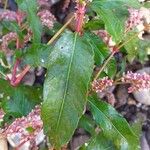
Persicaria maculosa
Red shank · Lady's-thumb · Jesusplant · Spotted lady's-thumb · Spotted Ladysthumb
Description
Source: leafsnapPersicaria maculosa, commonly known as Lady's Thumb, is a herbaceous annual plant belonging to the Polygonaceae family. Originally native to Europe and Asia, it has now spread worldwide. The plant grows up to 60 cm tall, featuring slender stems and lance-shaped leaves that are green with distinctive purple spots. Its small flowers, which are pink or white, are densely arranged in spikes at the top of the stem. Lady's Thumb thrives in moist soils and is often found in fields, gardens, waste areas, and along roadsides. In some regions, it is considered an invasive species due to its ability to spread rapidly through self-seeding. The plant has been used for medicinal purposes for centuries. Its anti-inflammatory properties make it useful for treating skin conditions such as eczema and psoriasis. Additionally, it can act as an astringent for treating wounds and bleeding gums. Lady's Thumb is also edible. Young leaves can be eaten raw in salads, while older leaves can be cooked like spinach. The seeds have been used as a substitute for buckwheat flour. Overall, Persicaria maculosa is an interesting herbaceous annual that offers both medicinal benefits and culinary uses. It is easy to grow, making it popular among gardeners worldwide, despite its invasive tendencies in some regions of North America. It was introduced accidentally from Europe centuries ago through contaminated seed shipments from England during colonial times when agriculture was still developing.
🌳 Lady's thumb acts as an indicator of soil nitrate concentrations. Because it prefers nitrogen-rich soils, botanists and ecologists use its presence to evaluate an area's nutrient content and possible pollution levels. This information can guide environmental monitoring and agricultural management, making lady's thumb an unexpected ally in assessing ecosystem health and farmland fertility.
🎭 Renewal, tying, limitation, attracting love
Care Guide
💧 Water Every 3 days
Lady's thumb naturally thrives in humid environments and prefers consistent moisture, although it can tolerate moderate drought conditions. For optimal growth, it should be watered weekly and does best in evenly damp soil during its growing season. This plant is adaptable to varying levels of soil moisture.
When should I water my Lady's Thumb?
Watering Lady's Thumb, or Persicaria maculosa, is vital for its health, affecting its growth, flower production, and disease resistance. You should water the plant when the top 1-2 inches of soil are dry. Look for signs like dried soil, wilted or discolored leaves, smaller leaves, and leaf shedding as indicators of when to water. It's crucial to adjust watering based on temperature and sunlight exposure; more is needed in warm and bright conditions. Avoid watering when the soil is still moist to prevent root diseases, but also be aware that late watering when excessively dry can harm the plant.
How should I water my Lady's thumb?
To water Lady's Thumb effectively, consider bottom-watering by placing the plant pot in a tray of water to allow moisture absorption from the bottom. Using a moisture meter can help determine the precise time for watering. If you're using a watering can, opt for one with a narrow spout to target the base of the plant directly, avoiding moisture on the foliage which can lead to fungal diseases.
How much water does Lady's Thumb really need?
Lady's Thumb, thriving in wet environments, requires a moderate amount of water that should thoroughly soak the soil without causing waterlog. The plant's medium root depth and size mean it needs sufficient water to hydrate soil in its pot, balancing between too much and too little. Healthy watering signs include vibrant, glossy leaves, and steady growth. Over- or under-watering can lead to wilting, yellowing leaves, root rot, or stunted growth, highlighting the importance of a balanced water regimen.
What kind of water is best for Lady's Thumb?
Lady's Thumb thrives with distilled water, owing to its purity and lack of contaminants. Rainwater, being natural and chemical-free, is also highly recommended, as is filtered water that removes harmful substances. Tap water is usable in the absence of other options but be cautious of chlorine and other chemical content, to which Lady's Thumb is highly sensitive. Letting tap water sit to allow chlorine to evaporate, and using room temperature water, can mitigate potential stress on the plant.
How do Lady's Thumb's watering needs change with the seasons?
Seasonal changes significantly impact Lady's Thumb's watering needs. In spring, with the onset of growth, increase watering as temperatures rise, but avoid over-watering. During the high-growth summer months, the plant requires frequent watering, adjusting for soil dryness and weather conditions. In autumn, reduce watering as growth slows down and further decrease it in winter during dormancy, only watering when the soil is dry to avoid diseases.
☀️ Light Full sun
Lady's thumb grows best in full sunlight, though it can also tolerate less-than-full sun. Coming from sunny habitats, its growth and health suffer when light is inadequate. Too much sun, however, can cause it to wilt.
What are the sunlight requirements for Lady's thumb?
Lady's thumb (Persicaria maculosa) thrives best under full sun conditions, requiring above 6 hours of sunlight a day, but it can also tolerate partial sun, with about 3-6 hours of sunlight. It's crucial to observe how sunlight moves through your garden to ensure you choose spots that offer the ideal balance of light and shade for the plant. Ensuring that it receives the right amount of sunlight is key to its growth and health, as originating from areas with abundant sunlight, Lady's thumb can suffer from inadequate light, leading to possible growth issues and wilting from overexposure.
How can artificial lighting be used for growing Lady's thumb indoors?
When natural sunlight is insufficient, especially during winter or in less sunny spaces, artificial lights can provide a vital solution for growing Lady's thumb indoors. Optimal growth under artificial light requires choosing the right type of light - LEDs are recommended due to their customization options for specific wavelengths. Full sun plants need 30-50W per square foot, partial sun plants require 20-30W per square foot, and full shade plants need 10-20W per square foot. The artificial light should be placed 12-36 inches above the plant to mimic natural sunlight conditions and be kept on for 8-12 hours per day to mimic natural daylight duration.
What are the symptoms of inadequate sunlight for Lady's thumb grown indoors?
Indoor Lady's thumb plants may show several symptoms if they receive inadequate sunlight, including smaller new leaves, leggy or sparse growth, faster leaf drop, slower or no new growth, and lighter colored new leaves. These symptoms indicate the plant's struggle with insufficient light. Additionally, conditions such as chlorosis, sunscald, leaf curling, wilting, and leaf scorching may occur, indicating either excessive sunlight or poor adaptation to the current light conditions. Recognizing these signs is crucial for adjusting care to ensure the plant's health.
What are the solutions for Lady's thumb experiencing light-related issues?
For indoor Lady's thumb plants experiencing light deficiency, gradually move them to a sunnier location each week until they receive at least 6 hours of direct sunlight daily. If plants are large or not easily movable, consider using artificial lighting, keeping a desk or ceiling lamp on for at least 8 hours daily. For outdoor plants, similarly adjust their location to increase sun exposure gradually. When addressing sunlight obstruction, prune trees or other obstacles and consider transplanting smaller plants during their dormant period to locations with better sunlight and drainage. Note that while parts of the plant damaged by insufficient light may not recover, new growth will be healthy once proper light exposure is achieved.
🌡️ Temperature 5–35°C
Lady's thumb originates from temperate regions and prefers temperatures of 68 to 95 °F (20 to 35 °C). During hotter seasons, bringing the plant's ambient temperature closer to that range will help it thrive.
What is the native environment and preferred temperature range for Lady's thumb?
Lady's thumb, also known by its botanical name Persicaria maculosa, thrives in temperate environments. It prefers a temperature range from 68 to 95 °F (20 to 35 °C). To help it thrive during the hotter seasons, it's beneficial to adjust the temperature of its surroundings closer to this preferred range.
Does Lady's thumb require special frost protection measures during winter?
Lady's thumb possesses strong cold resistance, meaning special frost protection measures are not usually necessary during winter. However, if winter temperatures are expected to fall below -30°C, it's important to protect the plant against the cold. This can be achieved by covering the plant with insulating materials like soil or straw. Additionally, watering the plant abundantly before the first freeze in autumn is recommended to ensure the soil remains moist and enters the frozen state, helping prevent drought and water scarcity for the plant during winter and early spring.
How does Lady's thumb react to low temperatures during winter?
Lady's thumb is cold-tolerant, performing best in temperatures above 20°C. During winter, it's important to keep it above 0°C. When temperatures dip below -30°C, you might not notice immediate changes, but there could be a decrease in sprouting or no sprouting at all come spring. A solution for the spring is to remove any parts of the plant that have failed to sprout.
How should Lady's thumb be cared for during high temperatures?
In the summer, it's crucial to keep Lady's thumb's surroundings below 35°C. Should the temperature exceed 41°C, the plant's leaves might lighten in color, become prone to curling, susceptible to sunburn, and in severe cases, the whole plant may wilt and dry out. To remedy this, trim away sunburned and dried parts. Relocate the plant to a shaded area away from direct midday and afternoon sun, or use a shade cloth to mitigate sun exposure. Ensure the soil stays moist by watering the plant in the morning and evening.
💨 Humidity high (>60%)
This plant needs special care because it loves high humidity levels of 60-80% or more. The best way to achieve this is by placing a humidifier near the plant. Daily misting is also essential! Make sure the room has good ventilation.
🪴 Soil 6-7
🌱 Fertilizer
Lady's thumb benefits from regular, dilute applications of fertilizer to encourage healthy leaf growth. You should feed Lady's thumb about once a month in the summer. Nitrogen is essential for foliage, and adding nitrogen-rich sources helps Lady's thumb thrive.
🪴 Pot & Repot
✂️ Pruning
This plant does not typically require any pruning.
🌿 Propagating
🐛 Diseases & pets
☠️ Toxicity
This plant is not considered toxic.
Characteristics
- Plant Type
- Herb
- Life Cycle
- Annual, Biennial, Perennial
- Genus
- Persicaria
- Family
- Polygonaceae
- Hardiness Zone
- 4-10
- Mature Height
- 76 cm
- Mature Spread
- 13 cm to 37 cm
- Leaf Color
- Green, Variegated, Black
- Leaf Type
- Deciduous
- Flower Color
- Pink
- Flower Size
- 0.25 cm
- Bloom Time
- Early summer, Mid summer
- Planting Time
- Spring, Summer, Autumn
- Harvest Time
- Mid summer, Late summer
- Native Area
- Egypt, Turkey, Pakistan, Morocco, Yemen, Belarus, Uzbekistan, Russia, Iraq, Iceland, Estonia, Romania, Latvia, Moldova, Netherlands, Nepal, Saudi Arabia, Tunisia, Bulgaria, Laos, Greece, Ukraine, China, Lithuania, Kazakhstan, Switzerland, Vietnam, Finland, Iran, Albania, Algeria, Turkmenistan