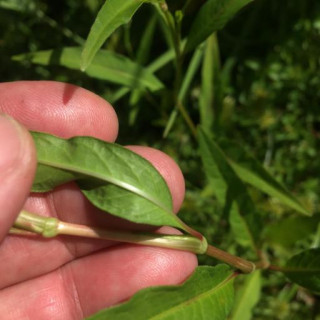
Persicaria pensylvanica
Pennsylvania Smartweed · Pinkweed · Pennsylvania Knotweed · Pink Knotweed · Annual smartweed
Description
Source: leafsnapPersicaria pensylvanica (syn. Polygonum pensylvanicum) is a species of flowering plant in the buckwheat family, Polygonaceae. It is native to parts of North America, where it is widespread in Canada and the United States. It has also been noted as an introduced species in parts of Europe and South America. Common names include Pennsylvania smartweed and pinkweed.
🌳 Pennsylvania smartweed might not look like an obvious candidate for technological use, yet it shows promise for water purification. Research has suggested that some smartweeds can absorb heavy metals from their surroundings, indicating potential for bioremediation. Though not a glamorous application, this practical use could bring notable environmental benefits, offering a natural way to clean polluted water bodies and possibly reducing reliance on chemical methods.
🎭 Renewal
Care Guide
💧 Water
Pennsylvania smartweed thrives in moist environments, preferring consistent moisture, and is resilient in water-saturated conditions. To replicate its native habitat and promote vigorous growth during its active season, it should be watered weekly, benefiting from natural rainfall when available.
☀️ Light Full sun
Pennsylvania smartweed prefers spots that get full sun. Such exposure encourages healthy growth, promotes maximum leaf expansion, and supports stronger root development. This preference matches its native open, unshaded habitat. Both too much sun and too little light can negatively affect its growth and health.
🌡️ Temperature 10–25°C
Pennsylvania smartweed is a plant accustomed to temperate climates and thrives in temperatures of 68 to 95 °F (20 to 35 ℃). It favors warm weather but can endure cooler conditions. Maintaining these temperature requirements year-round produces optimal growth.
💨 Humidity
🪴 Soil 5-6
🌱 Fertilizer
Pennsylvania smartweed responds well to regular, light applications of fertilizer to encourage healthy leaf development. You should apply fertilizer about once a month during the summer. Nitrogen is important for foliage, and providing nitrogen-rich sources helps Pennsylvania smartweed thrive.
🪴 Pot & Repot
✂️ Pruning
To promote growth control and improve airflow, Pennsylvania smartweed should be pruned. This is best done from early to late spring, as it helps remove dead stems and thin crowded areas, ultimately preventing disease. Pruning encourages healthy new growth and can also reduce pests. For more detailed guidelines, consider consulting resources such as the Royal Horticultural Society.
🌿 Propagating
🐛 Diseases & pets
☠️ Toxicity
Characteristics
- Plant Type
- Herb
- Life Cycle
- Annual
- Genus
- Persicaria
- Family
- Polygonaceae
- Hardiness Zone
- 6
- Mature Height
- 0.1 m to 2.13 m
- Mature Spread
- 30 cm to 46 cm
- Leaf Color
- Green
- Leaf Type
- Deciduous
- Flower Color
- Pink, Purple
- Flower Size
- 0.51 cm to 1.52 cm
- Bloom Time
- Early summer, Mid summer
- Planting Time
- Autumn, Winter
- Harvest Time
- Mid summer, Late summer
- Native Area
- Cuba, Haiti, Mexico, Georgia, Dominican Republic