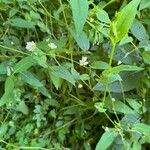
Persicaria strigosa
Care Guide
💧 Water
Spotted knotweed thrives in humid environments and needs consistently moist soil to grow well. To ensure it stays hydrated, water it weekly. When grown outdoors, this plant benefits from mulching, which helps retain moisture and mimics the leaf litter found in its natural habitat.
☀️ Light Full sun
Spotted knotweed is a perennial, herbaceous plant that favors sunlight and comes from open habitats, commonly flourishing in meadows and grasslands. It prefers full sun but can also endure partial sun conditions.
What are the sunlight requirements for Spotted knotweed?
Spotted knotweed, a sun-loving perennial herbaceous plant that thrives in open habitats such as meadows and grasslands, requires full sun for optimal growth. This means it needs above 6 hours of sunlight daily. However, it can also tolerate partial sun conditions, which equate to about 3-6 hours of sunlight. To ensure the health and happiness of your plants, it's crucial to observe how sunlight moves through your garden and choose locations that offer a balanced mix of light and shade.
How can artificial lighting support Spotted knotweed indoor growth?
Indoor Spotted knotweed plants require adequate lighting for optimal growth, especially in spaces that receive insufficient natural sunlight. Artificial lights, such as LED lights, provide a viable solution by offering the specific wavelengths of light needed. For full sun plants like Spotted knotweed, 30-50W/sq ft of artificial light is recommended. The light source should be placed 12-36 inches above the plant, with an exposure of 8-12 hours per day to mimic natural daylight conditions.
What are common symptoms of light deficiency in Spotted knotweed?
Spotted knotweed may exhibit several symptoms under inadequate lighting, such as smaller new leaves, leggy or sparse growth, faster leaf drop, delayed or halted growth, and lighter-colored or irregularly patterned new leaves. Additional issues can include chlorosis, where leaves lose their green color, sunscald that causes pale or necrotic spots on leaves, curling of leaves as a defense against excessive sunlight, wilting due to significant water loss, and leaf scorching marked by brown, dry edges on leaves.
What solutions can optimize Spotted knotweed's sunlight exposure?
For optimal growth, gradually move Spotted knotweed to sunnier locations, ensuring they receive at least 6 hours of direct sunlight daily. Use south-facing windows and keep curtains open. If outdoor relocation or large plants pose a challenge, consider artificial lighting, maintaining at least 8 hours of exposure daily. Minimize obstructions by pruning trees or relocating plants to sunnier spots. Note that affected plant parts may not recover, but new growth will be healthy with improved light exposure.
🌡️ Temperature 15–37.8°C
Spotted knotweed can tolerate a wide range of temperatures, yet its distribution may still be restricted by different combinations of moisture and heat. It does best in warm summer climates with sufficient rainfall or watering. Long stretches of cloudy, rainy weather or prolonged high temperatures can raise the chance of Spotted knotweed dying. In winter, protecting it from cold can increase its survival rate.
💨 Humidity
🪴 Soil 5-7
🌱 Fertilizer
A single spring application of fertilizer is generally adequate for Spotted knotweed, though repeated feedings can help maximize growth. Feed once every month to a month and a half. Fertilization improves leaf appearance and function, helping maintain consistent color and a healthy texture. It also stimulates root growth and nutrient absorption to support long-term plant health.
🪴 Pot & Repot
✂️ Pruning
Spotted knotweed is characterized by its spotted leaves and aggressive growth. To manage its growth and health, prune the plant by one-third in early to late spring. This helps remove unhealthy stems and improve air circulation, which can prevent disease. After the flowering period, additional pruning helps maintain the plant’s shape, supports future blooms, and enhances its overall vigor and aesthetic appeal in garden spaces.
🌿 Propagating
🐛 Diseases & pets
☠️ Toxicity
Characteristics
- Plant Type
- Herb
- Life Cycle
- Perennial
- Genus
- Persicaria
- Family
- Polygonaceae
- Hardiness Zone
- 7-11
- Mature Height
- 15 cm to 46 cm
- Mature Spread
- 30 cm to 61 cm
- Leaf Color
- Green, Dark Green
- Leaf Type
- Deciduous
- Flower Color
- White, Pink
- Flower Size
- 0.25 cm to 0.51 cm
- Bloom Time
- Summer, Early fall, Mid fall
- Planting Time
- Spring, Summer, Autumn
- Harvest Time
- Late summer, Fall, Early winter
- Native Area
- Nepal, Sri Lanka, Malawi, India, Malaysia, Angola, Namibia, South Africa, Madagascar, Rwanda, Zambia, Philippines, Bangladesh, Laos, Thailand, Kenya, Uganda, Tanzania, Zimbabwe, China, Indonesia, Burundi, Vietnam, Myanmar, Bhutan, Eswatini, Ethiopia, Botswana