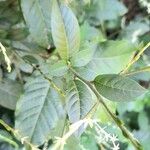
Petiveria alliacea
Strong Man Bush · Garlicweed · Strongman's-weed · Guinea-hen-plant · Guinea-hen-weed
Description
Source: leafsnapPetiveria alliacea, commonly known as Anamu or Guinea Henweed, is a perennial herbaceous plant in the Phytolaccaceae family. Native to Central and South America, it thrives in tropical regions worldwide. The plant reaches up to 1 meter in height and emits a strong garlic-like odor when its parts are crushed. The leaves of Petiveria alliacea are long, narrow, and pointed with a dark green hue. The flowers are small, with white or greenish-yellow petals that grow in clusters at the ends of long stems. The fruit is a small berry that transitions from green to black as it ripens. For centuries, indigenous people have harnessed the medicinal properties of Petiveria alliacea. The plant contains several bioactive compounds, including triterpenes, flavonoids, alkaloids, and sulfur compounds, which exhibit anti-inflammatory, analgesic (pain-relieving), antimicrobial (against bacteria), antifungal (against fungi), and antiparasitic (against parasites) properties. Traditionally, Petiveria alliacea has been used to treat a variety of ailments such as fever, respiratory issues like asthma, digestive problems like diarrhea, skin conditions such as eczema, and menstrual cramps. In recent years, Petiveria alliacea has attracted scientific interest due to its potential anti-cancer properties. Research has shown promising results against various types of cancer cells, including breast cancer cells. Overall, Petiveria alliacea is a significant medicinal herb with potential therapeutic benefits for numerous health conditions. Its promising properties make it an important subject for future drug development research.
Care Guide
💧 Water Every 7 days
Guinea henweed flourishes in tropical regions, as it requires consistent moisture and high humidity. To recreate its natural environment, water the plant weekly. If growing it outdoors, apply mulch to help retain soil moisture and regulate root temperature.
How should I water my Guinea henweed?
To properly water the Guinea henweed, it is recommended to use filtered water at room temperature. This is because tap water can contain harmful particles for the plant's health. Since the Guinea henweed is from a warm environment, it is best to avoid using cold water as it can shock the plant. Another important tip is to avoid overhead watering, as it can lead to leaf issues. Instead, it is best to thoroughly soak the soil with filtered room temperature water. This helps to moisturize the roots and aids in their growth and nutrient absorption.
What should I do if I give my Guinea henweed too much or too little water?
Overwatering is a common issue that can harm Guinea henweed. When this plant receives too much water, its stems and leaves may wilt, turn yellow, and develop diseases like root rot, mold, and mildew. Underwatering is less common, but possible. In such cases, the leaves may become brittle and brown. It's important to notice the signs of overwatering early and take action immediately. Diseases like root rot may be irreversible if not addressed promptly. Reduce watering if you see signs of overwatering and check the soil's drainage. If it drains poorly, replace it with well-draining potting mix. If signs indicate your plant is getting too little water, simply water more regularly until the signs improve.
How many times should I give water to my Guinea henweed?
If your Guinea henweed is in a pot, the best way to determine if it needs water is to check the soil by sticking your finger into it. If the top two to three inches of soil feels dry, it's time to water. If you have Guinea henweed growing outdoors in the ground, you can use the same method to test the soil. When the top few inches of soil have dried out, it's time to water. Typically, during spring and early fall, you'll need to water this plant about once a week using this method. However, in excessively hot weather, you may need to water it about twice a week or more. Nevertheless, mature and well-established Guinea henweed plants are quite resilient to drought.
How much water does my Guinea henweed require?
When watering your Guinea henweed, don't be afraid to give it plenty of water. Make sure the top few inches of soil are dry before watering, then thoroughly soak the soil. Add enough water that it flows out of the pot's drainage holes. If there's no excess water draining, you may not have watered enough. However, be careful not to let water accumulate in the soil, as this can harm the plant. If there's no drainage, it could mean the soil doesn't drain well, which is bad for the plant's health. If the plant is outside, about 1 inch of rain per week should be enough.
How do I water my Guinea henweed as it grows?
The water needs of the Guinea henweed vary depending on its growth stages. In the first few years or after transplanting, it requires more water because it focuses on developing new roots for future growth, which need extra moisture. After a few seasons, less water is needed. Additionally, during the bloom period, the plant may require more water as the flower development utilizes significant moisture.
☀️ Light Full sun
Guinea henweed thrives in full sun but can tolerate somewhat less light. It carries out photosynthesis efficiently and grows well by using plentiful sunlight. Because it comes from sunny regions, high levels of sunlight do not readily damage the plant. However, insufficient sunlight can limit its growth.
What are the sun requirements for Guinea henweed?
Guinea henweed thrives best under full sun, requiring more than 6 hours of sunlight daily, but it can also tolerate partial sun, approximately 3-6 hours of sunlight. It's essential to observe how sunlight moves through your garden to find spots offering an optimal balance of light and shade, as this significantly impacts the plant's growth and happiness.
What are the essentials for growing Guinea henweed successfully?
To grow successfully, Guinea henweed requires full sun exposure to photosynthesize effectively and grow robustly. Originating from regions with ample sunlight, it's well-suited to environments with abundant solar energy and can tolerate excessive sunlight without harm. However, insufficient sunlight may impede its growth. In spaces with inadequate natural sunlight, indoor plants can benefit from artificial lighting solutions, such as LED lights, to provide the necessary wavelengths of light. The requirements range from 30-50W/sq ft for full sun plants to 10-20W/sq ft for full shade plants. Proper distance (12-36 inches above the plant) and duration (8-12 hours per day) of artificial light exposure are crucial for mimicking natural conditions.
What symptoms indicate Guinea henweed is getting inadequate sunlight?
Symptoms of inadequate sunlight for Guinea henweed include smaller new leaves, leggy or sparse growth, faster leaf drop, slower or no new growth, lighter-colored new leaves, chlorosis (leaves turning yellow due to chlorophyll breakdown), sunscald (pale or damaged areas on leaves or stems from too much sun), leaf curling (leaves curling or twisting as a defense mechanism against excessive sunlight), wilting (loss of turgor pressure causing drooping), and leaf scorching (brown, dry edges on leaves caused by too much sunlight). These symptoms suggest the plant is struggling with the light conditions provided and adjustments are needed.
How can I address light issues for Guinea henweed indoors?
To address light issues for indoor Guinea henweed, gradually increase the plant's exposure to sunlight by moving it to a sunnier location each week, aiming for at least 6 hours of direct sunlight daily. Utilize south-facing windows and keep curtains open to maximize sunlight. If the plant is large or not easily movable, consider supplementing with artificial light, turning a desk or ceiling lamp on for at least 8 hours daily, or investing in professional plant grow lights to ensure ample light exposure.
What should I do if my outdoor Guinea henweed isn't getting enough sunlight?
For outdoor Guinea henweed struggling with insufficient sunlight, gradually acclimate the plant to more sun by moving it to a sunnier spot each week. It's crucial to make these changes gradually to prevent sunburn. Note that parts of the plant already affected by light deficiency may not fully recover, but new growth will be healthy with increased light exposure.
🌡️ Temperature 20–37.8°C
Guinea henweed naturally occurs in areas where temperatures range from 68 to 100.4 °F (20 to 38 ℃). It prefers warm environments. To keep guinea henweed growing well, make sure the temperature does not drop below 68 °F (20 ℃), especially during colder months.
What is the ideal temperature range for growing Guinea henweed?
Guinea henweed thrives in regions where temperatures range between 68 to 100.4 °F (20 to 38 °C). It is a heat-loving plant that benefits from being kept in warm climates. To promote healthy growth, it's important to ensure that the temperature does not fall below 68 °F (20 °C), especially during the colder seasons. In areas experiencing cold weather, it is advisable to move Guinea henweed indoors and place it near a bright window while keeping it a safe distance from heaters. Winter temperatures should be maintained above 20°C to aid in the plant's development, as temperatures nearing 0°C can be harmful.
How does low temperature affect Guinea henweed and what are the solutions?
Guinea henweed is not tolerant to low temperatures and prefers the warmth, with optimal growth occurring above 20°C. Exposure to temperatures below 0°C during winter can be detrimental. Temperatures falling below -5°C may cause the leaves to lighten in color, which after frost damage, gradually turn brown or black. Symptoms such as wilting and drooping may also occur. To address frost damage, affected parts should be trimmed off, and the plant should be immediately moved to a warmer indoor environment. Placing the plant near a south-facing window ensures ample sunlight, but it's crucial to avoid direct heat sources like heaters or air conditioning vents to prevent the air around the plant from becoming excessively dry.
What should I do if Guinea henweed is exposed to high temperatures?
During the summer, it's important to ensure that Guinea henweed is not exposed to temperatures above 38°C. Exposure to temperatures exceeding 43°C can lighten the leaves' color and increase susceptibility to sunburn. If such damage occurs, sunburned and dried parts of the plant should be trimmed away. To protect the plant from intense heat, relocate it to a spot that provides shade during the midday and afternoon sun. Keeping the soil moist by watering the plant in the morning and evening helps to cope with high temperatures. This care prevents further sun damage and supports the plant's well-being despite the heat stress.
💨 Humidity normal (40-60%)
This plant will thrive in moderate humidity, which is probably the level in your home. However, misting it a few times a week can be very beneficial. Make sure the room has good ventilation.
🪴 Soil 5-6
🌱 Fertilizer
Guinea henweed needs the most fertilizer during its active growth phase, which takes place mainly in spring, summer, and early fall. Fertilizing supplies essential nutrients that the soil may lack, supporting healthy root and stem development and enhancing the attractive foliage that is a defining trait of this plant.
Why should I put fertilizer on my Guinea henweed?
All plants require soil nutrients for growth, including the Guinea henweed. However, the soil in which your plants grow may not always contain all the necessary nutrients. To ensure that your garden plants receive both basic and specific nutrients, fertilization and soil amendments are necessary. For Guinea henweed, fertilizer is essential to support healthy root and stem development during the growing season. Fertilization also enhances the appearance of its foliage, which is the plant's main ornamental feature.
When should I put fertilizer on my Guinea henweed?
During the active growth phase of a Guinea henweed, which covers spring, summer, and early fall, it requires the highest amount of fertilizer. After winter, you should feed the plant every two to four weeks until fall. As fall approaches, gradually decrease the amount of fertilizer provided until you stop completely in preparation for the less active growth period during winter.
When it is not a good idea to fertilize Guinea henweed?
For most of the year, including spring, summer, and most of the fall, it's important to regularly feed your Guinea henweed. However, there are a couple of exceptions. If you've over-fertilized or fertilized incorrectly, causing fertilizer burn or some other issue, you'll need to fix that before going back to a regular feeding schedule. Additionally, you should not fertilize a Guinea henweed during winter. If you have this plant indoors in a cold winter area, it will go through a dormant phase during the winter. Feeding it during this phase is not necessary and will likely cause fertilizer burn.
What kind of fertilizer does my Guinea henweed require?
The fertilizer for Guinea henweed requires a specific blend of nutrients, each in relatively low amounts. An ideal fertilizer has an N-P-K ratio of 3-1-2, but a general-purpose fertilizer with an even blend can also work well. However, even with a balanced fertilizer, the ratio number for each nutrient volume should be 10 or lower. You can choose between granular or liquid-based fertilizers. If you opt for a liquid-based fertilizer, it's best to dilute the strength by half. Granular fertilizer has few downsides, but using liquid fertilizer is often most sensible, especially when supplying water while feeding your Guinea henweed.
How can I fertilize my Guinea henweed?
When fertilizing your Guinea henweed, it is important to follow the instructions provided with the fertilizer. In most cases, you should apply the fertilizer just before or during watering to prevent root damage. If you are using a slow-release granular fertilizer, sprinkle it on the soil and water immediately afterward. For liquid fertilizers, dilute them with water, apply to the soil, and then add some more water. It is crucial to dilute your fertilizer by at least half, especially in the spring and fall when the plant's growth is increasing or slowing down.
🪴 Pot & Repot 2-3 years
When repotting Guinea henweed, pick a pot 1–2 inches (2.5–5.1 cm) larger with good drainage. Use a well-draining potting mix. Repot in spring or fall, making sure the root ball is slightly lower than the rim of the flower pot. Water thoroughly after repotting and place in a warm spot with indirect sunlight.
✂️ Pruning
Guinea henweed thrives with proper pruning, especially from early to late spring. Focus on removing dead or crowded branches to improve air circulation and encourage denser foliage. Be careful not to over-prune, as maintaining the plant's natural shape helps it resist pests and diseases, leading to healthier growth.
🌿 Propagating
🐛 Diseases & pets
☠️ Toxicity
Characteristics
- Plant Type
- Herb, Shrub
- Life Cycle
- Perennial
- Genus
- Petiveria
- Family
- Petiveriaceae
- Hardiness Zone
- 9-12
- Mature Height
- 91 cm
- Mature Spread
- 30 cm
- Leaf Color
- Yellow
- Leaf Type
- Deciduous
- Flower Color
- White
- Flower Size
- 0.76 cm to 1.27 cm
- Bloom Time
- Late spring, Summer
- Planting Time
- Spring, Summer, Autumn
- Harvest Time
- Mid summer, Late summer, Early fall
- Native Area
- Belize, Honduras, Mexico, Guatemala, Peru, Dominican Republic, Trinidad and Tobago, Panama, Jamaica, Uruguay, Colombia, Bahamas, Cuba, Paraguay, Argentina, Haiti, Bolivia, Venezuela, Brazil, Guyana, El Salvador, Nicaragua, Ecuador, Suriname, Costa Rica