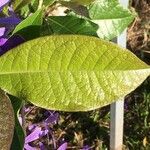
Petrea volubilis
Queen's-wreath · Sandpaper vine · Purple-wreath · Sandpaper · Petrea
Description
Source: leafsnapPetrea volubilis, commonly known as purple wreath, queen's wreath, sandpaper vine, and nilmani, is an evergreen flowering vine in the family Verbenaceae, native to Tropical America, that is valued especially for its display of violet flowers.
🌳 Beyond decorative use, queen's wreath can be used as a natural dye, its deep purple shades applied in textile industries. In some cultures it is viewed as a floral emblem symbolizing nobility and refinement. Researchers are examining queen's wreath's potential for eco-friendly dyes, and its sturdy nature makes it a good choice for urban greening efforts, helping to lower city pollution.
Care Guide
💧 Water Every 1-2 weeks
The Queen's wreath thrives in high humidity and consistently moist conditions. To maintain the right level of moisture, water it every 1-2 weeks ensuring the soil remains moist but not waterlogged. As an evergreen plant, it does well outdoors, where it benefits from natural rainfall that promotes lush foliage year-round.
How should I water my Queen's wreath?
To promote excellent root development in your plants, consider using a garden hose at the base of each plant. Make sure to avoid directly spraying the leaves, as this can be harmful. If your plants are outdoors and exposed to direct sunlight, keep in mind that the leaves may require more watering. One option is to use bubblers to keep the roots moist. Another method is using soaker hoses that cover the entire garden or bed, which can help deeply water the roots when planting or removing plants. After watering, be sure to drain any excess water and wait for the soil to dry before watering again. When watering, try to do so at ground level to prevent the occurrence of diseases. On a sunny day, consider giving the entire bush a light spray of water. Whether your plants are in pots or in the ground, always remember that Queen's wreath prefers deep watering rather than light sprinkling.
What should I do if I give Queen's wreath too much or too little water?
An overwatered Queen's wreath can exhibit several signs, including yellowing, dropping, and wilting of leaves. The plant may also appear dull and unhealthy, with mushy stems. If these signs start to appear, it is advisable to adjust your watering schedule accordingly. On the other hand, wilting can also indicate under watering. In this case, you might notice crispy and dry leaves, while overwatered leaves will be soft and wilted. If the soil is dry and regular watering is not sufficient, give the plant a thorough watering. However, keep in mind that even with enough water, the Queen's wreath may still have dry and yellow leaves for a few days due to a damaged root system. Once the plant returns to normal, the yellowing of leaves will cease. When keeping the Queen's wreath indoors, always check the moisture levels in the pot and avoid overwatering. Look out for signs of black spots, and if present, allow the soil to dry in the pot by withholding watering for a few days. Overwatering can lead to root rot, which can be addressed by transferring the plant into a different pot, especially if you observe discolored and slimy roots. To prevent root rot, avoid making the soil too soggy. When planting the Queen's wreath outdoors, make sure to check the soil's moisture levels by digging a little deeper. If the soil feels too dry, it might indicate underwatering, and adequate watering is necessary to facilitate the plant's recovery.
How frequently should I water my Queen's wreath plant?
The Queen's wreath prefers to be watered deeply and infrequently. Especially when planted in pots, it is recommended to soak them in a gallon of water each time. Since the water storage in flower pots is limited, the soil tends to dry out faster. In cold regions, watering is required every 3 to 5 days. It is best to water the plant early in the morning when the soil is dry, whether it is indoors or outdoors. Additionally, checking the soil moisture can determine if watering is needed. When the top 2-3 inches of soil is dry, it is time to give the plant a thorough watering. During hot days, it may be necessary to check the soil moisture daily as the heat can quickly dry out the potting soil. If you have a garden, irrigation of the soil is also necessary. In hot climates, watering once a week is recommended. Only water when about 2 to 3 inches of soil has become too dry, and avoid adding water if there has been sufficient rainfall to prevent root rot. The Queen's wreath typically grows during spring and fall, so mulching with a layer about 3 to 4 inches deep can help conserve water when the plants are outdoors. Sandy soil drains faster, so plants in this type of soil may require more frequent watering. On the other hand, plants in clay soil can be watered less frequently to allow the plant to dry out between watering and prevent root rot. A helpful tip is to mark the date on the calendar whenever you water the plants and pay attention to any signs of drooping leaves, as it could mean watering is needed.
How much water should I give my Queen's wreath?
The Queen's wreath plant requires about a gallon of water per watering session. For potted plants, water them deeply until water starts to drip from the bottom of the pot. Wait for the soil to dry before watering again. You can use a water calculator or moisture meter to determine how much water you've given your plant in a week. Water the plant generously, especially during the flowering period, but allow the moisture to evaporate to avoid root rot. If the Queen's wreath plant is planted outdoors and receives adequate rainfall, it may not need additional watering. When the plant is young or newly planted, it should receive 1-2 inches of rain per week. As the Queen's wreath grows, it can rely solely on rainfall. However, if the weather is extremely hot or there is no rainfall for 2-3 weeks, consider giving the plant a thorough watering during cooler parts of the day to prevent heat damage. Additional watering will be necessary during extended dry spells.
Do I need to change how often I water my Queen's wreath based on the time of year or the weather?
To care for a Queen's wreath, it is important to consider its watering needs. In general, the plant requires watering only when there is persistent dry weather, as it can typically obtain enough water from rain when grown outdoors. During the spring and fall seasons, the soil should be kept moist but not soggy, with alternating dry and moist conditions promoting healthy growth. However, during the summer, hot weather and lack of rainfall may cause water to evaporate quickly, necessitating more frequent and thorough watering to keep the plant moist. In contrast, the plant requires less water during the winter when it goes dormant. During this period, using terracotta pots with a well-draining but moisture-retentive soil mixture can help the water evaporate efficiently. Once the Queen's wreath starts to leaf out and go dormant in early spring, watering can generally be skipped, as the plant can rely on fall and winter rains for survival. To encourage growth and blooming, the Queen's wreath should be cultivated and provided with appropriate drainage to prevent ponding or drought. For potted plants, which have limited root growth, regular watering, especially during the summer, is necessary. To avoid cold and wet roots, adequate drainage is essential, particularly while the plant is still actively growing. Deep soaking of the entire root system once or twice a week, depending on weather conditions, is preferable over shallow sprinkles that only wet the leaves and encourage fungal growth. It is important to prevent the plant from drying out completely during the fall and winter, even during dormancy, as this can lead to its demise. However, overwatering should also be avoided, as the Queen's wreath does not thrive in waterlogged conditions, especially during winter when poor drainage can be fatal. Applying mulch is recommended whenever possible, as it reduces stress, conserves water, and promotes healthy blooming.
☀️ Light Full sun
Queen's wreath does best with plenty of sunlight but can tolerate locations with moderate light. Native to bright environments, it may experience reduced growth in dimmer spots. Excessive sun can scorch its leaves, while insufficient light causes poor growth and fewer blooms.
What are the sunlight requirements for Queen's wreath?
Queen's wreath requires full sun exposure of above 6 hours of sunlight to thrive optimally, but it can also withstand partial sun, meaning about 3-6 hours of sunlight. It's essential to observe how sunlight moves through your garden to find spots that offer the perfect balance of light and shade, ensuring your Queen's wreath's happiness and health.
How does sunlight affect the growth of Queen's wreath?
Queen's wreath, or Petrea volubilis, thrives under abundant sunlight but can also adapt to areas with moderate light. Originating from light-rich environments, its growth may be hindered in less illuminated areas. While overexposure could potentially damage the foliage by scorching, insufficient light leads to lackluster growth and fewer blooms. To supplement light, especially indoors, artificial lighting such as LED can be used, offering vital support for the plant's growth by mimicking natural sunlight conditions.
What are the signs of inadequate light exposure in Queen's wreath?
Signs of poor light conditions in Queen's wreath include the development of smaller new leaves, leggy or sparse growth, early leaf drop to conserve resources, delayed or halted growth, lighter-colored new leaves indicating a lack of chlorophyll, and symptoms like chlorosis, sunscald, leaf curling, wilting, and leaf scorching due to excessive sunlight or inadequate exposure.
How can I improve the light conditions for my Queen's wreath?
To optimize light conditions for Queen's wreath, gradually move your plants to receive at least 6 hours of direct sunlight daily, preferably by utilizing a south-facing window and keeping curtains open for maximum exposure. For plants large or hard to move, consider artificial lighting, like using a desk or ceiling lamp for at least 8 hours daily or investing in professional plant grow lights. Outdoor plants should be moved gradually to sunnier spots to avoid shock or sunburn. Note that parts of the plant damaged by prior inadequate light may not recover, but new growth will be healthy with improved light conditions. Additionally, for ground plants, reduce obstructions to sunlight by pruning obstructive trees and consider transplanting smaller plants to sunny locations during their dormant periods.
🌡️ Temperature 20–41.1°C
Queen's wreath comes from tropical areas, where the weather is typically warm and humid. Consequently, it is adapted to high temperatures and moisture. It dislikes sudden temperature shifts and prefers a constant temperature, so preventing indoor temperature fluctuations is important. It generally cannot tolerate cold and needs higher temperatures to grow. If the surrounding temperature falls too low, the plant may stop growing or even die.
What is Queen's wreath?
Queen's wreath, known botanically as Petrea volubilis, is a plant species recognized for its distinct characteristics and appeal. It does not have further detailed information provided regarding its essentials, content, or symptoms associated with its care or presence.
💨 Humidity
🪴 Soil 6-7
🌱 Fertilizer
The best time to fertilize a Queen's wreath is in early spring as it breaks dormancy. This encourages overall growth and flower development. Fertilization improves the foliage, stems, and branches, while encouraging large, vibrant, and long-lasting blooms. It also helps move nutrients from the roots to the flowers and enhances the plant's health and resistance to disease.
Why should I add fertilizer to my Queen's wreath?
Fertilizing a Queen's wreath is important for a few reasons. Firstly, it helps the plant produce beautiful blooms. Secondly, fertilizing in early spring ensures that the Queen's wreath will have excellent flowers during that season. Additionally, fertilizer provides the plant with ample energy that it can store in the ground during its dormant growth phases. By giving the Queen's wreath extra nutrients during the fall planting process or late spring, it will have more energy to use when it resumes active growth.
What is the most suitable time to add fertilizer to my Queen's wreath?
To effectively fertilize Queen's wreath, timing is crucial. Applying fertilizer while the plant is dormant will render it ineffective, as rainwater may wash it away, causing waste and pollution. It is recommended to first apply fertilizer in the early spring and continue fertilizing monthly until early summer.
When is it not a good idea to add fertilizer to my Queen's wreath?
To help Queen's wreath thrive and produce beautiful blooms, it's important to be mindful of the fertilizer you use. High levels of nitrogen can result in excessive leaf growth but a dearth of flowers, so look for a fertilizer that has a lower nitrogen concentration compared to other nutrients. Avoid fertilizing the plant after early autumn since this can encourage excessive growth just before winter sets in. Additionally, refrain from fertilizing Queen's wreath during hot and dry periods as dry soil doesn't effectively deliver the nutrients and can trigger growth that requires more water, which may not be available. The best time to apply fertilizer is earlier in the season when temperatures are cooler. Remember that nearby plants or lawns can also absorb applied fertilizer, so take care to avoid inadvertently giving Queen's wreath an excessive dose.
What kind of fertilizer does my Queen's wreath plant need?
To maximize the growth and blooming of your Queen's wreath, it is recommended to use a fertilizer that has a balanced mix of nutrients, with slightly more phosphorus. Alternatively, some gardeners choose to enrich the soil by adding organic materials like compost, worm castings, and manure. Experienced gardeners may supplement with water-soluble fertilizers containing phosphorus when the flower buds appear, promoting better flower development and extended blooming. There are various forms of fertilizers available, but liquid or powdered ones are considered the best for Queen's wreaths. Regardless of the form, it is important to dilute the fertilizer and apply it while watering the plant.
How should I add fertilizer to my Queen's wreath plant?
To properly fertilize your Queen's wreath, it's crucial to follow specific directions for the type of fertilizer you are using and conduct research on how to apply it. Avoid over-fertilization by determining the correct amount. Typically, you can estimate one-tenth of a pound of fertilizer per year or per inch of trunk, with a maximum of one pound. Apply granular or organic fertilizers, like blood meal, by sprinkling them around the base of the tree, extending to the drip line. Make sure the fertilizer doesn't touch the trunk. These substances gradually break down and filter into the soil, getting absorbed by the roots. After fertilizing, spread a one-inch layer of compost around the tree base and water thoroughly.
🪴 Pot & Repot 2-3 years
Repot your queen's wreath every 2 to 3 years, ideally in late winter or early spring. Use a well-draining pot that is slightly larger than the current one. After repotting, place the plant in bright, indirect light and maintain consistent moisture levels, taking care not to overwater. Handle the plant gently, as it can be sensitive after being transplanted.
✂️ Pruning
The Queen's wreath boasts vibrant purple flowers and exhibits vigorous growth. To promote its health and increase flowering, prune it in early spring. Remove any dead stems and trim back overgrown branches. This practice enhances air circulation and light penetration, aligning with the plant's growth cycle for optimal results.
🌿 Propagating
🐛 Diseases & pets
☠️ Toxicity
Characteristics
- Plant Type
- Vine, Shrub
- Life Cycle
- Perennial
- Genus
- Petrea
- Family
- Verbenaceae
- Hardiness Zone
- 10-11
- Mature Height
- 4.88 m
- Mature Spread
- 1.83 m to 3.05 m
- Leaf Color
- Green
- Leaf Type
- Evergreen
- Flower Color
- Purple, Lavender
- Flower Size
- 2.54 cm to 5.08 cm
- Bloom Time
- Mid spring, Late spring, Early summer, Mid summer
- Planting Time
- Spring, Autumn
- Harvest Time
- Summer
- Native Area
- Belize, Honduras, Mexico, Guatemala, Peru, Trinidad and Tobago, Panama, Colombia, Paraguay, Bolivia, Venezuela, Guyana, El Salvador, Nicaragua, Brazil, Ecuador, Suriname, Costa Rica