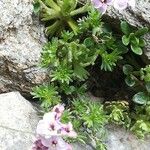
Petrocallis pyrenaica
Pyrenean whitlowgrass
Description
Source: wikipedia (CC BY-SA)Petrocallis is a genus of flowering plants belonging to the family Brassicaceae. It includes a single species, Petrocallis pyrenaica, a subshrub native to subalpine regions in the Pyrenees, Alps, and Carpathian mountains of southern and east-central Europe.
Care Guide
💧 Water
Pyrenean whitlow-grass, a plant native to European mountains, thrives in environments with moderate moisture and occasional dry spells. To mimic its natural alpine habitat, it needs weekly watering. This makes it ideal for rock gardens or similar settings, where it benefits from consistent hydration without overwatering.
What's the best way to water my Pyrenean whitlow-grass?
To properly water the Pyrenean whitlow-grass, it is best to use filtered water at room temperature. This plant prefers filtered water because tap water may contain harmful particles. Since the Pyrenean whitlow-grass is native to a warm environment, it is important to avoid using cold water as it can be a shock to the plant. Additionally, overhead watering should be avoided as it can cause issues with the foliage. Instead, pour the filtered room temperature water directly onto the soil until it becomes completely saturated. This method helps to moisten the roots and allows them to spread and absorb essential nutrients from the soil.
What should I do if I give my Pyrenean whitlow-grass too much or too little water?
Overwatering is a more common problem than underwatering for Pyrenean whitlow-grass. When the plant receives too much water, its stems and leaves may wilt and turn yellow. Overwatering for a long time can also lead to diseases like root rot, mold, and mildew, which can be fatal for the plant. Underwatering is less common because the plant is drought-tolerant, but it can still happen. When underwatering occurs, the leaves become brittle and brown. It's important to identify signs of overwatering early to prevent irreversible damage. Reduce watering immediately if you notice these signs and consider replacing the poorly draining soil with a well-draining potting mix. In case of underwatering, simply increase the watering frequency until the signs improve.
How frequently should I water my Pyrenean whitlow-grass plant?
If you have your Pyrenean whitlow-grass in a pot, the best way to check if it needs water is by sticking your finger into the soil. When the top two to three inches of soil feel dry, it's time to water it. If you have your Pyrenean whitlow-grass planted in the ground, you can use a similar method to check the soil. Once the first few inches of soil are dry, it's time to water. In the spring and early fall, this typically means watering once a week. In very hot weather, you may need to water twice a week or more. However, mature and well-established Pyrenean whitlow-grass can handle drought conditions quite well.
How much water does my Pyrenean whitlow-grass require?
To properly water your Pyrenean whitlow-grass, don't hold back on the amount of water you provide. Make sure the top couple of inches of soil are dry before watering, and then give the plant a good, thorough soaking until the soil is completely saturated. You should add enough water so that it drains out through the bottom holes of the pot. If you don't see excess water draining, it means you haven't watered enough. On the other hand, be careful not to let water accumulate in the soil as this can harm the plant. If you notice that water is not draining properly, it might be due to poorly draining soil, which is not good for the plant. If the plant is outside, receiving 1 inch of rain per week will be enough.
How do I water my Pyrenean whitlow-grass at different times as it grows?
The water needs of the Pyrenean whitlow-grass can vary depending on its growth stages. In the first few years of its life or when it is transplanted to a new location, it requires more water than usual. During these stages, the plant focuses on developing new roots for future growth, which require extra moisture. As the plant matures over a few seasons, it will need less water. Additionally, during the bloom period, the plant requires more water due to the energy needed for flower development.
☀️ Light Full sun
Pyrenean whitlow-grass is a perennial herbaceous plant that likes sunny locations and comes from open habitats, commonly growing in meadows and grasslands. It prefers full sun but can also tolerate partial sun.
What are the sunlight requirements for Pyrenean whitlow-grass?
Pyrenean whitlow-grass requires full sun, meaning it needs above 6 hours of sunlight daily, but it can also tolerate partial sun conditions, which refers to about 3-6 hours of sunlight. It's essential to observe how sunlight moves through your garden to select the best spots that provide a good balance of light and shade, ensuring the plants' optimal growth.
What essentials should be known about Pyrenean whitlow-grass?
Pyrenean whitlow-grass, botanically known as Petrocallis pyrenaica, is a sun-loving perennial herb that flourishes in open habitats like meadows and grasslands. Despite its preference for full sunlight, it can adapt to partial sun. For indoor plants where natural light is limited, artificial lighting such as LED lights can be employed to provide the necessary wavelengths of light. The intensity required varies with the sunlight preference of the plant, with full sun plants needing 30-50W/sq ft, partial sun plants 20-30W/sq ft, and full shade plants 10-20W/sq ft of artificial light.
What are the symptoms of inadequate lighting for Pyrenean whitlow-grass?
Symptoms of inadequate lighting in Pyrenean whitlow-grass may include smaller new leaves, leggy or sparse growth, faster leaf drop, slower or halted growth, paler new leaves, and symptoms like chlorosis, sunscald, leaf curling, wilting, and leaf scorching. These issues arise from either too little or too much sunlight, impacting the plant's health and appearance. It's crucial to monitor these symptoms closely to adjust care practices promptly.
How can lighting issues be addressed for Pyrenean whitlow-grass?
Addressing lighting issues for Pyrenean whitlow-grass involves either increasing sunlight exposure or providing supplemental artificial light. Gradually moving plants to sunnier spots or using south-facing windows for indoor plants can enhance natural sunlight absorption. Artificial lighting can support plants that are not easily moved or are too large. For outdoor plants, gradual adaptation to brighter spots can prevent sunburn. Ensuring new growth receives proper light while accepting that parts damaged by previous light conditions may not recover fully is important. Additionally, reducing obstructions like overhanging branches and considering transplanting to sunnier locations can optimize light exposure.
🌡️ Temperature 10–25°C
What is Pyrenean whitlow-grass?
Pyrenean whitlow-grass, scientifically known as Petrocallis pyrenaica, is a plant species. Unfortunately, additional details such as its characteristics, habitat, and uses were not provided.
💨 Humidity
🪴 Soil 6-7
🌱 Fertilizer
For Pyrenean whitlow-grass, the primary time to fertilize is in early spring when the flowers are developing. The appropriate fertilizer promotes better blooms and helps Pyrenean whitlow-grass produce attractive flowers. Fertilizing in early spring ensures strong flowers throughout the season and supplies energy for dormant growth stages.
🪴 Pot & Repot
✂️ Pruning
Pyrenean whitlow-grass is a hardy perennial known for its dense clusters of pink flowers. To encourage growth and maintain its shape, prune it from early to late spring. Be sure to avoid heavy pruning, as this plant has a slow growth rate. Properly pruning Pyrenean whitlow-grass improves airflow, reduces the risk of disease, and encourages continuous blooming.
🌿 Propagating
🐛 Diseases & pets
☠️ Toxicity
Characteristics
- Plant Type
- Herb
- Life Cycle
- Perennial
- Genus
- Petrocallis
- Family
- Brassicaceae
- Hardiness Zone
- 6
- Mature Height
- 2 cm
- Mature Spread
- 10 cm to 49 cm
- Leaf Color
- Green, Gray, Silver
- Leaf Type
- Semi-evergreen
- Flower Color
- Pink, Lavender
- Flower Size
- 0.51 cm to 0.76 cm
- Bloom Time
- Early spring, Mid spring
- Planting Time
- Spring, Autumn
- Harvest Time
- Late spring, Early summer
- Native Area
- Germany, Austria, Italy, Spain, Switzerland, Slovakia, Poland, Croatia, Slovenia, France