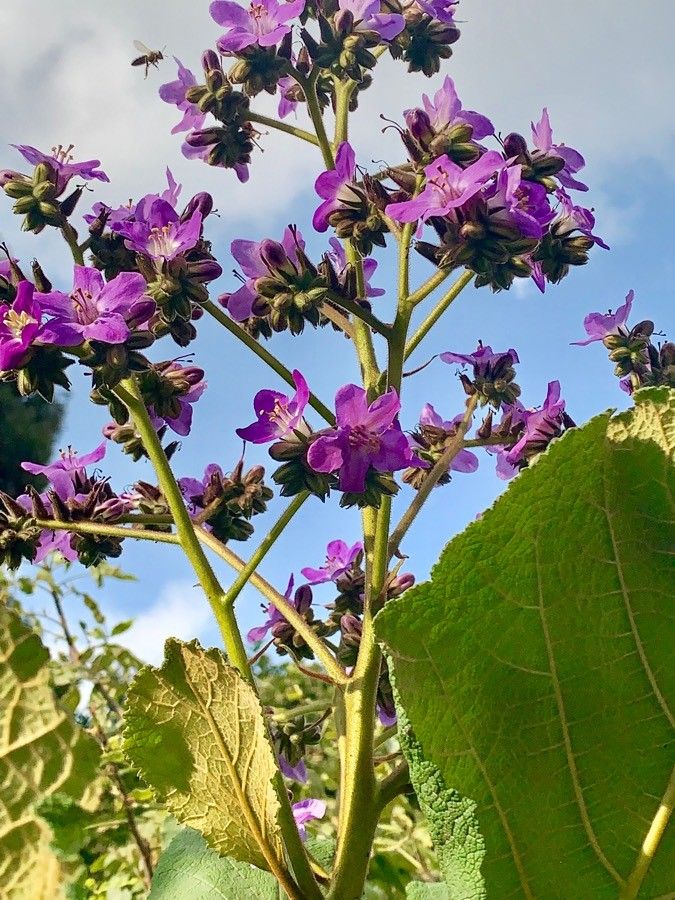
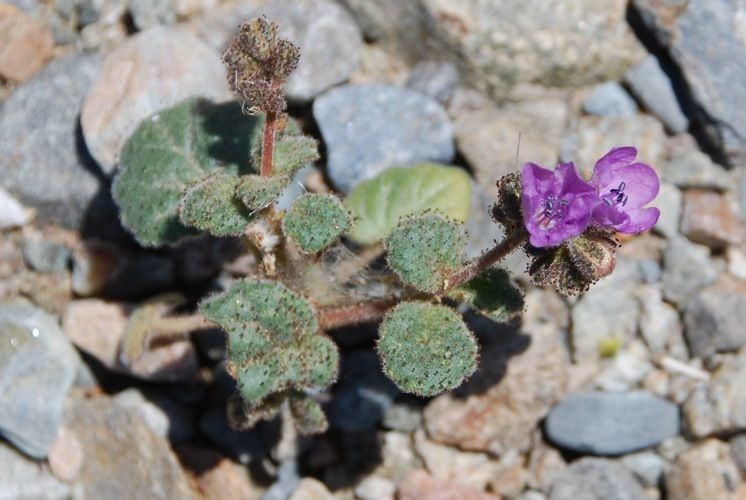
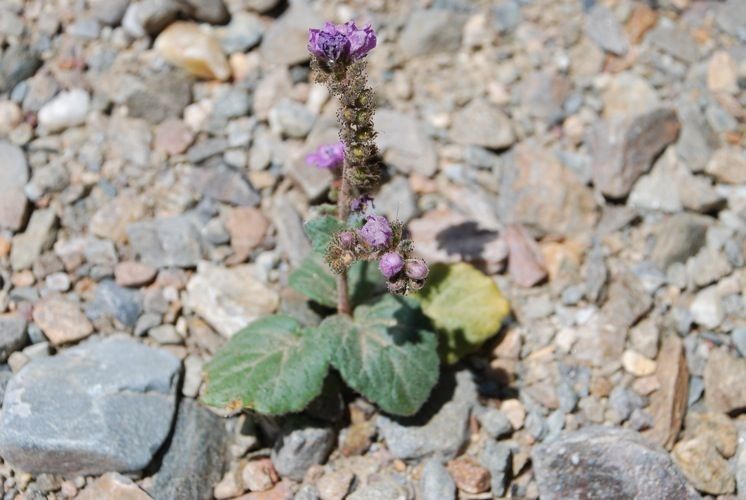
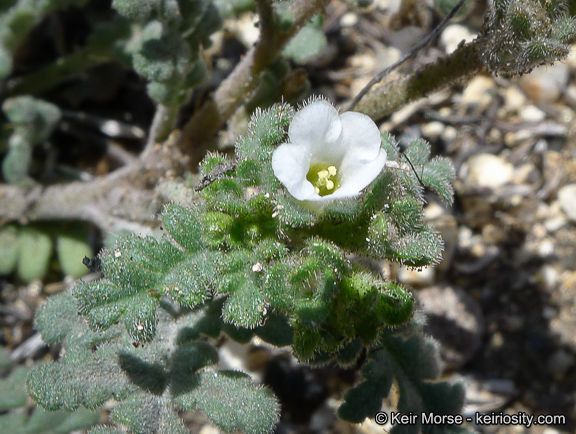
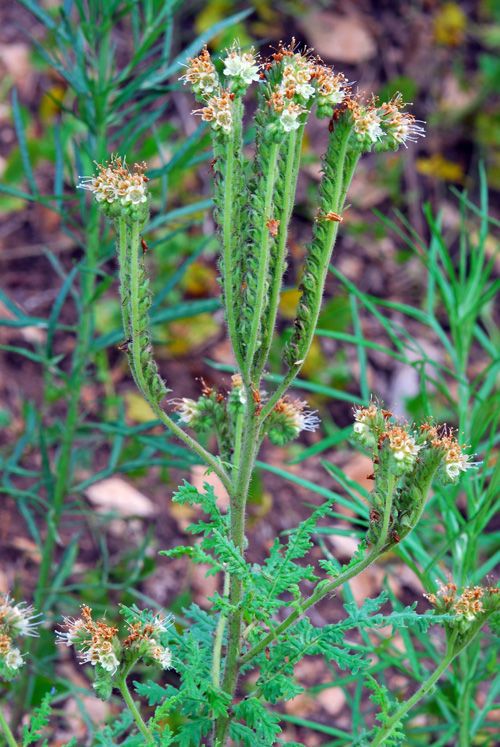
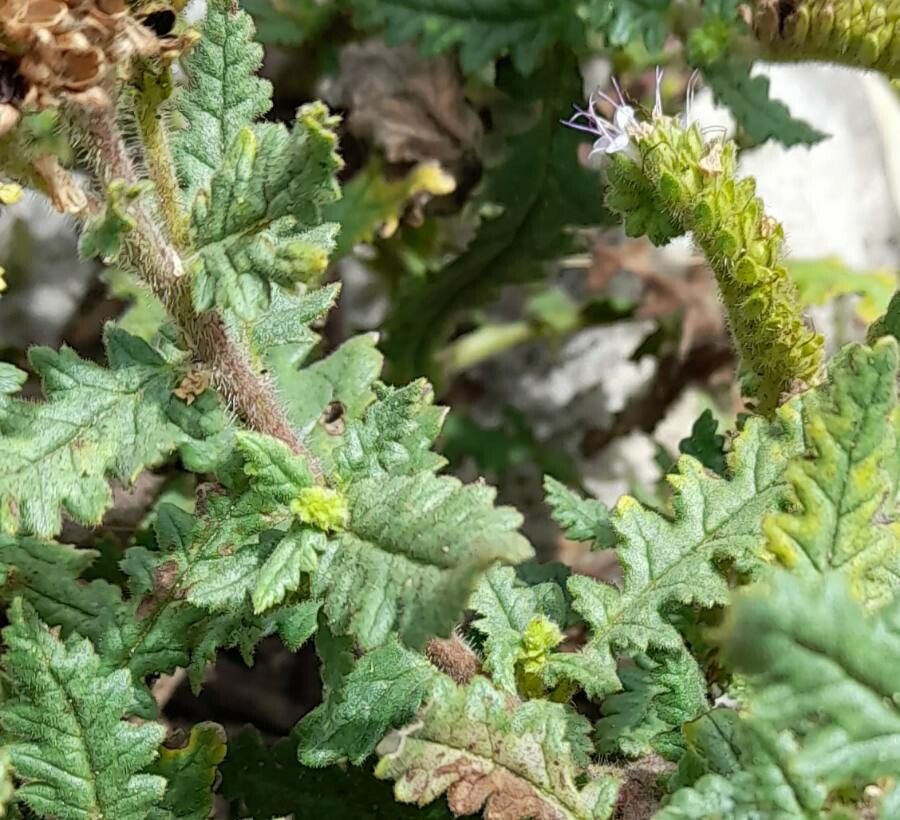
Phacelia calthifolia (calthaleaf phacelia or caltha-leaved phacelia), is a flowering plant in the family Boraginaceae. It is native to the Mojave Desert in southeastern California and western Nevada, between Barstow, California, and the Death Valley area, where it occurs below 1,000 m in sandy soils. It is an annual plant growing to 30 cm tall, with bristly stems. The leaves are dark green, rounded to heart-shaped with a notched base, 1–3 cm long and wide, with an entire or serrated margin. The flowers are bell-shaped, about 1 cm diameter, purple to violet in color.
Calthaleaf phacelia is fairly disease-resistant and typically not prone to illnesses. Still, it can be affected by pests and diseases present nearby, though these infestations are generally mild. Regarding upkeep, the plant needs a moderate level of care. It should be trimmed regularly to preserve a neat appearance and healthy growth. Applying fertilizer can also encourage blooming. This phacelia is appropriate for anyone with an outdoor area, such as a garden or patio, and does not demand extensive care experience. If kept indoors, it may need more attentive care.
How to keep Phacelia Calthifolia.
Light
The calthaleaf phacelia requires abundant, steady sunlight to do well. The strength of the sun's rays is crucial for its healthy development from seedling to full maturity. It naturally occurs in habitats that receive regular sun; too little light can cause it to perish, while too much exposure is not a major threat.
Water
Calthaleaf phacelia flourishes with periodic moisture, favoring moderate hydration and steady humidity. Although it can withstand drought conditions, it benefits from weekly watering to stay balanced. When grown outdoors, its water requirements change with the growing season to ensure optimal health and vigor.
Temperature
Calthaleaf phacelia is native to areas with temperatures between 68 and 95 °F (20 to 35 °C). These temperature ranges are ideal for its growth. In cooler climates, applying mulch around the plant's base can help retain the warmth it needs.
Fertilizer
When most of the Calthaleaf phacelia flowers have opened to full size, you should resume fertilizing. Around the time the blooms are at their highest output, fertilize again every three to four weeks, as the weather allows. Then, once the plant starts producing fewer new blooms, cease fertilizing—there's no point in feeding it when it can no longer produce additional blooms.
Pruning
Calthaleaf phacelia benefits from annual pruning, typically done between early to late spring. To encourage growth and improve air circulation, remove any dead stems. Light trimming helps maintain the plant's shape, while regular pruning encourages denser foliage and more abundant blooms. For optimal results, refer to trusted horticultural sources for best practices.
Botanical profile.
- Plant Type
- Herb
- Life Cycle
- Annual
- Genus
- Phacelia
- Family
- Boraginaceae
- Hardiness Zone
- 8-10
- Mature Height
- 15 cm to 30 cm
- Mature Spread
- 15 cm to 40 cm
- Leaf Color
- Green, Dark Green
- Leaf Type
- Deciduous
- Flower Color
- Purple, Lavender
- Flower Size
- 2.54 cm
- Bloom Time
- Early spring, Mid spring
- Planting Time
- Spring, Summer
- Harvest Time
- Late spring, Early summer
Other names.
Reader questions.
How should I water my Calthaleaf phacelia plant to ensure it thrives?
To water Calthaleaf phacelia, you have various options like using a garden hose with a spray nozzle, a watering can, or any other common watering tool. This plant is not very particular about how it receives water and can survive on rainwater, tap water, or filtered water. It is generally best not to water this plant from above as it can harm the leaves and flowers and increase the risk of disease. A drip irrigation system can be a good choice for watering this plant, as it evenly and directly supplies water to the soil. When dealing with a container-grown Calthaleaf phacelia, you can follow a similar approach but use a cup, watering can, or tap to water directly into the soil.
What are the sunlight requirements for Calthaleaf phacelia?
Calthaleaf phacelia requires ample and constant exposure to sunlight to flourish. It thrives in environments that provide more than 6 hours of sunlight a day. The strength of solar rays is crucial for its growth from seedling to full maturity, and though it originates from regions with regular sunlight, insufficient light could be detrimental, while it's relatively tolerant of overexposure. Observing how sunlight moves through your garden to find spots with a perfect balance of light and shade is suggested to ensure the plant's health.
What is Calthaleaf Phacelia?
Calthaleaf Phacelia, known botanically as Phacelia calthifolia, is a plant indigenous to environments with temperatures ranging from 68 to 95 °F (20 to 35 °C). These conditions are considered optimal for its growth. It has some degree of cold tolerance but thrives best when the temperature stays above freezing. In cooler climates or during unexpected cold snaps, certain measures are necessary to protect the plant and ensure its survival.
What should I do if I give my Calthaleaf phacelia plant too much water or too little water?
To address the issue of underwatering your Calthaleaf phacelia, simply water it more regularly when you notice it lacks moisture. On the other hand, overwatering can be more serious. It can lead to diseases and the decline or death of the plant. To prevent this, choose a suitable location with sufficient sunlight and good drainage to avoid waterlogged soil. If you have overwatered a potted Calthaleaf phacelia, consider transferring it to a new pot with proper drainage and loose soil.
How can artificial lighting support Calthaleaf phacelia's growth indoors?
Indoor Calthaleaf phacelia plants may require artificial lighting to thrive, especially in winter or less sunny spaces where natural sunlight is not sufficient. Using the right type of artificial light, such as LED lights customized to provide specific wavelengths, can promote healthier, faster growth. For full sun plants like Calthaleaf phacelia, 30-50W/sq ft of artificial light is recommended. The light source should be placed 12-36 inches above the plant to mimic natural sunlight, and it's essential to mimic the natural daylight hours, generally ensuring the plant receives 8-12 hours of light per day.
How does Calthaleaf phacelia react to low temperatures?
Calthaleaf phacelia has a moderate tolerance to low temperatures and performs best when the temperature remains above 20°C. During winter, it's crucial to keep the plant above 0°C. If temperatures fall below -10°C, the leaves may droop and, in severe cases, wilt and fall off. To address frost damage, trim the damaged parts and wrap the plant with materials like non-woven fabric or cloth. Additionally, constructing a wind barrier can help protect it from cold winds.
How often should I water my Calthaleaf phacelia plant?
Calthaleaf phacelia needs regular watering throughout the growing season. In the spring, water once a week and increase to two to three times per week as it gets warmer. However, overwatering can harm the plant, so ensure the soil is moist but not wet. When watering a potted Calthaleaf phacelia, it may need more frequent watering compared to an in-ground plant. Typically, water a container-grown plant a few times per week, compared to once per week for an in-ground plant.
What are the symptoms of inadequate light for indoor Calthaleaf phacelia?
When Calthaleaf phacelia is cultivated indoors under insufficient light conditions, it may exhibit several symptoms indicating light deficiency. These include smaller new leaves, leggy or sparse growth, faster leaf drop, slower or no new growth, lighter-colored new leaves, and symptoms of overexposure like chlorosis, sunscald, leaf curling, wilting, and leaf scorching. These signs highlight the plant's struggle with inadequate light levels, stressing the importance of proper sunlight or artificial lighting.
What should be done when temperatures rise above optimal levels for Calthaleaf phacelia?
During the summer, it's important to ensure Calthaleaf phacelia is not exposed to temperatures exceeding 35°C. When temperatures surpass 41°C, the plant's leaves might lighten in color, dry at the tips, curl, and become more prone to sunburn. To mitigate this, remove sunburned or dried parts of the plant. Moving the plant to a shaded area during the hottest parts of the day or utilizing a shade cloth can offer protection. Additionally, watering the plant in the morning and evening helps keep the soil moist and supports the plant's needs during high temperatures.
How much water does my Calthaleaf phacelia plant need?
To determine how much water your Calthaleaf phacelia needs, there are a few options. Some gardeners prefer to assess soil moisture by touching it, aiming to moisten the top six inches. Others use a general guideline of giving the plant around two gallons per week, taking into account temperature and soil drying speed. However, strict adherence to this guideline could risk overwatering if your plant requires less. When growing in a container, a different approach is needed. You should aim to moisten all dry soil layers, which can be confirmed by feeling the soil or observing water draining from the pot's holes.
What are some solutions for Calthaleaf phacelia not receiving enough sunlight?
To address insufficient sunlight for Calthaleaf phacelia, gradually moving the plant to a sunnier location can be beneficial, aiming for at least 6 hours of direct sunlight daily. For indoor plants, utilizing a south-facing window or artificial lighting, such as desk, ceiling lamps, or professional grow lights for at least 8 hours a day, can help. Outdoors, it's crucial to transition plants to brighter spots without causing sunburn by making sudden changes. Minimizing obstructions like pruning obstructive trees and transplanting smaller plants to brighter areas with good drainage are also effective solutions. It's important to note that while damaged parts may not recover, new growth should be healthy with improved light conditions.
What are the general care recommendations for Calthaleaf phacelia in varying climates?
Calthaleaf phacelia prefers temperatures between 68 to 95 °F (20 to 35 °C) for optimal growth. In cooler climates, applying mulch around the base can help yet is not required if temperatures stay above 0°C. For protection against cold, temporary measures such as wrapping the plant with plastic film, fabric, or other materials are recommended if temperatures are forecasted to drop below freezing. These precautions should be promptly removed once temperatures rise to suitable levels. Careful management of the plant in response to temperature fluctuations, including trimming damaged parts and providing shade or wind protection as necessary, will help ensure the plant's health and longevity.