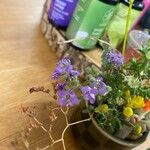
Phacelia congesta
Blue curls · Spike phacelia · Caterpillars
Description
Source: leafsnapPhacelia congesta, commonly known as the congested phacelia, is a species of flowering plant in the borage family. Native to western North America, it thrives in diverse habitats including grasslands, sagebrush scrublands, and forests. The plant typically reaches a height of 10-50 cm and features hairy stems with clusters of small blue or purple flowers that bloom from April to July. Its deeply lobed leaves have toothed edges and are arranged alternately along the stem. Phacelia congesta is a significant species for pollinators, particularly bees, owing to its nectar-rich flowers. Additionally, it has been used for erosion control because of its ability to quickly establish itself on disturbed soils. Overall, Phacelia congesta is not only visually appealing but also ecologically crucial, contributing significantly to the ecosystems of western North America.
Care Guide
💧 Water Every 7 days
Blue curls thrive best with moderate hydration, preferring consistent moisture without becoming waterlogged. To achieve this balance, water it weekly. When grown outdoors in temperate regions, its growth cycle is influenced by the availability of water. Therefore, efficiently capturing rainwater is essential for its seasonal development.
How should I water my Blue curls?
Watering Blue curls is easy and can be done with a variety of common watering tools such as a garden hose with a spray nozzle or a watering can. This plant is not too particular about the type of water it receives and can thrive with rainwater, tap water, or filtered water. It is important to avoid watering this plant from above, as this can harm the leaves and flowers and make the plant susceptible to disease. A drip irrigation system is often the best watering method for Blue curls because it delivers water evenly and directly to the soil. If you have a Blue curls plant in a container, you can still follow a similar watering approach by using a cup, watering can, or tap to water the soil directly.
What should I do if I give my Blue curls too much or too little water?
To prevent underwatering Blue curls, simply water the plant on a more regular basis when you notice it lacks moisture. However, overwatering can be a more serious problem. It can lead to diseases and the decline and death of the plant. To prevent this, choose a suitable location for the plant that gets plenty of sunlight to dry the soil and has good drainage. If you have overwatered Blue curls in a pot, consider repotting it with loose soil and a pot that drains efficiently to avoid waterlogging.
How many times should I water my Blue curls?
Blue curls require regular watering during the growing season. In spring, it is recommended to water the plant once a week. As the season progresses and becomes warmer, watering may need to be increased to two or three times a week. However, it is important not to exceed this rate as it can harm the plant. Additionally, it is crucial to keep the soil moist but not wet, regardless of the watering frequency. Watering Blue curls in a pot differs slightly. Generally, potted plants need more frequent watering as the soil can dry out faster compared to ground soil. Therefore, watering a Blue curls plant in a container usually requires a few times per week, as opposed to once per week for an in-ground plant.
How much water does my Blue curls plant need?
To determine how much water to give your Blue curls, there are a few options. One approach is to check the moisture level of the soil by feeling it, and water until the top six inches are moist. Another option is to use a set measurement, usually about two gallons per week, based on factors like temperature and soil dryness. But be careful not to overwater if your plant needs less than two gallons. When growing Blue curls in a container, a different method is needed. Water until all layers of dry soil are moist, which can be tested by sticking your finger in the soil or waiting for excess water to trickle out of the drainage holes.
How do I know if I'm giving enough water to my Blue curls?
Avoiding overwatering your Blue curls can be a bit challenging. These plants have deep roots, so it's important to water the soil weekly. However, Blue curls are prone to root rot and browning when overwatered. Underwatering is less of an issue as these plants can survive for some time without additional watering. But if you wait too long, the plants will start to wilt and develop dry leaves.
☀️ Light Full sun
Blue curls favors a setting that receives abundant sunlight, though it can also tolerate areas where the sun is somewhat weaker. Ample sun nourishes the plant, encouraging healthy growth and development. Both too much sunshine and too little, however, can impede its growth.
What are the sunlight requirements for Blue curls (Phacelia congesta)?
Blue curls thrives in environments with plenty of sunlight. Specifically, it requires full sun, which is above 6 hours of sunlight a day, or partial sun, about 3 to 6 hours of sunlight a day. Ensuring the right balance of light and shade is crucial for the plant's health and growth. An area that receives the appropriate amount of sunlight, according to these requirements, will help promote healthy growth and development of Blue curls.
How does sunlight affect the growth of Blue curls?
Sunlight plays a significant role in the growth and well-being of Blue curls. An ample amount of sunlight is beneficial, nourishing the plant and encouraging robust growth. However, too much or too little sunlight can adversely affect its growth. Insufficient sunlight may lead to poor growth and development, whereas excessive sunlight can also harm the plant. To mitigate light-related growth issues in indoor conditions, artificial lighting can be employed. The correct type of artificial light, appropriate distance from the plant, and duration of exposure are crucial factors to consider for optimal growth.
What are common symptoms of inappropriate sunlight exposure in Blue curls?
Blue curls may exhibit various symptoms if it doesn't receive the right amount of sunlight. When grown indoors or under inadequate light conditions, the plant might show signs such as small or pale new leaves, leggy or sparse growth, accelerated leaf drop, cessation of new growth, and chlorosis. Additionally, excessive sunlight exposure can cause symptoms like sunscald, leaf curling, wilting, and leaf scorching. These symptoms indicate either a deficiency or excess of sunlight, affecting the plant's health.
How can sunlight exposure issues be corrected for Blue curls?
To address sunlight exposure issues for Blue curls, gradually acclimatize the plant to its ideal sunlight conditions. For indoor plants, moving them to a brighter spot or using artificial light can help achieve the necessary light levels. Outdoor plants should be gradually shifted to optimal sunlight conditions to prevent shock. Reducing obstructions such as branches or relocating the plant to a sunnier spot can also increase sunlight exposure. For severely affected parts of the plant, recovery may not be possible, but with proper light adjustments, new growth will be healthy. Always consider the plant's specific sunlight needs and adjust your approach accordingly.
🌡️ Temperature 10–37.8°C
Blue curls is native to environments where temperatures generally range from 68 to 100 °F (20 to 38 ℃). It grows best under these conditions, so for optimal growth across seasons, keep the temperature within its preferred range.
What are the ideal temperature conditions for growing Blue curls?
Blue curls thrive in environments where temperatures generally range from 68 to 100°F (20 to 38°C). For optimal growth across different seasons, it's advisable to maintain the temperature within this preferred range. Despite its strong cold resistance, and often not needing special frost protection measures in winter, if temperatures are expected to fall below -25°C, it is crucial to protect the plant against cold. This protection can be provided by covering the plant with soil or straw, especially before the first freeze in autumn, while also ensuring the soil around the plant is moist. This preparation helps prevent drought and water scarcity during the winter and early spring periods.
How should one care for Blue curls in low temperature conditions?
Blue curls is a cold-tolerant plant that performs best when temperatures are maintained above 20°C. During winter, it is important to ensure the temperature stays above 0°C. If temperatures plummet below -25°C, Blue curls may show no immediate adverse effects during the winter; however, a noticeable decrease in sprouting, or in some cases, a complete absence of sprouting may occur by spring. If this happens, the recommended solution is to remove any plant parts that have failed to sprout, as a way to promote healthier growth and recovery.
What steps should be taken if Blue curls are affected by high temperatures?
In the case of high temperatures, particularly during summer, it's important to ensure that Blue curls are not exposed to conditions exceeding 38°C. Temperatures above 43°C can cause the leaves to lighten in color, become more prone to curling, suffer from sunburn, and in severe cases, lead to the wilting and drying of the plant. To mitigate these effects, it's advisable to trim away the sunburned and dried parts of the plant. Moving the plant to a shaded location, especially during the midday and afternoon sun, or using a shade cloth can provide necessary protection. Additionally, watering the plant in the mornings and evenings will help maintain soil moisture, offering further support to the plant under high temperature stress.
💨 Humidity
🪴 Soil 6-7
🌱 Fertilizer
When most of Blue curls' blooms are fully open, resume fertilizing. Around the time the blooms are at peak production, apply fertilizer once every three to four weeks, as weather permits. Once Blue curls begins producing fewer new blooms, stop fertilizing; there's no reason to fertilize when the plant can no longer produce additional blooms.
🪴 Pot & Repot
✂️ Pruning
Blue curls have dense clusters of blue flowers and benefit from light pruning from early to late spring. To promote growth and improve their appearance, remove any dead stems and spent flowers. Pruning not only enhances airflow but also reduces the risk of disease and supports vigorous development.
🌿 Propagating
🐛 Diseases & pets
☠️ Toxicity
Characteristics
- Plant Type
- Herb
- Life Cycle
- Annual, Biennial
- Genus
- Phacelia
- Family
- Boraginaceae
- Hardiness Zone
- 6-11
- Mature Height
- 30 cm to 91 cm
- Mature Spread
- 30 cm
- Leaf Color
- Green
- Leaf Type
- Semi-evergreen
- Flower Color
- Purple, Lavender
- Flower Size
- 2.54 cm
- Bloom Time
- Spring
- Planting Time
- Autumn
- Harvest Time
- Late spring, Early summer, Mid summer
- Native Area
- Mexico