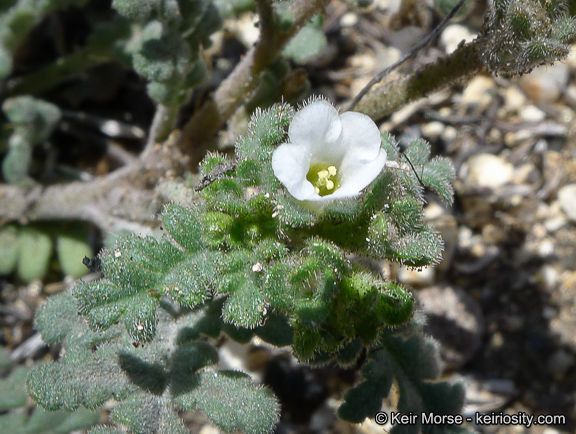
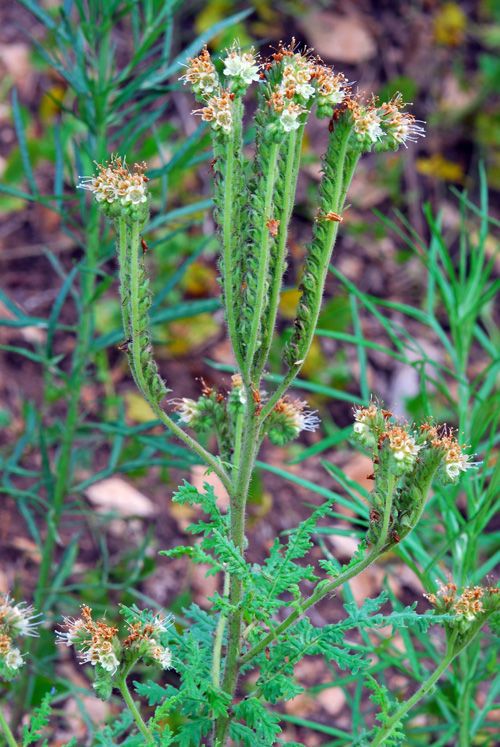
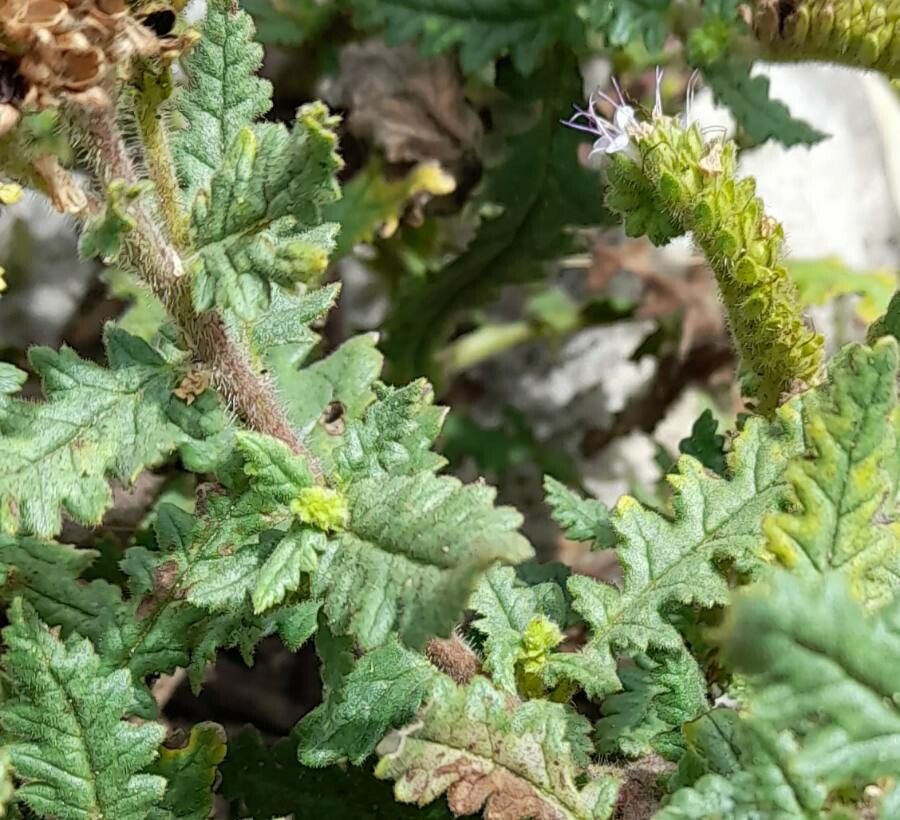
Phacelia cryptantha is a species of flowering plant in the borage family, Boraginaceae, known by the common name hiddenflower phacelia. It is native to the southwestern United States and Baja California in Mexico, where it grows in several habitat types in desert, rocky mountain slopes, canyons, plateau, and other areas. It is an annual herb growing mostly erect to a maximum height near half a meter, usually unbranched. It is glandular and coated in short and soft or long, stiff hairs. The lower leaves are up to 15 centimeters long and divided into leaflets; leaves higher on the plant are smaller but may be compound as well. The inflorescence is a one-sided curving or coiling cyme of several narrow bell-shaped flowers. The flower is pale blue to lavender, under a centimeter long, and surrounded by long, narrow linear sepals covered in hairs.
Hiddenflower phacelia is fairly disease-resistant and typically not prone to illnesses. However, it can be vulnerable to pests and diseases present in its surroundings. These problems are usually mild. Care-wise, this plant needs moderate maintenance. Regular pruning is necessary to keep a neat appearance and support healthy growth. Fertilizing can also help encourage flowering. Hiddenflower phacelia is suitable for anyone with outdoor space, such as a garden or patio, and does not require extensive care experience. It may need more attention if grown indoors.
How to keep Phacelia Cryptantha.
Light
Hiddenflower phacelia comes from bright, open habitats and thrives in full sun. It can tolerate partial sun but favors direct sunlight for best growth. This plant, which can be annual or biennial, is noted for its sun-loving nature.
Temperature
Hiddenflower phacelia can tolerate a wide range of temperatures, but its distribution may still be restricted by different combinations of moisture and heat. It performs best in warm summer conditions with sufficient rainfall or irrigation. Extended periods of cloudy, rainy weather or prolonged high temperatures can raise the likelihood of Hiddenflower phacelia dying. In winter, protecting the plant from cold can increase its chances of survival.
Fertilizer
Hiddenflower phacelia responds well to regular, dilute applications of fertilizer to encourage healthy foliage. Fertilize Hiddenflower phacelia about once a month during the summer. Nitrogen is essential for foliage, and supplementing with nitrogen-rich sources helps Hiddenflower phacelia thrive.
Pruning
To promote healthy growth and abundant blooms in hiddenflower phacelia, prune the plant from early to late spring. Remove any dead stems and trim spent flowers to encourage continued blooming. Make sure to clean your tools to prevent infection, as regular pruning not only enhances the plant’s vitality and shape but also reduces the risk of disease.
Botanical profile.
- Plant Type
- Herb
- Life Cycle
- Annual
- Genus
- Phacelia
- Family
- Boraginaceae
- Hardiness Zone
- 7-10
- Mature Height
- 10 cm to 30 cm
- Mature Spread
- 15 cm to 25 cm
- Leaf Color
- Green, Dark Green
- Leaf Type
- Semi-evergreen
- Flower Size
- 0.51 cm to 0.76 cm
- Bloom Time
- Early spring, Mid spring
- Planting Time
- Spring, Summer
- Harvest Time
- Late spring, Early summer
- Native Area
- Mexico