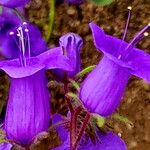
Phacelia minor
Wild canterbury bells · California bell · Whitlavia · California bluebell · Wild scorpion weed
Description
Source: leafsnapPhacelia minor, with the common names Whitlavia and wild Canterbury bells, is a species of phacelia. It is native to Southern California and Baja California, where it grows in the Colorado Desert and the coastal and inland mountains of the Transverse-Peninsular Ranges, often in chaparral and areas recently burned.
🎭 Modesty, Steadfastness
Care Guide
💧 Water
☀️ Light Full sun
Wild canterbury bells thrive in plentiful sunlight, especially during their active growing phase. Their native habitat is characterized by abundant sun. Too little sun can restrict their growth. Conversely, too much exposure can be harmful, causing problems like drying out or sunburn.
🌡️ Temperature 20–35°C
Wild canterbury bells naturally occur in habitats where temperatures generally range from 68 to 95 °F (20 to 35 ℃). This plant favors warmer climates and may require extra care and suitable temperature adjustments during seasonal changes.
💨 Humidity
🪴 Soil 6-7
🌱 Fertilizer
When most of the blooms on Wild canterbury bells have fully opened, it's time to resume fertilizing. About the time the blooms reach peak production, start fertilizing once every three to four weeks, as weather allows. Then, when Wild canterbury bells begins to produce fewer new blooms, discontinue fertilizing; there's no need to fertilize once the plant can no longer produce additional blooms.
🪴 Pot & Repot
✂️ Pruning
🌿 Propagating
🐛 Diseases & pets
☠️ Toxicity
Characteristics
- Plant Type
- Herb
- Life Cycle
- Annual
- Genus
- Phacelia
- Family
- Boraginaceae
- Hardiness Zone
- 9
- Mature Height
- 20 cm to 61 cm
- Mature Spread
- 30 cm to 61 cm
- Leaf Color
- Green, Dark Green
- Leaf Type
- Semi-evergreen
- Flower Color
- Purple, Lavender
- Flower Size
- 4.06 cm
- Bloom Time
- Spring
- Planting Time
- Autumn
- Harvest Time
- Late spring, Early summer, Mid summer
- Native Area
- Mexico