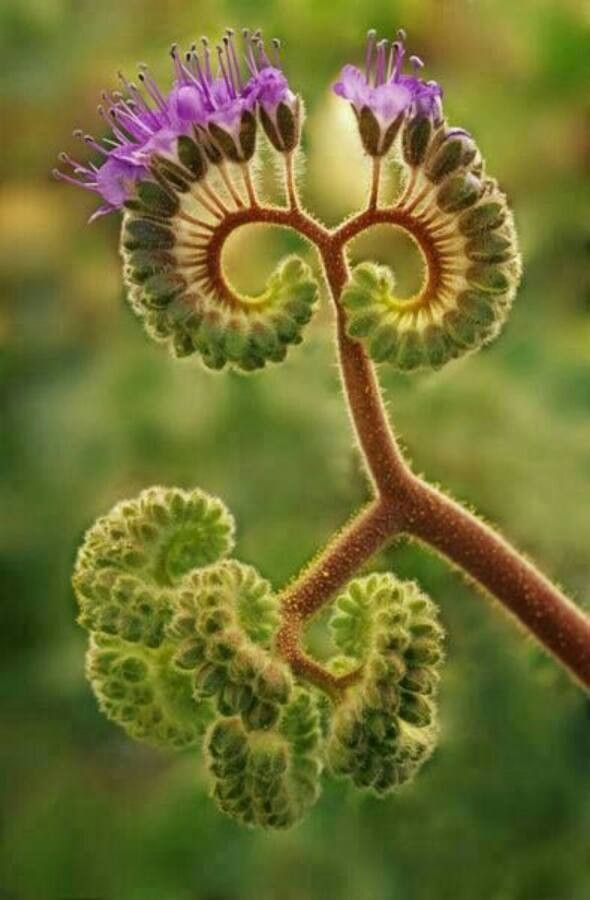
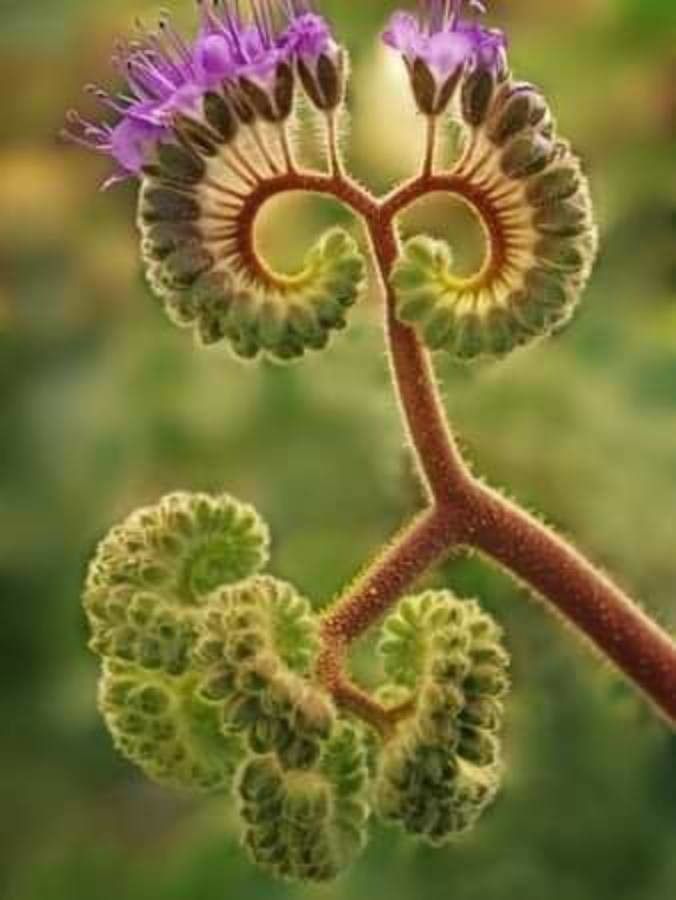
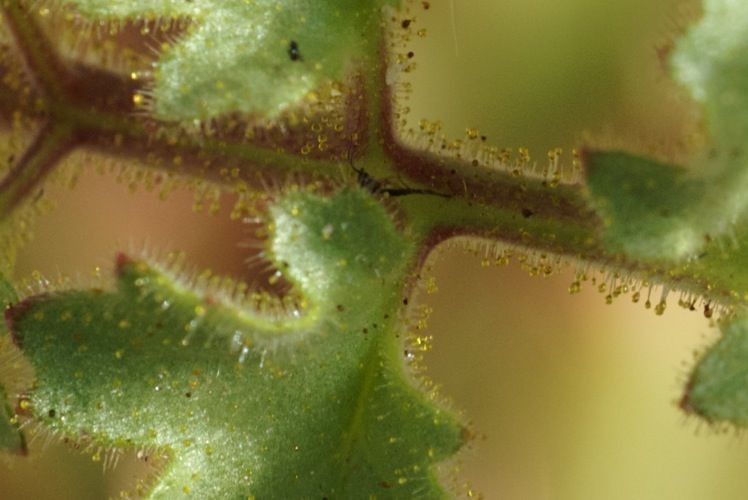
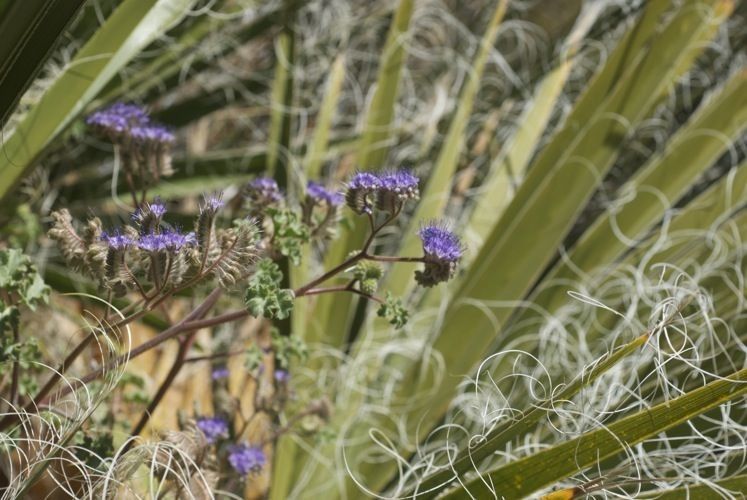
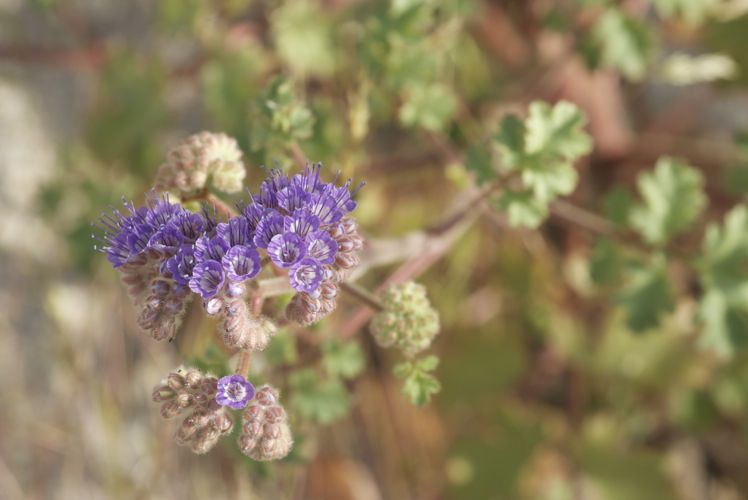
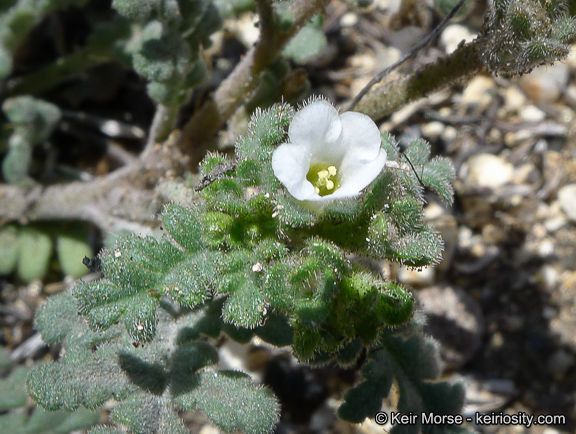
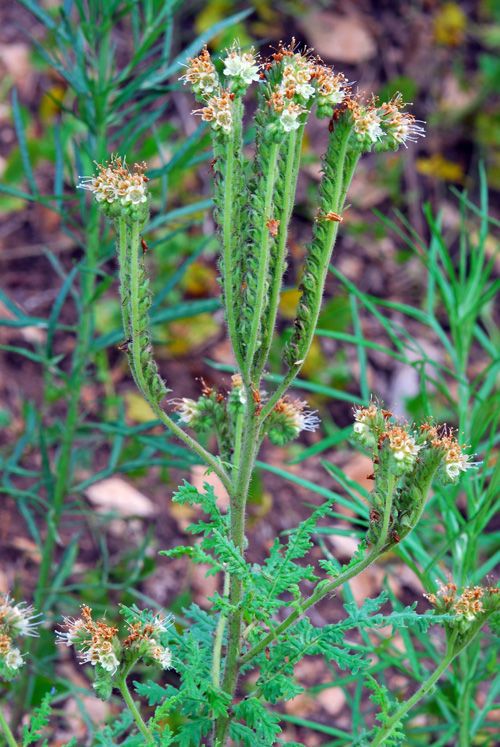
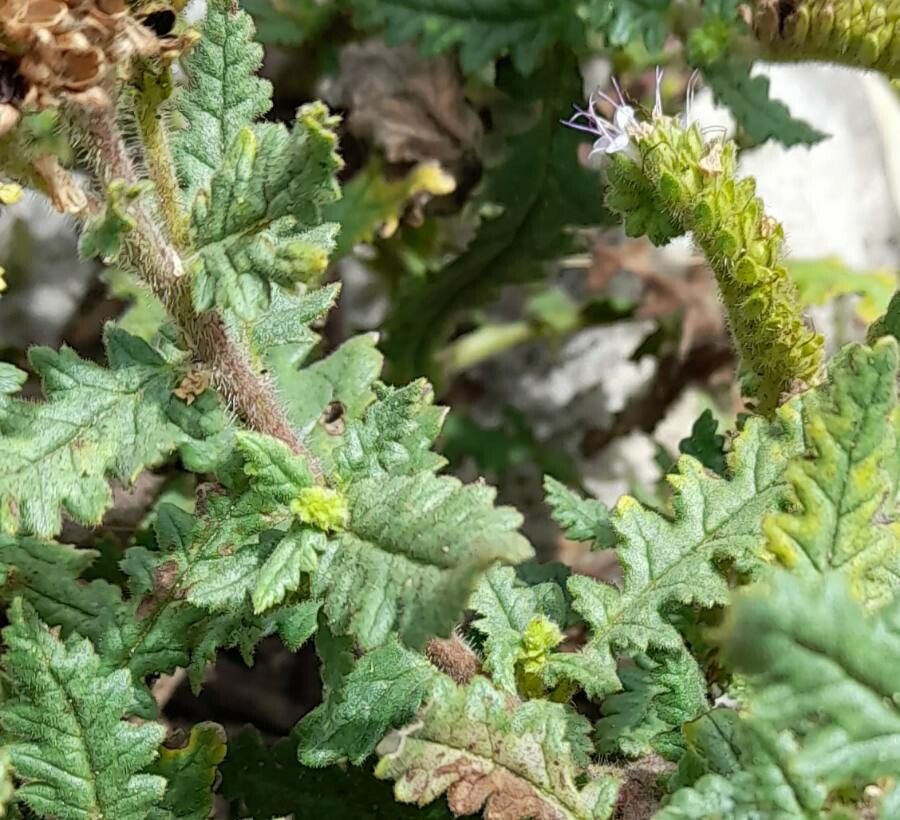
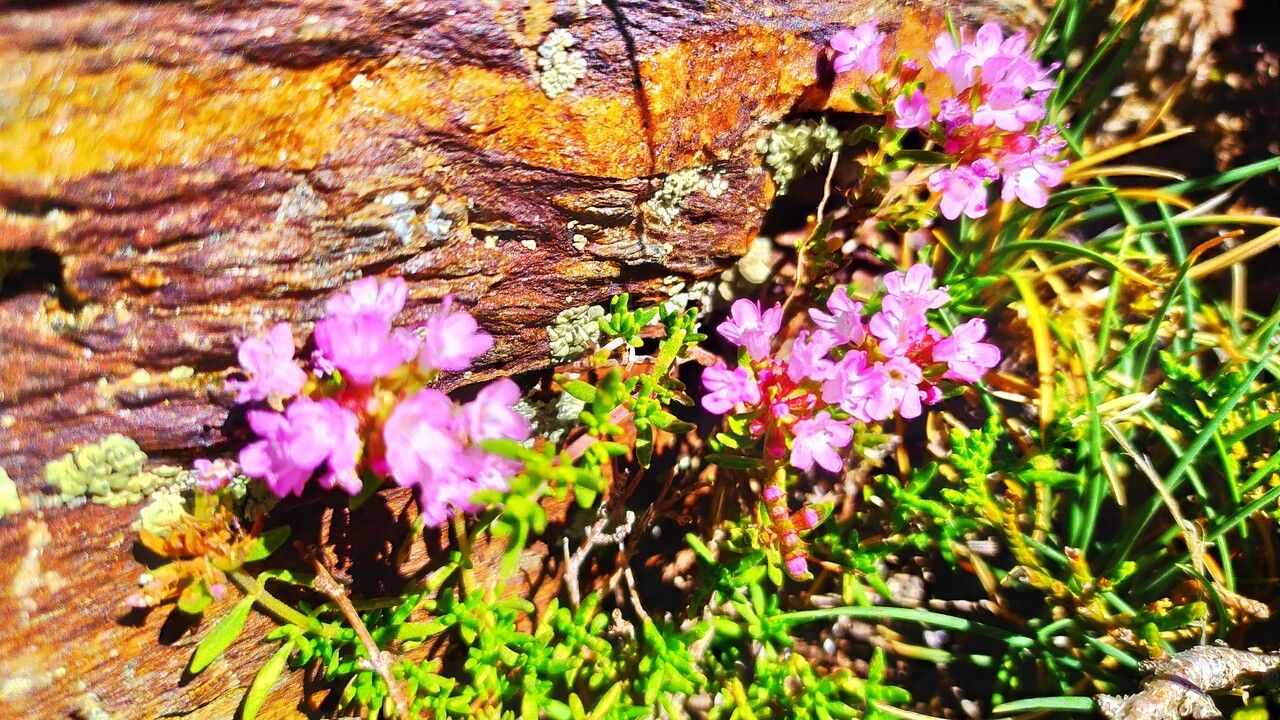
Phacelia pedicellata is a species of flowering plant in the borage family, Boraginaceae. Its common names include specter phacelia and pedicellate phacelia. It is native to the southwestern United States and Baja California, where it can be found in several types of habitat, including creosote bush scrub and Joshua tree woodland.It is an annual herb growing a mostly erect stem up to 50 centimeters long. It is glandular and coated in stiff hairs, which, like those of many other phacelias, cause dermatitis when touched. The leaves are up to 12 centimeters long with rounded or oval blades, the largest divided into 3 to 7 leaflets. The hairy, glandular inflorescence is a one-sided curving or coiling cyme of bell-shaped flowers. Each flower is roughly half a centimeter long and may be pink to blue in color. There are reports that glandular hairs of stems, flowers and leaves of P. pedicellata secrete oil droplets that can cause an unpleasant skin rash (contact dermatitis) in some people.
Pedicellate phacelia shows strong resistance to disease and is typically not susceptible to illnesses. Nevertheless, it can be affected by pests and diseases present in its environment. Such infections are generally mild. Regarding maintenance, this plant needs a moderate level of care. It should be pruned on a regular basis to preserve a neat appearance and encourage healthy growth. Applying fertilizer can also aid in boosting flower production. Pedicellate phacelia is appropriate for anyone with outdoor areas like a garden or patio and does not demand extensive gardening experience. If cultivated indoors, it may call for more attentive care.
How to keep Phacelia Pedicellata.
Fertilizer
Pedicellate phacelia does well with regular, light applications of fertilizer to encourage healthy leaf growth. You should feed Pedicellate phacelia about once a month during the summer. Nitrogen is important for foliage, so adding nitrogen-rich fertilizer helps Pedicellate phacelia thrive.
Pruning
The pedicellate phacelia is known for its delicate flowers and rapid growth. To keep the plant healthy and encourage more blooms, it's important to prune it in the spring. This helps remove dead stems, which not only enhances the plant's health and flowering but also helps control its shape, improves air circulation, and reduces the risk of pests. Make sure to use clean, sharp tools when you prune to ensure precise cuts and maintain the plant's vitality.
Botanical profile.
- Plant Type
- Herb
- Life Cycle
- Annual
- Genus
- Phacelia
- Family
- Boraginaceae
- Hardiness Zone
- 5-10
- Leaf Type
- Deciduous
- Native Area
- Mexico
Other names.