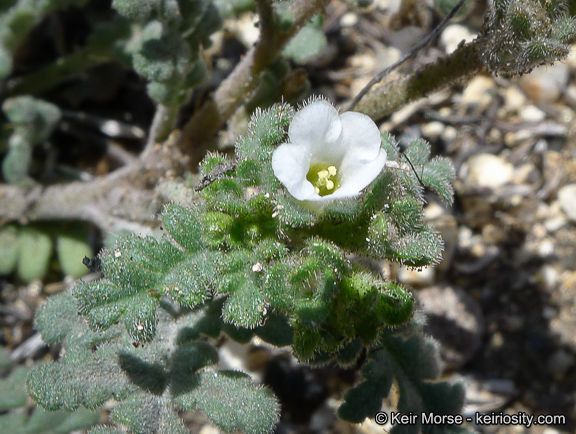
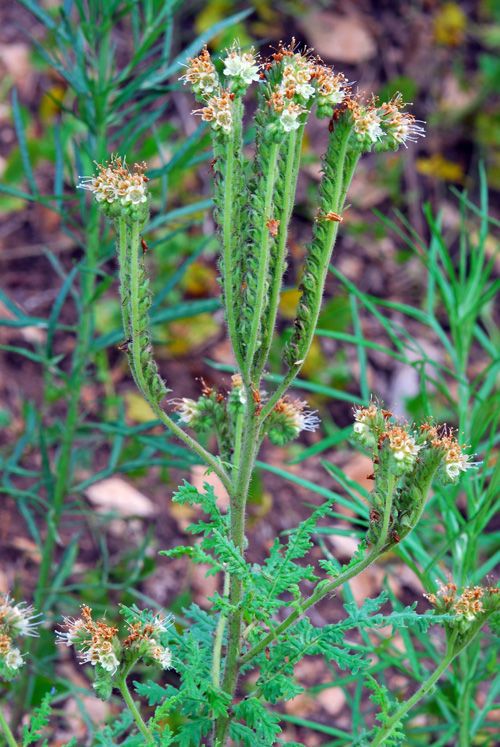
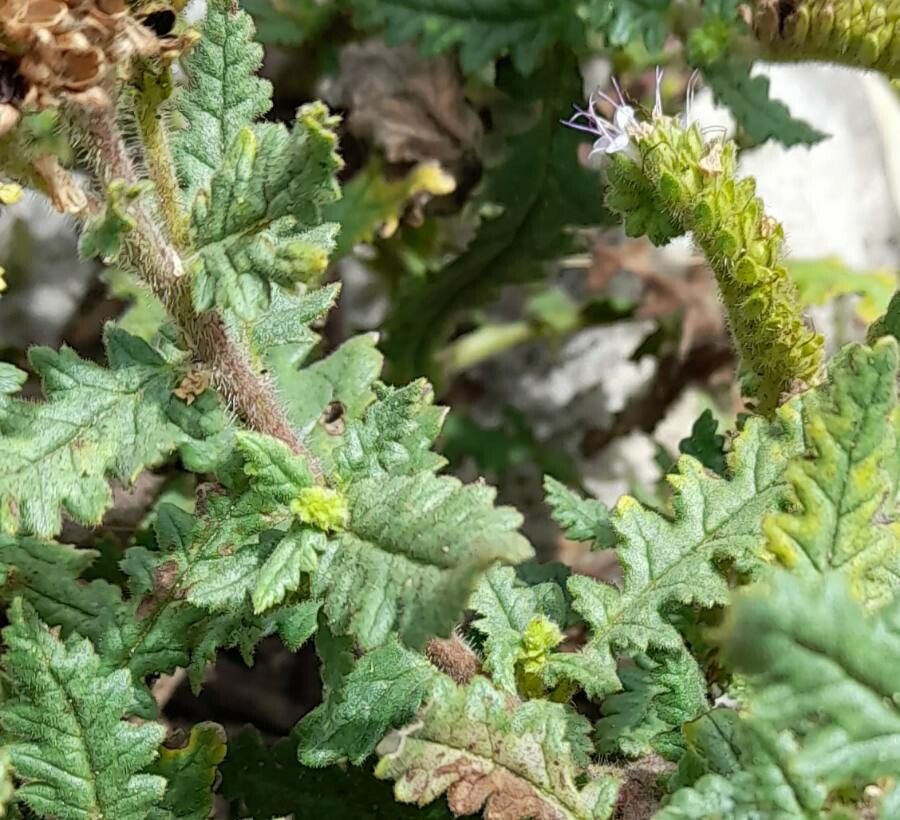
Phacelia procera is a species of phacelia known by the common name tall phacelia. It is native to the northwestern United States as far south as the Sierra Nevada, where it grows in mountainous habitat, such as forests, meadows, and talus. It is a perennial herb producing an erect stem from a taproot, reaching a maximum height around two meters. It is hairy in texture, some of the hairs black and glandular. The lance-shaped or oval leaves are up to 12 centimeters long and toothed or lobed along the edges. The inflorescence is a one-sided curving or coiling cyme of bell-shaped flowers. Each flower is under a centimeter long and white to greenish or brownish in color. It is surrounded by a calyx of pointed sepals coated in black glandular hairs.
Tall phacelia is fairly disease-resistant and usually not prone to illnesses. However, it can be vulnerable to pests and diseases present in its surroundings; such problems are typically mild. For care, this plant needs a moderate amount of maintenance. It should be pruned regularly to preserve a neat appearance and healthy growth. Fertilizing can also encourage flowering. Tall phacelia is well suited to anyone with outdoor space, like a garden or patio, and does not demand extensive care experience. It may need more attention when grown indoors.
How to keep Phacelia Procera.
Fertilizer
Usually one fertilizer application in spring suffices for Tall phacelia, although repeated feedings can further boost growth. Apply fertilizer roughly every month to six weeks. Fertilization improves the leaves’ appearance and function, helping maintain even color and a healthy texture. It also encourages root development and better nutrient uptake, supporting the plant’s long-term health.
Pruning
Tall phacelia features tall, leafy stems adorned with bell-shaped flowers. Prune the plant in early spring to remove dead stems and thin crowded areas, enhancing air circulation. Ensure you use clean tools to prevent disease. Regular pruning encourages vigorous blooms and improves the shape and manageability of the plant.
Botanical profile.
- Plant Type
- Herb
- Life Cycle
- Perennial
- Genus
- Phacelia
- Family
- Boraginaceae
- Hardiness Zone
- 5-10