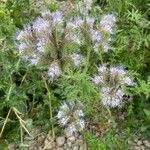
Phacelia tanacetifolia
Fiddleneck · Lacy Phacelia · Self-heal · Phacelia · Tansy phacelia
Description
Source: leafsnapPhacelia tanacetifolia is a species of flowering plant in the borage family Boraginaceae, known by the common names lacy phacelia, blue tansy or purple tansy.
💡 Lacy phacelia is an excellent choice for both cover cropping and green mulching in agriculture. It is highly attractive to pollinators and beneficial insects like hoverflies, which feed on harmful pests such as aphids. Farmers often plant it alongside their crops and in vineyards to draw pollinators. An interesting fact about lacy phacelia is that its seeds require darkness to germinate.
🌳 Lacy phacelia is widely valued for its ability to prevent soil erosion and for its role as a green manure in crop rotations. Aside from its ornamental qualities and its usefulness to gardeners in attracting a diversity of pollinators, its deep root system helps improve soil structure.
🎭 Protection, health, resistance, and immortality; a wish for good health; be linked to hostile thoughts.
Care Guide
💧 Water Every 1-2 weeks
Lacy phacelia excels in dry environments due to its exceptional drought tolerance. When cultivated, it typically needs watering every 1-2 weeks, thanks to its ability to retain water within its tissues. In its native habitat, its growth is closely tied to seasonal rainfall, which allows it to thrive during wetter periods.
What should I do if I give my Lacy phacelia plant too much or too little water?
To remedy underwatering Lacy phacelia, simply water it more regularly when you notice it lacks moisture. However, overwatering is a more serious problem that can lead to diseases and the plant's decline or death. To prevent this, choose a growing location with ample sunlight to dry the soil and good drainage to avoid waterlogging. If your potted Lacy phacelia is overwatered, consider switching to a pot with better drainage and loose soil when repotting.
How do I water my Lacy phacelia when it is growing at different stages?
Throughout the year, Lacy phacelia goes through different growth stages, each with different water requirements. To begin, when starting your Lacy phacelia from a seed, it's important to provide more water than it will need later on. This means watering frequently to keep the soil consistently moist. After a few weeks, as the plant emerges from the soil, it will require slightly less water than during the seedling phase. Once the plant matures, watering can be done regularly, about once per week. When the plant begins to develop flowers, it may benefit from slightly increased watering to support the process.
☀️ Light Full sun
Lacy phacelia prospers in places where sunlight is the main light source, but it can also adapt to sites with broken or intermittent sun. Originating from habitats that are rich in sunlight, it performs well under those conditions. Insufficient light can modify its growth patterns, whereas excessive exposure can cause harm.
What are the sunlight requirements for Lacy phacelia?
Lacy phacelia requires full sun, meaning it should receive above 6 hours of sunlight daily, but it can also thrive in partial sun, which is about 3-6 hours of sunlight. Observing the movement of sunlight through your garden is crucial to find spots that offer the ideal balance of light and shade, ensuring the plants' well-being. This plant is naturally inclined to grow in areas abundant in sunlight, benefiting from environments where sunlight is the dominant light source. However, variations in light availability can affect its growth, with insufficient light altering its growth patterns and excessive exposure risking damage.
How can artificial lighting be used for Lacy phacelia indoors?
When natural sunlight is insufficient for Lacy phacelia, especially during winter or in less sunny spaces, artificial lighting becomes essential for optimal growth. LED lights are recommended for their ability to mimic specific wavelengths needed by plants. Full sun plants require 30-50W per square foot of light, partial sun plants need 20-30W per square foot, and full shade plants should have 10-20W per square foot. The artificial light source should be placed 12-36 inches above the plant to simulate natural sunlight, and the duration should mimic natural daylight hours, typically 8-12 hours per day for most plant species.
What are the symptoms of light deficiency or excessive exposure in Lacy phacelia?
When Lacy phacelia is cultivated indoors with inadequate light, it may display signs such as smaller new leaves, leggy or sparse growth, faster leaf drop, slower or halted new growth, and lighter-colored new leaves, indicating insufficient sunlight. Conversely, excessive sunlight can cause chlorosis, leaf scorching, sunscald, leaf curling, and wilting, indicating damage from too much exposure. These symptoms reflect the plant's struggle to adapt to inappropriate lighting conditions.
What solutions can help Lacy phacelia thrive in indoor, outdoor, and ground settings?
To promote healthy growth of Lacy phacelia, gradually increasing its exposure to sunlight is key. Indoors, this can mean moving it weekly to sunnier spots until it receives at least 6 hours of direct light daily, utilizing a south-facing window, or supplementing with artificial light such as desk or professional grow lights for at least 8 hours a day. Outdoors, plants should be gradually transitioned to brighter areas to prevent sunburn, striving for incremental adjustments. For ground-planted specimens, reducing obstructions like pruning trees to allow more light or transplanting smaller plants during dormant periods can ensure they receive ample sunlight, alongside ensuring good drainage for their new location. Notably, parts of the plant damaged by prior insufficient light may not recover, but addressing the light conditions can ensure new growth is healthy.
🌡️ Temperature 5–35°C
Lacy phacelia naturally occurs in regions with moderate temperatures and grows best when temperatures are between 68 and 95 °F (20 to 35 ℃). Care should involve accommodating cooler winter temperatures while keeping conditions within that preferred range at other times.
What is the native environment of Lacy phacelia?
Lacy phacelia is native to environments with moderate temperatures, thriving best in a temperature range from 68 to 95 °F (20 to 35 ℃). It is accustomed to adjusting to lower temperatures during the winter while striving to maintain its preferred temperature range otherwise.
Does Lacy phacelia require special frost protection measures during winter?
Lacy phacelia possesses strong cold resistance, and usually, special frost protection measures are not necessary during winter. However, if winter temperatures are expected to drop below the growth limit temperature, it is important to provide cold protection. This can be achieved by covering the plant with materials such as soil or straw. Additionally, watering the plant abundantly before the first freeze of autumn to ensure the soil remains moist and enters a frozen state can help prevent drought and water scarcity during winter and early spring.
How does lacy phacelia react to low temperatures, and what are the solutions?
Lacy phacelia is cold-tolerant and prefers temperatures to remain above a certain minimum suitable growth temperature. During winter, it should be kept above a tolerable growing temperature minimum. When temperatures fall below the limit growth temperature, there might not be any noticeable changes during winter. However, a decrease in sprouting or a complete lack of sprouting may occur during springtime. The solution for this symptom is to remove any parts of the plant that have failed to sprout in the spring.
What should be done if Lacy phacelia experiences high temperatures?
During the summer, it is crucial to keep Lacy phacelia below a specific maximum suitable growth temperature. Exceeding a tolerable growing temperature maximum can lead to the leaves becoming lighter in color, prone to curling, susceptible to sunburn, and in severe cases, the entire plant may wilt and become dry. To address these issues, trim away the sunburned and dried-up parts. Move the plant to a location that provides shade from the midday and afternoon sun, or use a shade cloth. Additionally, watering the plant in the morning and evening to keep the soil moist can help manage high temperatures.
💨 Humidity normal (40-60%)
This plant will thrive in moderate humidity, which is probably the level in your home. However, misting it a few times a week can be very beneficial. Make sure the room has good ventilation.
🪴 Soil 6-7
🌱 Fertilizer
Lacy phacelia does well with frequent, light fertilizer applications to support healthy leaf growth. You should fertilize it about once a month during the summer. Nitrogen is essential for foliage, and supplying nitrogen-rich sources helps Lacy phacelia thrive.
🪴 Pot & Repot
When repotting Lacy phacelia, choose a pot that is 1–2 inches (2.5–5.1 cm) larger in diameter and has good drainage. Use a well-draining potting mix, and consider adding perlite for extra drainage. Repot in spring or early summer, then water thoroughly and keep it in a shady spot at first.
✂️ Pruning
Lacy phacelia is a resilient annual plant with fern-like leaves and lavender-blue flowers that are great for attracting pollinators. To keep the plant healthy, prune it from early to late spring. Remove any dead stems and pinch the tips to encourage bushier growth. Regular pruning helps improve air circulation, reduces the risk of disease, and prolongs the flowering period. For the best results, make sure to use clean, sharp tools when pruning.
🌿 Propagating
🐛 Diseases & pets
☠️ Toxicity
Phacelia Tanacetifolia contain skin irritants that can lead to allergic reaction. It is harmless to animals and considered as a harmless food plant.
Characteristics
- Plant Type
- Herb
- Life Cycle
- Annual, Biennial, Perennial
- Genus
- Phacelia
- Family
- Boraginaceae
- Hardiness Zone
- 5-10
- Mature Height
- 0.2 m to 1.22 m
- Mature Spread
- 30 cm to 61 cm
- Leaf Color
- Green, Silver
- Leaf Type
- Deciduous
- Flower Color
- Lavender
- Flower Size
- 0.51 cm to 1.02 cm
- Bloom Time
- Mid spring, Late spring, Early summer
- Planting Time
- Spring, Autumn
- Harvest Time
- Early summer, Mid summer
- Native Area
- Mexico