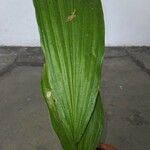
Phaius tankervilleae
Nun Orchid · Orchid · Swamp orchid · Nun's-hood orchid · Nun's orchid
Description
Source: leafsnapPhaius tankervilleae, commonly known as the greater swamp-orchid, swamp lily, swamp orchid, nun's-hood orchid, nun's orchid, veiled orchid, Lady Tankerville's swamp orchid or 鹤顶兰 (he ding lan), is a species of orchid native to areas from Asia to islands in the Pacific Ocean. It has large, pleated leaves and tall flowering stems bearing up to twenty five white, brown, mauve and yellow flowers. It was named for Lady Tankerville who owned the greenhouse where the first orchid flowered. It was the first tropical orchid to flower in England.
🎭 Affection, Attractiveness
Care Guide
💧 Water Every week
The Nun's-hood orchid flourishes in moist, humid environments and needs regular watering, ideally on a weekly basis, to keep the soil consistently moist. As an evergreen plant often grown indoors, it benefits from elevated humidity levels. This can be achieved through misting or by using a pebble tray to replicate its natural rainforest habitat.
How should I water my Nun's-hood orchid?
The way you water your Nun's-hood orchid depends on whether it is in an active growth phase or not. During active growth, apply water to the soil and perform occasional overhead watering if it's warm to allow the plant to absorb moisture through its leaves. In winter or cool/wet weather, stick to watering the soil directly. If the roots and leaves of your orchid become thin, dry, or discolored, it needs more water. On the other hand, if the orchid looks mushy and limp, it's receiving too much water. Grow your orchid in a pot with good drainage, and water multiple times a week during the growing season. Each watering should drain quickly to avoid standing water. The size of the pot determines the amount of water needed, with larger pots needing water less frequently. Use rainwater or distilled water that matches the air temperature as closely as possible.
What should I do if I give my Nun's-hood orchid too much water or too little water?
One of the most common ways to kill a Nun's-hood orchid is by keeping the soil too moist for too long. While these plants need frequent watering when they are actively growing, it is important that their growing medium drains water quickly. If the orchid is overwatered, it becomes mushy and gets root rot. In this case, you can use sterile pruning shears to cut out any rotted roots and then repot the orchid in a container with good drainage and a fast-draining potting mix. However, excessive repotting is not ideal for Nun's-hood orchids, so it's important to find the right watering rate. If the orchid is underwatered, it starts to shrivel and feels dry to the touch. In this situation, the soil may be drying out faster than expected, so you should increase the watering frequency.
How often should I water my Nun's-hood orchid? -> How frequently do I need to water my Nun's-hood orchid?
During the active growth stage in spring and summer, water your Nun's-hood orchid once or twice per week. Increase watering to three times per week or more during long periods of hot and dry weather. In winter, water the orchid, but not as frequently. Two to three times per month should be sufficient during the coldest months. However, if you keep the orchid indoors during winter, be aware that indoor locations may cause the soil to dry quickly, so you may need to water more often. Use the fall to gradually decrease watering from the summer rate to the reduced winter schedule.
What things should I think about when watering my Nun's-hood orchid during different seasons and stages of growth?
When planning the watering schedule for your Nun's-hood orchid, it's important to consider two key growth phases. The active growth period occurs in spring and summer and requires frequent watering, multiple times per week. On the other hand, during the rest period in winter, the orchid should experience a reduced watering frequency, about once or twice per month, for around two to three months. To transition from the active growth period to the rest period, gradually decrease watering frequency from multiple times per week in the fall.
How should I water my indoor Nun's-hood orchid?
The Nun's-hood orchid prefers a humid growing environment, but indoor locations usually lack the necessary moisture. This causes the plant and soil to dry out faster than if it were grown outside. To prevent this, you should consider using a humidifier in the room where you keep your orchid. Additionally, you may need to water it more frequently. However, it's important to note that while the orchid likes humidity, it also needs good air circulation to avoid excessive moisture and diseases. To provide adequate airflow, you should also include a fan in the room where you grow the plant.
☀️ Light Partial sun
The nun's-hood orchid prefers a spot with moderate sunlight while being somewhat shielded from intense light. Too much sun can burn its leaves. Conversely, insufficient light can impede its healthy development. Its sunlight needs can change at different stages of growth.
What are the sunlight requirements for plants?
Plants have varying needs for sunlight, categorized into partial and full sun requirements. Partial sun plants thrive with about 3-6 hours of sunlight daily, while full sun plants need more than 6 hours of sunlight to flourish. Monitoring the movement of sunlight through your garden helps in placing your plants in ideal spots that offer a good balance of light and shade, ensuring their optimal growth and health.
How does the Nun's-hood orchid adapt to sunlight?
The Nun's-hood orchid prefers environments that are well-lit yet somewhat protected from direct, intense sunlight. Too much sun can damage its leaves, and too little can impede its growth. The orchid's sun requirement may change through its different growth stages. If natural sunlight is not sufficient, especially during winter or in darker spaces, artificial lighting can be employed to support its growth. LEDs are recommended for their efficiency and the ability to adjust to the specific light needs of the plant, mimicking natural sunlight by placing the lights 12-36 inches above the plant for 8-12 hours per day.
What symptoms indicate improper sunlight exposure for the Nun's-hood orchid?
The Nun's-hood orchid shows several symptoms when it's not getting the right amount of sunlight. Under low light conditions, it may exhibit smaller new leaves, leggy growth, early leaf drop, halted growth, pale new leaves, and chlorosis. Excessive sunlight can lead to sunscald, leaf curling, wilting, and leaf scorching. These symptoms highlight the importance of providing the orchid with its ideal sunlight requirement—partial sunlight, while also protecting it from the harsh afternoon sun, especially during hotter seasons.
What solutions can help the Nun's-hood orchid adjust to sunlight conditions?
To help the Nun's-hood orchid adjust to sunlight conditions, gradually increase its exposure to direct sunlight by moving it to sunnier locations each week until it receives the ideal 3-6 hours of sunlight daily. For plants that are large or difficult to move, or during seasons when natural sunlight is lacking, consider supplementing with artificial light sources like grow lights, keeping them on for at least 8 hours a day. For outdoor plants, it's crucial to avoid sudden changes in light exposure to prevent sunburn. Also, reducing obstructions that block sunlight, such as by pruning nearby branches, and transplanting smaller plants to sunnier spots during their dormant periods, can significantly improve their light conditions. Remember, parts of the plant that suffered from insufficient light might not recover, but new growth should be healthy with proper light adjustment.
🌡️ Temperature 20–37.8°C
Nun's-hood orchid originates from tropical environments and requires temperatures between 68 and 100.4 °F (20 to 38 °C). It favors warm conditions and can tolerate temperatures up to 100.4 °F (38 °C). Seasonal adjustments may be necessary to maintain the optimum temperature.
What is the native environment and temperature requirements for Nun's-hood orchid?
Nun's-hood orchid, also known by its botanical name Phaius tankervilleae, thrives in tropical environments. It prefers temperatures ranging from 68 to 100.4 °F (20 to 38°C), with an ability to tolerate up to 100.4°F (38°C). To ensure the plant flourishes, seasonal temperature adjustments might be necessary, especially to maintain the optimum range. During winter, if temperatures drop below 0°C, it's advisable to move the Nun's-hood orchid indoors to avoid the cold. Keeping indoor temperatures above 20°C and positioning the plant near a south-facing window will provide enough sunlight. Additionally, to maintain adequate humidity, regular misting or the use of a humidifier is recommended. If the plant must be kept outdoors during winter, it should be in a sheltered spot that receives sunlight, and you might consider a temporary greenhouse or wrapping the plants with protective materials for warmth.
How do you care for a Nun's-hood orchid in low temperatures?
Nun's-hood orchid is sensitive to low temperatures and performs best when the environment is warmer than 20°C. If winter temperatures fall below 0°C, the orchid should be moved indoors to protect it from cold snaps. Exposure to temperatures below -5°C can lead to extensive water-soaked necrosis, resulting in the leaves wilting and drooping. To save a cold-damaged Nun's-hood orchid, trim the frostbitten areas and bring the plant into a warm setting immediately. Placing it near a south-facing window ensures the plant receives sufficient sunlight without being overly close to heaters or air conditioning vents, which could dry out the air excessively.
What should I do if my Nun's-hood orchid is exposed to high temperatures?
During the summer, keeping the Nun's-hood orchid's environment below 38°C is crucial for its survival. Exposure to temperatures above 43°C can halt the plant's growth and cause its leaves to gradually wilt, making the orchid more prone to root rot and sunburn when exposed to direct sunlight. If your Nun's-hood orchid suffers from high temperature stress, start by trimming away the sunburned and dried-up parts to encourage new growth. Then, relocate the plant to a shadier spot, especially one that is protected from the intense midday and afternoon sun. Watering the plant during the cooler morning and evening hours will help maintain a moist environment for both the orchid and its surrounding area.
💨 Humidity
🪴 Soil 5-6
🌱 Fertilizer
Proper fertilization is essential for the Nun's-hood orchid's health and appearance. Fertilize the Nun's-hood orchid in summer, repeating the application monthly throughout the summer. Nutrients supply energy for growth and support the maintenance of the plant's parts. Fertilization improves the Nun's-hood orchid's flower display, ensuring the best blooms.
Why should I put fertilizer on my Nun's-hood orchid?
Fertilizer and soil nutrients are like fuel for your Nun's-hood orchid, helping it grow in a healthy way. By using the nutrients found in the soil, plants create new plant material and maintain their existing components. In the case of the Nun's-hood orchid, fertilization is particularly important to enhance the quality of its flowers. Since the flowers are the main attraction of this plant, most gardeners prioritize ensuring the flowers look their best. Fertilization is a reliable method to assist your Nun's-hood orchid in producing beautiful blooms.
When should I fertilize my Nun's-hood orchid for optimal growth?
The Nun's-hood orchid has two main phases each year. The first phase is the dormant phase during winter, when there is minimal new growth. The second phase is the active growth phase, which occurs in spring and fall, and when fertilization is most needed. For the best results, start fertilizing your Nun's-hood orchid in spring, and continue once a month throughout the rest of spring and most of summer. As fall approaches, you can decrease the frequency of fertilization.
When is the best time to not fertilize my Nun's-hood orchid?
To support the growth of your Nun's-hood orchid without risking root burn, it's important to understand its growth cycle. During the spring and summer, when the plant is actively growing, it requires additional nutrients. However, in the fall and winter, the orchid enters a period of dormancy, during which fertilization should be ceased.
What kind of fertilizer does my Nun's-hood orchid require?
The best fertilizer for a Nun's-hood orchid is one with a balanced mix of three main plant nutrients, with slightly more phosphorus. Alternatively, you can improve the orchid's soil by adding organic materials like compost, worm castings, and manure. Fertilizers can come in various forms, and most will work well for your orchid. However, the top choices for Nun's-hood orchids are liquid or powdered fertilizers. Regardless of the type you choose, make sure to dilute it and apply it while watering your orchid.
How do I give plant food to my Nun's-hood orchid?
To properly apply fertilizer to your Nun's-hood orchid, start by finding the right fertilizer and determining the ideal fertilization schedule. Once you have the proper fertilizer, the most reliable method is to mix it with water before applying it to the soil. Each fertilizer will come with specific instructions on how to feed your plants, so it is best to follow the manufacturer's guidance. These instructions will also include details on how to dilute the fertilizer correctly to avoid overfertilization. Mixing the fertilizer with water is a straightforward process, and once it's done, simply pour the mixture into the soil where your orchid is planted.
🪴 Pot & Repot Every 12 months
✂️ Pruning
The Nun's-hood orchid is known for its large, striking flowers and tall stems. To keep the plant healthy and thriving, it's important to prune it strategically. The ideal time to do this is from late winter to early spring. During this period, trim away any spent flower spikes and damaged foliage. This encourages new growth, improves air circulation, and reduces the risk of diseases. Make sure to make clean cuts, as this minimizes stress on the plant and helps prevent infestations.
🌿 Propagating
🐛 Diseases & pets
☠️ Toxicity
Characteristics
- Plant Type
- Herb
- Life Cycle
- Perennial
- Genus
- Phaius
- Family
- Orchidaceae
- Hardiness Zone
- 9-11
- Mature Height
- 0.61 m to 2.13 m
- Mature Spread
- 91 cm
- Leaf Color
- Green, Yellow, Brown
- Leaf Type
- Evergreen, Semi-evergreen
- Flower Color
- White, Brown, Purple
- Flower Size
- 10.16 cm to 12.70 cm
- Bloom Time
- Spring, Summer
- Planting Time
- Spring, Summer, Autumn
- Harvest Time
- Summer, Fall
- Native Area
- Nepal, Sri Lanka, India, Malaysia, Vanuatu, Philippines, Bangladesh, Laos, Fiji, China, Solomon Islands, Indonesia, Cambodia, Vietnam, Myanmar, Japan, Papua New Guinea, Bhutan, Singapore, Thailand