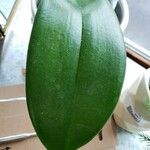
Phalaenopsis × singuliflora
ارکیده دو رنگ · Moth Orchid · Orchidea · Moth Clover
Description
Source: leafsnapPhalaenopsis × singuliflora is a hybrid orchid, created by crossing Phalaenopsis amabilis and Phalaenopsis equestris. Often referred to as the "One-Flowered Phalaenopsis," this plant is unique for producing just one flower per stem. Its long, arching leaves are dark green and can grow up to 30 cm in length. The flowers of Phalaenopsis × singuliflora are large, with a diameter of up to 10 cm, and come in shades of white, pink, or purple. The flowers have a distinctive shape, featuring broad petals that curve upwards toward the center and narrow sepals that extend downward. For optimal growth, this orchid requires bright but indirect light and should be kept at temperatures between 18-25°C. It prefers high humidity levels but must not be overwatered to prevent root rot. Phalaenopsis × singuliflora is an ideal indoor plant for orchid enthusiasts who have limited space, as it does not grow very tall or wide. With proper care, this beautiful hybrid orchid can bloom multiple times throughout the year, adding color and elegance to any room it occupies.
Care Guide
💧 Water Every 7 days
Water your Phalaenopsis orchid every week, especially when its exposed roots have turned silvery white. It's best to water them during the mornings to keep the potting soil damp throughout the day. Orchids are not very drought-tolerant but avoid standing water around the stem since this promotes rot. You can cut back watering to every other week in the flowering season.
☀️ Light
🌡️ Temperature
The Moth Orchid thrives in a mild tropical climate. It prefers daytime temperatures between 66–86°F (19–30°C) and nighttime temperatures between 61–66°F (16–19°C). To keep the plant healthy, avoid exposing it to drafts and significant temperature changes.
💨 Humidity high (>60%)
This plant needs special care because it loves high humidity levels of 60-80% or more. The best way to achieve this is by placing a humidifier near the plant. Daily misting is also essential! Make sure the room has good ventilation.
🪴 Soil
🌱 Fertilizer
🪴 Pot & Repot
✂️ Pruning
Prune your phalaenopsis orchid after the flowers have faded during its dormancy period. This usually
🌿 Propagating
🐛 Diseases & pets
☠️ Toxicity
Phalaenopsis orchids are non-toxic houseplants for people and pets.
Characteristics
- Plant Type
- Herbaceous flowering perennial, orchid group
- Genus
- Phalaenopsis
- Family
- Orchidaceae
- Hardiness Zone
- 10 to 12, USDA
- Bloom Time
- Spring and summer; indoors, it is a repeat seasonal bloomer
- Native Area
- Southeast Asia to the Philippines, New Guinea and northern Australia